
Performance Comparison and Selection Guide for High-Transmittance LSR Silicone in LED Packaging
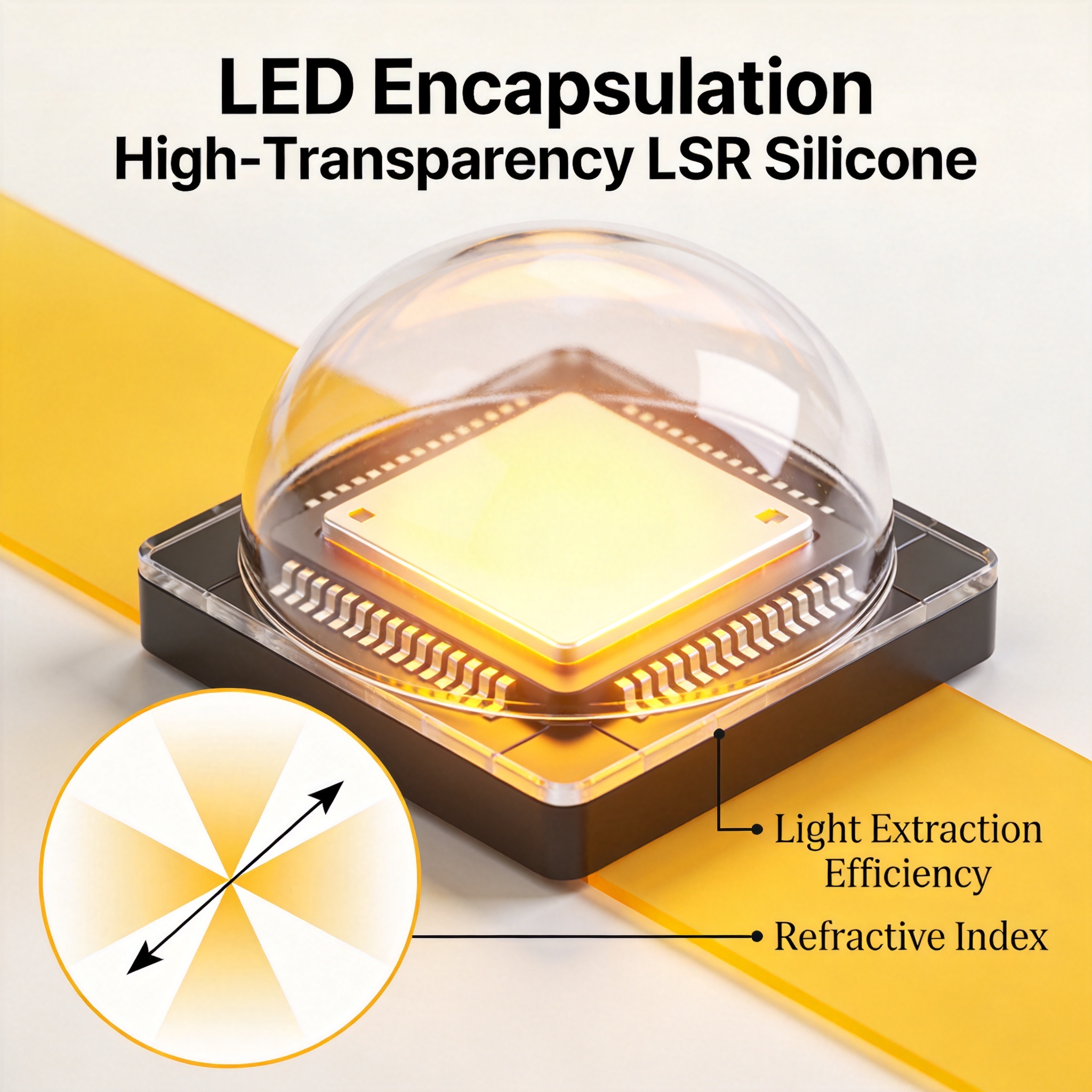
The rapid development of LED lighting technology has placed higher demands on packaging material performance. High-transmittance LSR silicone, as the optical interface between LED chip and the outside world, directly affects LED luminous efficacy and lifespan through its refractive index, light transmittance, yellowing resistance, and high-temperature resistance.
I. Core Requirements for LED Packaging LSR
1. Optical Performance
- Transmittance: ≥ 95% in visible light range (400-700nm)
- Refractive index: 1.41-1.53, matching with LED chip and substrate affects light extraction efficiency
- Yellowing index: YI ≤ 2 after 150°C × 1000 hours
2. Thermal Performance
- Operating temperature: long-term 150-200°C, short-term up to 250°C
- Thermal conductivity: 0.8-3.0 W/m·K (thermally conductive types), aiding chip heat dissipation
- CTE matching with chip and substrate, reducing thermal stress
3. Reliability
- UV aging resistance: transmittance decrease ≤ 3% after 365nm UV exposure 1000h
- Damp heat aging: stable performance after 85°C/85% RH × 1000h
- Sulfurization resistance: preventing LED chip silver reflector blackening
II. Mainstream LSR Packaging Silicone Comparison
ParameterMethyl LSRPhenyl LSRFluorosilicone LSR
Refractive index1.411.49-1.531.38-1.41
Transmittance (450nm)95-97%93-96%90-93%
Long-term temperature200°C250°C200°C
YI (150°C×1000h)3-51-22-4
UV resistanceGoodExcellentExcellent
CostLowHighHighest
Typical applicationLighting LEDHigh-power/UV LEDSpecial environment LED
III. Selection Strategy
1. General Lighting LED (White Light)
Methyl LSR recommended, refractive index 1.41, best cost-effectiveness. Focus on anti-yellowing performance, select formulations with antioxidants. Hardness Shore D 40-60, ensuring mechanical strength.
2. High-Power LED (>1W)
Phenyl LSR recommended, refractive index 1.50-1.53, improving light extraction efficiency by 5-10%. High temperature rating, withstanding chip junction temperatures of 150-200°C. Low stress characteristics, reducing thermal cycling package cracking.
3. UV LED (365-405nm)
Must select high phenyl content LSR with excellent UV resistance. Transmittance ≥ 90% in UV band. Avoid formulations containing UV absorbers.
4. Outdoor LED Displays
Weather-resistant methyl LSR recommended, with UV and sulfurization resistance. Salt spray and acid rain resistance needs specific verification. Anti-fouling surface design, reducing dust adhesion affecting luminous efficacy.
IV. Packaging Process Considerations
1. Dispensing Process
- Methyl LSR viscosity 3000-8000 mPa·s, suitable for dispensing
- Phenyl LSR higher viscosity (10000-30000 mPa·s), requires parameter adjustment
- Vacuum degassing before dispensing, avoiding bubbles inside package affecting light output
2. Curing Conditions
- Methyl LSR: 150°C × 30-60 min
- Phenyl LSR: 150-180°C × 60-120 min, requires step-up heating
- Post-cure after initial cure (200°C × 2-4h), reducing volatiles
3. Quality Inspection
- Optical testing: integrating sphere for luminous flux and color temperature
- Bubble inspection: X-ray or infrared detection of internal defects
- Reliability verification: LM-80 standard 6000-hour lumen maintenance test
Selecting the appropriate LSR packaging silicone is fundamental to LED product performance and reliability, requiring comprehensive consideration of optical, thermal, and reliability requirements based on specific application scenarios.