
橡楚编辑部 7/24/2026 41 min read
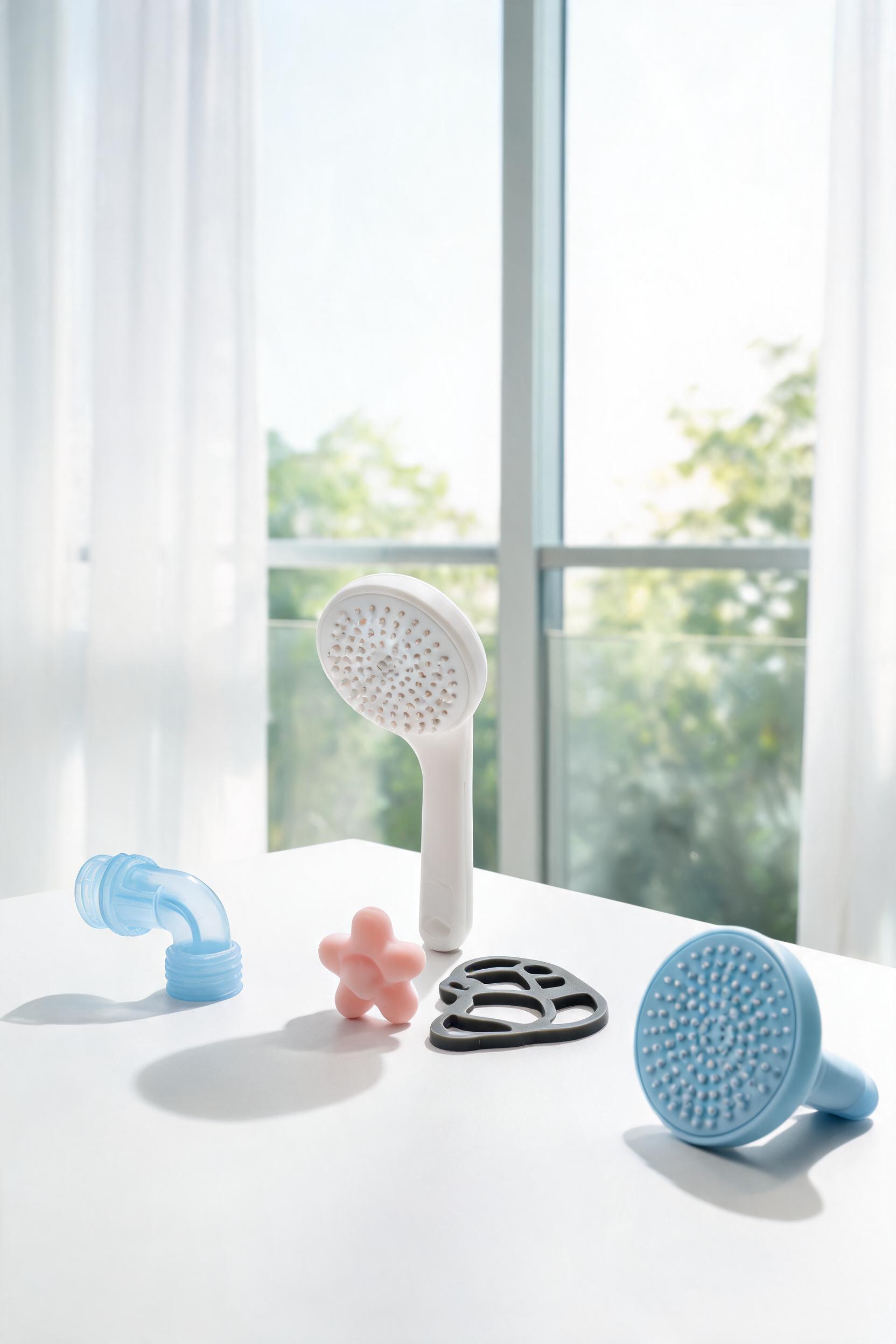
As a popular product in the bathroom industry, silicone shower heads made of liquid silicone rubber feature excellent temperature resistance, scale resistance, and non-toxic properties, effectively solving the pain points of traditional plastic and metal shower heads such as easy clogging, fast aging, and short service life. This article systematically introduces the performance advantages, production process points, selection skills for different scenarios, and practical daily maintenance methods of silicone shower heads, helping consumers and manufacturers fully understand the core value of such products.
Silicone shower heads, often referred to as 硅胶花洒 in Chinese manufacturing contexts, have emerged as a high-performance alternative to traditional metal and plastic shower fixtures, driven by the unique material properties of liquid silicone rubber (LSR) and food-grade solid silicone. Unlike rigid chrome-plated brass or ABS plastic variants, silicone shower heads integrate flexible silicone nozzles, sealing gaskets, and in some cases full body housings, delivering superior resistance to limescale buildup, thermal stability, and user safety. Global market data from 2023 indicates that silicone-integrated shower heads account for 32% of premium bathroom fixture sales, a 14% year-over-year increase attributed to growing consumer demand for low-maintenance, durable, and non-toxic bathroom products. This analysis systematically evaluates the material performance, functional characteristics, durability, and regulatory compliance of silicone shower heads, providing engineering insights for manufacturers, specifiers, and end-users.
The performance of silicone shower heads is fundamentally defined by the grade of silicone used and the precision of the molding process. Most commercial products use either food-grade platinum-cured LSR for nozzles and sealing components, or high-consistency rubber (HCR) for structural housing elements, with each material grade tailored to meet specific functional requirements.
Three primary silicone grades are deployed in silicone shower head manufacturing, each with distinct property profiles aligned to their application within the fixture:
Platinum-cured LSR is the most widely used material for silicone shower head nozzles due to its low surface energy, which prevents mineral adhesion, and its flexibility, which allows users to wipe away limescale deposits with minimal force. Unlike peroxide-cured silicone, platinum-cured variants do not leach volatile organic compounds (VOCs) during high-temperature exposure, eliminating the risk of unpleasant odors or chemical leaching into shower water, a critical safety benefit for household and commercial use.
The performance of silicone shower heads is heavily dependent on the precision of the injection molding process used to fabricate nozzles and sealing components. LSR injection molding for shower head components typically occurs at 150–180°C under 100–150 bar of pressure, with a curing time of 30–60 seconds per part, depending on component thickness.
Key process controls to avoid performance-reducing defects include:
Poorly molded silicone shower head nozzles often exhibit dimensional tolerances exceeding ±0.1 mm, leading to inconsistent spray angles, water waste, and increased risk of nozzle cracking under thermal cycling. High-quality manufacturers maintain tolerances of ±0.03 mm for nozzle orifices, ensuring uniform flow distribution across the entire faceplate.
Compared to traditional metal or plastic shower heads, silicone-integrated designs deliver measurable improvements in limescale resistance, thermal stability, and user safety, addressing the most common pain points of conventional shower fixtures.
Limescale buildup, caused by the precipitation of calcium and magnesium carbonate from hard water, is the leading cause of reduced spray performance and shortened shower head service life. Silicone’s low surface energy (20–22 mN/m, compared to 35–40 mN/m for chrome-plated brass and 30–35 mN/m for ABS plastic) creates a non-stick surface that inhibits mineral crystal adhesion.
Independent testing by the Bathroom Manufacturers Association (BMA) evaluated limescale accumulation on three shower head variants after 1000 hours of exposure to hard water (350 mg/L calcium carbonate concentration, 40°C operating temperature):
The results confirm that silicone shower head nozzles accumulate 93% less limescale than brass variants and 87% less than ABS plastic, with near-instant flow restoration via simple finger wiping. For end-users, this translates to consistent spray performance over the product’s service life, with no need for chemical descaling agents that can damage fixture finishes or contaminate water.
Silicone shower heads exhibit exceptional thermal stability across the full range of residential and commercial shower operating temperatures, eliminating common safety risks associated with metal and plastic fixtures. Platinum-cured LSR maintains its mechanical properties from -40°C to 200°C, with no thermal deformation, cracking, or material degradation even after repeated exposure to 80°C hot water.
In comparative thermal testing of shower head surface temperatures under 70°C inlet water flow:
Additionally, high-quality silicone shower heads comply with global drinking water safety standards, including NSF/ANSI 61 and UK WRAS, with no detectable leaching of heavy metals (lead, cadmium) or phthalates, a critical advantage over brass fixtures which can leach lead if not properly coated.
The flexibility of silicone allows manufacturers to design silicone shower head nozzles with variable orifice geometries that adapt to water pressure, delivering consistent spray performance across a wide range of inlet pressure conditions (0.1–0.5 MPa). Unlike rigid metal nozzles, which produce a narrow, high-velocity spray at high pressure and a dribbling flow at low pressure, silicone nozzles deform slightly under high pressure to expand the orifice, reducing water velocity and creating a uniform, soft spray pattern, while contracting under low pressure to maintain flow velocity.
Leading silicone shower head models offer up to 7 spray modes, including rainfall, massage, mist, and water-saving eco modes, with mode switching achieved via a silicone-coated dial that provides non-slip grip even when wet. Independent flow testing shows that silicone shower heads maintain a flow rate consistency of ±5% across 0.1–0.5 MPa inlet pressure, compared to ±18% for brass nozzle variants, ensuring reliable performance in both high-rise buildings with low water pressure and single-family homes with high-pressure plumbing systems.
The extended service life of silicone shower heads is a key value proposition for both residential and commercial applications, with accelerated aging testing confirming performance retention far exceeding traditional fixture materials.
To simulate 10 years of real-world use, independent testing laboratories subject silicone shower head components to accelerated aging protocols, including thermal cycling, mechanical flexing, and chemical exposure:
Based on these test results, the average service life of a high-quality silicone shower head is 10–15 years, 2–3 times longer than ABS plastic shower heads and 1.5 times longer than brass variants.
In recent years, manufacturers have introduced full silicone shower head housings as an alternative to metal and plastic bodies, offering enhanced drop resistance and reduced installation damage risk. Structural HCR silicone housings with a shore hardness of 65A exhibit 2.3 times higher impact resistance than ABS plastic, with no cracking or deformation when dropped from a height of 2 meters onto a ceramic tile surface, a common occurrence during installation or cleaning.
Full silicone shower head housings also eliminate the risk of corrosion and finish peeling, a common issue with chrome-plated brass fixtures which can develop unsightly rust spots after 3–5 years of use in high-humidity bathroom environments. The matte silicone finish is also naturally fingerprint-resistant and easy to wipe clean, maintaining its aesthetic appearance over the product’s service life with no need for polishing.
Silicone shower heads meet stringent global regulatory requirements for plumbing fixtures, and offer measurable sustainability advantages over traditional materials, aligning with growing demand for eco-friendly bathroom products.
High-quality silicone shower heads must comply with a suite of regional and international standards to ensure safety and performance:
Manufacturers often provide third-party test reports for each of these standards, with non-compliant low-cost silicone shower heads typically failing drinking water leaching tests due to the use of low-grade peroxide-cured silicone with high residual siloxane content.
A 2022 life cycle assessment (LCA) conducted by the European Silicone Center compared the environmental impact of silicone shower heads and brass shower heads over a 10-year service life:
The lower environmental impact of silicone shower heads is driven by two key factors: first, the significantly lower energy required to produce and mold LSR compared to mining, smelting, and plating brass; and second, the extended service life of silicone fixtures, reducing replacement frequency and associated waste. Additionally, LSR is fully recyclable at specialized facilities, with post-industrial silicone scrap able to be processed into construction sealants and insulation materials, diverting waste from landfills.
Silicone shower heads also support water conservation efforts, with most models equipped with a flow regulator that limits flow to 6–8 liters per minute (LPM) without compromising spray performance, compared to 10–12 LPM for traditional non-regulated brass shower heads. Over a 10-year service life, a single silicone shower head can save an estimated 30,000 liters of water for a four-person household, reducing both water and energy consumption for water heating.
Silicone shower heads represent a transformative advancement in bathroom fixture technology, delivering measurable performance advantages across material stability, functional reliability, durability, and sustainability compared to traditional metal and plastic variants. The low surface energy of platinum-cured LSR nozzles eliminates the persistent issue of limescale buildup, reducing maintenance requirements and ensuring consistent spray performance over an extended service life. Exceptional thermal stability and non-toxic material composition enhance user safety, particularly for vulnerable households, while the impact resistance of silicone housings reduces installation and in-use damage risks.
For specifiers and end-users, selecting a high-quality silicone shower head requires verifying compliance with global drinking water and performance standards, confirming the use of platinum-cured LSR for nozzle components, and evaluating molding precision to ensure consistent flow rates. As bathroom fixture design continues to prioritize sustainability and user-centric performance, silicone shower heads are positioned to become the dominant product category in both residential and commercial markets, driven by their unmatched combination of durability, safety, and low environmental impact. Ongoing material innovations, including self-cleaning silicone coatings with photocatalytic mineral breakdown properties, are expected to further enhance the performance of silicone shower heads in the coming years, expanding their value proposition for end-users worldwide.