
橡楚编辑部 7/24/2026 45 min read
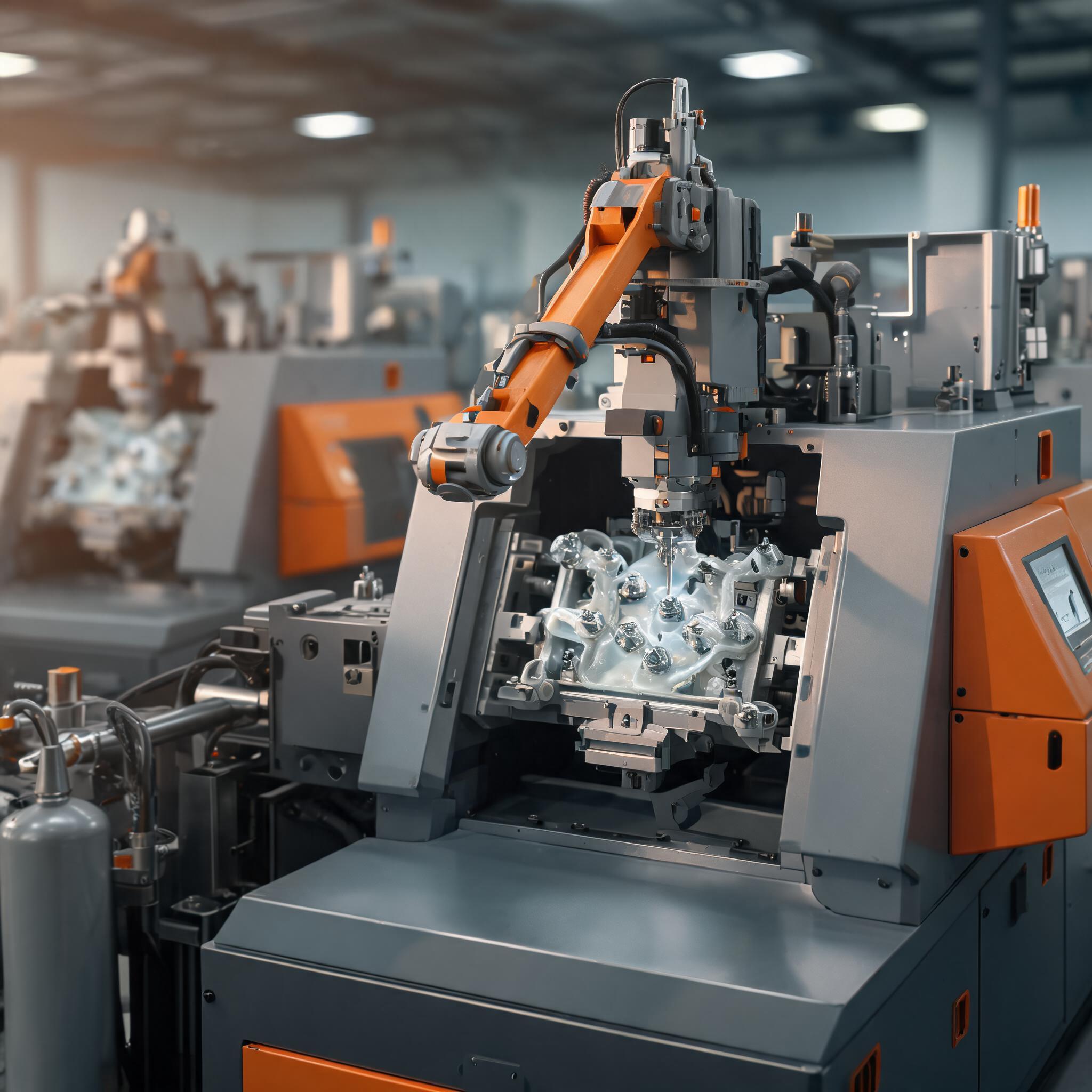
Precision metal insert overmolding is a special molding process that pre-places metal inserts into the mold cavity and then injects liquid silicone to achieve a firm bond between the two materials, which is widely used in automotive, medical, consumer electronics and other fields with high requirements for sealing and structural strength. This paper sorts out the core operation points of the process, analyzes the causes of common problems such as insufficient bonding force, flash, and insert offset, and provides corresponding quality control solutions to help manufacturers improve product yield.
Liquid Silicone Rubber (LSR) overmolding of precision metal inserts has emerged as a critical manufacturing process for high-performance components across medical, automotive, aerospace, and consumer electronics sectors. This process bonds biocompatible, temperature-resistant, and chemically inert LSR to tight-tolerance metal substrates (e.g., stainless steel, aluminum, copper alloy, titanium), combining the structural rigidity of metals with the elastic, sealing, and skin-friendly properties of LSR. Unlike thermoplastic overmolding, LSR overmolding operates via a low-pressure cold injection followed by high-temperature crosslinking, introducing unique challenges in insert positioning, adhesion reliability, and dimensional consistency. For components such as surgical instrument grips, automotive sensor seals, and wearable electrode interfaces, even 10μm deviations in insert position or 1% adhesion failure can lead to product scrappage or critical functional failures. This article systematically analyzes the core technical principles, key process control points, common defect mitigation strategies, and quality validation systems for LSR-based precision metal insert overmolding, providing actionable guidance for manufacturers targeting zero-defect production.
The foundation of high-quality overmolding lies in the compatibility between the metal insert and LSR material, as well as controlled pre-treatment processes that eliminate surface contaminants and create functional bonding sites. Unlike mechanical interlocking alone, reliable LSR-metal bonding requires a combination of physical roughness, chemical functional group matching, and primer compatibility, all of which must be validated prior to mass production.
The choice of insert material directly impacts bonding strength, dimensional stability during curing, and long-term component performance. Table 1 summarizes common precision insert materials, their key properties, and recommended pre-treatment processes for LSR overmolding:
Insert pre-processing must adhere to strict dimensional tolerance controls first: for precision applications, insert dimensional deviation must be controlled within ±5μm, and flatness error for mating surfaces must not exceed 2μm per 10mm length. All inserts undergo ultrasonic cleaning in deionized water with a 40kHz frequency for 15 minutes to remove machining oils, burrs, and metal shavings, followed by 10 minutes of low-temperature drying at 80°C to avoid residual moisture. For inserts with micro features (e.g., 0.2mm diameter positioning holes), air jet inspection is required to confirm no residual debris in blind cavities, as even 5μm particles can cause LSR flash or insert misalignment during molding.
LSR materials for insert overmolding are typically two-part platinum-catalyzed systems with tailored hardness, viscosity, and crosslinking kinetics to match insert geometry and processing conditions. For high-precision applications, low-viscosity LSR (30,000–50,000 cP at 25°C) is preferred for complex micro cavities, as it flows uniformly without displacing inserts during injection, while higher viscosity grades (60,000–80,000 cP) are used for thick-wall components to reduce curing shrinkage.
Adhesion promotion follows two primary pathways:
Compatibility testing is mandatory for all material combinations: test samples must pass 1000 hours of thermal cycling between -40°C and 125°C, 72 hours of immersion in pH 2–10 chemical solutions, and peel strength tests per ASTM D3330, with no delamination or >15% strength loss allowed.
Mold design for precision insert overmolding is the primary determinant of insert position accuracy, LSR fill consistency, and production efficiency. Unlike conventional LSR molding, overmolding molds require specialized positioning and clamping systems to hold inserts within ±10μm tolerance during the entire injection and curing cycle, while preventing LSR flash in critical mating areas.
The core requirement for insert positioning is zero displacement during low-pressure LSR injection (typical injection pressure: 20–50 bar) and high-temperature curing (mold temperature: 150–200°C). Three primary positioning systems are used, selected based on insert geometry and tolerance requirements:
For multi-cavity molds, each cavity’s positioning system is individually calibrated with a coordinate measuring machine (CMM) prior to production, with cavity-to-cavity position deviation not exceeding 5μm.
LSR cures via exothermic crosslinking, so uniform mold temperature distribution is critical to prevent inconsistent curing, insert warpage, or uneven bonding strength. For precision overmolding molds, integrated cartridge heaters with 100W/cm² power density and K-type thermocouples with ±0.5°C accuracy are installed within 10mm of each cavity surface, creating a temperature difference across the cavity of ≤2°C. For large inserts (length >100mm), conformal cooling channels are machined into the mold core to match the insert’s contour, reducing thermal gradient-induced insert deformation to <2μm per 100mm.
Venting design is another critical factor, as trapped air in the cavity can cause incomplete fill, voids, or insert displacement. For LSR overmolding, venting gaps of 0.005–0.008mm are machined along the parting line, with a depth 20% smaller than conventional LSR molding to prevent flash from entering insert mating areas. For micro cavities with complex geometries, porous sintered steel venting plugs (porosity 30%, pore size 5μm) are installed at the end of fill paths to remove air without allowing LSR to leak. In high-volume production, mold surfaces are coated with a 2μm thick PTFE-nickel composite coating to reduce LSR adhesion, extend mold life by 30%, and simplify flash removal.
Even with optimized material preparation and mold design, improper process parameter control can lead to defects such as insert displacement, delamination, flash, and dimensional deviation. LSR overmolding processes require closed-loop control of all critical parameters to ensure consistency across production runs.
The LSR overmolding cycle consists of four stages: insert loading, injection, curing, and demolding, each with tightly controlled parameters. Table 2 summarizes the recommended parameter ranges for precision applications and their impact on part quality:
Closed-loop control systems are required for all parameters: for example, injection speed is adjusted in real time based on cavity pressure sensor data (installed at the injection gate and end of fill) to maintain a constant melt front velocity of 100–200 mm/s, preventing insert displacement caused by sudden flow surges. For insert materials with high CTE (e.g., aluminum alloy), mold temperature is set 5°C higher than the insert pre-heat temperature to compensate for thermal expansion, ensuring final part dimensional tolerance remains within ±20μm.
Even with optimal parameter setup, defects can occur due to material batch variation, mold wear, or environmental fluctuations. Table 3 lists the most common defects in LSR insert overmolding, their root causes, and corresponding correction measures:
For high-volume production, statistical process control (SPC) is implemented for key quality metrics: insert position accuracy, bonding strength, and dimensional tolerance are monitored every 30 minutes, with control limits set at ±3σ to detect process drift before defects occur.
Post-molding quality control for precision insert overmolded components combines non-destructive in-line testing and destructive batch validation to ensure both immediate conformance and long-term performance under application-specific conditions.
For 100% of production parts, three non-destructive tests are conducted to avoid defective products reaching customers:
These in-line tests are integrated with the injection molding machine control system, automatically adjusting process parameters if defect rates exceed 0.1% to reduce scrappage.
For every production batch (maximum 5000 parts), 5 sample parts are selected for destructive testing to validate performance:
For implantable medical components, additional biocompatibility testing per ISO 10993 is required, including cytotoxicity, skin irritation, and genotoxicity assessments, to ensure the LSR-metal interface does not leach harmful substances into the body.
Precision metal insert overmolding with LSR is a multi-disciplinary process that requires tight integration of material science, mold design, process control, and quality validation to achieve the high reliability demanded by critical applications. The core success factors include: (1) systematic material matching and pre-treatment to achieve consistent LSR-metal bonding strength exceeding 3.5 MPa; (2) mold positioning systems with ≤5μm accuracy and uniform temperature control to eliminate insert displacement and warpage; (3) closed-loop process parameter control to maintain consistency across production runs; and (4) a combination of non-destructive in-line inspection and destructive batch testing to ensure zero defective parts. As demand for miniaturized, multi-functional components grows, future advancements in this field will focus on in-situ plasma treatment of inserts within the mold to reduce pre-processing time, artificial intelligence-based process parameter auto-optimization to cut setup time by 50%, and nanoscale interface modification to further improve bonding strength for extreme environment applications. By implementing the control frameworks outlined in this article, manufacturers can achieve overmolding production yields exceeding 99%, meeting the most stringent requirements of medical, automotive, and aerospace industries.