
橡楚技术团队 5/8/2026 11 min read
Detailed guide to 0.1mm micro-pore LSR molding for glucose meter seals.
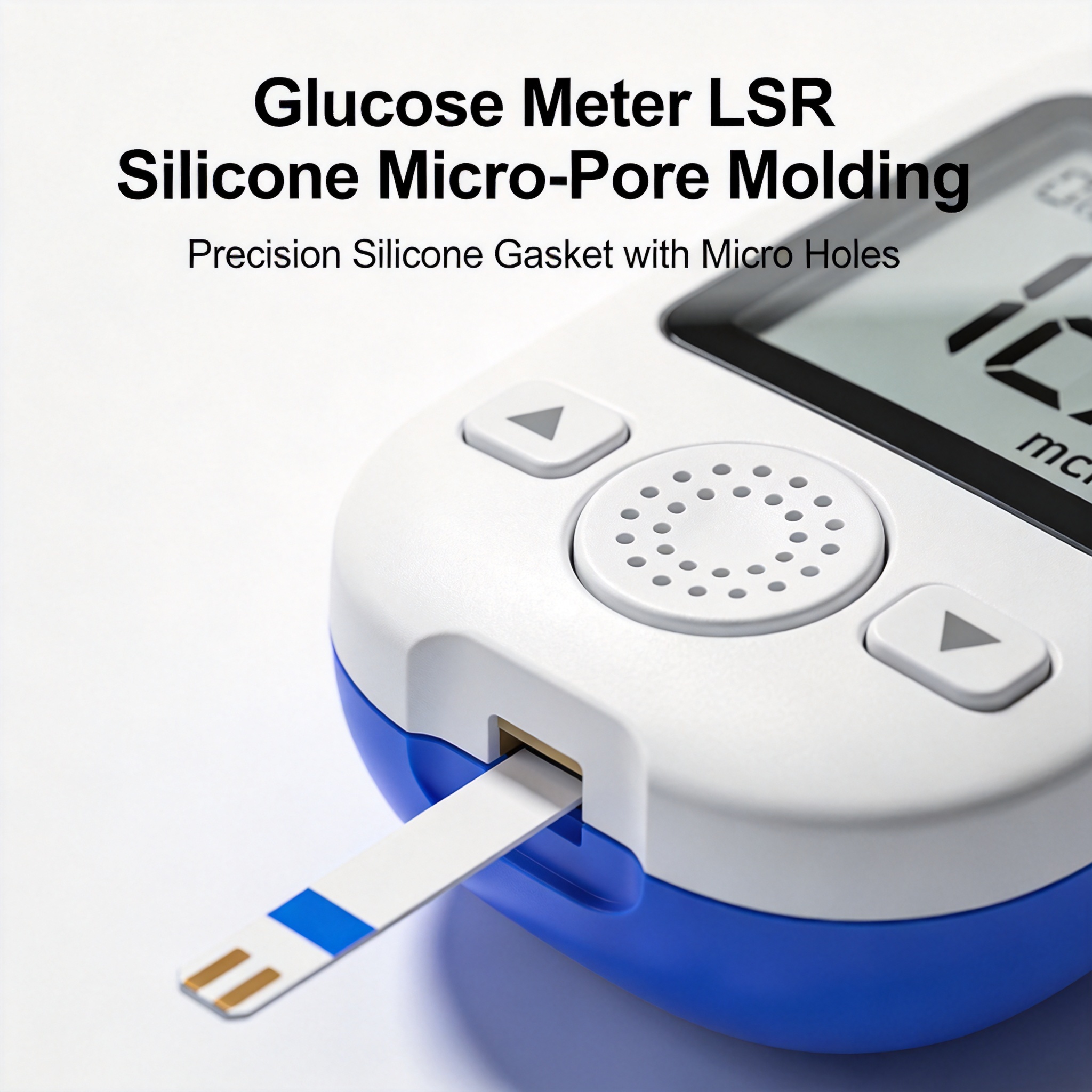
Detailed guide to 0.1mm micro-pore LSR molding for glucose meter seals.
Precision Micro-Pore Molding Technology for Blood Glucose Meter LSR Silicone Seals
Blood glucose meters are essential daily self-monitoring tools for diabetic patients, where measurement accuracy and reliability directly affect treatment outcomes. At the test strip interface, LSR silicone seals guide blood samples, isolate the environment, and ensure measurement accuracy. Precision micro-pore molding is the core technical challenge in the manufacturing process.
A 0.3mm micro-pore means the mold core diameter is only 0.3mm, which is prone to bending deformation under 170°C mold temperature and vulcanization pressure.
Relative position deviation between multiple micro-pores affects blood channel alignment after test strip insertion, requiring control within ±0.03mm.
High friction between micro-pore core and vulcanized LSR; demolding easily damages pore walls or breaks cores.
Micro-pore edge flash (>0.05mm) affects blood capillary action, causing measurement deviation.
In 32-cavity or 48-cavity molds, every seal micro-pore must be identical in size and position.
Precision micro-pore molding technology for blood glucose meter LSR silicone seals represents the perfect combination of micro-molding process and medical precision requirements, where every micron of control relates to patient health and safety.