
橡楚编辑部 6/22/2026 48 min read
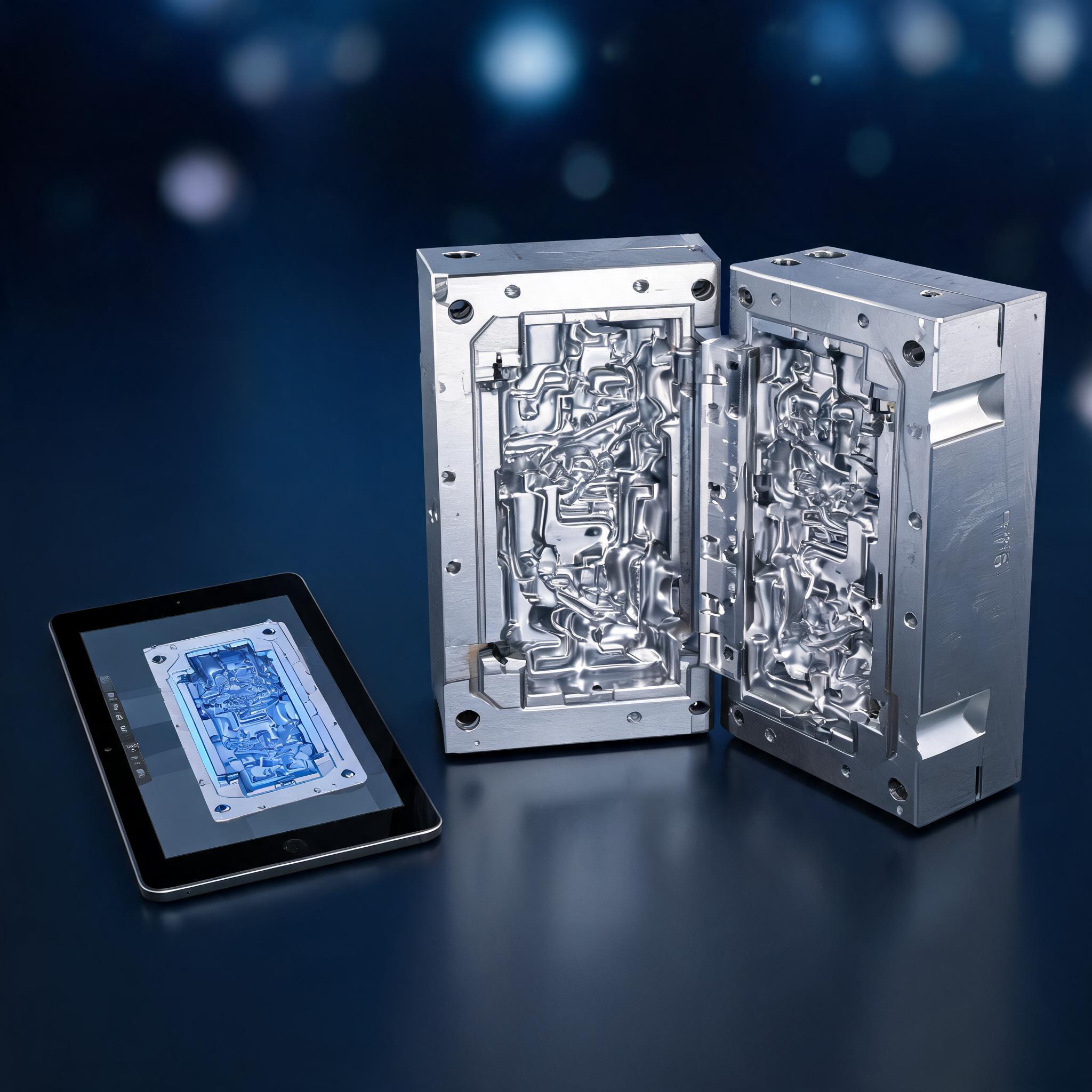
Custom rubber molds are the core link to adapt to the production of special rubber products, which need to be designed in combination with product use, molding process, production demand and other dimensions. This paper sorts out the key points of the whole process of custom rubber molds, covering core contents such as material selection, structural design, processing accuracy control, and surface treatment schemes, helping enterprises avoid common mistakes in the customization process, and improve mold service life and product molding yield.
Custom rubber molds are the backbone of high-volume, precision liquid silicone rubber (LSR) and general elastomer component manufacturing, serving as the critical interface between product design intent and mass production performance. Unlike off-the-shelf mold solutions, 橡胶模具定制 (custom rubber mold) engineering accounts for unique material shrinkage rates, complex part geometries, end-use environmental demands, and production throughput requirements, directly impacting component dimensional accuracy, defect rates, and total production cost over the mold’s lifecycle. For medical device, automotive, consumer electronics, and industrial sealing applications, even minor design or material flaws in a custom rubber mold can lead to 20–30% higher production scrap rates, 2x longer lead times, and premature mold failure within 10% of its expected service life. This guide systematically breaks down the core technical considerations of custom rubber mold development, from material selection tailored to elastomer processing characteristics to design optimization for demolding and durability, to advanced processing techniques that extend mold lifespan and reduce per-part production costs.
The performance and total cost of ownership (TCO) of a 橡胶模具定制 solution is 70% determined by the base mold material and surface treatment selection, as these factors directly govern compatibility with rubber curing chemistries, resistance to abrasive filler wear, thermal conductivity for uniform curing, and tolerance for high-volume production cycles. Selection must balance three core priorities: the specific elastomer being processed, required production volume, and part dimensional tolerance requirements.
Different rubber families exhibit unique curing temperatures, chemical compositions, and filler content that create distinct stressors on mold materials, so compatibility is the first non-negotiable selection criterion.
For LSR processing, which requires continuous high-temperature curing at 120–220°C and exposure to platinum-based curing catalysts that are prone to contamination, P20 pre-hardened steel (30–35 HRC) is the baseline for low-to-medium volume runs (10,000–100,000 cycles), offering good thermal conductivity (45 W/m·K) and minimal risk of catalyst inhibition. For high-volume LSR production (1M+ cycles) or parts with tight dimensional tolerances (±0.01 mm), H13 hot work tool steel (48–52 HRC after heat treatment) is preferred, as it resists thermal fatigue cracking from repeated heating/cooling cycles and maintains dimensional stability even after 2 million production runs.
For general purpose rubbers such as EPDM, nitrile rubber (NBR), and natural rubber, which often contain high loads of abrasive carbon black, silica, or mineral fillers (up to 60% by weight), wear resistance is the primary consideration. Table 1 compares common mold material performance metrics for different rubber processing applications:
For specialized applications such as food-contact or medical LSR components, 420 stainless steel is required to comply with FDA and ISO 10993 biocompatibility standards, as it eliminates the risk of iron leaching into rubber parts during curing. For rubber formulations containing acidic curatives or halogenated ingredients, 420 stainless steel also resists corrosion that would otherwise cause pitting and surface defects on finished parts.
Even high-performance tool steels benefit from surface treatments that improve wear resistance, reduce friction for easier demolding, and prevent chemical adhesion between rubber and the mold cavity. For 橡胶模具定制 projects targeting high-volume production, the right surface treatment can extend mold lifespan by 2–3x and reduce demolding-related scrap by up to 90%.
Polishing is the most common baseline treatment: for general purpose rubber parts, a #300–#600 grit polish is sufficient, while medical and optical LSR parts require SPI-A1 or diamond polishing (Ra < 0.025 μm) to ensure a blemish-free surface finish. For LSR molds, plasma nitriding is a widely used treatment that creates a 0.1–0.3 mm thick hardened surface layer (1000–1200 HV) without compromising the base steel’s toughness, reducing wear from repeated LSR flow and eliminating the need for external release agents that can contaminate medical-grade parts.
For highly filled rubber (e.g., 50% silica-filled EPDM gaskets), physical vapor deposition (PVD) coatings such as TiN (titanium nitride) or CrN (chromium nitride) add a 2–5 μm thick layer with 2000–3000 HV hardness, reducing abrasive wear by 70% compared to untreated H13 steel. For rubber formulations that tend to adhere to mold surfaces (e.g., fluorosilicone), diamond-like carbon (DLC) coatings offer a low-friction surface (coefficient of friction <0.2) that eliminates stuck parts and reduces demolding force by 40–60%.
A well-designed 橡胶模具定制 solution balances three competing priorities: achieving the required part geometry and tolerance, minimizing production cycle time, and reducing long-term maintenance costs. 60% of rubber part production defects (including flash, short shots, and dimensional deviation) stem from avoidable design flaws rather than processing errors, making rigorous design validation a critical step before mold fabrication.
All rubber materials undergo volumetric shrinkage during curing and post-cooling, with rates varying from 1.5–5% depending on the elastomer formulation, curing temperature, and part wall thickness. Failure to accurately account for shrinkage in mold cavity design is the leading cause of dimensional non-conformance in custom rubber parts, requiring costly rework that can delay production by 2–4 weeks.
For LSR, shrinkage rates typically range from 2.0–3.5%, with higher shrinkage for high-hardness (70+ Shore A) grades and lower shrinkage for liquid silicone foams. For high-consistency rubber (HCR) and EPDM, shrinkage rates can be as high as 3–5% for filled formulations, with additional post-cure shrinkage of 0.5–1% that occurs in the first 72 hours after demolding. To compensate, mold designers must scale cavity dimensions by the exact shrinkage rate determined through material testing, with adjustments for variable wall thickness: for example, a part with a 1 mm thick wall will have 0.5–1% lower shrinkage than a 5 mm thick section of the same material, requiring localized scaling adjustments to ensure uniform dimensional accuracy.
For parts with critical tolerances (e.g., automotive sealing grommets with ±0.02 mm dimensional requirements), designers use prototype tooling to conduct trial runs with the exact production rubber formulation before fabricating the final production mold. This trial process captures real-world shrinkage data that accounts for specific processing parameters (injection pressure, curing time, mold temperature) that material data sheets do not always specify. Additional design considerations for dimensional stability include:
The gating and venting system of a 橡胶模具定制 solution directly impacts production cycle time, defect rates, and material waste, making it one of the most critical design elements for high-volume manufacturing.
For LSR injection molding, cold runner systems are the industry standard for high-volume production, as they keep the LSR material cooled (10–25°C) in the runner channels to prevent premature curing, eliminating runner scrap that can account for 30–50% of material waste in hot runner systems. For small precision parts (e.g., medical catheter seals weighing <1 g), pin gates with 0.2–0.5 mm diameter are used to minimize gate vestige on the finished part, while for larger parts (e.g., automotive battery seals weighing >100 g), sub-gates or fan gates are preferred to ensure uniform material flow into the cavity and reduce shear stress that can cure LSR prematurely. For multi-cavity molds, balanced runner design is required to ensure equal filling pressure across all cavities, preventing short shots in cavities further from the injection nozzle.
Venting is equally critical for rubber molding, as air trapped in the cavity during material injection will cause burn marks, voids, or incomplete part filling. For LSR molds, vent channels with 0.01–0.03 mm depth and 5–10 mm width are machined at the end of fill paths, as LSR has a low viscosity that can leak through vents deeper than 0.03 mm, causing flash. For higher viscosity HCR and EPDM, vent depths of 0.05–0.1 mm are sufficient. For complex parts with undercuts or internal channels, vacuum venting systems are integrated into the mold to pull 90–95% of air out of the cavity before injection, eliminating void defects in hard-to-fill areas.
Demolding system design must avoid damaging delicate rubber parts during ejection:
Uniform temperature control across the mold cavity is critical for consistent rubber curing, as temperature deviations of ±5°C can cause 10–15% variation in shrinkage rates, leading to dimensional non-conformance and variable part hardness.
For LSR molding, which requires rapid, uniform heating to activate the platinum curing catalyst, mold designers integrate drilled heating channels placed 10–15 mm from the cavity surface, with channel spacing of 20–30 mm to ensure even heat distribution. Cartridge heaters inserted into the channels maintain mold temperature within ±2°C of the setpoint, with thermocouples placed at multiple points across the mold to monitor for hot or cold spots. For large-format molds (cavity area >0.5 m²), zone-based heating control is implemented, allowing independent temperature adjustment for different sections of the mold to compensate for heat loss at the edges.
For thermoset rubber processing that requires post-cure cooling, conformal cooling channels manufactured via 3D printing are increasingly used in 橡胶模具定制 projects, as they follow the contours of complex part geometries to reduce cooling time by 30–40% compared to traditional straight drilled channels. For example, a 3D printed conformal cooling system for an automotive LSR gasket mold reduced total cycle time from 60 seconds to 38 seconds, increasing production output by 58% while maintaining uniform part dimensional tolerance.
Key design rules for thermal control systems include:
The final performance and durability of a 橡胶模具定制 solution depends heavily on the precision of the fabrication process, with advanced machining and quality control technologies enabling tighter tolerances, faster lead times, and longer mold service life.
Modern custom rubber mold fabrication relies on a combination of CNC machining, electrical discharge machining (EDM), and additive manufacturing to produce complex geometries with micron-level accuracy.
High-speed CNC milling with 5-axis capability is the primary fabrication method for mold cavities and cores, with spindle speeds of 12,000–20,000 RPM enabling tight dimensional tolerance of ±0.005 mm for steel components. For hard tool steels such as H13 and S7, rough milling is performed at 50% of the spindle speed before heat treatment, followed by finish milling after hardening to eliminate dimensional distortion from the heat treatment process. For complex cavity textures (e.g., soft-touch surfaces on consumer electronics LSR grips), CNC milling is followed by laser texturing, which produces consistent, repeatable textures with Ra values ranging from 0.1–10 μm, eliminating the variability of manual bead blasting or chemical etching.
Sinker EDM (electrical discharge machining) is used for features that cannot be milled, such as sharp internal corners, micro-sized channels, and undercuts with <0.5 mm radius. For medical LSR micro-molds with cavity features as small as 0.05 mm, micro-EDM with 0.01 mm diameter electrodes achieves dimensional accuracy of ±0.002 mm, with a surface finish of Ra < 0.1 μm without additional polishing. Wire EDM is used for cutting mold inserts and split cavity components, producing perfectly straight edges with <0.003 mm dimensional deviation.
For low-volume production and prototype 橡胶模具定制 projects, 3D printed mold inserts using tool steel powder via selective laser melting (SLM) are increasingly common, reducing lead times from 4–6 weeks to 1–2 weeks for complex geometries. SLM printed molds can achieve 50 HRC hardness equivalent to P20 steel, with integrated conformal cooling channels that are impossible to machine via traditional methods. While 3D printed molds have a shorter lifespan (10,000–50,000 cycles) than machined tool steel molds, they offer a cost-effective solution for pilot production runs and design validation before investing in high-volume production tooling.
Rigorous quality control during mold fabrication and proactive maintenance during production are critical to maximizing the service life of a custom rubber mold and minimizing unplanned downtime.
Before first production runs, molds undergo three layers of validation:
For ongoing maintenance during production, a preventive maintenance schedule tailored to the mold material and production volume reduces unplanned downtime by 60–70%. Standard maintenance procedures include:
With proper maintenance, high-quality H13 steel custom rubber molds can achieve 2–3 million production cycles, with TCO 30–40% lower than lower-quality P20 steel molds that require frequent replacement.
橡胶模具定制 is a highly specialized engineering process that requires close alignment between material science, design optimization, and precision manufacturing to deliver high-performance, cost-effective tooling for rubber component production. The most successful custom rubber mold projects start with material selection tailored to the specific rubber formulation, production volume, and end-use requirements, with surface treatments that enhance wear resistance and demolding performance. Design optimization that accounts for accurate shrinkage compensation, balanced gating and venting, and uniform thermal control reduces production defect rates by 60% or more, while advanced machining technologies and proactive maintenance extend mold service life and reduce total production costs over the tool’s lifecycle. For manufacturers in medical, automotive, and industrial sectors, partnering with an experienced custom rubber mold provider that can