
橡楚编辑部 6/18/2026 43 min read
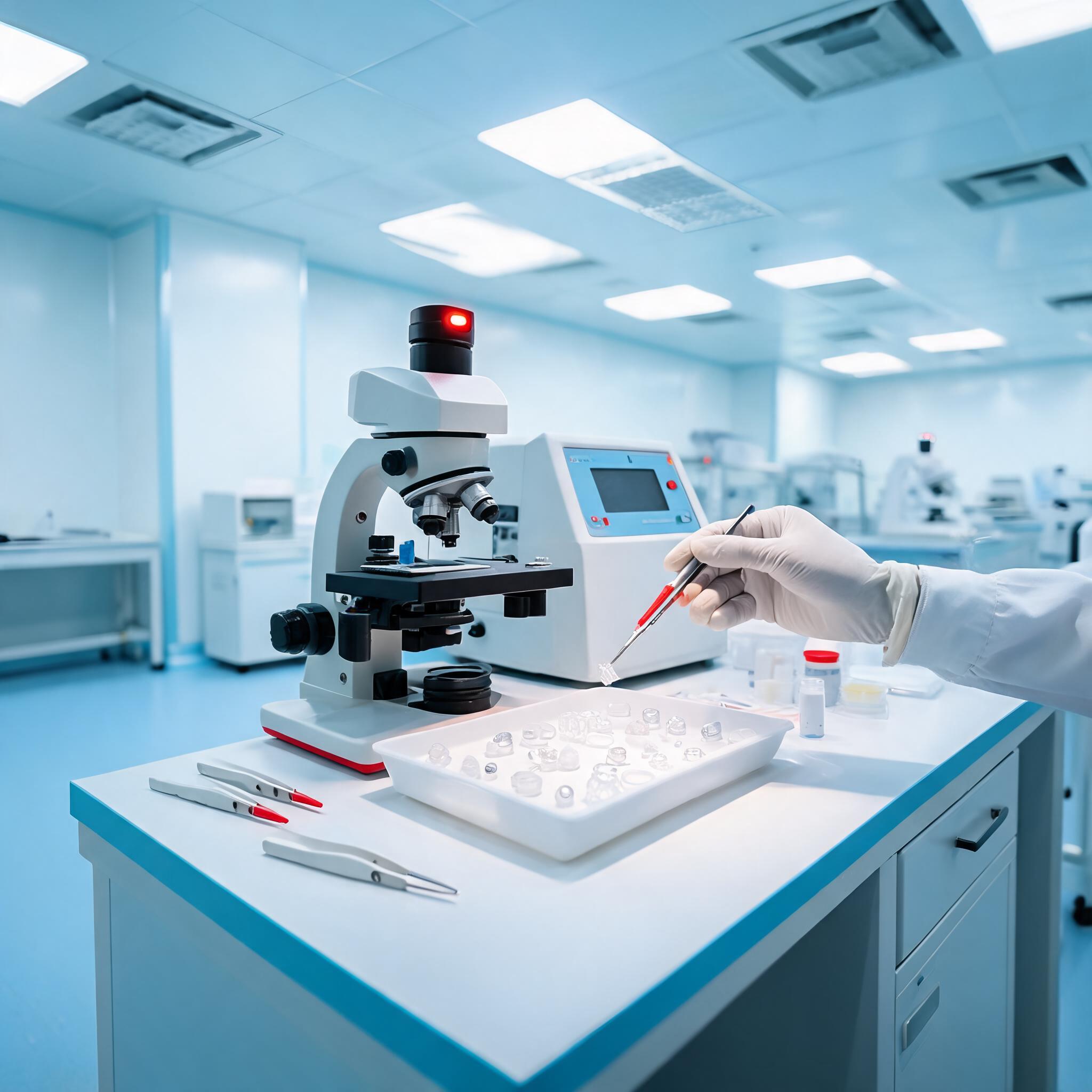
Liquid silicone rubber (LSR) precision parts have strict requirements for production environment. Xiangchu (Hubei) Rubber Co., Ltd. built a Class 100000 cleanroom to meet the production standards of LSR products. This article explains the role of cleanroom in LSR precision part quality, and helps you understand the real requirements of LSR production environment.
Liquid Silicone Rubber (LSR) injection molding has become a foundational manufacturing process for high-precision silicone components used in medical devices, consumer electronics, automotive systems, and food-contact applications. Unlike general-purpose rubber products, precision LSR parts often require micron-level dimensional tolerance, zero surface contamination, and consistent biocompatibility — properties that cannot be achieved without strict control of the production environment.
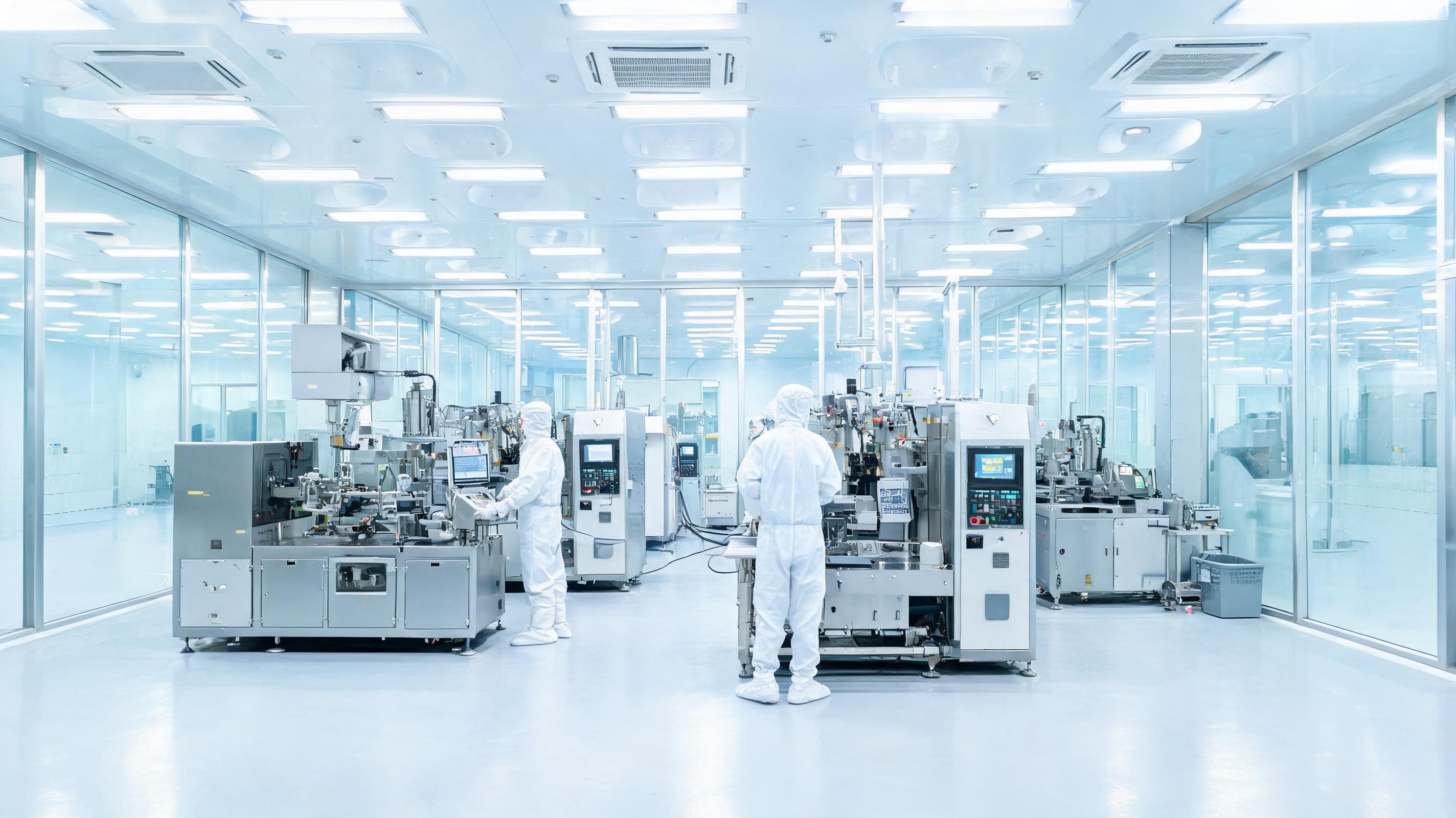
At 橡楚(湖北)橡胶有限公司, we invested in a fully certified Class 100000 cleanroom for all our precision LSR component production lines, located at our production facility in 湖北省鄂州市鄂城区经济开发区凡口街道内河巷54号. This investment is not a marketing gimmick, but a direct response to the actual performance and regulatory requirements of precision LSR parts. In this article, we break down why Class 100000 cleanroom standards are non-negotiable for high-quality LSR production, explain the technical requirements for LSR manufacturing environments, and clarify common misconceptions about cleanroom classification for silicone processing.
To understand the value of a Class 100000 cleanroom for LSR production, we first need to define cleanroom classification standards and what these ratings mean for particulate control.
Cleanrooms are rated based on the maximum number of particles of a specified size allowed per cubic meter of air. Two of the most widely used classification systems are the US Federal Standard 209E (still commonly referenced in manufacturing) and ISO 14644-1 (the current international standard). A Class 100000 cleanroom per Federal Standard 209E aligns with ISO Class 8, with the following particulate limits:
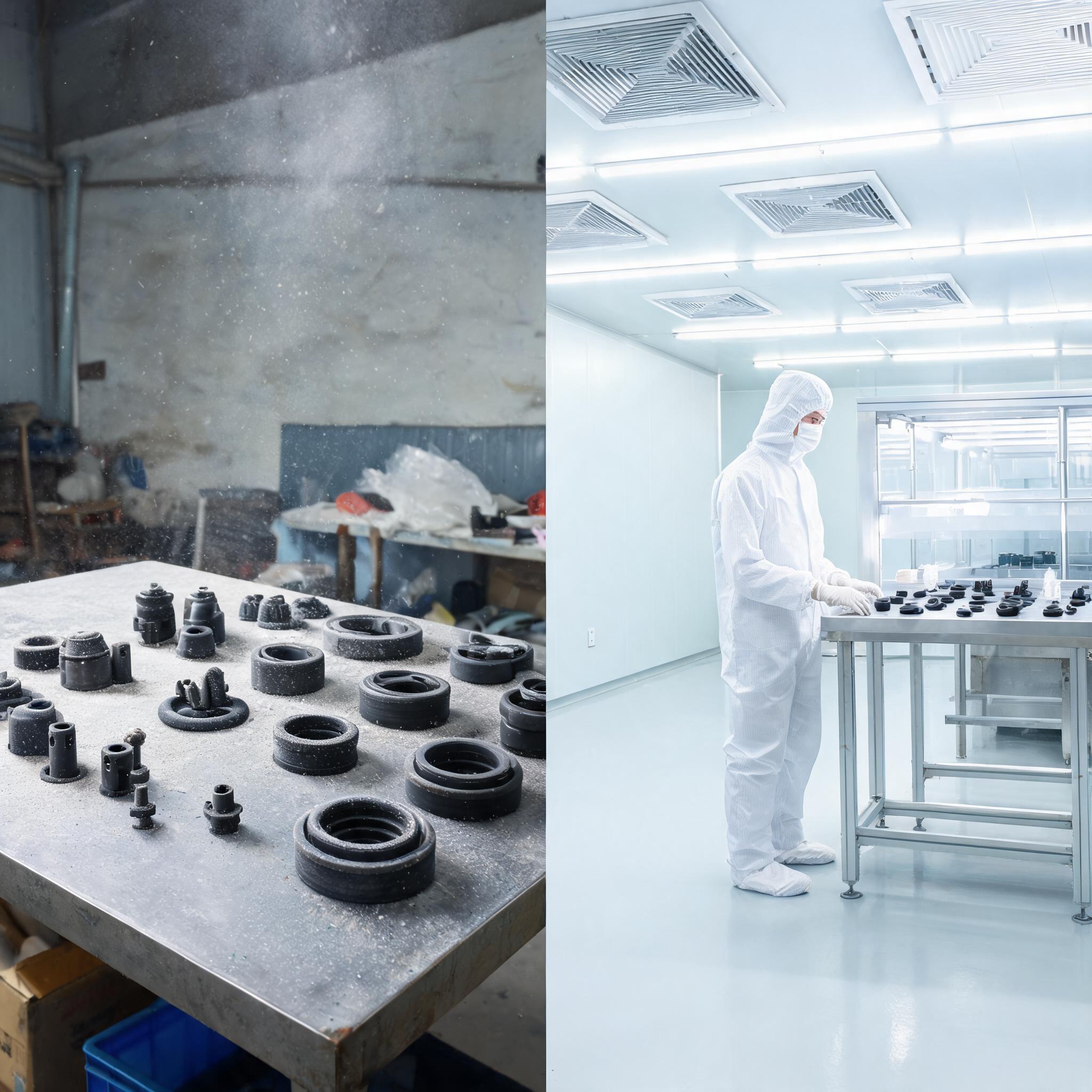
By comparison, a typical non-cleanroom manufacturing workspace has an average of 1,000,000 to 5,000,000 particles of 0.5μm or larger per cubic foot — 10 to 50 times the limit of a Class 100000 cleanroom. Even a "swept and cleaned" conventional workshop far exceeds the particulate count required for precision LSR production.
Our cleanroom is purpose-built for LSR injection molding, with design features tailored to the unique requirements of liquid silicone processing:
LSR itself is an inert, biocompatible material, but the properties that make it ideal for high-performance applications also make it highly susceptible to contamination in production. For precision LSR parts, even micro-level contaminants can cause complete functional failure or regulatory non-compliance.
Precision LSR components often have dimensional tolerances ranging from ±0.01mm to ±0.05mm, depending on the application. A single particulate of 5-10μm can embed in the LSR surface during injection molding, creating a bump, void, or uneven surface that pushes the part out of tolerance. For applications like LSR seals for smartphone cameras or medical catheter gaskets, this deviation is enough to cause functional failure.
For example, an LSR waterproof seal for a wearable fitness tracker requires a completely smooth surface to maintain consistent compression against the device housing. A 10μm embedded particulate can create a micro gap that allows water ingress, compromising the device's IP67 rating. In a conventional workshop, these contaminants are nearly impossible to avoid: dust from raw material packaging, skin flakes from personnel, fiber from clothing, and grinding debris from nearby machinery all circulate in the air and settle on mold surfaces or liquid LSR before curing.
In our Class 100000 cleanroom, we reduce the risk of such defects by over 95% compared to open workshop production. Below is data from internal defect rate testing we conducted over a 3-month production run of 50,000 precision LSR watch seals:
This data clearly demonstrates the impact of production environment on final part quality. For high-volume precision LSR production, even a 2% reduction in reject rate translates to significant cost savings for both our factory and our customers.
LSR is selected for critical applications specifically for its inherent properties: biocompatibility for medical use, non-toxicity for food contact, and chemical stability for automotive underhood components. Any foreign contamination introduced during production can negate these properties, leading to regulatory non-compliance or safety risks.
For medical-grade LSR components (such as surgical instrument grips, implantable gaskets, or baby bottle nipples), surface contamination from bacteria, dust, or chemical residues can cause adverse patient reactions or fail biocompatibility testing per ISO 10993 standards. For food-contact LSR parts, unexpected contaminants can lead to failure of migration testing required by the FDA or EU Regulation 10/2011.
In automotive and electronics applications, organic or inorganic contaminants can also accelerate material degradation. Particulates with high metal content can catalyze oxidative degradation of LSR, reducing the part's service life from 10+ years to less than 2 years. Even non-reactive contaminants can interfere with LSR-to-plastic or LSR-to-metal overmolding adhesion, leading to delamination and part failure in use.
Class 100000 cleanroom production eliminates these risks by controlling not just particulate count, but also microbial contamination. The consistent HEPA filtration and regular sanitation protocols we follow at 橡楚(湖北)橡胶有限公司 keep microbial levels well within the limits required for medical and food-grade LSR applications, with no additional post-production sterilization required for most use cases.
Beyond particulate contamination, uncontrolled ambient conditions in conventional workshops also create consistent processing issues for LSR injection molding. LSR is a two-part liquid system that cures via platinum-catalyzed crosslinking, and the curing rate is highly sensitive to both temperature and humidity.
A Class 100000 cleanroom includes integrated HVAC systems that maintain consistent temperature and humidity within narrow ranges, eliminating these processing variables. At 橡楚(湖北)橡胶有限公司, we log temperature and humidity data 24/7, with automated alarms for any deviations outside our controlled range. This consistency ensures that every LSR part we produce matches the same mechanical and dimensional specifications, regardless of when it is manufactured.
A common question from customers is why we selected Class 100000, rather than a stricter Class 10000 or Class 1000 cleanroom, or a lower class cleanroom. The answer is simple: Class 100000 meets the actual requirements of nearly all precision LSR applications, without adding unnecessary production costs that get passed to customers.
Not all LSR parts require the same level of environmental control. Below we break down which applications benefit from Class 100000 production, and when other classifications may be considered:
For over 90% of the precision LSR components we produce at 橡楚(湖北)橡胶有限公司, Class 100000 cleanroom production fully meets all customer requirements for quality, regulatory compliance, and functional performance. Building a cleaner Class 10000 or Class 1000 cleanroom would add 30-50% to our production costs, with no tangible benefit for most applications. A lower-class cleanroom, on the other hand, would fail to meet the contamination control requirements for precision parts, leading to higher reject rates and customer quality issues.
There are two common misconceptions we encounter when discussing cleanroom production with customers, and we want to clarify them here:
This is not true. A poorly maintained Class 100000 cleanroom that does not actually meet particulate limits offers no benefit over a well-managed conventional workshop. At 橡楚(湖北)橡胶有限公司, we conduct monthly third-party testing to verify our cleanroom maintains Class 100000 standards, and we hold ISO 9001 certification for our quality management system to ensure consistent protocols are followed.
While surface cleaning can remove some loose contaminants from finished LSR parts, it cannot remove contaminants that are embedded in the LSR matrix during curing. Embedded particulates will remain in the part forever, and can leach out over time or cause surface defects that post-processing cannot fix. For precision parts with tight tolerances, post-grinding or polishing to remove embedded contaminants often changes the part dimensions enough to push it out of specification. Cleanroom production prevents contamination before it becomes part of the finished part, which is far more effective than any post-production remediation.
At 橡楚(湖北)橡胶有限公司, our decision to build a Class 100000 cleanroom was rooted in our commitment to delivering precision LSR parts that meet customer requirements at a fair, competitive price. We do not overinvest in unnecessary cleanroom classification to market our capabilities, nor do we cut corners on environmental control that would compromise quality.
To ensure our Class 100000 cleanroom consistently meets requirements, we have implemented the following standard operating procedures:
All our production processes, including cleanroom operations, are managed under our ISO 9001 certified quality management system, which ensures consistent process control and traceability for every production batch. We are able to provide full traceability from raw material to finished part, and cleanroom compliance documentation for regulatory submissions for medical, food, and automotive customers.
If you have questions about our cleanroom production capabilities, or would like to discuss your precision LSR component requirements, you can contact us at:
The decision by 橡楚(湖北)橡胶有限公司 to invest in a Class 100000 cleanroom is not a superficial marketing choice, but a technical response to the actual requirements of precision LSR component production. Precision LSR parts require strict control of airborne particulates, temperature, humidity, and contamination to meet dimensional tolerance requirements, preserve key functional properties like biocompatibility and non-toxicity, and ensure consistent processing across production runs.
Class 100000 (ISO Class 8) strikes the ideal balance for most precision LSR applications: it provides the level of contamination and environmental control required for medical, automotive, electronics, and food-contact applications, without adding unnecessary production costs that would make parts less affordable for customers. For lower-precision general industrial LSR parts, cleanroom production is often not required, but for any application demanding tight tolerances and low contamination, Class 100000 is the proven, cost-effective standard.
At 橡楚(湖北)橡胶有限公司, we remain committed to matching our production infrastructure to the actual needs of our customers, delivering high-quality precision LSR components that meet all performance and regulatory requirements. Our Class 100000 cleanroom is just one part of our commitment to quality, supported by our ISO 9001 quality management system and years of experience in LSR injection molding for global export markets.