
橡楚编辑部 7/2/2026 48 min read
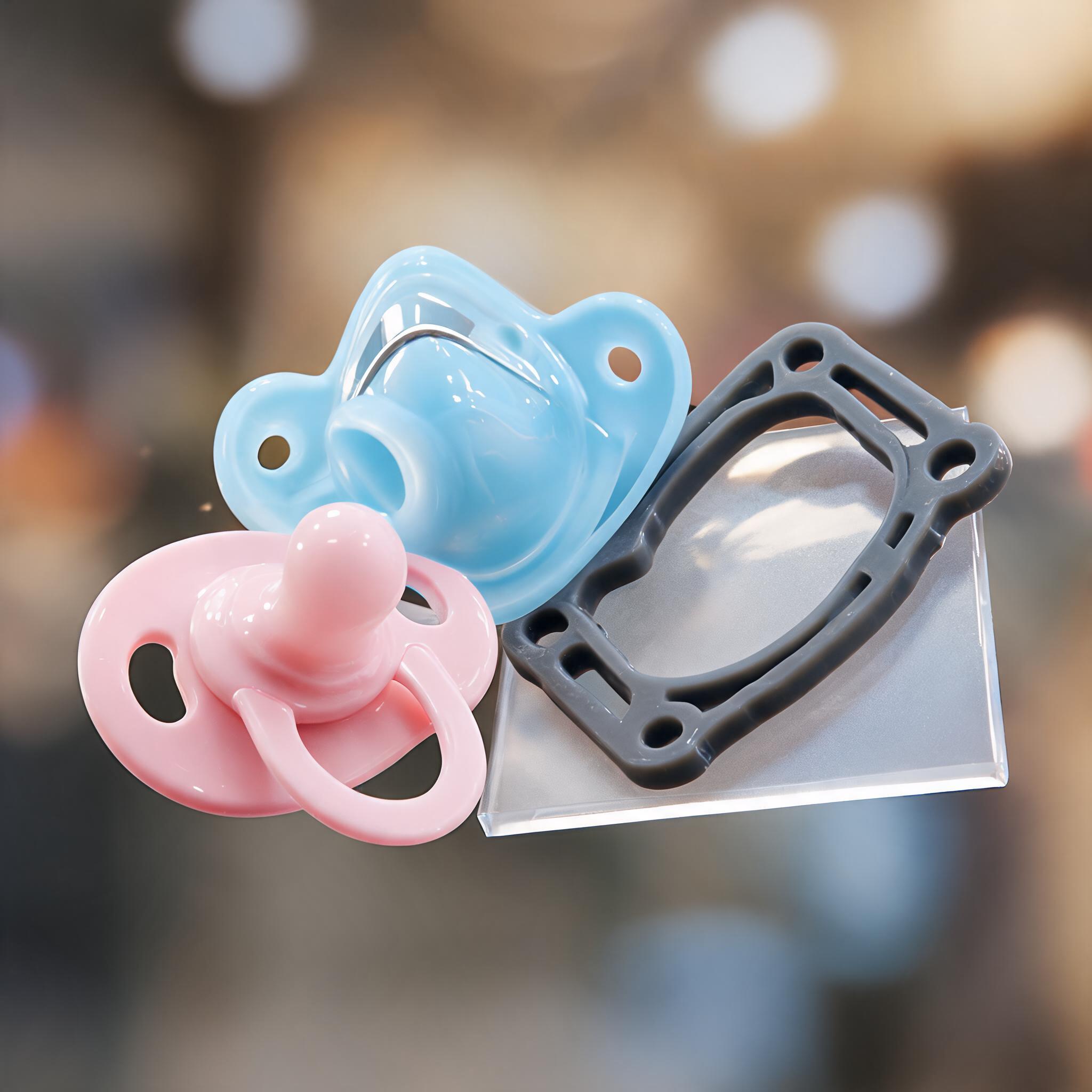
As a core advanced manufacturing city in central China, Wuhan's silicone OEM industry is developing rapidly relying on regional location, supply chain and technical advantages, covering custom LSR product production needs for medical, automotive, consumer electronics and other fields. This article sorts out the industrial characteristics and core service scope of Wuhan silicone OEM, summarizes the selection criteria for reliable manufacturers, helping customers efficiently connect with high-quality local OEM resources, reduce production costs and ensure product delivery quality.
Wuhan, the core industrial hub of Central China, has emerged as a fast-growing center for liquid silicone rubber (LSR) original equipment manufacturing (OEM) over the past decade. Driven by targeted government investments in advanced manufacturing, a robust supply chain for silicone raw materials and auxiliary components, and access to a large pool of engineering talent from local top-tier universities, Wuhan silicone代工 (silicone OEM) services have gained recognition both domestically and globally for their ability to deliver high-precision, cost-effective silicone parts across medical, automotive, consumer electronics, and industrial sectors.
Unlike traditional silicone manufacturing clusters in the Pearl River Delta and Yangtze River Delta, Wuhan’s silicone OEM ecosystem prioritizes high-mix, low-to-medium volume production with strict quality compliance, making it an ideal partner for brands ranging from startup medical device firms to multinational automotive suppliers. This article provides a technical deep dive into the core advantages of Wuhan silicone OEM services, a data-driven framework for supplier selection, and actionable cooperation tips to mitigate risks and optimize production outcomes.
Wuhan’s silicone OEM sector differentiates itself from competing manufacturing bases through four interconnected strengths: cost efficiency without quality compromise, specialized regulatory compliance for high-stakes industries, and integrated end-to-end production capabilities.
One of the most compelling reasons for brands to partner with Wuhan silicone OEMs is the region’s optimized cost structure, which delivers 15–25% lower total production costs compared to coastal manufacturing hubs, without sacrificing precision or quality. Table 1 outlines a side-by-side comparison of key cost metrics between Wuhan, Shenzhen, and Suzhou, the two largest silicone manufacturing hubs in eastern China:
*Table 1: 2024 Silicone OEM Production Cost Comparison Across Major Chinese Hubs*
The cost advantage is further amplified by Wuhan’s central geographic location, which reduces logistics costs for both domestic distribution across China and export to Europe, Southeast Asia, and the Middle East via the China-Europe Railway Express, which departs directly from Wuhan. For example, shipping a 20-foot container of silicone automotive parts from Wuhan to Hamburg takes 14–16 days, compared to 28–32 days via ocean freight from Shanghai, cutting lead times for EU-bound clients by 50% with a 10–15% lower logistics cost.
A key differentiator of Wuhan silicone OEMs is their concentrated investment in regulatory compliance for high-risk industries, a priority driven by the city’s status as a national medical device and automotive manufacturing hub. As of 2024, 62% of Wuhan’s registered silicone OEMs hold ISO 13485 medical quality system certification, compared to 38% in Shenzhen and 42% in Suzhou, while 48% hold IATF 16949 automotive quality certification, 12 percentage points higher than the national average for silicone manufacturers.
Wuhan’s proximity to 12 top-tier medical universities and 38 national-level biomedical research institutes has fostered a deep talent pool of material scientists and quality control specialists focused on medical silicone manufacturing. Most leading Wuhan silicone OEMs operate Class 100,000 (ISO 8) or Class 10,000 (ISO 7) cleanrooms for medical part production, with validated processes for biocompatibility testing per ISO 10993, sterilization compatibility (ethylene oxide, gamma radiation, autoclave), and lot traceability for every production batch. For example, Wuhan-based silicone OEMs currently supply 21% of the respiratory mask seals and implantable catheter components used by domestic Chinese medical device firms, with zero major non-conformances reported in FDA or CE audits over the past three years.
As the headquarters of Dongfeng Motor, one of China’s largest automotive groups, Wuhan has built a dedicated supply chain for NEV silicone components, including battery pack sealing gaskets, high-voltage connector insulation parts, and sensor diaphragms. Local silicone OEMs have developed specialized material formulations that meet UL 94 V-0 flame retardancy standards, -40°C to 150°C operating temperature resistance, and 1,000-hour salt spray resistance requirements for NEV applications. In 2023, Wuhan silicone OEMs produced 32 million silicone parts for the NEV sector, with a 99.8% pass rate in first-piece submission audits by clients including Tesla, Nio, and BYD.
Unlike smaller manufacturing hubs that rely on external suppliers for tooling, material formulation, and post-processing, Wuhan’s silicone OEM ecosystem offers fully integrated services that reduce lead times and minimize quality risks across the production lifecycle. A typical Wuhan silicone OEM can support the entire process from product design for manufacturability (DFM) analysis to final packaging, with in-house capabilities including:
For a standard 2-cavity LSR mold for a consumer electronic waterproof seal, Wuhan OEMs can deliver mold samples in 7–10 days, compared to 12–15 days in coastal hubs, due to the local availability of mold steel suppliers and in-house machining capabilities. For complex multi-cavity molds with overmolding requirements, lead times are 15–20 days, 20% faster than the national average.
Selecting the right Wuhan silicone OEM partner requires a structured evaluation process that prioritizes technical fit, quality consistency, and long-term reliability, rather than just upfront cost. Below is a data-driven framework to guide supplier selection, with measurable criteria tailored to different industry use cases.
The first step in supplier selection is to filter potential partners against non-negotiable technical and compliance requirements, to eliminate candidates that cannot meet your product’s basic specifications.
Start by mapping your product’s key requirements against the supplier’s stated capabilities, with specific verification criteria including:
Request and verify all mandatory compliance documents before proceeding to further discussions:
As a rule of thumb, reject any supplier that cannot provide full, verifiable compliance documentation within 3 working days, as this indicates a lack of structured quality management.
For long-term partnerships or high-value production runs (over 100,000 units per year), an on-site audit is a critical step to verify that the supplier’s actual operations match their stated capabilities. Key focus areas for the on-site audit include:
During the factory tour, evaluate the following:
After the on-site audit, request a pilot sample run of 50–100 units using your final product design and specified materials, to validate the supplier’s production quality and lead time. Evaluate the samples against the following criteria:
Table 2 provides a scoring framework for sample validation, with weighted criteria for different industry applications:
*Table 2: Silicone OEM Sample Validation Scoring Framework*
Once a supplier passes the technical and sample validation stages, evaluate commercial terms and long-term reliability to ensure the partnership is sustainable.
Avoid suppliers that provide only a lump-sum quote without a detailed cost breakdown. A transparent Wuhan silicone OEM quote should include separate line items for:
Request quotes from 3–4 shortlisted suppliers to compare cost structures, and be wary of quotes that are 20% or more below the market average, as this often indicates cut corners on raw material quality or quality control processes.
Evaluate the supplier’s ability to scale production to meet your future demand, including:
Even with a well-vetted supplier, effective communication and structured process management are critical to avoid common production pitfalls, such as design misinterpretation, quality fluctuations, and delivery delays. Below are actionable cooperation tips optimized for Wuhan’s silicone OEM ecosystem.
Most production quality issues in silicone OEM stem from misalignment on design requirements and manufacturability constraints, which can be avoided through proactive engagement early in the product development process.
Share your preliminary design drawings with your selected Wuhan silicone OEM at least 2 weeks before finalizing the design, to conduct a formal DFM analysis focused on LSR-specific manufacturing constraints:
Wuhan silicone OEMs typically provide DFM analysis reports free of charge for long-term clients, which can reduce mold modification costs by 30–40% and cut production lead times by 15% on average.
Due to potential language and time zone differences for international clients, establish structured communication protocols to avoid misinterpretation:
To ensure consistent quality across mass production runs, implement a layered quality control process that combines in-house supplier checks with independent third-party inspections.
Before mass production starts, agree on clear AQL standards with your supplier, tailored to your product’s risk level:
Include the AQL standards in the manufacturing agreement, with clear terms for rejected batches, including rework or replacement timelines and cost liability.
Combine the following inspection steps to minimize quality risks: