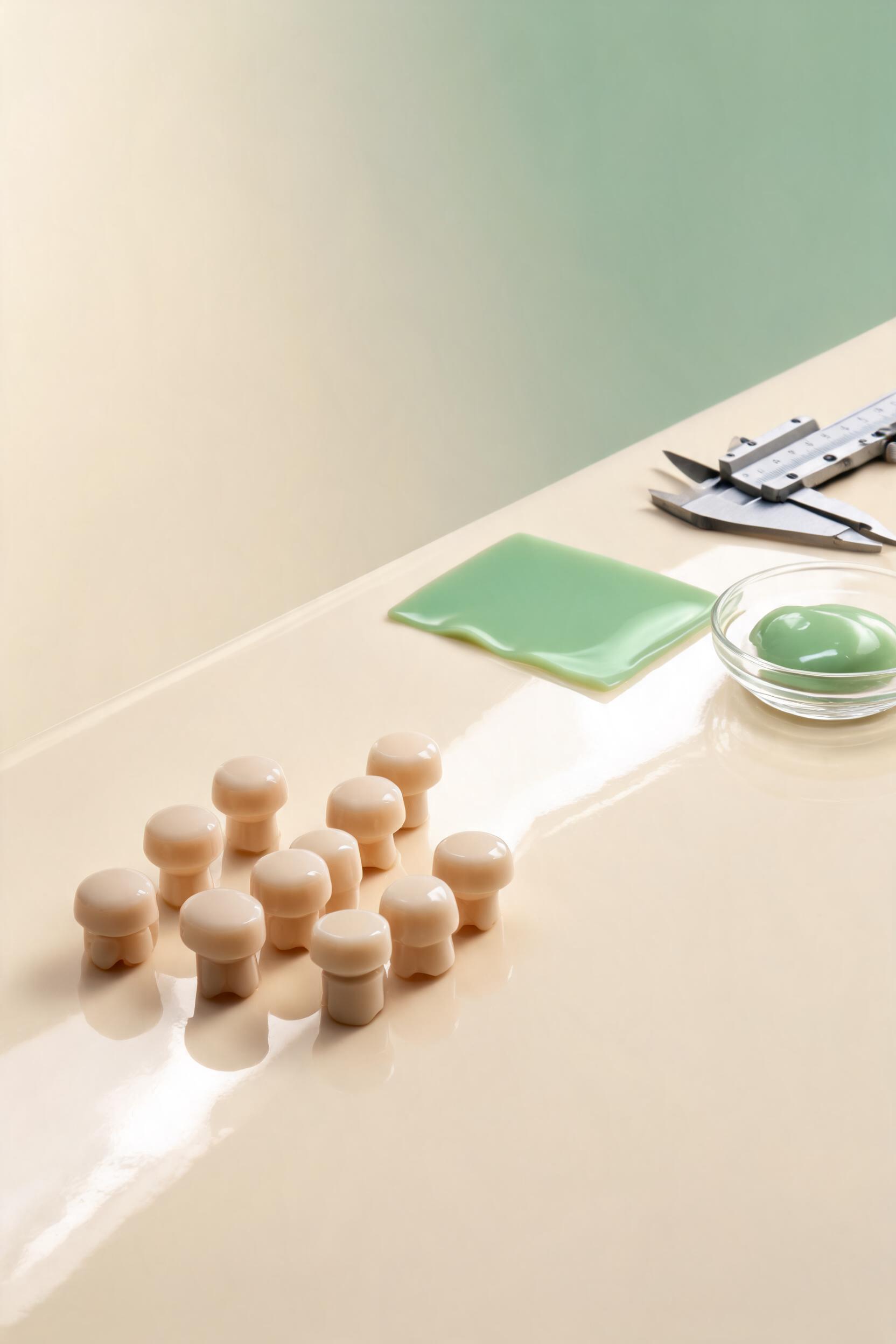
Liquid silicone rubber (LSR) waterproof plugs have become critical sealing components for modern electronic devices, enabling compliance with IP (Ingress Protection) standards ranging from IPX4 for splash-resistant wearables to IPX8 for submersible industrial sensors. Unlike traditional thermoplastic elastomer (TPE) or neoprene seals, LSR-based electronic device waterproof silicone plugs offer a unique combination of low compression set, broad temperature resistance, and chemical inertness, making them suitable for harsh operating environments spanning consumer electronics, automotive, and industrial IoT sectors. As device miniaturization accelerates and durability requirements grow, the design, material selection, and performance validation of these plugs have emerged as key differentiators for product reliability. This analysis provides a technical deep dive into material formulations, structural design optimization, manufacturing process controls, and validation protocols for electronic device waterproof silicone plugs, with actionable insights for engineering teams aiming to enhance product sealing performance and service life.
Material Formulation and Performance Characteristics of LSR for Waterproof Plugs
The performance of electronic device waterproof silicone plugs is directly determined by the base LSR formulation and targeted compound modifications, which are tailored to meet application-specific environmental and mechanical requirements.
Base LSR Formulation and Property Tuning
Standard LSR for waterproof plugs is a two-part addition-curing system consisting of vinyl-terminated polydimethylsiloxane (PDMS) polymer, fumed silica reinforcing filler, a hydride crosslinking agent, and a platinum-based catalyst. The mechanical and sealing properties of the final part are adjusted by modifying the polymer molecular weight, filler loading, and crosslink density:
- Shore Hardness Adjustment: For most consumer electronics applications, plugs are formulated to a Shore A hardness of 30–50, balancing compression force for easy assembly and sufficient seal pressure. For high-vibration automotive applications, 60–70 Shore A formulations are preferred to resist displacement under mechanical stress.
- Filler Loading Optimization: Fumed silica loading typically ranges from 15–35 wt%. Higher loading improves tensile strength and tear resistance but increases material viscosity, requiring higher injection pressures during manufacturing. For micro-sized plugs used in true wireless stereo (TWS) earbuds, 20–25 wt% filler loading is standard to achieve a 5–7 MPa tensile strength and 15–20 kN/m tear resistance while supporting complex micro-mold filling.
- Low Compression Set Additives: Formulations for long-term sealing applications incorporate 2–5 wt% of hydrogen-containing silicone oil as a post-cure modifier, reducing compression set from the standard 10–15% (at 70°C for 22 hours) to <5% for 10-year service life requirements.
Table 1 compares key performance parameters of standard LSR, modified high-performance LSR, and competing sealing materials for waterproof plug applications:
Material TypeShore Hardness (A)Tensile Strength (MPa)Compression Set (70°C, 22h, %)Operating Temperature Range (°C)IP Rating CapabilityTypical Service Life (Years)
Standard LSR30–704.5–88–15-50 to 200IPX4–IPX73–5
Modified High-Performance LSR30–707–122–5-60 to 230IPX6–IPX88–12
TPE40–805–1020–30-40 to 120IPX4–IPX62–3
Neoprene50–806–1215–25-30 to 100IPX5–IPX71–2
Specialized Formulations for Niche Application Requirements
For use cases with extreme operating conditions, modified LSR formulations address specific performance gaps that standard grades cannot meet:
- Flame-Retardant Formulations: For automotive and industrial electronics requiring UL94 V-0 certification, LSR is compounded with 3–8 wt% of platinum-based flame retardants, which achieve self-extinguishing properties without compromising flexibility or compression set. These formulations meet FMVSS 302 automotive flammability standards while maintaining IPX8 sealing performance after 1,000 hours of 125°C thermal aging.
- Chemical-Resistant Formulations: For outdoor sensors and marine electronics exposed to gasoline, cleaning agents, or saltwater, LSR is modified with fluorinated side chains in the PDMS backbone. These fluorinated LSR grades exhibit <1% swelling after 1,000 hours of immersion in 5% NaCl solution, compared to 5–7% swelling for standard LSR.
- UV-Stabilized Formulations: For outdoor devices such as security cameras and solar panel sensors, 1–3 wt% of hindered amine light stabilizers (HALS) and UV absorbers are added to the formulation, reducing surface cracking and property degradation after 5,000 hours of accelerated UV exposure (QUV-A 340 nm, 0.89 W/m² irradiation).
Structural Design Optimization for Reliable Sealing Performance
The sealing effectiveness of electronic device waterproof silicone plugs depends not only on material properties but also on structural design that accounts for assembly force, interference fit, and long-term stress relaxation.
Core Sealing Feature Design
The primary sealing mechanism of LSR plugs relies on controlled contact pressure between the plug and the device housing port, which is achieved via intentional interference between the plug’s sealing features and the port dimensions.
- Interference Fit Optimization: For most applications, a radial interference of 0.15–0.3 mm is specified for ports with diameters between 2 mm and 10 mm. For ports smaller than 2 mm (common in hearing aids and medical wearables), interference is reduced to 0.08–0.12 mm to avoid excessive assembly force that could damage delicate device housings. Finite element analysis (FEA) simulation is typically used to validate contact pressure distribution, with a minimum required contact pressure of 0.2 MPa across the entire sealing interface to prevent water ingress under IPX8 test conditions (1.5 m depth for 30 minutes).
- Sealing Rib Geometry: Most plugs incorporate 1–3 circumferential sealing ribs (O-ring style protrusions) to concentrate contact pressure. Ribs with a semicircular cross-section of 0.3–0.5 mm radius are preferred for dynamic applications (plugs that are regularly removed and reinserted, such as charging port plugs), as they reduce insertion force by 20–30% compared to rectangular ribs. For static applications (sealing unused internal port openings), rectangular ribs with 0.2 mm radius edges provide higher contact pressure and improved resistance to pressure fluctuations.
- Retention Features: To prevent plug dislodgement under vibration or thermal expansion, design features such as undercuts, barbed edges, or snap-fit tabs are integrated into the plug body. For automotive electronics subjected to 10–2000 Hz vibration testing, barbed retention features with 0.2 mm depth reduce displacement risk by 95% compared to smooth plug bodies.
Design for Manufacturability and Usability
Balancing sealing performance with manufacturing feasibility and end-user usability is a core challenge in plug design, particularly for high-volume consumer electronics applications.
- Draft Angle and Ejection Design: LSR parts require draft angles of 1–3° for easy demolding, depending on the part depth. For plugs with complex retention features, 3–5° draft angles are specified to avoid tearing during ejection from the mold. Textured surface finishes (Ra 1.6–3.2 μm) are often added to the plug’s grip area to improve user handling, while sealing surfaces are polished to Ra <0.4 μm to eliminate gaps that could cause leakage.
- Assembly Force Tuning: Insertion force for user-accessible plugs (such as USB-C charging port plugs) is typically specified between 5 N and 15 N to ensure a secure fit without requiring excessive user effort. Removal force is targeted at 3–10 N, adjusted via the number of sealing ribs and interference fit. For example, a 6 mm diameter USB-C plug with two 0.4 mm radius sealing ribs and 0.2 mm interference delivers an insertion force of 8–12 N, meeting consumer usability requirements.
- Thermal Expansion Compensation: The coefficient of thermal expansion (CTE) of LSR is approximately 200–250 ppm/°C, significantly higher than plastic housing materials (ABS: 70–110 ppm/°C, polycarbonate: 60–80 ppm/°C). To maintain sealing performance across -40°C to 85°C operating temperatures, the interference fit is designed to compensate for CTE mismatch: at the maximum operating temperature, LSR expansion increases contact pressure by no more than 30% to avoid over-compression and accelerated stress relaxation, while at the minimum temperature, contact pressure remains above the 0.2 MPa threshold to prevent leakage.
Manufacturing Process Control for Consistent Plug Quality
LSR injection molding is the dominant manufacturing process for electronic device waterproof silicone plugs, with strict process controls required to ensure consistent dimensional accuracy and sealing performance across high-volume production runs.
Precision Injection Molding Process Parameters
LSR molding is a low-temperature, high-pressure process that requires precise control of material metering, temperature, and curing time to avoid defects such as short shots, flash, or under-curing that compromise sealing performance.
- Metering and Mixing: The two-part LSR components (A and B) are metered at a 1:1 ratio with ±0.5% accuracy, using a static mixer to ensure uniform dispersion of catalyst and crosslinking agent. For micro-plugs with part weights <0.1 g, screw diameters of 14–18 mm are used to reduce shot volume variation, with metering accuracy controlled to ±0.001 g to avoid dimensional deviations.
- Mold Temperature and Curing Time: Mold temperatures are typically set between 150°C and 180°C, with curing time ranging from 10–30 seconds depending on part thickness. For plugs with wall thickness <0.5 mm, a 170°C mold temperature and 12-second cure time are standard, ensuring full crosslinking without scorching. In-line cure monitoring via Fourier-transform infrared (FTIR) spectroscopy is used for high-volume production lines, verifying crosslink density to within ±2% of target values.
- Injection Pressure and Speed: LSR has a low viscosity (10,000–100,000 cP before curing), so injection speeds of 50–150 mm/s are used to fill micro-mold cavities before curing begins. Injection pressure ranges from 50–150 bar, adjusted based on material viscosity and part complexity. For micro-plugs with 0.1 mm sealing ribs, injection pressure is increased to 120–150 bar to ensure complete rib filling, with in-cavity pressure sensors monitoring filling consistency across every shot.
Quality Control and Defect Mitigation
Even with optimized process parameters, inherent LSR molding challenges such as flash and dimensional variation require rigorous quality control to prevent defective plugs from reaching assembly lines.
- Dimensional Inspection: Critical sealing dimensions (sealing rib diameter, overall plug length, retention feature depth) are inspected via optical coordinate measuring machines (CMM) with ±0.005 mm accuracy, with a sample size of 5 parts per production hour. For high-volume production runs of >1 million parts per month, automated machine vision inspection systems are deployed to conduct 100% inspection of critical dimensions, reducing defect escape rates to <1 ppm.
- Flash Control: Flash (excess LSR at mold parting lines) is a common defect that can compromise sealing performance if present on sealing surfaces. To mitigate flash, mold parting lines are precision machined to a <0.005 mm gap, with venting channels of 0.003–0.005 mm depth to allow air escape without LSR leakage. Post-molding deflashing via cryogenic tumbling is used for high-volume production, removing flash without damaging delicate sealing ribs.
- In-Line Leak Testing: 100% of finished plugs undergo air leak testing before shipment, with test conditions tailored to the target IP rating. For IPX8-rated plugs, a pressure decay test is conducted at 15 kPa (equivalent to 1.5 m water depth) for 10 seconds, with a maximum allowable pressure drop of 10 Pa to qualify as non-leaking. For plugs intended for high-pressure applications (submersible cameras rated for 10 m depth), leak testing is conducted at 100 kPa for 30 seconds, with a maximum pressure drop of 20 Pa.
Performance Validation and Accelerated Life Testing
Validating the long-term sealing performance of electronic device waterproof silicone plugs requires a combination of standardized IP testing and application-specific accelerated aging protocols that simulate real-world operating conditions.
Standard Ingress Protection and Mechanical Testing
All waterproof plugs must undergo baseline performance testing to validate compliance with IEC 60529 IP standards and mechanical durability requirements:
- IP Rating Validation: IPX4 testing involves splashing water at 10 L/min from all directions for 10 minutes, with no water ingress allowed into the device housing. IPX7 testing requires immersion in 1 m of water for 30 minutes, while IPX8 testing is conducted at a customer-specified depth (typically 1.5–10 m) for 24 hours, with post-test electrical continuity testing to confirm no water penetration.
- Insertion/Removal Cycle Testing: For dynamic plugs that are regularly accessed by users, durability testing involves 500–5,000 insertion/removal cycles, with sealing performance validated after the final cycle. High-performance plugs for industrial applications typically survive >10,000 cycles with <10% change in insertion force and no leakage, while consumer-grade plugs are rated for 500–1,000 cycles.
- Temperature and Humidity Cycling: Plugs are subjected to 100–1,000 cycles of -40°C to 85°C temperature cycling (30 minutes dwell time at each extreme, 15 °C/min transition rate) and 1,000 hours of 85°C/85% RH (relative humidity) accelerated aging. Post-test compression set must remain <15% for standard plugs and <7% for high-performance plugs to maintain sealing integrity.
Application-Specific Environmental Testing
For use cases in harsh operating environments, additional testing is conducted to validate performance under industry-specific conditions:
- Automotive Testing: Plugs for automotive electronics undergo 1,000 hours of thermal aging at 125°C, 1,000 hours of salt spray testing (5% NaCl solution, 35°C), and vibration testing at 10–2000 Hz, 1 g RMS acceleration across three axes. No dislodgement or leakage is allowed after testing, and compression set must remain <8%.
- Wearable Testing: Plugs for smartwatches and fitness trackers are tested for resistance to sweat (simulated via pH 4.3 acidic solution containing 0.5% NaCl and 0.1% lactic acid) and common skincare products (sunscreen, hand sanitizer) for 1,000 hours. No swelling >2% or cracking is allowed, and sealing performance must meet IPX8 requirements post-exposure.
- Industrial IoT Testing: Plugs for outdoor industrial sensors undergo 5,000 hours of UV exposure (QUV-A 340 nm) and 1,000 cycles of temperature/humidity cycling from -40°C to 125°C at 90% RH. Tensile strength retention must be >80% of initial values, and no surface cracking is allowed.
Conclusion
Electronic device waterproof silicone plugs are high-precision sealing components that require careful integration of material formulation, structural design, manufacturing process control, and performance validation to deliver reliable long-term sealing. Modified LSR formulations with tailored hardness, low compression set, and environmental resistance enable plugs to meet a wide range of application requirements, from consumer wearables to industrial IoT sensors. Design optimization of interference fits, sealing ribs, and retention features ensures consistent contact pressure across the sealing interface, while precision LSR injection molding with in-line quality control delivers dimensional accuracy of ±0.01 mm and defect rates <1 ppm for high-volume production. Rigorous validation via IP testing, accelerated aging, and application-specific environmental testing ensures that plugs maintain sealing performance for 3–12 years of service life, depending on operating conditions.
As electronic devices continue to miniaturize and expand into harsher operating environments, future development of waterproof silicone plugs will focus on three key areas: self-healing LSR formulations that automatically repair micro-cracks from mechanical damage, overmolded plug-and-housing assemblies that reduce assembly complexity and improve sealing reliability, and recyclable LSR grades that support circular economy goals for electronic products. For engineering teams, selecting the right LSR formulation, optimizing plug design for both performance and manufacturability, and implementing strict process and quality controls are critical to achieving robust waterproof sealing and reducing field failure rates.