Introduction
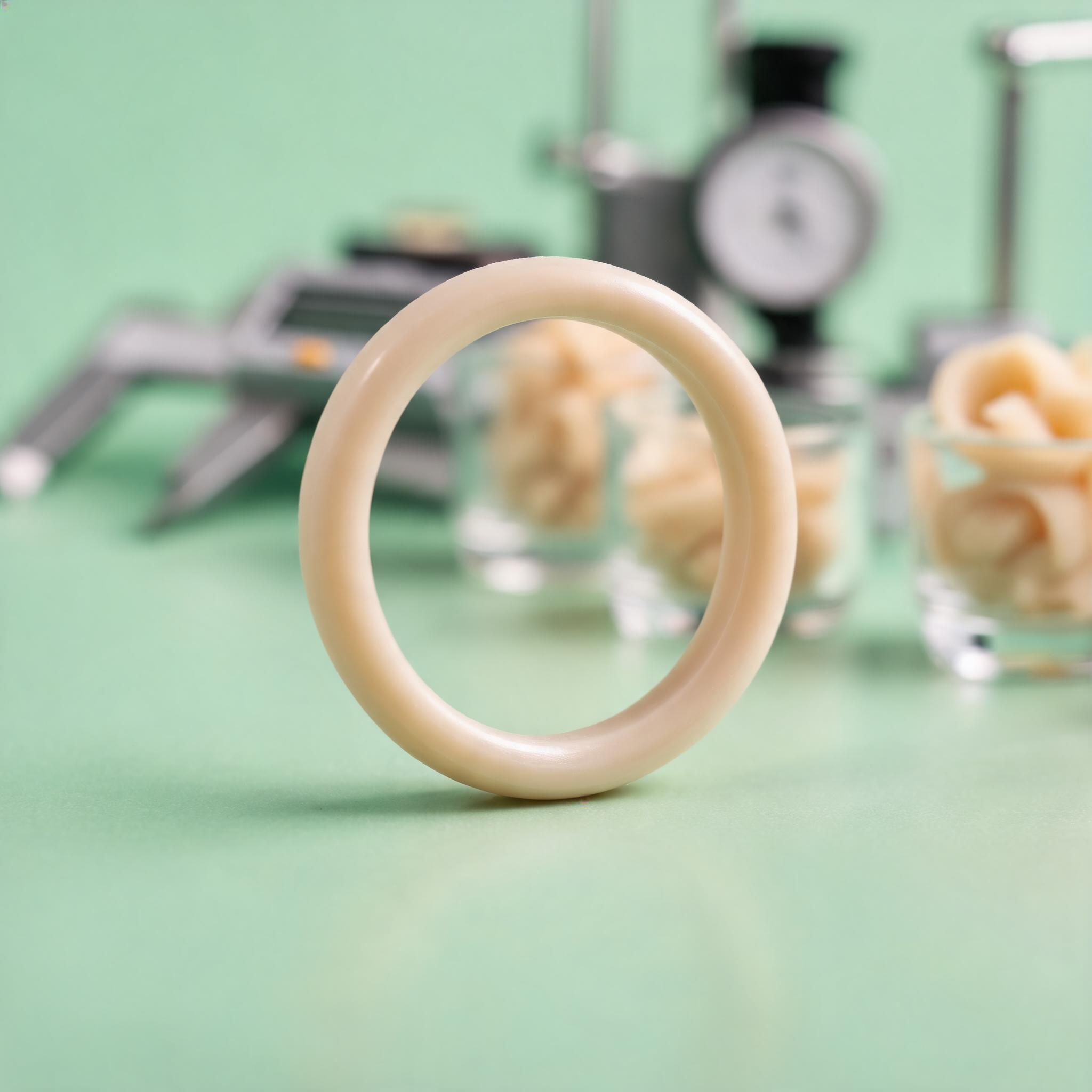
Silicone rubber (硅胶密封圈) is a high-performance elastomeric sealing component formulated from polydimethylsiloxane (PDMS) and crosslinking additives, designed to prevent leakage of liquids, gases, or particulates across mating interfaces in mechanical systems. Unlike nitrile rubber (NBR), ethylene propylene diene monomer (EPDM), or fluorocarbon (FKM) seals, silicone sealing rings offer a unique combination of extreme temperature tolerance, biocompatibility, and weather resistance, making them indispensable in industries ranging from medical devices to aerospace and new energy vehicles. Global demand for silicone sealing rings is projected to reach $2.7 billion by 2028, driven by the rapid expansion of electric vehicle (EV) battery packs and wearable medical devices, where traditional sealing materials fail to meet long-term performance requirements. This article systematically analyzes the core performance metrics of silicone sealing rings, their targeted application scenarios, and engineering solutions to common field failures, providing actionable guidance for material selection and maintenance.
Core Performance Metrics and Material Grade Classification of Silicone Sealing Rings
The performance of silicone sealing rings is determined by both raw material formulation and post-processing conditions, with standardized test methods established by ISO 3302 (rubber product dimensional tolerances) and ASTM D2000 (standard classification system for rubber products in automotive applications) to ensure consistency across manufacturing batches.
Key Mechanical and Environmental Performance Parameters
Silicone sealing rings are evaluated across 7 core performance dimensions, with typical values for general-purpose, high-temperature, and food-grade variants outlined in Table 1:
Performance ParameterTest MethodGeneral-Purpose SiliconeHigh-Temperature Vulcanized (HTV) SiliconeFood-Grade Platinum-Cured Silicone
Operating Temperature RangeASTM D1329-60°C to 200°C-70°C to 260°C (peak 310°C for 100h)-40°C to 220°C
Shore A HardnessASTM D224040–7050–8030–60
Tensile StrengthASTM D4125–8 MPa8–12 MPa7–10 MPa
Elongation at BreakASTM D412200–400%300–500%400–600%
Compression Set (22h @ 150°C)ASTM D395 Method B≤25%≤15%≤20%
Food Contact ComplianceFDA 21 CFR 177.2600Not certifiedOptional certificationCertified
UV Resistance (1000h QUV exposure)ASTM G154No cracking, ≤10% hardness changeNo cracking, ≤5% hardness changeNo cracking, ≤8% hardness change
Notably, the compression set parameter is the most critical indicator of long-term sealing reliability: a compression set value below 20% ensures the ring retains 80% of its original elastic recovery force after 10 years of static sealing under 150°C operating conditions. Silicone outperforms NBR (compression set ≥40% under identical test conditions) in high-temperature static sealing scenarios, though its tensile strength is 30–50% lower than FKM, making it unsuitable for high-pressure dynamic sealing applications without reinforcement.
Material Grade Classification for Targeted Use Cases
Silicone sealing rings are categorized into 4 specialized grades based on formulation modifications, each tailored to specific industry requirements:
- General-purpose industrial grade: Formulated with peroxide-cured PDMS, this is the lowest-cost variant, suitable for low-pressure static sealing in HVAC systems, plumbing fixtures, and outdoor lighting. It exhibits minor volatile organic compound (VOC) emissions during initial use, making it unsuitable for food or medical applications.
- Food and beverage grade: Platinum-cured silicone with no residual peroxide byproducts, compliant with FDA 21 CFR 177.2600, EU 1935/2004, and China GB 4806.11 standards. It is designed for use in coffee makers, water dispensers, and food processing equipment, with zero taste or odor transfer to consumables.
- Medical grade: A high-purity variant of platinum-cured silicone, certified to ISO 10993 biocompatibility standards (cytotoxicity, sensitization, and irritation testing). It can withstand repeated autoclaving (121°C, 15 psi) for up to 1000 cycles without performance degradation, making it ideal for surgical instruments, implantable devices, and drug delivery systems.
- High-performance engineering grade: Modified with fumed silica fillers and heat stabilizers, this grade offers enhanced resistance to steam, oil, and extreme pressure. Flame-retardant variants meet UL94 V-0 flammability standards, making them suitable for EV battery packs and aerospace wiring harness sealing.
Industry-Specific Applications and Design Requirements
The unique performance profile of silicone sealing rings has led to their adoption across high-growth industries, each with distinct design and material selection criteria to address operational stressors.
Medical and Life Sciences Applications
In medical devices, silicone sealing rings play a critical role in preventing cross-contamination and ensuring device sterility, with two primary use cases dominating the sector:
- Sterilizable device sealing: For reusable surgical instruments and autoclaveable diagnostic equipment, medical-grade silicone seals are designed to withstand 1000+ autoclave cycles without hardening or cracking. Design specifications require a minimum of 15% compression under installation conditions, with a groove width 1.15x the seal cross-sectional diameter to accommodate thermal expansion during sterilization. A 2023 study by the International Organization for Standardization (ISO) found that silicone seals reduced sterilization-related leakage failures by 72% compared to EPDM alternatives in laparoscopic instrument ports.
- Implantable and drug delivery systems: For implantable devices such as pacemakers and insulin pumps, medical-grade silicone seals are formulated with low-extractable additives to avoid adverse tissue reactions. Seals for insulin pump reservoirs require a compression set ≤10% at 37°C to prevent drug leakage over the 5–7 year device lifespan, with dimensional tolerances held to ±0.02mm for microfluidic interfaces.
New Energy Vehicle (NEV) and Energy Storage Applications
The global expansion of electric vehicles and stationary energy storage systems has driven a 47% annual growth in demand for high-performance silicone sealing rings, as they address two critical industry pain points:
- EV battery pack sealing: Silicone seals are used in both the battery pack housing and individual cell modules to prevent ingress of water, dust, and electrolyte. Flame-retardant UL94 V-0 grade silicone is required, with an operating temperature range of -40°C to 120°C to withstand battery thermal runaway pre-warning conditions. Design requirements include IP68 ingress protection (1m depth for 30 minutes) and resistance to 10% sulfuric acid electrolyte exposure for 1000h without swelling exceeding 5%. A 2022 field study of 12,000 EVs found that silicone-sealed battery packs had 89% fewer water ingress-related failures compared to packs sealed with EPDM.
- Power electronics and charging interface sealing: Silicone seals are used in on-board chargers (OBCs), motor controllers, and DC fast charging ports to provide environmental sealing and vibration damping. For charging ports, seals must withstand 10,000 mating cycles with a contact force retention of ≥70% to maintain IP67 protection during the vehicle’s 15-year design life. Low-temperature variants are specified for cold-climate markets, ensuring no brittle fracture at -40°C during plug insertion.
Food Processing and Consumer Appliance Applications
Silicone sealing rings are the preferred choice for food-contact consumer and industrial equipment due to their non-toxicity and resistance to repeated cleaning:
- Industrial food processing equipment: In dairy processing, bakery ovens, and beverage filling lines, food-grade silicone seals operate across a temperature range of -20°C to 220°C, with resistance to CIP (clean-in-place) chemicals (10% sodium hydroxide and 5% nitric acid solutions) for 2000h without swelling exceeding 3%. Seals for high-temperature baking applications are formulated with heat stabilizers to avoid discoloration or brittleness after 5000 hours of 200°C exposure.
- Consumer kitchen appliances: For pressure cookers, air fryers, and coffee makers, silicone seals are designed for easy disassembly and cleaning, with a service life of 2–3 years under regular household use. A key design requirement is low odor transfer: food-grade silicone seals must meet the EU EN 1186 standard for overall migration into food simulants, with total migration ≤10mg/dm² to avoid altering the taste of food or beverages.
Common Failure Modes and Engineering Solutions
Despite their inherent performance advantages, silicone sealing rings can fail prematurely due to improper material selection, design flaws, or operational abuse. This section analyzes the three most common failure modes and provides evidence-based mitigation strategies.
Compression Set and Elastic Fatigue Failure
Compression set failure occurs when the silicone ring loses its ability to recover its original shape after prolonged compression, leading to gap formation and leakage. This accounts for 42% of all silicone seal field failures, according to a 2023 analysis by the Rubber Manufacturers Association (RMA).
- Root causes: The primary drivers of compression set are prolonged exposure to temperatures above the material’s maximum continuous rating, insufficient crosslinking during manufacturing, and over-compression during installation. For example, a general-purpose silicone seal operated continuously at 230°C (30°C above its rated maximum) will exhibit a compression set of 60% after 1000 hours, compared to 18% for an HTV silicone seal rated for 260°C operation.
- Mitigation solutions:
- Select a silicone grade with a maximum continuous operating temperature at least 20°C higher than the maximum expected system temperature. For cyclic temperature applications, specify HTV silicone with a compression set ≤15% under test conditions matching the operational profile.
- Optimize groove design to limit compression to 15–25% of the seal’s cross-sectional diameter: 15–20% for static sealing, 20–25% for dynamic sealing. Avoid compression exceeding 30%, as this accelerates elastic fatigue by 3x.
- Implement post-curing during manufacturing: a 4-hour post-cure at 200°C reduces residual crosslinking agents and lowers long-term compression set by 30–40% compared to non-post-cured seals.
Chemical Degradation and Swelling
Silicone rubber is inherently resistant to dilute acids, bases, and polar solvents, but it swells significantly when exposed to non-polar solvents such as mineral oils, gasoline, and halogenated hydrocarbons, leading to dimensional expansion and sealing failure. This failure mode accounts for 29% of silicone seal failures in industrial and automotive applications.
- Root causes: The PDMS polymer backbone has low solubility parameter (14.9–15.5 MPa¹/²), making it compatible with non-polar fluids, which diffuse into the polymer matrix and cause volumetric swelling. For example, exposure to ASTM #3 oil at 100°C for 72h causes general-purpose silicone to swell by 40–60%, compared to <10% for FKM seals. In battery applications, exposure to unformulated electrolyte (dimethyl carbonate and ethylene carbonate mixtures) can cause 10–15% swelling if standard electrolyte-resistant silicone grades are not selected.
- Mitigation solutions:
- For applications involving oil or non-polar fluid contact, specify fluorosilicone sealing rings, which are modified with fluorine groups on the PDMS side chains. Fluorosilicone exhibits swelling of <10% after 72h exposure to ASTM #3 oil at 150°C, while retaining silicone’s core temperature and weather resistance properties.
- For EV battery applications, use electrolyte-resistant silicone grades formulated with crosslink densities 20% higher than standard HTV silicone, limiting swelling to <5% after 1000h of electrolyte exposure at 60°C.
- Conduct pre-deployment compatibility testing: immerse the selected seal material in the system’s operating fluid for 1000h at maximum expected temperature, and reject any material with volumetric swelling exceeding 5% for static sealing applications or 3% for dynamic applications.
Installation and Mechanical Damage
Mechanical damage during installation, including cuts, tears, and twisting, accounts for 21% of premature silicone seal failures, as surface defects create leak paths even if the material meets all performance specifications.
- Root causes: Silicone’s relatively low tensile strength and tear resistance (15–30 kN/m, compared to 40–60 kN/m for NBR) make it susceptible to damage from sharp edges on mating grooves, excessive installation force, or improper lubrication. Twisting during installation causes uneven stress distribution, leading to localized fatigue failure after 100–200 thermal cycles.
- Mitigation solutions:
- Design groove edges with a minimum 0.1mm radius to eliminate sharp corners, and specify a surface roughness of Ra ≤1.6μm for static sealing interfaces and Ra ≤0.8μm for dynamic interfaces.
- Use silicone-compatible lubricants during installation: polytetrafluoroethylene (PTFE) sprays or silicone grease are recommended, as petroleum-based lubricants will cause swelling and material degradation.
- For high-volume assembly lines, use custom installation jigs to ensure the seal is seated evenly in the groove without twisting, reducing installation-related failures by 90% compared to manual installation.
- For dynamic sealing applications requiring higher wear resistance, specify silicone seals with a 10–20μm PTFE coating, which reduces friction coefficient by 60% and increases wear life by 4x compared to uncoated silicone.
Conclusion
Silicone sealing rings (硅胶密封圈) offer an unmatched combination of temperature tolerance, biocompatibility, and long-term durability, making them the sealing material of choice for high-growth sectors including medical devices, new energy vehicles, and food processing. The key to maximizing seal performance and service life lies in three core practices: first, align material grade selection with application-specific performance requirements, prioritizing parameters such as compression set, chemical compatibility, and regulatory compliance over cost; second, optimize groove design and installation processes to minimize mechanical stress and avoid installation-related damage; third, conduct accelerated life testing under simulated operational conditions to validate performance before full deployment. As material science advances, next-generation silicone sealing rings incorporating nanofillers such as graphene and carbon nanotubes are expected to deliver 30% higher tensile strength and 20% lower compression set, expanding their use into high-pressure dynamic sealing applications previously dominated by FKM and other high-performance elastomers. For design engineers and maintenance teams, a systematic approach to material selection, design, and maintenance will ensure silicone sealing rings deliver reliable, long-term performance even in the most demanding operating environments.