
橡楚编辑部 7/9/2026 47 min read
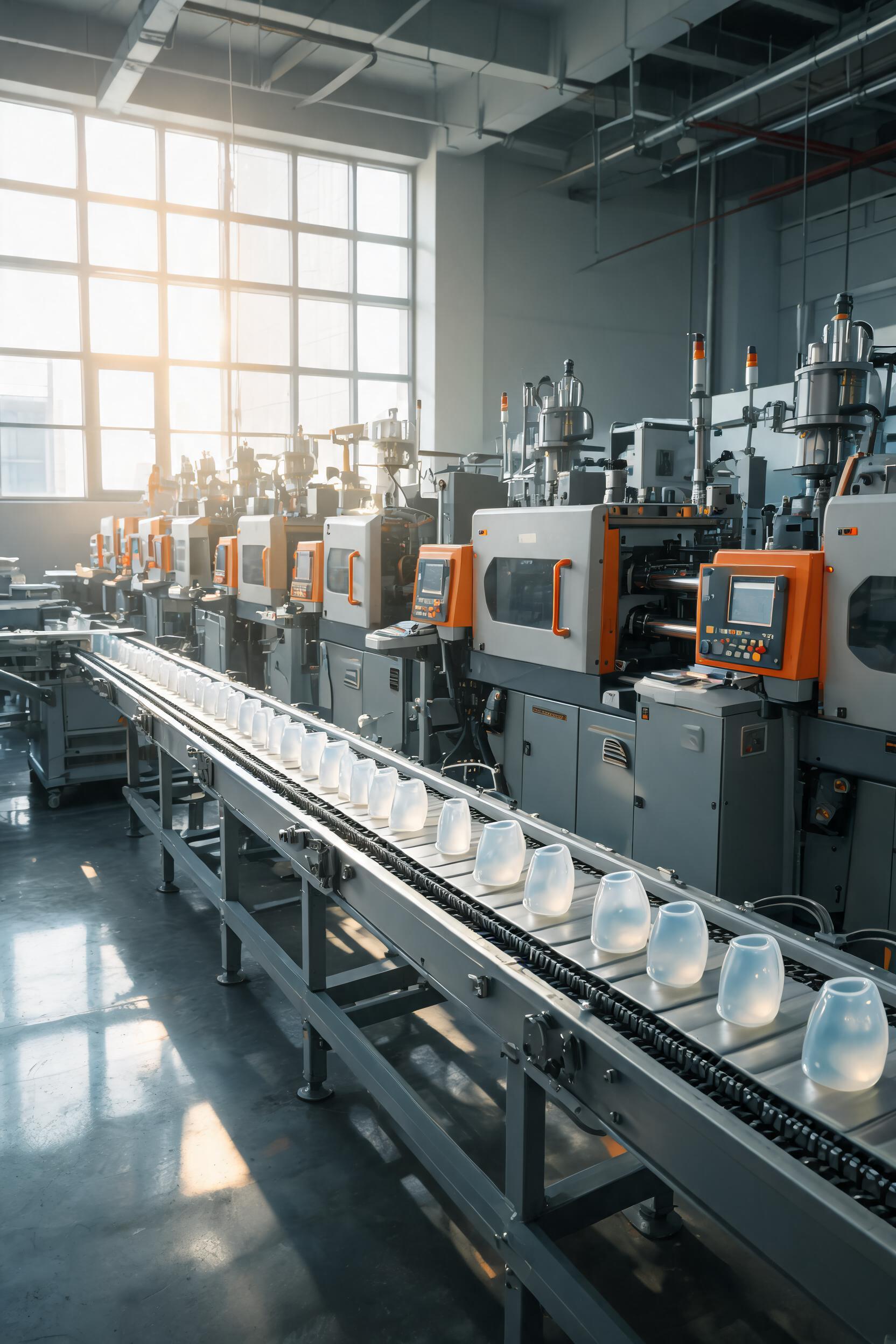
This article explains the core process links of self-adhesive waterproof silicone rubber sheath processing, covering key points such as raw material selection, molding parameter control, self-adhesive layer lamination, and waterproof performance testing. It helps manufacturers optimize processing procedures, avoid common defects like bubbles, weak adhesion, and waterproof failure, and improve the durability and environmental adaptability of sheath products to meet high-protection application requirements in outdoor electrical, communication, new energy and other fields.
Self-adhesive waterproof liquid silicone rubber (LSR) sheaths are critical protective components widely deployed in automotive wiring harnesses, renewable energy junction boxes, medical device ports, and consumer electronics external interfaces. Unlike traditional mechanically fastened rubber sheaths, these components integrate a pressure-sensitive adhesive (PSA) layer bonded permanently to the LSR substrate, delivering 360° water and dust ingress protection up to IP68, vibration resistance, and long-term durability across operating temperatures ranging from -40°C to 150°C. The unique processing workflow for these sheaths requires precise synchronization of LSR molding, surface activation, adhesive coating, and curing stages, as even minor deviations in any step can lead to adhesive delamination, waterproofing failure, or reduced service life. This article systematically breaks down the end-to-end manufacturing process, key material performance requirements, and rigorous quality control frameworks for self-adhesive waterproof LSR sheaths, providing actionable guidance for manufacturers to meet the most stringent industry application standards.
The performance of finished self-adhesive LSR sheaths is fundamentally determined by the compatibility and pre-processing quality of the three core input materials: LSR substrate, adhesive layer, and release liner. Inappropriate material pairing or inadequate pre-treatment can result in 2–3 times higher failure rates in accelerated aging tests, making this stage the foundational priority of production.
Not all general-purpose LSR grades are suitable for self-adhesive sheath production, as their inherent low surface energy and tendency to leach low-molecular-weight (LMW) siloxanes can severely compromise adhesive bond strength. Specialized self-adhesive grade LSRs are formulated with controlled vinyl content, fumed silica filler loading, and minimal volatile organic compound (VOC) content to balance mechanical performance and adhesive compatibility. Table 1 outlines the required material properties for LSR substrates used in high-performance waterproof sheaths:
For applications requiring UV resistance (e.g., outdoor solar junction box sheaths), 2–3% by weight of UV stabilizers such as hindered amine light stabilizers (HALS) are added to the LSR formulation, with no negative impact on adhesive bonding when compatible grades are selected.
The PSA layer for self-adhesive LSR sheaths must meet three core requirements: permanent bonding to low-surface-energy LSR, high peel strength to common mounting substrates (polycarbonate, aluminum, galvanized steel), and minimal water uptake under high-humidity conditions. Acrylic-based PSAs are the industry standard for most applications, while modified silicone PSAs are used for extreme high-temperature (≥180°C) operating environments. Key adhesive performance parameters are listed in Table 2:
Release liners are selected to match the adhesive’s curing temperature and tack level: 50 μm thick biaxially oriented polypropylene (BOPP) liners are used for low-temperature (≤80°C) cured acrylic PSAs, while 75 μm thick fluorosilicone-coated PET liners are required for high-temperature cured silicone PSAs to prevent premature liner adhesion or adhesive residue during peeling. Prior to full-scale production, a 7-day accelerated aging test (60°C, 90% RH) is conducted on material stacks to validate that no adhesive transfer or liner delamination occurs prior to end-use installation.
LSR raw material is supplied as a two-part (A/B) system, with part A containing platinum catalyst and part B containing crosslinking agent. To eliminate air bubbles that would cause surface defects or structural weaknesses in molded sheaths, the A/B mixture is first vacuum degassed at <10 mbar for 10–15 minutes after 1:1 high-shear mixing (300 rpm, 5 minutes). For adhesive materials, solvent-based formulations are filtered through 5 μm mesh filters to remove particulate contaminants that would cause uneven coating thickness or pinholes in the adhesive layer. Release liners are pre-treated with corona discharge at 1.2 J/cm² to ensure consistent surface tension ≥38 mN/m, preventing adhesive beading during coating.
The manufacturing workflow for self-adhesive waterproof LSR sheaths combines precision injection molding, surface activation, coating, and post-curing processes, with each stage requiring closed-loop parameter control to ensure cross-stage compatibility. Even a 5°C deviation in curing temperature or a 20% error in surface activation energy can reduce adhesive bond strength by 30% or more, leading to waterproofing failure in field applications.
Injection molding of LSR sheaths requires specialized cold-runner molding equipment to prevent premature curing of the material in the feed system, paired with precision temperature control in the mold cavity. Unlike thermoplastic injection molding, LSR curing is an exothermic chemical reaction, so process parameters are calibrated to ensure full crosslinking without scorching or excessive flash. Key molding parameters are outlined below:
Flash is a common defect in LSR molding, so molds are designed with a 0.02 mm maximum parting line gap, and molded parts are trimmed with a precision laser cutting system to ensure edge flatness ≤0.05 mm, a critical requirement for uniform adhesive application. Post-molding, parts are inspected for surface defects (bubbles, pits, flow marks) and dimensional tolerance, with critical dimensions (e.g., sealing lip diameter, mounting surface flatness) held to ±0.03 mm tolerance.
LSR has an inherent surface energy of ~22 mN/m, too low to form a strong permanent bond with PSA layers, so surface activation is required to increase surface energy to ≥38 mN/m and introduce reactive functional groups (hydroxyl, carbonyl) that bond with the adhesive. Three activation methods are commonly used, with selection based on production volume and performance requirements:
For applications using modified silicone PSA, or for sheaths intended for long-term outdoor use, a 0.5–1.0 μm thick layer of silane primer (aminopropyltriethoxysilane, APTES) is applied to the activated LSR surface via spray coating, followed by a 2 minute flash-off at 50°C to evaporate solvent. Primer application is verified via contact angle measurement, with a target water contact angle of 40–50° confirming uniform coverage.
Adhesive coating is the most critical stage for ensuring consistent waterproofing performance, as thickness variation or pinholes in the adhesive layer can create pathways for water ingress. Precision slot die coating is the industry standard for self-adhesive LSR sheaths, as it delivers ±5% thickness accuracy across the entire mounting surface, compared to ±15% accuracy for spray coating. Key coating parameters include:
Immediately after coating, the release liner is laminated to the adhesive layer under 0.5–1.0 bar pressure, with a alignment tolerance of ±0.1 mm to ensure full coverage of the adhesive area. Coated sheaths are then cooled to room temperature in a dust-free environment (ISO Class 8 cleanroom) to prevent particulate contamination of the adhesive surface.
Due to the critical safety and reliability role of self-adhesive waterproof LSR sheaths, a multi-stage quality control (QC) framework is required to verify both in-process parameters and finished product performance, with zero-defect requirements for high-risk applications such as automotive and medical devices.
In-process checks are conducted at every stage of production to catch defects early, reducing scrap rates by up to 40% compared to only final product inspection. Key in-process inspection items include:
All in-process inspection data is logged in a manufacturing execution system (MES) for full traceability, with each batch of parts assigned a unique lot number linked to material batches, process parameters, and inspection records.
All finished self-adhesive LSR sheaths undergo a series of performance tests to validate compliance with application-specific requirements, with sampling rates ranging from 0.5% for consumer electronics applications to 100% for automotive safety-related wiring harness sheaths. Core performance tests include:
The primary function of the sheath is to prevent water and dust ingress, so all parts are validated to IP rating requirements via two core tests:
Adhesive delamination is the most common failure mode for self-adhesive sheaths, so three bond strength tests are conducted:
For applications exposed to vibration, UV radiation, or chemical exposure, additional tests are conducted:
Despite rigorous process control, occasional defects may occur, so a structured failure mode and effects analysis (FMEA) system is used to identify root causes and implement corrective actions. Common failure modes and their root causes are listed in Table 3:
The production of self-adhesive waterproof LSR sheaths is a highly integrated process that requires precise control over material formulation, molding, surface activation, adhesive coating, and curing stages, paired with a rigorous quality control framework to ensure long-term performance. The key to reliable production lies in three core principles: first, selecting LSR and adhesive materials with validated compatibility and low LMW siloxane content to prevent long-term interface degradation; second, implementing closed-loop process control for surface activation and adhesive coating to ensure consistent bond strength and uniform thickness; third, conducting application-specific performance validation including ingress protection, thermal cycling, and humidity aging to meet the requirements of end-use environments. As demand for higher-performance protective components grows in electric vehicles, renewable energy, and wearable medical devices, future process developments will focus on inline AI-powered AOI for 100% real-time defect detection, plasma-free surface modification technologies to reduce production costs, and bio-based LSR formulations to improve the sustainability of production. By following the process parameters and quality control frameworks outlined in this article, manufacturers can achieve <0.1% field failure rates for self-adhesive waterproof LSR sheaths, meeting the most stringent industry reliability requirements.