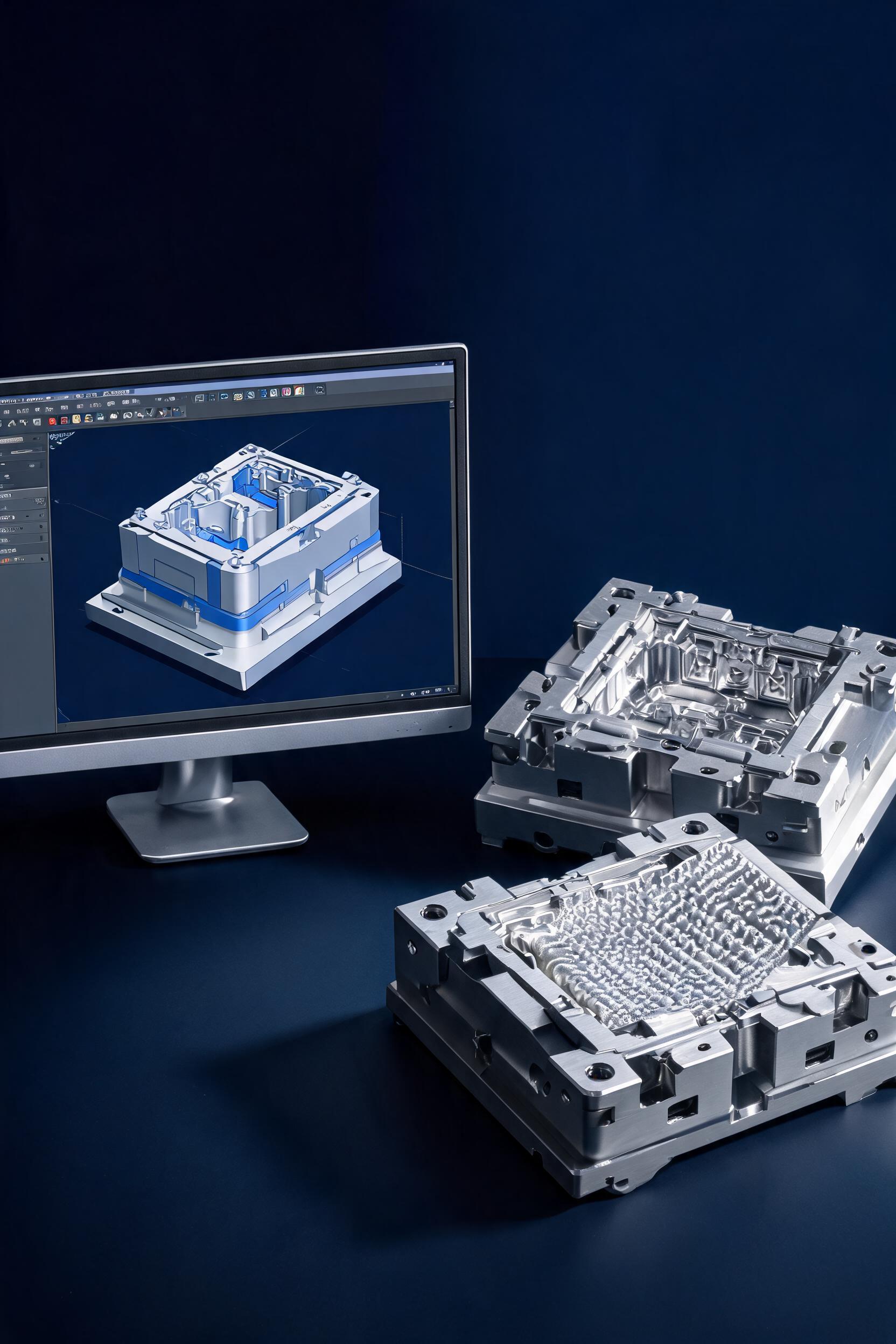
Liquid silicone rubber (LSR) and thermoset rubber components are foundational to industries ranging from medical devices and automotive engineering to consumer electronics and aerospace, where precision, durability, and material compatibility are non-negotiable. The performance, production efficiency, and lifespan of these components depend entirely on the quality of the 橡胶模具 (rubber mold) used to shape them. A poorly designed or manufactured rubber mold can lead to consistent part defects, high scrap rates, unplanned downtime, and cost overruns that erode project profitability.
This guide provides a structured, technical overview of rubber mold design and manufacturing, with a focus on LSR and high-performance elastomer applications. It covers core design principles, material selection for mold components, precision manufacturing workflows, and post-production validation to help engineers and product teams avoid common pitfalls and optimize mold performance for high-volume production.
Core Design Principles for Rubber Molds
Rubber molds differ significantly from thermoplastic injection molds due to the unique curing behavior of elastomers: LSR and thermoset rubbers crosslink (cure) under heat rather than solidifying via cooling, requiring uniform temperature control, specialized venting, and demolding mechanisms that accommodate the material’s low modulus and high flexibility. The design phase directly impacts 70% of the mold’s total lifecycle cost and part quality, making rigorous adherence to core principles critical.
Material-Specific Design Adjustments
Elastomer materials have distinct flow, curing, and shrinkage characteristics that require targeted design modifications, even within the broad category of rubber materials. Table 1 outlines key design parameters for the most common rubber types used in precision manufacturing:
Material TypeShrinkage Rate (Range)Recommended Mold TempFlow Length-to-Thickness RatioDemolding Draft Angle (Minimum)
Liquid Silicone Rubber (LSR)2.0–4.0%150–180°C150:11.5° (for textured surfaces: 3°)
High-Consistency Rubber (HCR)1.5–3.0%160–190°C80:12.0°
Nitrile Butadiene Rubber (NBR)1.0–2.5%170–200°C60:12.5°
Fluoroelastomer (FKM)2.5–4.5%180–210°C50:13.0°
For LSR specifically, the low viscosity of uncured material (typically 1,000–10,000 cP, comparable to heavy motor oil) requires tighter parting line tolerances (≤0.005 mm) to prevent flash, whereas higher-viscosity HCR can accommodate parting line gaps up to 0.02 mm. For medical-grade LSR components, designers must also avoid undercuts that trap residual material, as these can create contamination risks during repeated production runs.
Gating System Design for Elastomer Flow
The gating system controls the flow of uncured rubber into the mold cavity, directly influencing part stress, cure uniformity, and scrap rates. For rubber molds, gating designs are categorized by application and material type:
- Cold runner systems: The standard for LSR production, cold runners maintain uncured material at 5–15°C to prevent premature curing, with heated only the cavity plate. Cold runners reduce material waste by up to 70% compared to hot runner systems for high-volume runs, as the runner material remains uncured and can be recycled for subsequent batches. Sub-gating (pin gating) with diameters of 0.2–0.8 mm is preferred for small precision LSR parts, as it leaves minimal gate vestige and eliminates the need for post-processing.
- Hot runner systems: Used primarily for HCR and high-volume commodity rubber parts, hot runners maintain material at curing temperature throughout the flow path. While they eliminate runner scrap entirely, they require strict temperature uniformity (±2°C across all channels) to prevent scorching (premature curing of rubber in the runner) and uneven flow.
- Sprue gating: Reserved for large, thick-walled rubber parts (≥10 mm thickness) such as automotive gaskets, sprue gating provides high flow rates but requires manual gate trimming post-molding.
Critical design rules for gating include positioning gates at the thickest section of the part to prevent voids as the material cures and expands, and avoiding gate placement on high-tolerance or cosmetic surfaces. For multi-cavity molds, balanced runner layouts are required to ensure equal fill pressure across all cavities; flow simulation software (e.g., Moldex3D for LSR) is typically used to validate fill time and pressure distribution before manufacturing begins.
Venting and Demolding Mechanism Design
Elastomer curing releases volatile organic compounds (VOCs) and trapped air that must escape the cavity during injection, or the resulting part will have surface defects, incomplete fill, or reduced mechanical properties. For LSR molds, venting channels are typically 0.003–0.008 mm deep and 3–5 mm wide, cut into the parting line at 10–15 mm intervals. For thicker parts (≥5 mm), additional vacuum venting (pulling -0.9 bar or lower pressure in the cavity) is recommended to remove 99% of trapped air before injection.
Demolding design must account for rubber’s high elasticity, which can cause parts to deform if ejected too aggressively. Common demolding mechanisms for rubber molds include:
- Ejector pins: Used for rigid rubber parts (Shore A hardness ≥60), with pin diameters ≥1.5 mm to avoid puncturing the part. Pins must be polished to a Ra ≤0.2 μm finish to prevent material adhesion.
- Stripper plates: The preferred option for LSR and soft rubber parts (Shore A hardness <60), as they distribute ejection force evenly across the part perimeter to avoid deformation. Stripper plates require a clearance of ≤0.01 mm between the plate and cavity core to prevent flash.
- Air ejection: Used for ultra-thin or delicate parts (e.g., medical catheter balloons), where compressed air (3–5 bar) is released through small ports in the core to lift the part without contact.
For parts with undercuts, collapsible cores or unscrewing mechanisms are used instead of side actions, as rubber can stretch up to 500% before breaking; in some cases, minor undercuts (≤10% of the part wall thickness) can be demolded manually without additional mechanisms, reducing mold complexity and cost.
Mold Material Selection for Rubber Applications
The performance and lifespan of a 橡胶模具 depend directly on the materials chosen for core and cavity components, as rubber molding exposes molds to repeated thermal cycling, abrasive material flow, and chemical attack from curing agents and cleaning solutions. Material selection is guided by production volume, part complexity, required surface finish, and the specific rubber material being processed.
Core and Cavity Material Options
Table 2 compares the most common mold materials for rubber molding, along with their key performance parameters and use cases:
Material GradeHardness (HRC)Thermal Conductivity (W/m·K)Corrosion ResistanceTypical Lifespan (Shots)Primary Use Case
P20 Tool Steel28–3235Low100,000–300,000Low-volume prototype molds, HCR commodity parts
H13 Tool Steel48–5228Medium500,000–1,500,000High-volume LSR production, high-temperature FKM molding
420 Stainless Steel48–5225High800,000–2,000,000Medical-grade LSR molds, food-contact parts, acidic rubber formulations
S7 Tool Steel54–5827Medium1,000,000–2,500,000High-abrasion applications (e.g., rubber with filler materials)
Aluminum 7075N/A (150 BHN)130Low10,000–50,000Low-volume prototype molds, rapid iteration projects
For medical LSR molds, 420 stainless steel is the industry standard, as its high chromium content (12–14%) resists corrosion from repeated autoclaving and alkaline cleaning solutions required for FDA and ISO 13485 compliance. For molds used to process filled rubber (e.g., carbon black-filled NBR for automotive seals), H13 or S7 tool steel with a hard coating is recommended to reduce wear from abrasive filler particles.
Surface Treatment and Coating Options
Surface treatments extend mold lifespan, reduce material adhesion, and improve part release, reducing the need for external release agents that can contaminate medical or food-contact parts. The most effective treatments for rubber molds include:
- Polishing: Standard for LSR molds, with SPI-A1 grade polishing (Ra ≤0.025 μm) recommended for transparent optical LSR components (e.g., infant bottle nipples, lens gaskets). For matte finish parts, bead blasting with 100–200 grit glass beads produces a uniform Ra 0.8–1.6 μm surface.
- Hard chrome plating: A 5–10 μm chrome coating increases surface hardness by 10–15 HRC and improves corrosion resistance, making it ideal for HCR molds processing acidic rubber formulations. It reduces demolding force by 30–40% compared to uncoated steel.
- Diamond-like carbon (DLC) coating: A 1–3 μm amorphous carbon coating with a hardness of 2000–3000 HV, DLC reduces friction by 60% and eliminates adhesion for even the softest LSR formulations (Shore A 0–30). It is the standard coating for medical molds, as it does not leach chemicals and withstands repeated sterilization cycles.
- Nitriding: A thermochemical treatment that diffuses nitrogen into the steel surface to create a 0.1–0.5 mm hardened layer, nitriding improves wear resistance for high-volume production molds processing filled rubber materials. It is often combined with a PTFE topcoat for enhanced release.
For molds used to produce medical or food-contact parts, coatings must be compliant with FDA 21 CFR Part 177.2600 and EU 10/2011 regulations to ensure no harmful substances transfer to the finished rubber component.
Precision Manufacturing and Quality Control for Rubber Molds
Even the most well-designed 橡胶模具 will fail to meet performance requirements if manufactured with insufficient precision. Rubber molding requires tighter tolerances than thermoplastic molding due to rubber’s low viscosity and high cure shrinkage, making rigorous manufacturing process control and quality validation critical.
CNC Machining and EDM Process Optimization
The manufacturing workflow for rubber molds begins with rough machining, followed by precision finishing and dimensional validation. For core and cavity components:
- High-speed CNC milling: Used for rough and semi-finish machining, with spindle speeds of 12,000–20,000 RPM and cut depths of 0.1–0.3 mm for hardened steel. For complex geometries with tight tolerances, 5-axis CNC milling is used to reduce the number of setups, improving dimensional accuracy by eliminating alignment errors. For LSR molds, machining tolerances are held to ±0.005 mm for cavity features and ±0.003 mm for parting line surfaces to prevent flash.
- Electrical Discharge Machining (EDM): Used for complex internal features, sharp corners, and fine textures that cannot be achieved with CNC milling. Sinker EDM is used for cavity features with tolerances as tight as ±0.002 mm, while wire EDM is used for cutting ejector pin holes, venting channels, and complex core shapes. For LSR molds, a fine finish EDM process (0.1 A current, 2 μs pulse duration) is used to achieve a Ra ≤0.4 μm surface finish, reducing the need for manual polishing that can introduce dimensional errors.
- Grinding: Used for flat plates and core/cavity mating surfaces, with surface grinding achieving flatness tolerances of ≤0.002 mm per 100 mm of surface area. This is critical for uniform clamping pressure across the mold, which prevents flash in high-pressure LSR injection (injection pressures typically range from 70–120 bar).
A common manufacturing mistake for rubber molds is skipping stress relieving processes: after rough machining, tool steel components must be heated to 600–650°C and held for 2–4 hours to release internal stresses, preventing dimensional warping during thermal cycling in production. For H13 and S7 tool steel, stress relieving is repeated after semi-finish machining to ensure long-term dimensional stability.
Mold Assembly and Pre-Production Validation
Once individual components are manufactured, the mold is assembled and tested to ensure it meets performance requirements before full production begins. The validation process includes three critical steps:
- Dimensional metrology: All core and cavity features are measured using a coordinate measuring machine (CMM) with a measurement accuracy of ±0.001 mm, along with laser scanning for complex free-form surfaces (e.g., custom gasket profiles). Critical dimensions such as parting line flatness, ejector pin clearance, and cooling channel alignment are verified against the CAD model, with a 100% inspection requirement for all features with tolerances ≤0.01 mm.
- Dry cycle testing: The mold is installed in a press and run for 50–100 cycles without material to test clamping, ejection, and temperature control uniformity. Temperature uniformity across the cavity surface is measured using a thermal imaging camera, with a maximum allowed variance of ±3°C for LSR molds; uneven heating can lead to partial curing and part defects.
- Trial molding and material performance testing: A small batch of 100–500 parts is produced to validate part quality, with testing including:
- Dimensional inspection of critical part features against the part drawing, including shrinkage rate verification (actual shrinkage can vary by up to 0.5% from the nominal value depending on curing temperature and injection pressure)
- Tensile strength, elongation at break, and hardness testing to ensure the curing process is uniform
- Flash and defect analysis: any flash larger than 0.01 mm indicates a parting line gap or uneven clamping pressure that must be corrected before production
- Demolding force measurement: a load cell is used to measure ejection force, with a maximum allowed force of 50 N per part to prevent deformation
For medical and aerospace rubber molds, a production part approval process (PPAP) is required, including full documentation of material traceability, inspection reports, and process capability (Cpk ≥1.33 for critical features) before the mold is approved for full production.
Maintenance Strategy for Extended Mold Lifespan
Proactive maintenance is critical to maximizing the lifespan of a 橡胶模具 and reducing unplanned downtime. A standard maintenance schedule includes:
- Daily inspection: Before production begins, the parting line, venting channels, and ejector pins are cleaned with a low-abrasive solvent to remove residual rubber and curing agent residue. Venting channels are inspected for blockages, as blocked vents are the leading cause of part defects in LSR production.
- Weekly maintenance: Ejector pins and guide pins are lubricated with a high-temperature grease rated for 200°C+ to prevent seizing. Cooling channels are flushed with water to remove mineral buildup that can reduce temperature uniformity.
- Quarterly overhaul: The mold is fully disassembled, and all components are inspected for wear, corrosion, and cracking. Core and cavity surfaces are re-polished or re-coated as needed, and worn components (e.g., ejector pins, O-rings) are replaced.
- Long-term storage: For molds taken out of production, all surfaces are coated with a corrosion inhibitor, and the mold is stored in a temperature-controlled (15–25°C), low-humidity (<40% RH) environment to prevent rust.
Following this maintenance schedule can extend mold lifespan by 30–50% compared to reactive maintenance, reducing total production cost per part significantly over the mold’s lifecycle.
Conclusion
The design and manufacturing of a high-performance 橡胶模具 is a complex, multi-disciplinary process that requires careful consideration of elastomer material properties, precision machining, and rigorous quality validation. By adhering to material-specific design principles, selecting appropriate mold materials and coatings, and implementing strict manufacturing and maintenance controls, engineering teams can produce molds that deliver consistent part quality, high production efficiency, and long lifespan for even the most demanding LSR and rubber component applications.
As the demand for high-precision rubber components continues to grow in medical, automotive, and aerospace industries, integrating simulation tools (e.g., LSR flow simulation, thermal cycle analysis) into the design phase and leveraging advanced manufacturing technologies such as 5-axis machining and in-process metrology will further improve mold performance and reduce time-to-market. For product teams, prioritizing mold quality in the early stages of product development ultimately delivers lower total cost of ownership, higher production yield, and reduced risk of costly production delays.