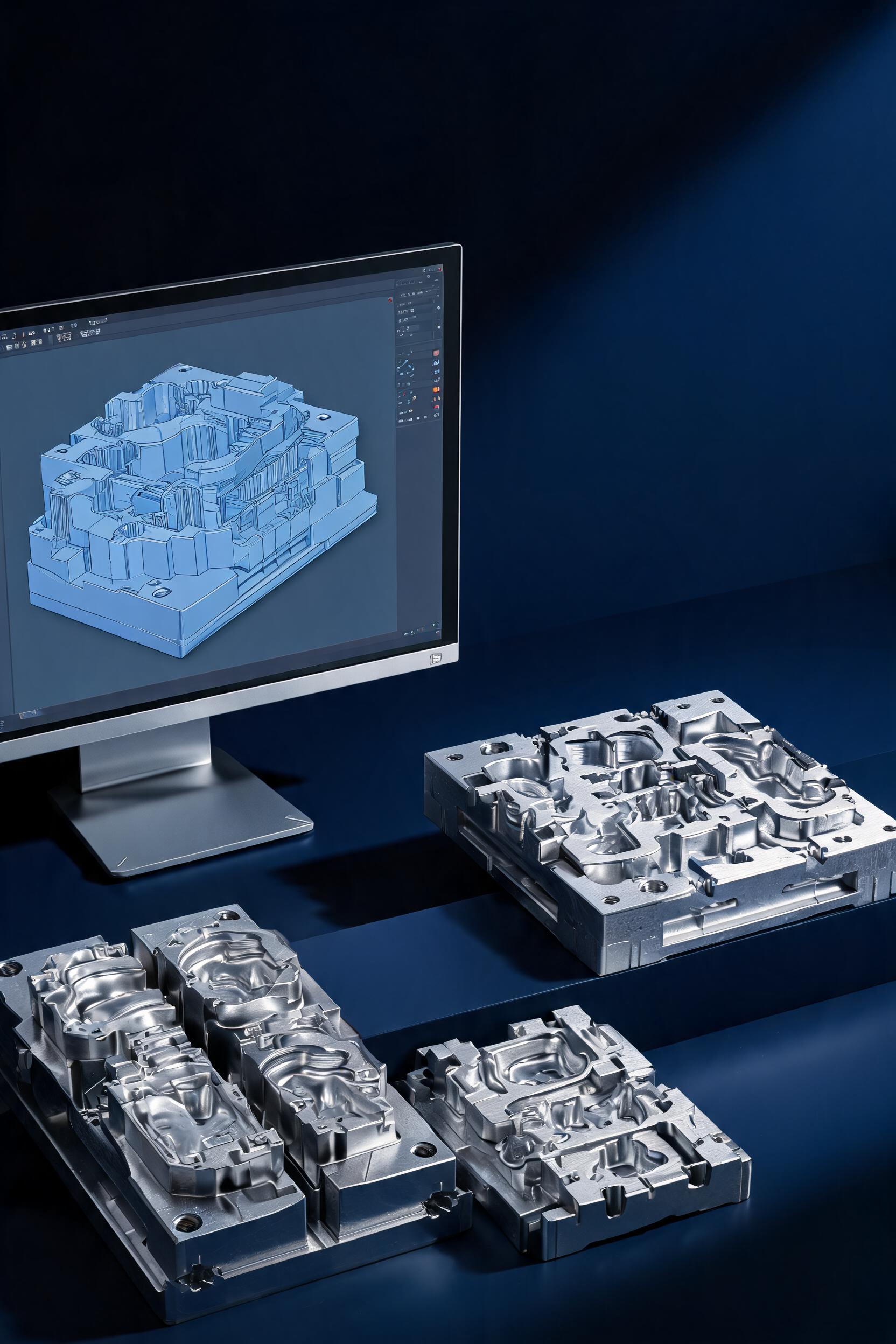
Custom liquid silicone rubber (LSR) part manufacturing begins with robust mold development, and the "drawings and samples-based" (来图来样) workflow is the most widely adopted approach for low-volume prototyping, mass production, and niche part customization. Unlike generic off-the-shelf mold designs, this customer-centric process prioritizes alignment with exact geometric, functional, and performance requirements, reducing post-production modification costs and cutting time-to-market by 20–30% for most applications.
The global LSR market is projected to reach $2.8 billion by 2028, with medical devices, automotive components, and consumer electronics accounting for 62% of custom mold demand. For these sectors, even 0.01 mm of dimensional deviation or a single hidden surface defect can render a part non-compliant with regulatory standards (e.g., FDA 21 CFR Part 177.2600 for medical LSR, IATF 16949 for automotive parts). This guide breaks down the end-to-end custom silicone mold development process from customer-provided drawings and samples, covering technical feasibility assessment, mold design optimization, precision manufacturing, and validation workflows to help product teams avoid common pitfalls and achieve consistent production outcomes.
Phase 1: Pre-Development Feasibility Assessment of Drawings and Samples
The first 48 hours of any custom mold project are dedicated to validating the input data (drawings, samples, or both) and aligning on technical requirements, as 35% of mold development failures stem from incomplete or ambiguous initial input specifications. This phase eliminates unfeasible design concepts early, avoiding costly rework later in the production cycle.
Technical Reconciliation of Input Data
Projects may start with 2D engineering drawings, 3D CAD models, physical prototype samples, or a combination of all three, each requiring a distinct validation workflow:
- 2D drawing verification: Engineers first cross-check for critical missing parameters, including geometric dimensioning and tolerancing (GD&T), draft angles, surface finish requirements, hardness (Shore A scale), and regulatory compliance mandates. Common gaps include unspecified flash tolerances, undefined undercut release mechanisms, and unmarked critical functional dimensions (e.g., seal groove widths for medical components). Table 1 outlines the minimum required drawing specifications for LSR mold development.
- 3D model validation: For STEP, IGES, or SolidWorks files, technicians run design for manufacturing (DFM) analysis to identify non-moldable features, such as sharp internal corners (<0.1 mm radius), negative draft angles, and wall thickness variations exceeding 3:1 ratios. 3D models are also cross-referenced against 2D drawings to resolve dimensional conflicts, as 2D drawings are always the governing document for tolerance requirements per ISO 10209 standards.
- Physical sample reverse engineering: When only a physical sample is provided, 3D structured light scanning (accuracy ±0.002 mm) is used to generate a parametric CAD model, with manual adjustments to correct for sample wear, deformation, or surface defects. For functional samples, material testing is performed to identify LSR grade, curing agent ratio, and tensile/tear strength properties, ensuring the final molded part matches the sample’s performance.
Specification CategoryMinimum Required DetailsAcceptable Tolerance Range for LSR
Dimensional TolerancesGD&T for critical features, general tolerance class±0.02 mm for features <10 mm, ±0.05 mm for features 10–50 mm, ±0.1 mm for features >50 mm
Material PropertiesShore hardness, tensile strength, elongation at break, regulatory compliance standardShore A 10–90, tensile strength 5–12 MPa, elongation 300–800%
Part GeometryDraft angles, undercut locations, wall thickness range, parting line positionMinimum 1° draft angle for vertical surfaces, wall thickness 0.2–10 mm
Surface FinishSPI mold finish class, texture requirements, gloss levelSPI A-1 (mirror) to SPI D-3 (matte textured)
*Table 1: Mandatory input specifications for custom LSR mold development*
Material and Application Compatibility Review
Not all LSR grades are compatible with every mold design, so this step aligns the mold material, surface treatment, and gating system with the selected LSR formulation and end-use environment:
- LSR grade matching: For food-contact and medical applications, platinum-cured LSR grades require polished mold surfaces (SPI A-2 or higher) to avoid residual curing agent buildup and ensure biocompatibility. For high-temperature automotive applications (operating range -60°C to 220°C), high-tear-strength LSR grades require hardened mold inserts to withstand repeated thermal cycling and reduce wear.
- Production volume alignment: Low-volume prototyping (100–10,000 parts) can use P20 steel molds (hardness 28–32 HRC) with a 50,000-cycle lifespan, while mass production (100,000+ parts) requires S136 stainless steel molds (48–52 HRC) with nitriding surface treatment to extend lifespan to 1,000,000+ cycles. Table 2 compares common mold materials for different production scenarios.
- Regulatory pre-screening: For medical devices, molds must be designed for cleanability and compatibility with autoclave sterilization, with no internal crevices that could trap silicone residue. For automotive parts, molds must accommodate LSR grades with UV resistance and flame retardant additives, which require higher injection pressures and specialized gating designs to prevent additive segregation.
Mold MaterialHardness (HRC)Surface Finish CapabilityLifespan (Cycles)Typical Application
6061 Aluminum95 BHNSPI B-3500–5,000Low-volume prototyping, design validation
P20 Steel28–32SPI A-350,000–100,000Medium-volume consumer products, industrial parts
S136 Stainless Steel48–52SPI A-1500,000–1,000,000+Mass production, medical/food contact parts, high-volume automotive components
H13 Tool Steel46–50SPI A-2200,000–500,000High-temperature LSR grades, overmolding applications
*Table 2: Mold material selection by production volume and application*
Phase 2: Custom Mold Design Optimization for LSR Processing
Unlike thermoplastic injection molds, LSR molds require specialized design considerations due to the material’s low viscosity (10,000–1,000,000 cP before curing), high thermal expansion coefficient, and room-temperature flow characteristics. This phase translates the validated input data into a production-ready mold design that minimizes defects, reduces cycle time, and ensures part consistency.
Core Structural Design for LSR Molds
The core mold structure is optimized for LSR’s unique curing and flow behavior, with three critical design priorities:
- Parting line and flash control: LSR’s low viscosity means it can flow into gaps as small as 0.005 mm, making flash control a primary design concern. The parting line is placed on non-critical surfaces whenever possible, with a 0.003 mm interlock fit between the core and cavity plates to prevent leakage. For parts requiring zero visible flash, a sacrificial flash trap is added to the mold, with a 0.05 mm deep, 1 mm wide channel around the part perimeter to collect excess material, which can be removed in post-processing.
- Gating system design: LSR gating is selected based on part size, geometry, and cosmetic requirements:
- Pin gates (0.2–0.8 mm diameter): Ideal for small, high-precision parts (e.g., wearable device seals), leaving minimal gate vestige that requires no secondary finishing.
- Submarine gates: Used for parts requiring hidden gating, with the gate located on the underside of the part and automatically sheared during ejection.
- Edge gates: Suitable for large, low-precision parts (e.g., silicone gaskets), with a 1–2 mm width to reduce injection pressure and improve flow.
For multi-cavity molds, a balanced hot runner system is used to ensure uniform fill across all cavities, with temperature control accuracy of ±0.5°C to prevent premature LSR curing in the runner channels.
- Vent and cooling system design: LSR curing releases small amounts of volatile organic compounds (VOCs) and trapped air, which can cause voids and surface defects if not properly vented. Vent channels 0.01–0.03 mm deep and 5–10 mm wide are added at the end of flow paths, near sharp corners, and around undercuts. Unlike thermoplastic molds, LSR molds require heating (not cooling) to cure the material, with cartridge heaters embedded in the core and cavity plates to maintain a consistent 160–200°C curing temperature across the entire mold surface, with temperature variation limited to ±1°C to prevent uneven curing.
Undercut and Ejection System Design
30% of custom LSR parts include undercuts (e.g., snap-fit features, seal grooves, threaded openings), which require specialized release mechanisms to avoid tearing the soft, flexible LSR during ejection:
- Manual side actions: For low-volume production, removable hand-loaded inserts are used for simple undercuts, reducing mold cost by 15–20% but increasing cycle time by 10–15 seconds per shot.
- Hydraulic/pneumatic side actions: For high-volume production, automatic side cores are integrated into the mold, retracting before ejection to release undercuts without manual intervention. This system is ideal for threaded parts and complex 3D undercuts, with actuation accuracy of ±0.01 mm.
- Collapsible cores: For internal undercuts (e.g., silicone bottle stoppers, medical catheter balloons), segmented collapsible cores are used, which contract during ejection to release the part without damage.
Ejection systems for LSR molds differ significantly from thermoplastic molds, as LSR is soft and prone to deformation. Most designs use an air ejection system, with 0.5–1 mm diameter air holes connected to a compressed air supply that blows the part off the core surface without contact. For parts with complex geometry, soft silicone-tipped ejector pins are used to minimize indentation and tearing.
Phase 3: Mold Manufacturing, Testing, and Validation
Even the most optimized design will fail if not manufactured to precise tolerances, so this phase combines high-precision machining, iterative testing, and quantitative validation to ensure the mold meets all production and part performance requirements. The average manufacturing cycle for a custom LSR mold is 15–30 days, depending on complexity and cavity count.
Precision Machining and Surface Treatment
Mold manufacturing follows a sequential workflow to ensure dimensional accuracy and surface quality:
- Rough machining: CNC milling is used to cut the basic core and cavity geometry from the selected steel blank, leaving 0.2–0.3 mm of material for finishing. For multi-cavity molds, a coordinate measuring machine (CMM) is used to verify the position of each cavity after rough machining, with positional tolerance limited to ±0.005 mm.
- Finish machining: High-speed CNC milling (spindle speed 15,000–30,000 RPM) with diamond-coated tools is used to cut the final geometry, followed by electrical discharge machining (EDM) for internal features with sharp corners or complex curves that cannot be milled. Wire EDM is used for cutting precision inserts and vent channels, with accuracy of ±0.002 mm.
- Surface treatment: Molds for medical and food-contact parts are polished to SPI A-2 or higher finish using diamond polishing pastes, with a surface roughness of Ra <0.02 μm to prevent silicone adhesion and ensure easy release. Molds for textured parts undergo chemical etching or laser engraving to match the specified surface texture, with sample texture coupons provided to the customer for approval before final assembly. For high-volume molds, nitriding or PVD coating is applied to the core and cavity surfaces to increase hardness by 5–10 HRC and reduce wear from repeated LSR injection.
T1 Trial and Iterative Optimization
The first mold trial (T1) is the most critical step in validation, where 50–200 sample parts are produced using the specified LSR grade and processing parameters to identify defects and design gaps:
- Defect identification and root cause analysis: Common T1 defects include flash (caused by insufficient interlock fit or excessive injection pressure), voids (caused by inadequate venting or low injection speed), and incomplete fill (caused by undersized gates or low mold temperature). For example, a 0.01 mm increase in vent depth typically resolves 80% of void-related defects, while a 0.1 mm increase in gate diameter can reduce injection pressure by 20% and eliminate incomplete fill.
- Dimensional validation: 10–15 T1 sample parts are measured using CMM and 3D scanning to compare against the drawing specifications, with a focus on critical functional dimensions. For parts with high thermal expansion, dimensions are measured at 23°C (room temperature) 24 hours after molding, as LSR shrinks by 2–3% during cooling and post-curing. If dimensional deviations exceed tolerance limits, the mold is adjusted by welding and re-machining the core or cavity, or by modifying processing parameters (e.g., increasing curing temperature to reduce shrinkage).
- Cycle time optimization: After dimensional accuracy is confirmed, processing parameters (injection pressure, curing time, mold temperature) are adjusted to minimize cycle time without compromising part quality. For a typical 10 mm thick LSR part, curing time is 30–45 seconds at 180°C, with total cycle time (injection + curing + ejection) of 60–90 seconds. For high-volume production, multi-cavity molds can reduce per-part cycle time by 50–70% compared to single-cavity designs.
Final Validation and Production Handover
Once T1 adjustments are complete, a T2 trial of 500–1,000 parts is conducted to validate long-term mold performance and part consistency:
- Process capability testing: 30 consecutive parts are sampled at the start, middle, and end of the T2 run to measure Cp (process capability) and Cpk (process capability index) for critical dimensions. For medical and automotive applications, a Cpk of ≥1.33 is required to ensure 99.99% of parts fall within tolerance limits, while consumer products may accept a Cpk of ≥1.0.
- Lifespan validation: For high-volume molds, accelerated wear testing is conducted by running 10,000 consecutive cycles, with part dimensions measured every 1,000 cycles to ensure dimensional drift remains within acceptable limits. S136 steel molds with nitriding treatment typically show <0.005 mm of wear after 100,000 cycles, meeting long-term production requirements.
- Customer acceptance and handover: The final validation package provided to the customer includes a full dimensional report of sample parts, material compliance certificates (FDA, RoHS, REACH), mold maintenance guidelines, and recommended processing parameters. The mold is then serialized and stored in a climate-controlled facility for future production runs, with annual maintenance checks to prevent corrosion and wear.
Conclusion
Custom silicone mold development from drawings and samples is a highly structured, precision-driven process that balances design intent, manufacturing feasibility, and long-term production performance. By following a rigorous workflow of pre-development feasibility assessment, LSR-specific design optimization, and quantitative validation, manufacturers can reduce mold development lead times by up to 30%, cut production defect rates to <0.1%, and extend mold lifespan by 20–40% compared to ad-hoc design approaches.
Key success factors for custom mold projects include clear communication of input specifications during the initial assessment phase, early involvement of mold engineers in part design to implement DFM improvements, and adherence to strict validation standards for dimensional accuracy and process capability. As LSR applications continue to expand into high-precision sectors such as wearable medical devices, electric vehicle battery seals, and semiconductor manufacturing components, the demand for customized, high-performance silicone molds will continue to grow, making a standardized, data-driven development process essential for both product teams and mold manufacturers. For most projects, investing 10–15% of the total project budget in upfront feasibility and design optimization will generate a 3–5x return on investment by avoiding costly rework and production delays later in the product lifecycle.