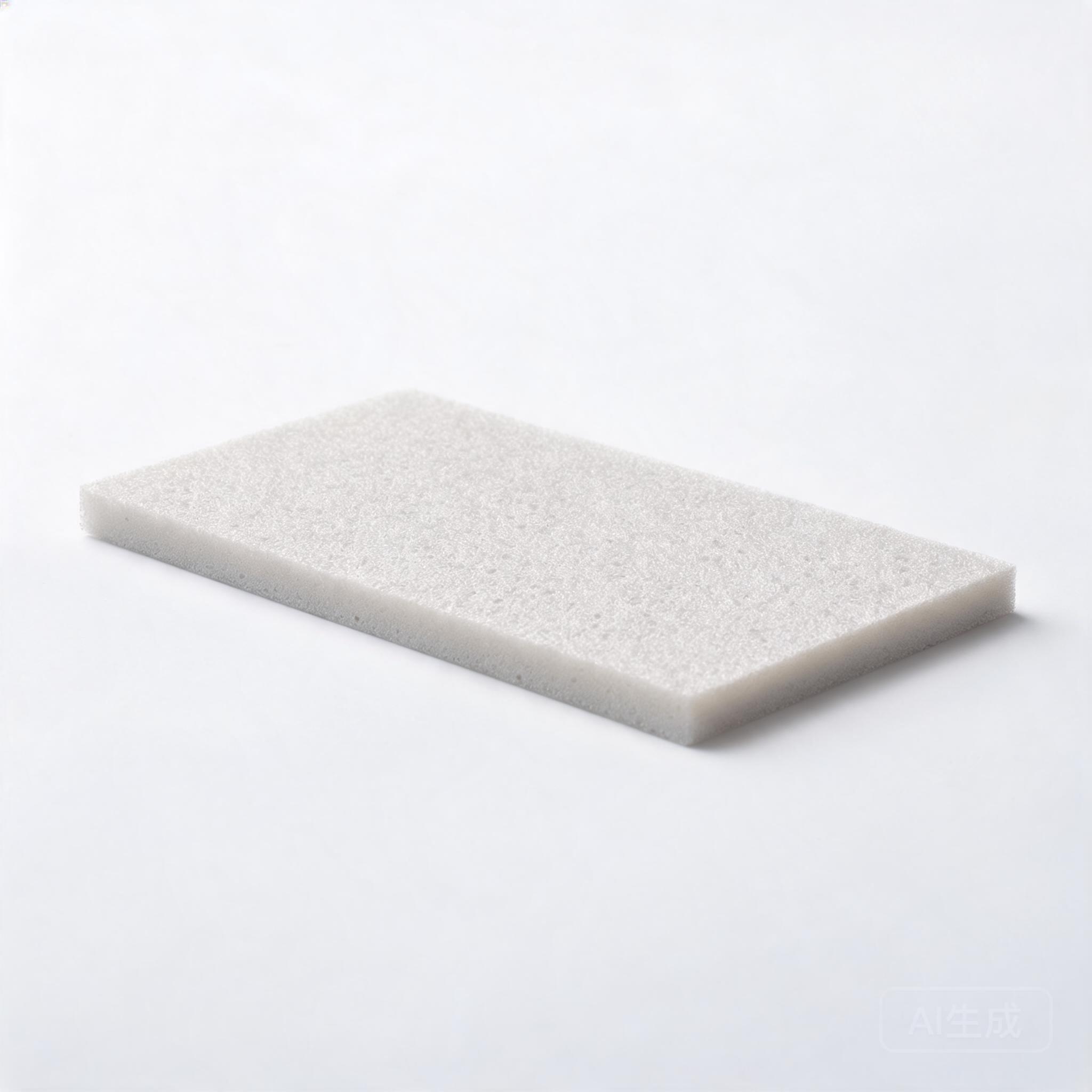
# New Energy Foamed Silicone Thermal Insulation Pad for Automotive Battery Modules
Product Overview
The New Energy Foamed Silicone Thermal Insulation Pad is a high-performance, lightweight thermal management material purpose-engineered for lithium-ion battery modules in electric and hybrid electric vehicles (EV/HEV). Designed to address the unique challenges of new energy vehicle (NEV) battery systems, this pad combines the inherent temperature stability of liquid silicone rubber (LSR) with a closed-cell foaming structure to deliver exceptional thermal insulation, mechanical cushioning, and long-term reliability across extreme operating conditions.
Unlike traditional insulation materials such as polyurethane foam, ceramic fiber, or aerogel blankets, this foamed silicone pad maintains consistent performance over a -60°C to 220°C operating range, with short-term resistance to up to 300°C during thermal runaway events. Its uniform microcellular structure (average cell size 50–200μm) delivers low thermal conductivity without sacrificing compression resilience, making it ideal for filling gaps between battery cells, module housings, and cooling plates. The material is inherently flame-retardant, meets UL 94 V-0 flammability standards, and emits zero toxic fumes even under high-temperature decomposition, addressing critical NEV safety requirements. Pre-cut to custom dimensions with optional pressure-sensitive adhesive (PSA) backing, the pad enables fast, automated assembly, reducing production line labor costs and improving alignment accuracy.
Technical Specifications
Material Properties
ParameterValueTest StandardNotes
Base MaterialMedical/food-grade liquid silicone rubber (LSR)--100% non-toxic, RoHS and REACH compliant
Foaming StructureUniform closed-cellASTM D3576Closed-cell ratio ≥ 92%, no water absorption under long-term immersion
Density0.25–0.5 g/cm³ASTM D792Adjustable based on application requirements
Flame RetardancyUL 94 V-0UL 94No molten drips during combustion, smoke density < 10% (ASTM E662)
Thermal Stability-60°C to 220°C (long-term), 300°C (short-term, 10min)ASTM D1525Less than 5% weight loss after 1000h aging at 180°C
Chemical ResistanceResistant to electrolyte, lubricants, road salt, and UV radiationASTM D543No swelling, cracking, or performance degradation after 500h immersion in EV battery electrolyte
Physical Performance
ParameterValueTest StandardNotes
Thermal Conductivity0.032–0.045 W/(m·K)ASTM D5470Measured at 25°C, 50% compression
Tensile Strength≥ 1.2 MPaASTM D412Sufficient to resist tearing during assembly and vibration
Elongation at Break≥ 180%ASTM D412Accommodates cell expansion and contraction during charge-discharge cycles
Compression Set≤ 8%ASTM D395After 22h at 70°C, 25% compression; maintains consistent contact pressure over 10,000 cycles
Impact Absorption≥ 75%ASTM D1596Reduces transmission of road shock and collision forces to battery cells
Water Absorption≤ 0.1%ASTM D570Prevents moisture ingress that could cause short circuits or corrosion
Dielectric Strength≥ 15 kV/mmASTM D149Provides secondary electrical insulation between live components and module housings
Process Parameters
ParameterSpecificationNotes
Custom Thickness Range1mm–20mmTolerance ± 0.1mm for thickness ≤ 5mm, ± 0.2mm for thickness > 5mm
Maximum Sheet Size1200mm × 1000mmSupports large-format module designs for 4680 and pouch cell packs
Adhesive OptionsAcrylic PSA, silicone PSA, or non-adhesiveAcrylic PSA offers high peel strength (≥ 8 N/25mm) for permanent fixation; silicone PSA performs reliably at temperatures above 150°C
Cutting Tolerance± 0.2mmPrecision die-cut, laser-cut, or waterjet-cut to match custom module geometries with cutouts for tabs, sensors, and fasteners
Assembly CompatibilityCompatible with automated pick-and-place equipmentAnti-static treatment available for ESD-sensitive production environments
Product Advantages
1. Superior Thermal Barrier Performance for Thermal Runaway Mitigation
The closed-cell foamed structure delivers 30% lower thermal conductivity than conventional silicone rubber sheets, effectively blocking heat transfer between adjacent cells during abnormal temperature spikes. In third-party nail penetration tests, a 3mm thick pad prevented heat propagation from a 800°C thermal runaway cell to neighboring cells for over 15 minutes, exceeding the GB 38031-2020 NEV battery safety requirement of 5 minutes of occupant escape time. Unlike aerogel products, the material does not shed brittle particles or release toxic irritants when exposed to high temperatures, protecting passengers and first responders.
2. Excellent Mechanical Resilience for Long Cycle Life
NEV battery cells expand by 3–8% over their lifecycle during charge-discharge cycles, and this pad’s 180% elongation at break and 8% maximum compression set accommodate this volume change without losing contact pressure or insulation performance. After 10,000 simulated charge-discharge cycles with 25% compression, the pad’s thermal conductivity increased by less than 3%, compared to a 25% increase for polyurethane foam alternatives, eliminating the need for mid-lifecycle insulation replacement.
3. Broad Environmental Compatibility for Harsh Automotive Conditions
Engineered to withstand the full range of NEV operating environments, the pad retains 95% of its performance after 1000 hours of temperature-humidity cycling (-40°C to 85°C, 95% RH) and 500 hours of salt spray exposure. Its resistance to battery electrolyte, brake fluid, and road deicing chemicals prevents degradation from common automotive fluid leaks, a critical failure point for cellulose and plastic-based insulation materials.
4. Lightweight Design for Extended Vehicle Range
With a minimum density of 0.25 g/cm³, the pad is 75% lighter than solid silicone rubber sheets, reducing overall battery pack weight by 2–4 kg for a typical 75kWh EV pack. This weight reduction translates to an approximate 3–5 km increase in CLTC (China Light-duty Vehicle Test Cycle) range, supporting OEM goals of maximizing energy efficiency without compromising safety.
Applications
This foamed silicone thermal insulation pad is primarily deployed in NEV lithium-ion battery systems, with key use cases including:
- Inter-cell thermal insulation: Installed between cylindrical, prismatic, or pouch cells to prevent thermal propagation during cell failure, while accommodating cell swelling during fast charging.
- Module-to-housing insulation: Positioned between battery module assemblies and pack bottom/side housings to isolate cells from extreme external temperatures (e.g., road surface heat in summer, cold ambient temperatures in winter) and reduce heat loss from the pack during low-temperature operation.
- **Cooling plate gap filling: Filled between the module bottom and liquid cooling plates to provide thermal insulation for cold-weather operation, while cushioning vibration from the road to prevent damage to cell tabs and cooling system connectors.
- **BMS and high-voltage component insulation: Used as a combined insulation and cushioning layer for battery management system (BMS) circuit boards, high-voltage busbars, and current sensors, reducing thermal interference with sensitive electronic components and providing secondary electrical insulation.
Beyond automotive battery modules, the material is also suitable for energy storage system (ESS) battery racks, electric bus battery packs, and NEV motor thermal insulation applications where long-term reliability and fire safety are critical requirements.
Selection Guide
Hardness Selection
- Shore 00 30–40: Recommended for pouch and thin prismatic cells, where low compression force is required to avoid damaging delicate cell casings. The soft structure conforms to uneven cell surfaces, eliminating air gaps that reduce insulation performance.
- Shore 00 45–55: The standard option for most cylindrical and standard prismatic cell modules, balancing cushioning performance and structural support to maintain consistent cell alignment during vibration.
- Shore 00 60–70: Suitable for heavy-duty commercial vehicle battery packs and ESS applications, where higher load-bearing capacity is required to support the weight of large-format cell stacks.
Size Specifications
- For inter-cell use: Select a thickness 15–20% larger than the nominal gap between cells to ensure 10–15% pre-compression during assembly, maximizing contact and insulation performance.
- For module housing insulation: Thickness ranges from 3mm to 10mm, selected based on the minimum required thermal resistance (R-value) for the target operating temperature range. For example, a 5mm thick pad provides an R-value of 0.14 m²·K/W, sufficient to insulate against -40°C ambient temperatures for 8 hours with minimal pack heat loss.
- Custom cutouts for busbars, temperature sensors, and mounting bolts can be specified at the time of order, with 3D drawing files accepted for precision manufacturing.
Material Grade
- Standard automotive grade: Meets RoHS, REACH, and UL 94 V-0 requirements, suitable for most passenger EV applications.
- High-temperature resistant grade: Modified LSR formulation with long-term operating temperature up to 250°C, designed for high-performance EVs with 800V fast charging systems that generate higher peak cell temperatures.
- Flame-retardant enhanced grade: Added inorganic flame retardant fillers that provide 30 minutes of thermal barrier performance at 1000°C, recommended for large-format ESS and commercial vehicle battery packs with stricter fire safety requirements.
Quality Assurance
Our foamed silicone thermal insulation pads are manufactured in an ISO 9001 and IATF 16949 certified production facility, with strict quality control implemented at every stage of production:
- Incoming material inspection: All LSR raw materials are tested for molecular weight consistency and impurity content, with traceability codes maintained for every batch.
- In-process testing: Every production batch is tested for density, cell uniformity, and thermal conductivity after foaming, with defective products rejected before secondary processing.
- Final validation: 100% of finished pads undergo dimensional inspection, flame retardancy sampling, and compression performance testing to ensure compliance with customer specifications. Custom PPAP (Production Part Approval Process) documentation is available for OEM customers, including material performance reports, aging test data, and process flow charts.
All products meet the requirements of GB 38031-2020 (Chinese EV battery safety standard), UN 38.3, and EU ECE R100 regulations, with third-party test reports from SGS and Intertek available upon request. We offer a 5-year performance warranty for all pads installed in passenger EV applications, guaranteeing no more than 10% degradation in thermal conductivity and compression performance under normal operating conditions.