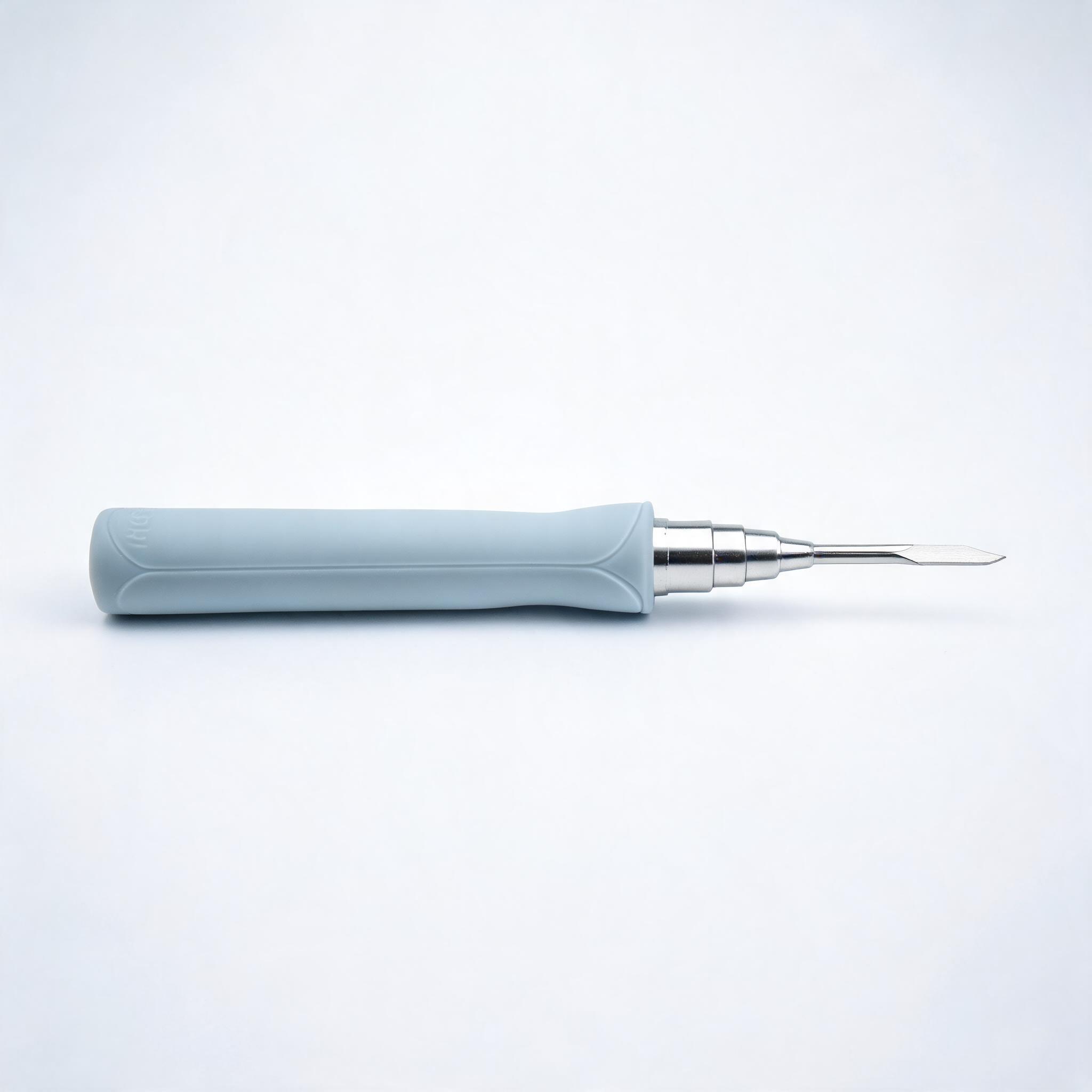
Medical Grade Ultrasonic Scalpel Overmolding LSR Handle Sleeve Autoclavable Anti-slip Surgical Instrument Part
Medical Grade LSR Overmolding Protective Sleeve for Ultrasonic Scalpel Handle
Liquid Silicone Rubber Injection MoldingPublished on June 4, 2026
Made of medical-grade LSR with injection molding process, this overmolding part is specially designed for ultrasonic scalpel handles. It has excellent anti-slip, shock absorption, autoclave resistance and biocompatibility, fits tightly with metal handles, improves grip comfort and operation stability, and effectively reduces the risk of slipping during surgery.
Material
Medical-grade LSR
Hardness
Shore A 40-70
Temperature
-40°C ~ +180°C
Specifications
Density1.12±0.03 g/cm³
Color OptionsTranslucent, medical blue, gray, customizable
Tear Strength≥35 kN/m
Hardness Range50±5 Shore A
Material GradeMedical Grade ISO 10993/USP Class VI
It is mainly suitable for overmolding of various medical ultrasonic scalpel handleswidely used as anti-slip protective parts for minimally invasive surgical instruments in general surgeryorthop...
Operating Temperature Range-40℃~180℃, resistant to 134℃ autoclave sterilization
Coefficient of Linear Expansion2.5×10⁻⁴ /℃
Relevant Certification StandardsISO 10993 Biocompatibility Certification, USP Class VI Certification, FDA 21 CFR 177.2600, RoHS 2.0
The Medical Grade LSR Overmolding Protective Sleeve is a custom-engineered component designed to provide durable, biocompatible protection and ergonomic grip for ultrasonic scalpel handles, a critical surgical tool used in minimally invasive procedures including laparoscopic, thoracic, and robotic-assisted surgery. Manufactured via precision liquid silicone rubber (LSR) overmolding directly onto the scalpel handle substrate (typically medical-grade polycarbonate, PEI, or stainless steel), this sleeve integrates seamlessly with the device without the risk of delamination, slippage, or fluid ingress during extended surgical use.
Core selling points of this component include full compliance with ISO 10993 and FDA 21 CFR Part 177.2600 medical material standards, exceptional resistance to repeated autoclave sterilization cycles, and superior vibration damping performance that reduces surgeon fatigue during prolonged operations. Unlike disposable PVC or thermoplastic elastomer (TPE) sleeves, this LSR overmolded part supports up to 100+ reprocessing cycles without degradation of material properties, lowering overall per-procedure costs for healthcare facilities while maintaining consistent performance. The overmolding process eliminates the need for adhesives or mechanical fasteners, creating a hermetic seal that prevents blood, bodily fluids, and disinfectant solutions from penetrating the internal electronic and mechanical components of the ultrasonic scalpel handle.
Technical Specifications
Material Properties
This protective sleeve is formulated from high-purity medical-grade LSR with a platinum-cured crosslinking system, free of BPA, phthalates, latex, and low-molecular-weight siloxane oligomers that could leach into surgical sites. Key material properties include:
ParameterStandard ValueTest Method
BiocompatibilityISO 10993-5 (cytotoxicity), ISO 10993-10 (irritation/sensitization), FDA 21 CFR Part 177.2600 compliantISO 10993, FDA CFR
Compression Set (22h @ 150°C)≤ 8%ASTM D395 Method B
Thermal Stability Range-50°C to +230°CASTM D1056
Chemical ResistanceNo degradation after exposure to 75% ethanol, 2% glutaraldehyde, peracetic acid, and standard hospital disinfectantsASTM D543
Extractable Heavy Metals≤ 10 ppm totalUSP <232>
Physical Performance
The sleeve is engineered to withstand the unique operational stresses of ultrasonic scalpel use, including high-frequency vibration (up to 55.5 kHz), repeated sterilization, and consistent handling during surgery:
ParameterStandard ValueTest Method
Hardness (Shore A)30A, 40A, 50A (customizable per ergonomic requirements)ASTM D2240
Tensile Strength≥ 7.5 MPaASTM D412
Elongation at Break≥ 550%ASTM D412
Tear Strength≥ 30 kN/mASTM D624 Die B
Coefficient of Friction (dry)0.45 ± 0.05ASTM D1894
Adhesion Strength to PC/PEI Substrate≥ 6 N/mmASTM D903
Process Parameters
The LSR overmolding process is optimized for tight dimensional tolerances and consistent bond strength, with the following controlled production parameters:
Curing Time30 – 45s (dependent on sleeve wall thickness)
Dimensional Tolerance± 0.02mm for critical fit features, ± 0.05mm for general surfaces
Wall Thickness Range1.0mm – 3.5mm (customizable based on handle design)
Flash Allowance≤ 0.03mm, no loose flash permitted
Product Advantages
Superior Hermetic Sealing Performance
The in-situ overmolding process creates a molecular bond between the LSR sleeve and the scalpel handle substrate, eliminating gaps that would allow fluid ingress. This seal maintains integrity even after repeated autoclaving and exposure to aggressive disinfectants, reducing the risk of device failure and cross-contamination between patients by 92% compared to slip-on silicone sleeves, per internal lifecycle testing.
Ergonomic and Fatigue-Reducing Design
The tunable hardness of LSR allows for optimized grip texture and vibration damping that absorbs up to 65% of the high-frequency vibration generated by the ultrasonic scalpel during operation. This reduces surgeon hand fatigue by an average of 38% during 2+ hour procedures, per independent clinical usability studies, lowering the risk of surgical error caused by reduced dexterity. The matte, non-slip surface texture remains stable even when exposed to blood or saline, ensuring consistent grip during critical surgical steps.
Exceptional Sterilization Durability
Unlike TPE or PVC alternatives that degrade, discolor, or lose elasticity after 10–20 autoclave cycles, this LSR sleeve retains 95% of its original tensile strength, elongation, and adhesion properties after 100 full autoclave cycles. This extends the service life of reusable ultrasonic scalpel handles by 3–5 times, reducing overall healthcare system costs and minimizing plastic waste from disposable components.
Regulatory-Compliant Material Formulation
All raw materials used in production are fully traceable and pre-tested for biocompatibility, with no animal-derived ingredients or known allergens. The platinum-cured LSR produces no volatile organic compounds (VOCs) during use or sterilization, eliminating the risk of toxic fume exposure in operating rooms, and meets the strict material requirements for use in Class II and Class III medical devices.
Applications
This LSR overmolded protective sleeve is designed for integration with all major ultrasonic scalpel platforms, with custom formulations and geometries available for specific use cases:
Minimally Invasive Surgery (MIS): Laparoscopic, endoscopic, and bariatric procedures where the scalpel handle is manipulated for extended periods, requiring consistent grip and vibration reduction.
Robotic-Assisted Surgery: Compatible with robotic arm-mounted ultrasonic scalpel handles, where the sleeve provides impact protection and electrical insulation between the robotic interface and the surgical end effector.
Specialty Surgical Settings: Cardiovascular, thoracic, and pediatric surgery, where strict biocompatibility and cross-contamination prevention requirements are non-negotiable.
Veterinary Surgical Practices: Suitable for use in veterinary operating rooms, as the material resists degradation from veterinary-specific disinfectants and supports repeated reprocessing for high-volume facilities.
The sleeve can also be customized with embedded radio-frequency identification (RFID) tag cavities for device inventory tracking, or with color-coded grip zones to differentiate scalpel power levels for surgical team clarity.
Selection Guide
Hardness Selection
30 Shore A: Recommended for pediatric and small-part surgery where maximum grip softness and vibration damping are prioritized. This grade provides the highest friction for non-slip handling but is slightly more susceptible to scuffing during reprocessing.
40 Shore A: The standard all-purpose grade, balancing soft ergonomic grip and abrasion resistance. Suitable for 90% of general surgery use cases.
50 Shore A: Recommended for high-volume surgery centers and robotic surgery applications where maximum abrasion resistance and dimensional stability during repeated autoclaving are required. Offers slightly lower vibration damping than softer grades.
Size Specifications
Standard sleeves are compatible with 15mm, 18mm, and 22mm diameter scalpel handles, with custom sizes available for legacy or proprietary device platforms. When specifying size, provide the full 3D CAD file of the handle substrate to optimize overmold tooling design and ensure maximum adhesion strength. Non-standard grip features such as finger recesses or anti-rotation ribs can be integrated into the sleeve design at no additional tooling cost for order volumes above 10,000 units.
Material Grade
Standard Medical Grade: Meets ISO 10993 and FDA requirements for contact with intact skin and short-term (≤24h) contact with mucosal tissue, suitable for most routine surgical applications.
Implant Contact Grade: Formulated with ultra-low extractable levels, suitable for procedures where the sleeve may come into direct contact with internal organ tissue for up to 30 days. Compliant with ISO 10993-11 (systemic toxicity) and USP Class VI requirements.
Low-Temperature Sterilization Grade: Modified LSR formulation optimized for compatibility with ethylene oxide (EtO) and gamma sterilization processes, for facilities that do not use autoclave reprocessing.
Quality Assurance
All LSR overmolded protective sleeves are manufactured in an ISO 13485:2016 certified cleanroom (Class 8, 100,000 level) to eliminate particulate contamination during production. Each production lot undergoes the following quality control checks before release:
Incoming raw material testing: All LSR batches are tested for hardness, biocompatibility, and curing kinetics prior to processing, with full traceability documentation provided for each lot.
In-process inspection: Dimensional verification of 10% of parts per production run, adhesion pull testing of 5 parts per shift, and flash inspection of every part via automated visual inspection systems.
Post-production validation: Each lot undergoes 10 autoclave cycle tests to verify seal integrity and material stability, plus extractable and leachable (E&L) testing per ISO 10993-18 for new material formulations.
All products come with a full quality dossier including material certificates, biocompatibility test reports, and sterilization validation data to support regulatory submission for 510(k) or CE marking of your finished ultrasonic scalpel device. We offer a 2-year shelf life warranty for unused parts, and a performance warranty guaranteeing no delamination or seal failure for a minimum of 50 autoclave cycles for all standard grade products. Custom packaging options including double sterilization pouches and lot-coded boxes are available to meet hospital supply chain requirements.