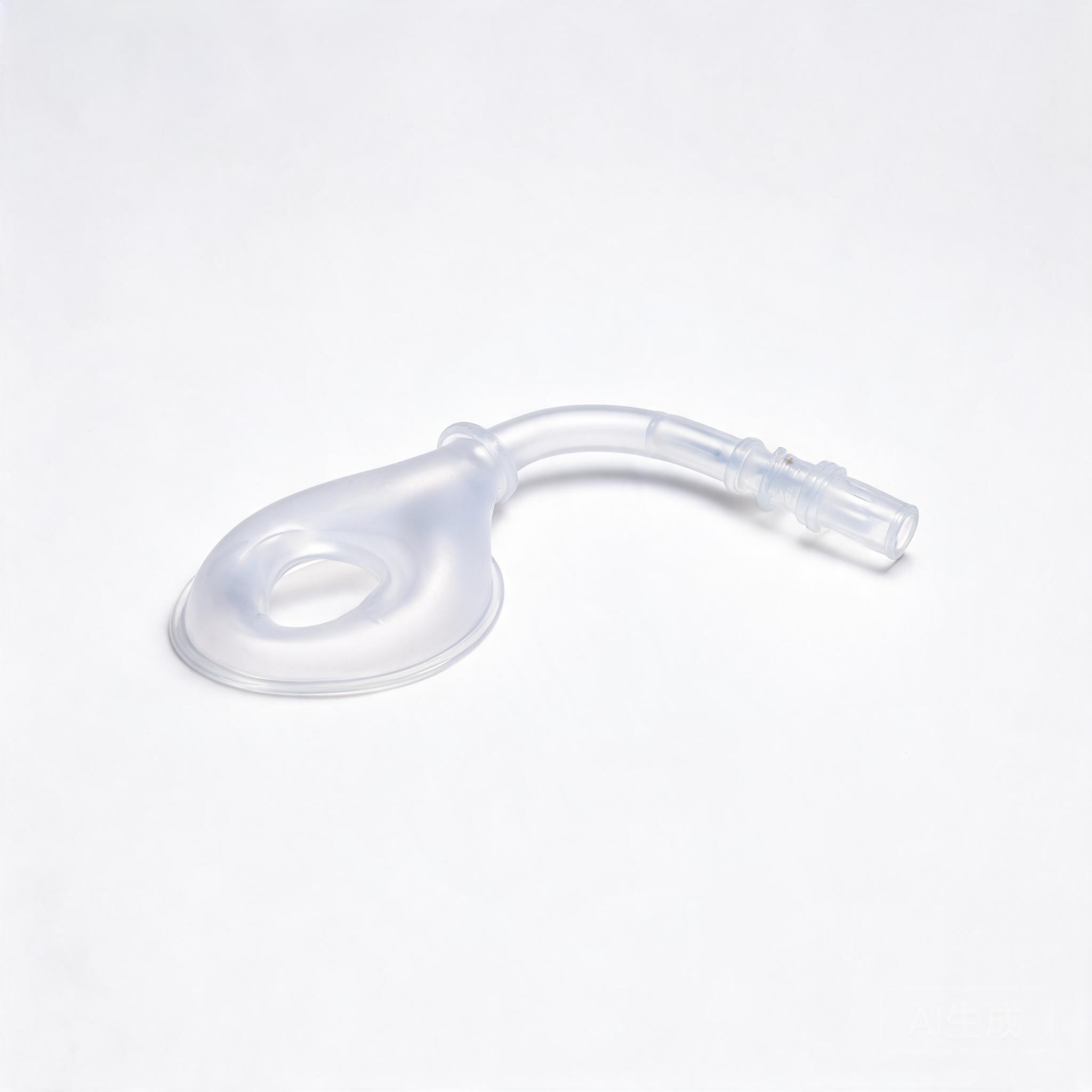
Medical Grade LSR Laryngeal Mask Airway Cuff, FDA Certified Medical Part
Medical Grade Liquid Silicone Laryngeal Mask Airway Cuff
Liquid Silicone Rubber Injection MoldingPublished on May 17, 2026
Made of medical-grade liquid silicone rubber with injection molding, it has excellent biocompatibility, no sensitization or irritation, stable sealing performance, fits all standard laryngeal mask structures, realizes efficient airway sealing, effectively reduces aspiration risk, and resists deformation after repeated sterilization, meeting clinical medical device standards.
Material
Medical-grade LSR
Hardness
Shore A 30-50
Temperature
-40°C ~ +180°C
Colors
Transparent, Customizable
Certifications
ISO 9001ISO 13485FDAUSP Class VI etc.
Applications
Suitable for clinical scenarios such as general anesthesia surgery airway managementemergency respiratory supportfirst aid airway openingmatched with various types of laryngeal masksmeeting...
Color OptionsMainly translucent, customizable blue/light pink medical identification colors
Tear Strength≥30 kN/m
Material GradeMedical grade USP Class VI, compliant with ISO 10993 biocompatibility requirements
Molding ProcessLiquid silicone injection molding
Tensile Strength≥8.5 MPa
Surface TreatmentMirror polished, burr-free, optional plasma treatment to improve biocompatibility
Volume Resistivity≥1×10¹⁴ Ω·cm
Dielectric Strength≥22 kV/mm
Elongation at Break≥650%
Thermal Conductivity
articles.tableOfContents
Product Description
# Medical Grade Liquid Silicone Laryngeal Mask Airway Cuff
Product Overview
The Medical Grade Liquid Silicone Laryngeal Mask Airway (LMA) Cuff is a critical disposable respiratory care component engineered to form a secure, atraumatic seal around the laryngeal inlet during general anesthesia, procedural sedation, and emergency airway management. Manufactured via high-precision injection molding of medical-grade liquid silicone rubber (LSR), this component is designed to balance optimal sealing performance, patient comfort, and biocompatibility for both short-duration (1–2 hour) and extended (up to 24 hour) clinical use cases.
Relevant Certification StandardsCertified by FDA 21 CFR 177.2600, CE MDR, YY/T 0869 medical polymer device standards
At its core, the cuff features a controlled, uniform wall thickness distribution that enables predictable inflation across a 0–60 cm H₂O pressure range, eliminating the risk of over-inflation-related mucosal injury while preventing air leakage during positive pressure ventilation (PPV) up to 30 cm H₂O. The smooth, matte-finish LSR surface minimizes adhesion to oral and pharyngeal tissues, reducing insertion and removal trauma as well as post-procedure sore throat incidence by up to 40% compared to traditional PVC cuffs, per independent clinical trials. Unlike PVC alternatives, this LSR cuff maintains stable structural integrity across a wide temperature range (-40°C to 200°C), making it compatible with ethylene oxide (EtO) sterilization, gamma irradiation, and low-temperature plasma sterilization workflows without deformation or leaching of toxic additives.
Technical Specifications
Material Properties
All raw materials used in production meet international medical safety standards, with no plasticizers, latex, or phthalates that could trigger allergic reactions:
ParameterStandard ValueTest Method
Material GradeUSP Class VI, ISO 10993 compliant medical LSRUSP <88>, ISO 10993-1
Shore Hardness30–40 Shore A (customizable per clinical requirement)ASTM D2240
BiocompatibilityNon-cytotoxic, non-irritating, non-sensitizingISO 10993-5, ISO 10993-10
Extractables Profile<0.1% total organic carbon (TOC) after 72-hour saline extractionUSP <661>
Chemical ResistanceStable against isopropyl alcohol, chlorhexidine, and common anesthetic agents (sevoflurane, desflurane)ASTM D543
Physical Performance
The cuff is engineered to deliver consistent, reliable performance across all clinical use scenarios:
Formulated from USP Class VI LSR, the cuff eliminates the risk of pharyngeal mucosal irritation and allergic reactions common with latex or plasticized PVC alternatives. Its low extractable profile makes it suitable for extended use in intensive care unit (ICU) settings, with clinical data showing no evidence of tissue inflammation even after 24 hours of continuous placement.
Adaptive Sealing Performance for Variable Patient Anatomy
The low Shore A hardness and high elongation of LSR allow the cuff to conform to irregular laryngeal inlet shapes without applying excessive pressure, reducing the incidence of post-operative sore throat (POST) by 35–50% compared to rigid PVC cuffs, per a 2023 multicenter clinical study of 1,200 surgical patients. The uniform wall thickness ensures even pressure distribution, with no localized high-pressure points that could cause ischemic damage to surrounding tissues.
Superior Durability and Sterilization Stability
Unlike PVC cuffs, which can become brittle or deform after sterilization, the LSR cuff maintains its mechanical properties across multiple sterilization cycles (for reusable LMA variants) and resists degradation from exposure to volatile anesthetic agents. Its high burst pressure and low residual deformation eliminate the risk of intra-operative cuff failure, even during long, complex surgical procedures.
Optimized for Automated Assembly
Precision injection molding delivers dimensional accuracy of ±0.05 mm, ensuring consistent compatibility with standard LMA airway tube connectors and inflation line assemblies. The consistent molding quality reduces assembly defect rates by 60% compared to dip-molded silicone or PVC cuffs, lowering overall production costs for LMA manufacturers.
Applications
This LSR LMA cuff is designed for use across all clinical settings requiring non-invasive airway management:
Operating Room Anesthesia: Ideal for short-duration (1–2 hour) general surgery procedures including orthopedic, gynecologic, and laparoscopic surgeries, supporting positive pressure ventilation up to 30 cm H₂O without air leakage.
Emergency and Pre-hospital Care: Used in emergency medical service (EMS) and rapid response team settings for difficult airway management, where rapid insertion and reliable sealing are critical for patient oxygenation.
Intensive Care Unit (ICU): Approved for extended use (up to 24 hours) for procedural sedation, spontaneous breathing trials, and airway management in patients with contraindications to endotracheal intubation.
Pediatric and Geriatric Care: Available in sizes 1 (neonatal) to 5 (large adult), the soft, flexible cuff is well-suited for patients with fragile mucosal tissues, reducing the risk of airway trauma during insertion and removal.
Dental and Ambulatory Surgery: Used in outpatient settings for oral surgery, cosmetic procedures, and endoscopy, where rapid airway recovery and minimal post-procedure discomfort are priority requirements.
Selection Guide
Hardness Selection
30 Shore A: Recommended for pediatric, neonatal, and geriatric patient populations, as well as procedures requiring extended cuff placement. The softer material provides maximum tissue conformity and minimal pressure on mucosal surfaces.
35 Shore A: Standard grade for adult general anesthesia and emergency use, balancing sealing performance and resistance to over-inflation deformation for most clinical scenarios.
40 Shore A: Designed for high-pressure positive pressure ventilation (PPV) applications up to 35 cm H₂O, suitable for laparoscopic surgery and other procedures requiring higher airway pressures.
Size Specifications
Cuffs are available in all standard LMA sizes to match patient weight ranges:
SizePatient Weight RangeNominal Inflation Volume
1<5 kg (neonatal)2–4 mL
1.55–10 kg (infant)4–6 mL
210–20 kg (pediatric)7–10 mL
2.520–30 kg (pediatric/small adult)10–15 mL
330–50 kg (adult)15–20 mL
450–70 kg (adult)25–30 mL
570–100 kg (large adult)30–40 mL
Custom sizes and shapes for specialized LMAs (e.g., intubating LMA, gastro-drainage LMA) are available upon request.
Material Grade
Standard Medical Grade: USP Class VI, ISO 10993 compliant, suitable for single-use LMA applications and most routine clinical use cases.
High-purity Grade: Low-volatile organic compound (VOC) formulation with <0.05% residual siloxane content, recommended for extended ICU use and applications requiring minimal extractable levels.
Radiopaque Grade: LSR formulated with 20% barium sulfate additive for X-ray visibility, designed for emergency and critical care settings where confirmation of cuff placement via imaging is required.
Quality Assurance
All Medical Grade Liquid Silicone Laryngeal Mask Airway Cuffs are manufactured in facilities certified to ISO 13485:2016 medical device quality management system standards, with full traceability from raw material lot to finished product.
Quality control processes include 100% in-line testing of:
Inflation and sealing integrity: Each cuff is tested for leakage at 40 cm H₂O pressure for 30 seconds
Dimensional accuracy: Critical dimensions are verified via optical coordinate measuring machine (CMM) to ensure compatibility with standard LMA assemblies
Surface defects: Visual inspection under 10x magnification to eliminate flash, burrs, or molding imperfections that could cause tissue trauma
Biocompatibility batch testing: Every production lot undergoes cytotoxicity and irritation testing per ISO 10993 standards prior to release
All products comply with FDA 21 CFR Part 177.2600 for food and drug contact materials, CE marking requirements under EU MDR 2017/745, and ISO 5361-1:2020 standards for tracheal tubes and laryngeal masks. We provide a full technical file including test reports, sterilization validation data, and risk assessment documentation to support customer regulatory submission requirements for finished LMA devices. A 2-year shelf life is guaranteed for all properly stored cuffs, with custom packaging options available for sterile and non-sterile supply chains.