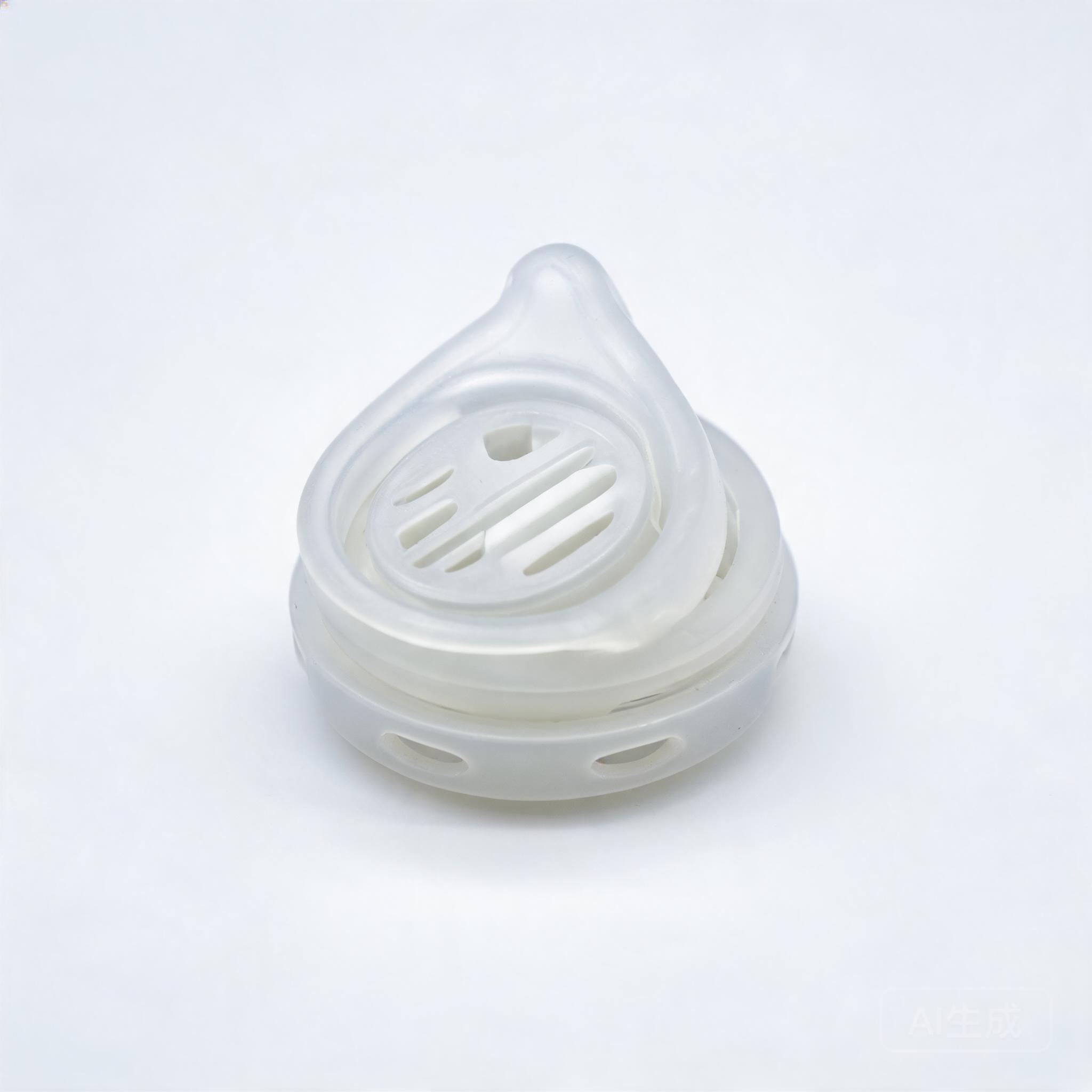
Medical LSR Respiratory Valve, FDA Certified for Ventilator Anesthesia Machine
Medical Grade Liquid Silicone Respiratory Valve for Breathing Circuit
Liquid Silicone Rubber Injection MoldingPublished on May 17, 2026
This medical respiratory valve made of medical-grade LSR via injection molding features excellent biocompatibility, air tightness and aging resistance, with stable opening and closing resistance, effectively preventing cross-infection, suitable for gas path control of various respiratory therapy equipment.
Material
Medical-grade LSR
Hardness
Shore A 40-60
Temperature
-40°C ~ +180°C
Colors
Transparent, White, Customizable
Certifications
ISO 13485FDAUSP Class VIISO 9001
Applications
Widely used in ventilatorsanesthesia machinesrespiratory masksmanual resuscitation bags and other medical equipment as a one-way gas path control component to ensure directional airflow trans...
Relevant Certification StandardsISO 13485, FDA 21CFR 177.2600, EU CE, RoHS 2.0
# Medical Grade Liquid Silicone Respiratory Valve for Breathing Circuit
Product Overview
The Medical Grade Liquid Silicone Respiratory Valve is a precision-molded critical component designed to regulate unidirectional or bidirectional gas flow in invasive and non-invasive respiratory therapy circuits. Manufactured via injection molding of medical-grade platinum-cured liquid silicone rubber (LSR), this valve combines biocompatibility, long-term sealing reliability, and low actuation resistance to meet the stringent performance requirements of acute and chronic respiratory care settings.
Unlike conventional rubber or plastic respiratory valves, our LSR-based design eliminates leachable plasticizers, latex allergens, and long-term material degradation risks, making it suitable for extended use in ventilators, continuous positive airway pressure (CPAP) machines, bi-level positive airway pressure (BiPAP) devices, anesthesia circuits, and portable emergency respiratory support systems. The valve’s integrated silicone diaphragm and housing structure ensures consistent cracking pressure (the minimum pressure required to open the valve) across 1,000,000+ actuation cycles, reducing the risk of rebreathing of exhaled CO₂ and ensuring accurate delivery of preset respiratory pressures.
Core selling points include ISO 10993 biocompatibility for prolonged skin and mucosal contact, compatibility with standard ethylene oxide (EtO) and gamma sterilization methods, and customizability to fit existing breathing circuit interface standards across global medical device manufacturers.
Technical Specifications
Material Properties
All components of the respiratory valve are manufactured from medical-grade platinum-cured LSR sourced from ISO 13485 certified raw material suppliers, with no added fillers, pigments, or processing aids that may leach into gas streams:
ParameterSpecification
Material GradeClass VI medical grade LSR
BiocompatibilityISO 10993-5 (cytotoxicity), ISO 10993-10 (irritation/sensitization), ISO 10993-11 (systemic toxicity) compliant
Extractable Substances<0.1% total organic extractables after 72-hour immersion in 37°C saline
The valve is engineered to deliver consistent flow performance across the full operating range of respiratory devices, with tight tolerances to avoid performance deviations across production batches:
ParameterStandard SpecificationCustomization Range
Hardness (Shore A)30 ± 520–50 Shore A
Cracking Pressure2 cm H₂O ± 0.5 cm H₂O0.5–10 cm H₂O
Maximum Flow Rate180 L/min at 10 cm H₂O60–240 L/min
Leakage Rate (closed)<1 mL/min at 20 cm H₂ON/A
Diaphragm Rebound Time<10 msN/A
Operating Temperature-40°C to 120°CN/A
Cycle Durability>1,000,000 actuation cycles with <5% deviation in cracking pressureN/A
Dead Space Volume<2.5 mL for standard 15 mm connector model1.5–10 mL
Process Parameters
All valves are produced in Class 100,000 (ISO 8) cleanrooms with fully automated injection molding processes to ensure part consistency:
Process StepParameter
Injection Molding Temperature170°C ± 5°C
Injection Pressure120–150 bar
Curing Time30 seconds per part
Dimensional Tolerance±0.02 mm for sealing surfaces, ±0.1 mm for connector interfaces
Post-Molding ProcessingAutomatic deflashing, no manual trimming to reduce contamination risk
Product Advantages
1. Superior Biocompatibility for Clinical Safety
Our LSR respiratory valve is free of latex, phthalates, BPA, and other harmful additives that may cause allergic reactions or systemic toxicity in sensitive patient populations, including neonates, elderly patients, and those with compromised immune systems. The material meets USP Class VI requirements, making it suitable for both short-term (24-hour anesthesia circuits) and long-term (30-day home CPAP) applications.
2. Consistent, Long-Lasting Performance
The silicone diaphragm maintains stable elasticity across millions of actuation cycles, avoiding the cracking, stiffening, or permanent deformation common in thermoplastic or natural rubber valves. This consistency eliminates the need for frequent valve replacements in clinical settings, reduces device maintenance costs, and minimizes the risk of unexpected valve failure during critical respiratory support.
3. Low Actuation Resistance for Patient Comfort
The valve’s optimized diaphragm geometry requires minimal cracking pressure to open, reducing patient work of breathing (WOB) during spontaneous respiration. This feature is particularly critical for non-invasive ventilation patients and those recovering from respiratory failure, as it reduces patient fatigue and improves adherence to therapy protocols.
4. Broad Sterilization and Compatibility
Unlike many plastic valve components that degrade after repeated autoclaving, our LSR valve withstands up to 100 autoclave cycles without performance loss, and is compatible with all common hospital sterilization methods. The standard 15 mm/22 mm ISO 5356-1 compliant connectors ensure seamless integration with all major breathing circuit, mask, and respiratory device models on the market.
Applications
The medical LSR respiratory valve is deployed across a wide range of respiratory care use cases:
Invasive Mechanical Ventilation: Installed in expiratory limbs of intensive care unit (ICU) ventilator circuits to control exhaled gas flow and prevent rebreathing of CO₂, with low dead space to minimize ventilation inefficiency for critically ill patients.
Non-Invasive Respiratory Therapy: Integrated into CPAP/BiPAP devices and full-face masks to regulate positive airway pressure, prevent air leakage during inhalation, and allow unobstructed exhalation for obstructive sleep apnea (OSA) and chronic obstructive pulmonary disease (COPD) patients.
Anesthesia Delivery Systems: Used in anesthesia breathing circuits to ensure unidirectional flow of anesthetic gas mixtures, preventing cross-contamination between patients and delivering accurate concentrations of anesthetic agents.
Portable Emergency Respiratory Devices: Incorporated into manual resuscitator bags (Ambu bags) and emergency transport ventilators, where the valve’s low weight, shock resistance, and consistent performance ensure reliable function in pre-hospital and disaster response settings.
Pediatric and Neonatal Respiratory Care: Custom low-cracking-pressure (0.5–2 cm H₂O) models are available for neonatal ventilators, minimizing WOB for premature infants with underdeveloped respiratory muscles.
Selection Guide
Hardness Selection
20–25 Shore A: Recommended for low-pressure applications (e.g., neonatal ventilation, high-flow nasal therapy circuits) where minimal actuation resistance is required. The softer diaphragm provides higher sealing performance at low pressures but is not suitable for high-cycle high-pressure use cases.
30–35 Shore A: The standard general-purpose grade, ideal for most adult CPAP/BiPAP, anesthesia, and ICU ventilation applications, balancing actuation resistance and long-term durability.
40–50 Shore A: Designed for high-pressure (up to 60 cm H₂O) respiratory support systems and high-cycle industrial respiratory equipment, where increased structural rigidity of the diaphragm prevents over-opening and pressure deviations.
Size Specifications
All valves are compatible with ISO 5356-1 breathing circuit connector standards, with common configurations including:
15 mm male/female connectors: For pediatric circuits, mask interfaces, and portable ventilator applications
22 mm male/female connectors: For adult ICU ventilator circuits, anesthesia machines, and manual resuscitators
Custom non-standard connector sizes are available upon request, with minimum order quantities (MOQ) of 10,000 units.
Material Grade
Standard Medical Grade: Meets ISO 10993 and USP Class VI requirements, suitable for most clinical applications with patient contact up to 30 days.
Implantable Grade: For special use cases requiring short-term (<30 days) implantation in respiratory tracts, with additional ISO 10993-6 (local tissue response) certification available.
Drug-Compatible Grade: For respiratory circuits delivering nebulized medications or anesthetic agents, with enhanced resistance to lipid-based drug residues and reduced absorption of active pharmaceutical ingredients (APIs) to ensure accurate dose delivery.
Quality Assurance
All our medical LSR respiratory valves are manufactured in facilities certified to ISO 13485:2016 medical device quality management system standards, with production processes aligned to 21 CFR Part 820 (US FDA Quality System Regulation) requirements.
Every valve undergoes 100% quality inspection before release, including:
Dimensional inspection via high-precision coordinate measuring machines (CMM) to ensure connector and sealing surface tolerances meet specifications
Pressure decay testing to verify leakage rates are below the 1 mL/min threshold at 20 cm H₂O
Actuation cycle testing on 1% of production batches to confirm durability meets the 1,000,000 cycle requirement
Biocompatibility batch testing to ensure no deviations in extractable or leachable substance levels
Standard certification documentation provided with each shipment includes a Certificate of Conformity (CoC), raw material traceability records, sterilization validation reports (for pre-sterilized units), and ISO 10993 test reports. Custom regulatory support is available for customers seeking 510(k) clearance, CE marking, or NMPA registration for their finished respiratory devices.
We offer a 2-year warranty against material and manufacturing defects, with dedicated technical support to assist with valve integration, performance testing, and custom design modifications for specialized use cases.