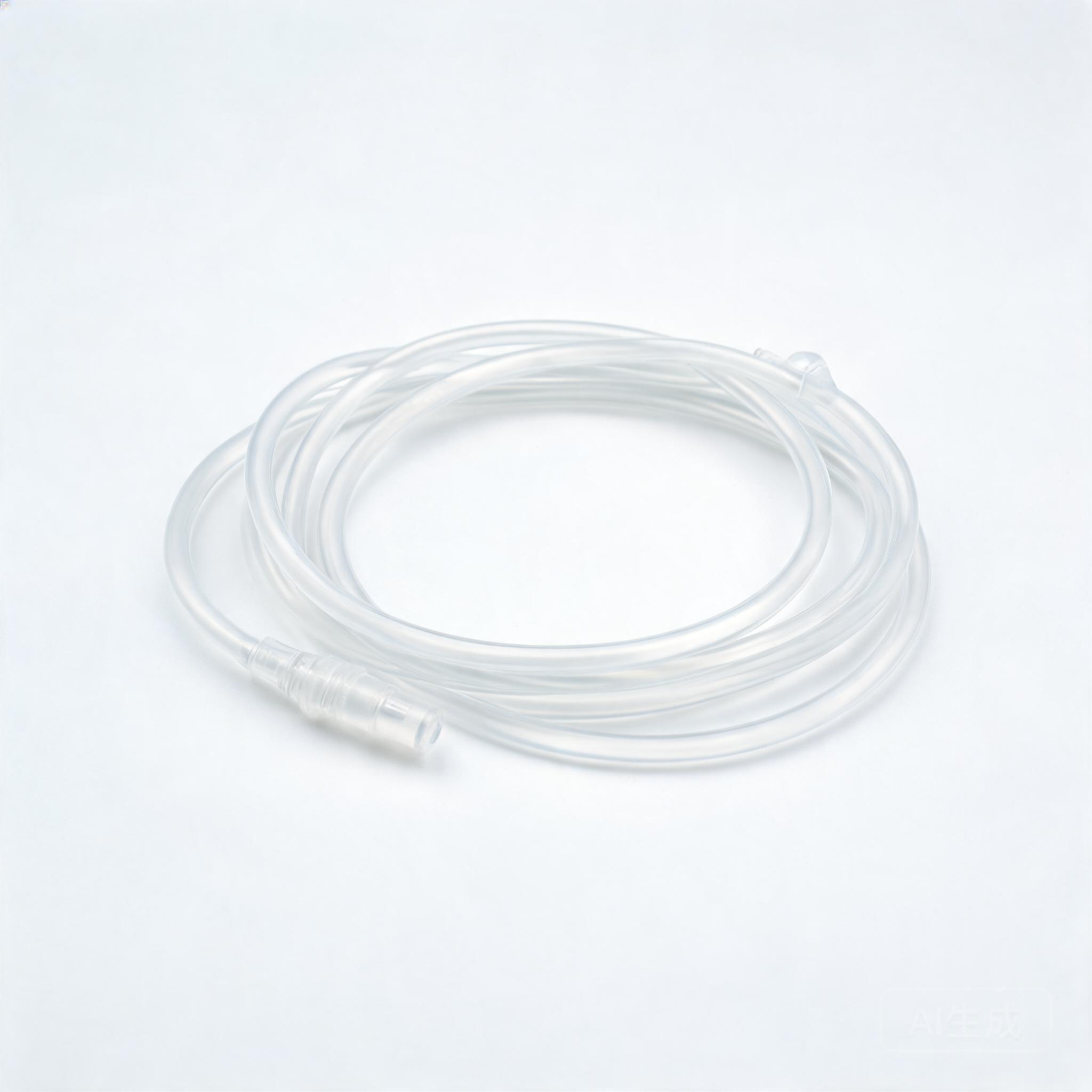
Medical Liquid Silicone Infusion Tube Sterile Medical Grade Silicone Tubing Custom
Medical Grade Liquid Silicone Infusion Tube Sterile IV Administration Tubing
Liquid Silicone Rubber Injection MoldingPublished on May 17, 2026
Made of high-purity medical-grade LSR via injection molding, with smooth inner wall without residue, resistant to drug corrosion and bending, not easy to knot. It has excellent biocompatibility without sensitization, compatible with various infusion connectors, suitable for sterile clinical use scenarios.
Material
Medical-grade LSR
Hardness
Shore A 50-60
Temperature
-40°C ~ +200°C
Colors
Transparent, Translucent, Customizable
Certifications
ISO 13485FDAUSP Class VICFDA
Applications
Widely used in clinical intravenous infusionenteral nutrition infusionintraoperative drug deliveryhome care infusion equipmentcompatible with various infusion pumps and infusion set connect...
medical silicone infusion tubelsr infusion tubemedical grade silicone tubingsterile infusion tubingmedical silicone parts
Curing Temperature
115~130℃
Volume Resistivity≥1×10^15 Ω·cm
Dielectric Strength≥22 kV/mm
Elongation at Break≥650%
Thermal Conductivity0.22 W/(m·K)
Operating Temperature Range-40℃~180℃, resistant to 121℃ high temperature sterilization
Linear Expansion Coefficient2.8×10^-4 ℃^-1
Relevant Certification StandardsUSP Class VI, ISO 10993, GB 4806.10, GMP aseptic production certification
Product Overview
The Medical Grade Liquid Silicone Infusion Tube (Sterile IV Administration Tubing) is a high-precision, biocompatible fluid delivery component engineered exclusively for clinical intravenous (IV) therapy, parenteral nutrition, drug infusion, and critical care fluid transfer applications. Manufactured from medical-grade platinum-cured liquid silicone rubber (LSR) via closed-loop injection molding and extrusion processes, this tubing eliminates common risks associated with traditional PVC or polyolefin IV tubing, including plasticizer leaching, drug adsorption, and material brittleness under low-temperature storage conditions.
Core selling points of this product include inherent biocompatibility compliant with global medical device regulatory requirements, pre-sterilization validation for immediate clinical use, consistent inner diameter tolerances to ensure accurate flow rate control, and resistance to a wide range of commonly infused pharmaceuticals and disinfectants. Unlike disposable non-silicone tubing, this LSR infusion tube can be gamma or autoclave re-sterilized up to 10 times for limited reusable clinical scenarios, reducing healthcare waste without compromising patient safety. It is compatible with all standard IV administration sets, luer lock connectors, infusion pumps, and syringe driver systems, making it a versatile solution for both inpatient and outpatient care settings.
Technical Specifications
Material Properties
ParameterSpecificationTest Standard
Base MaterialPlatinum-cured medical grade LSR, no peroxide residualsISO 10993 part 1
Plasticizer Content0% (no DEHP, BPA, or phthalate additives)USP <661.1>
Chemical CompatibilityStable with 98% of common IV drugs (antibiotics, chemotherapy agents, parenteral nutrition, blood products), 75% ethanol, 2% glutaraldehyde, and peracetic acid disinfectantsUSP <661.2>
Extractable/Leachable ContentTotal organic carbon (TOC) < 0.1 mg/L after 72-hour contact with pH 3–10 aqueous solutions at 40°CUSP <661.1>
Physical Performance
ParameterSpecificationTest Standard
Inner Diameter (ID) Range0.8 mm – 6.0 mm, tolerance ± 0.05 mmASTM D2103
Outer Diameter (OD) Range2.0 mm – 10.0 mm, tolerance ± 0.1 mmASTM D2103
Wall Thickness0.6 mm – 2.0 mm, custom sizes available upon requestASTM D2103
Burst Pressure≥ 300 psi (2.07 MPa) at 23°C, ≥ 200 psi (1.38 MPa) at 40°CASTM D1599
Tensile Strength≥ 7.5 MPaASTM D412
Elongation at Break≥ 500%ASTM D412
Tear Strength≥ 15 kN/mASTM D624
Operating Temperature Range-40°C to 180°C, suitable for refrigerated fluid infusion and autoclave sterilizationIEC 60601-1
Light Transmittance≥ 90% for visual inspection of fluid flow and particulate contaminationASTM D1003
Drug Adsorption Rate< 2% for hydrophobic drugs (e.g., paclitaxel, insulin) over 24-hour infusion, 80% lower than PVC tubingISO 15002
Process Parameters
ParameterSpecification
Extrusion ProcessClosed-loop precision extrusion with real-time laser diameter monitoring, accuracy ± 0.02 mm
Sterilization MethodPre-sterilized via gamma irradiation (25–30 kGy) or ethylene oxide (EO) with residual levels < 4 μg/g
Post-ProcessingUltrasonic cleaning to remove particulate impurities, vacuum packaging in medical-grade Tyvek pouches
Shelf Life5 years when stored in a dry, dark environment at 15–25°C, < 60% relative humidity
Customization OptionsCo-extruded multi-lumen designs, color-coded outer layers for clinical route identification, braided reinforcement for high-pressure infusion applications
Product Advantages
1. Superior Biocompatibility for High-Risk Patient Populations
Unlike PVC tubing which relies on DEHP plasticizers to maintain flexibility, this LSR infusion tube contains no leachable additives, eliminating the risk of endocrine disruption, developmental toxicity, and adverse reactions in sensitive patient groups including neonates, pregnant women, and oncology patients. Its compliance with ISO 10993 and USP Class VI biocompatibility standards makes it suitable for long-duration infusion therapies (over 24 hours) and chronic care applications.
2. Unmatched Drug Delivery Accuracy
The ultra-smooth inner LSR surface and consistent ID tolerance reduce flow resistance variability, ensuring infusion pump flow rate accuracy within ± 2% of the set value, compared to ± 8% for standard PVC tubing. Its extremely low drug adsorption rate prevents dose loss of high-value biologic drugs, chemotherapy agents, and protein-based therapies, ensuring patients receive the full prescribed dosage and improving clinical outcomes.
3. Durability and Versatility Across Clinical Scenarios
The high tear strength and temperature resistance of LSR make this tubing suitable for use in extreme clinical environments, including pre-hospital emergency care (operating at sub-zero temperatures), neonatal intensive care units (compatible with warmed infusion systems), and sterile operating rooms (autoclavable for use with surgical infusion sets). It kinks 60% less frequently than PVC tubing under the same bending stress, reducing flow interruptions and the need for frequent tubing replacements.
4. Reduced Healthcare Waste and Cost of Ownership
While upfront costs are slightly higher than disposable PVC tubing, the ability to re-sterilize this LSR infusion tube up to 10 times for non-invasive clinical applications reduces total tubing consumption by up to 90% in high-usage departments such as emergency rooms and outpatient infusion centers. Its resistance to cracking and degradation also reduces the risk of tubing rupture-related adverse events, lowering associated liability and treatment costs.
Applications
This medical LSR infusion tube is deployed across a wide range of clinical and life science settings, including:
General Inpatient Care: Routine IV fluid administration, antibiotic delivery, and electrolyte replacement in adult and pediatric wards, with minimal risk of phlebitis associated with leachable additives.
Oncology Centers: Chemotherapy drug infusion and targeted biologic therapy delivery, where low drug adsorption ensures accurate dosing of high-cost, narrow-therapeutic-window medications.
Neonatal and Pediatric Intensive Care Units (NICU/PICU): Low-volume infusion of parenteral nutrition, inotropes, and pain management medications, with DEHP-free formulation eliminating risks to developing organ systems.
Emergency Medical Services (EMS): Pre-hospital fluid resuscitation and trauma care, with temperature-resistant performance ensuring functionality in cold or hot outdoor environments.
Surgical Operating Rooms: High-pressure infusion of contrast media during interventional radiology procedures, and sterile fluid delivery during open and laparoscopic surgeries, with autoclave compatibility supporting sterile field requirements.
Home Healthcare Settings: Long-term chronic infusion therapies (e.g., insulin, pain management, immunoglobulin) for ambulatory patients, with kink resistance and compatibility with portable infusion pumps reducing patient care burden.
Life Science Research: Pre-clinical animal study fluid delivery, bioreactor media transfer, and laboratory fluid handling systems, where biocompatibility and low extractable levels prevent sample contamination.
Selection Guide
Hardness Selection
50A (Standard): Recommended for most general infusion applications, offering a balance of flexibility and structural integrity to minimize kinking while maintaining compatibility with standard luer connectors. Suitable for gravity infusion and low-pressure pump applications up to 100 psi.
60A (High-Pressure): Designed for contrast media infusion, arterial line monitoring, and high-pressure syringe pump applications, with higher burst pressure resistance and minimal dimensional expansion under pressure to ensure flow rate accuracy.
40A (Flexible): Ideal for neonatal and pediatric applications, with increased softness to reduce patient discomfort during extended wear, and flexibility to conform to small body contours without kinking.
Size Specifications
Select tubing size based on flow rate requirements and fluid viscosity:
ID 0.8–1.2 mm: Low-volume infusion (0.1–10 mL/hour) for neonatology, critical care inotrope delivery, and pediatric pain management.
ID 1.5–2.5 mm: Standard adult infusion (10–200 mL/hour) for routine fluid replacement, antibiotic delivery, and general ward use.
ID 3.0–6.0 mm: High-flow applications (200–1000 mL/hour) including trauma resuscitation, blood product transfusion, and surgical irrigation fluid delivery.
For custom multi-lumen or reinforced tubing designs, contact our engineering team to review application-specific requirements.
Material Grade
Standard Medical Grade (USP Class VI, ISO 10993): Suitable for all short-term (≤ 30 days) infusion applications and most clinical use cases, pre-sterilized and ready for immediate use.
Implantable Grade: For temporary in-dwelling applications (≤ 6 months) such as subcutaneous infusion ports and peritoneal dialysis delivery lines, with additional testing for long-term tissue compatibility and calcification resistance.
Low-Extractable Grade: For biologic drug delivery and cell therapy applications, with enhanced post-extrusion cleaning processes to reduce extractable levels to < 0.05 mg/L TOC, preventing protein denaturation and drug product degradation.
Quality Assurance
All Medical Grade Liquid Silicone Infusion Tubes are manufactured in an ISO 13485:2016 certified cleanroom (Class 100,000 / ISO 8) environment, with end-to-end quality control processes to ensure consistency and safety:
Incoming Material Inspection: Every batch of LSR raw material is tested for biocompatibility, purity, and mechanical performance prior to production, with full traceability to material suppliers.
In-Process Quality Control: Real-time laser diameter monitoring during extrusion ensures dimensional accuracy within tolerance, with 100% visual inspection for surface defects, particulate contamination, and wall thickness uniformity.
Final Batch Testing: Every production lot undergoes burst pressure testing, flow rate accuracy validation, extractable content testing, and sterility validation per USP <71> sterility test standards. A full batch test report is available upon request for every order.
Regulatory Compliance: The product is CE marked per EU MDR 2017/745 (Class IIa medical device), FDA 510(k) cleared for IV administration use, and compliant with China NMPA medical device registration requirements for global market access.
Warranty: We offer a 2-year shelf life warranty for all unopened products, with a no-questions-asked replacement policy for any products found to have manufacturing defects or non-conformities with published specifications.