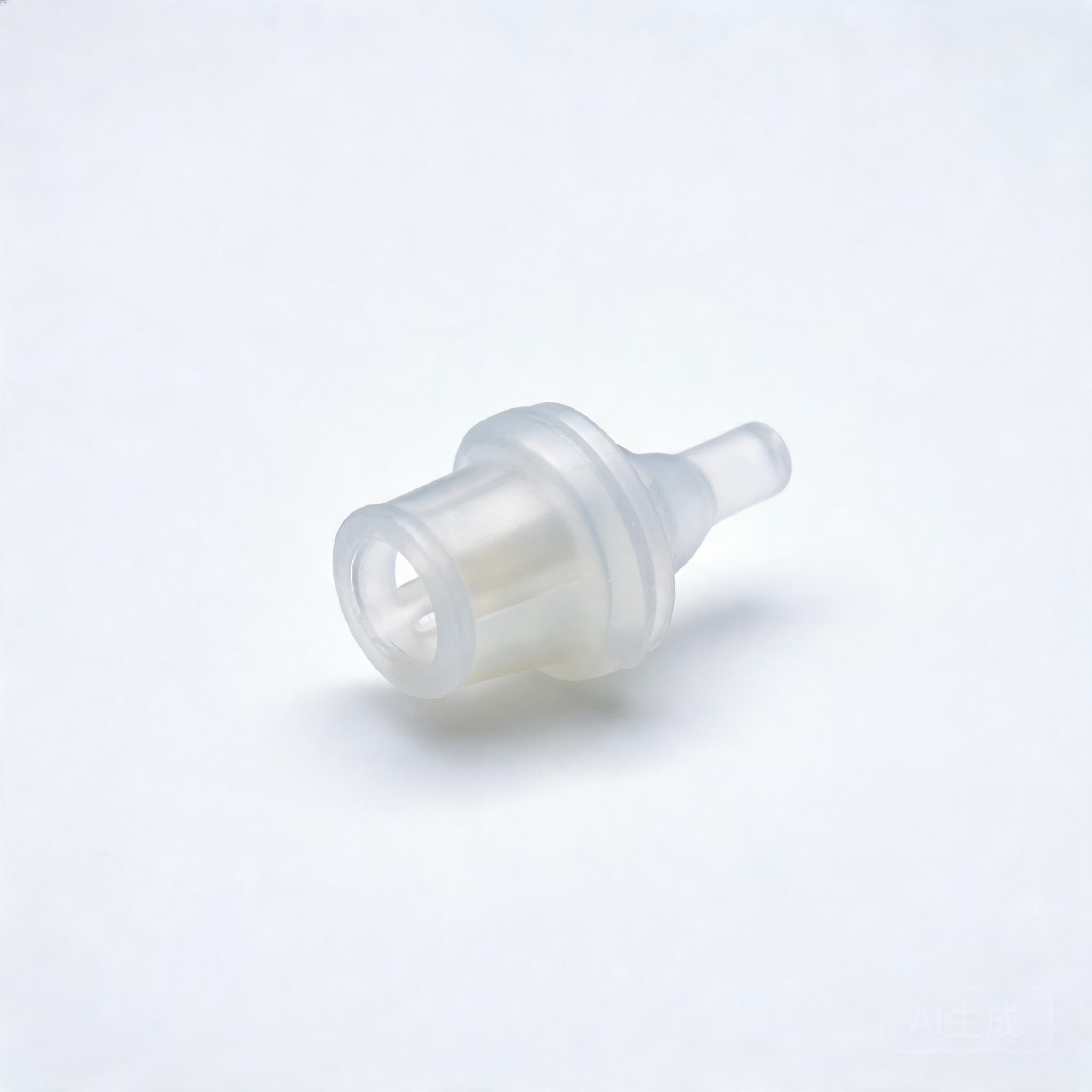
Medical Grade LSR Hemostasis Valve, Sealing Valve for Interventional Devices, ISO13485 Certified
Medical Liquid Silicone Hemostasis Valve Precision Interventional Medical Device Sealing Component
Liquid Silicone Rubber Injection MoldingPublished on May 17, 2026
This medical liquid silicone hemostasis valve is made of high-purity medical-grade LSR by injection molding, with excellent elasticity and sealing performance, which can effectively prevent blood leakage while allowing the passage of various interventional instruments. It has excellent biocompatibility, no sensitization and no precipitation, suitable for various vascular interventional surgical supporting devices.
Material
Medical-grade LSR
Hardness
Shore A 40-60
Temperature
-40°C ~ +180°C
Specifications
Density1.12~1.15 g/cm³
Color OptionsTranslucent/Medical Blue/Customizable
Tear Strength≥35 kN/m
Hardness Range40~60 Shore A
Material GradeMedical Grade ISO 10993 USP Class VI
Vulcanization Time30~60 s (Adjusted by Product Thickness)
articles.tableOfContents
Product Description
# Medical Liquid Silicone Hemostasis Valve: Precision Interventional Medical Device Sealing Component
Product Overview
Related Tags
medical silicone hemostasis valveLSR hemostasis valveinterventional device sealing valvemedical hemostasis valveliquid silicone medical valve
Colors
Transparent, Semi-transparent, Customizable
Certifications
ISO 13485FDAUSP Class VI
Applications
Widely used in various clinical interventional surgery scenarios such as angiographyinterventional therapycentral venous catheterizationetc.matched with interventional sheaths and catheter ...
Relevant Certification StandardsISO 13485, FDA 21CFR 177.2600, ROHS
The Medical Liquid Silicone Hemostasis Valve is a high-precision sealing component engineered for interventional medical procedures, manufactured from medical-grade injection-molded liquid silicone rubber (LSR). As a critical component in vascular access and interventional delivery systems, this valve is designed to regulate blood backflow while enabling smooth insertion and manipulation of guidewires, catheters, and interventional instruments through its central slit or variable-diameter lumen.
Unlike traditional thermoplastic or latex hemostasis valves, our LSR-based design balances biocompatibility, seal reliability, and low insertion force to minimize procedural risk and clinician workload. It is compatible with 0.014” to 0.038” guidewires and 4F to 8F interventional catheters, with a zero-leakage pressure rating of up to 300 mmHg to accommodate physiological and procedural pressure fluctuations common in angiography, electrophysiology, and structural heart interventions. The proprietary slit design delivers consistent performance across 50+ instrument insertions without permanent deformation, reducing the need for valve replacement mid-procedure.
Technical Specifications
Material Properties
This hemostasis valve is manufactured from Class VI medical-grade LSR, formulated without phthalates, latex, or toxic additives to eliminate risks of allergic reactions and chemical leaching:
ParameterSpecificationTest Standard
Base MaterialPlatinum-cured medical liquid silicone rubberISO 10993 series
BiocompatibilityISO 10993-5 (cytotoxicity: Grade 0), ISO 10993-10 (irritation/sensitization: non-irritating, non-sensitizing), ISO 10993-4 (hemolysis rate < 1%)FDA 21 CFR Part 177.2600
Chemical CompatibilityResistant to iodophor, 75% ethanol, heparin saline, contrast media, and hydrogen peroxide disinfectionASTM D471
Sterilization CompatibilityAutoclaving (121℃, 15 psi), ethylene oxide (EO), gamma irradiation (25–40 kGy), electron beam sterilizationISO 11135, ISO 11137
Storage Temperature Range-40℃ to +60℃, 2-year shelf life under dry, shaded conditionsAccelerated aging test (ASTM F1980)
Physical Performance
The valve’s mechanical properties are optimized for interventional use cases, balancing seal integrity and instrument maneuverability:
ParameterSpecificationTest Method
Shore Hardness40–70 Shore A (customizable per application)ASTM D2240
Seal Pressure Tolerance≥ 300 mmHg (no backflow with 0.038” guidewire inserted; ≥ 200 mmHg with no instrument present)ISO 10555-1
Insertion/Withdrawal Force0.5–2 N for 0.014” guidewire; 1–3 N for 8F catheterCustom interventional instrument friction test
Fatigue Resistance≥ 50 instrument insertions without slit deformation or leakage performance degradationCyclic insertion test
Process Parameters
Manufactured via high-precision LSR injection molding to ensure dimensional consistency across production batches:
ParameterSpecification
Molding Tolerance±0.02 mm for critical sealing surfaces; ±0.05 mm for non-critical features
Slit GeometryOne-piece cross-slit, Y-slit, or multi-lumen design (customizable) with edge smoothness Ra ≤ 0.2 μm
Molding Flash≤ 0.01 mm on all functional surfaces to avoid particulate shedding during instrument insertion
Post-Molding ProcessingAutomated de-flashing, secondary curing (4h at 150°C), and 100% visual inspection to eliminate residual contaminants
Batch ConsistencyDimensional variation < 0.03 mm across 100,000-unit production runs
Product Advantages
Superior Biocompatibility and Patient Safety
Platinum-cured LSR eliminates latex-related allergic reactions and plasticizer leaching, with a hemolysis rate of < 1% to reduce risk of thrombus formation during extended procedures. The material is fully compatible with all common interventional site disinfection agents and sterilization methods, eliminating performance degradation post-sterilization.
Consistent Seal Performance Across Procedural Cycles
The low compression set (<10%) and high tear resistance of LSR ensure the valve’s slit retains its original shape after dozens of instrument insertions, maintaining zero backflow up to 300 mmHg. This eliminates blood leakage-related procedural interruptions and reduces the risk of air embolism, a critical safety risk in vascular interventions.
Low Insertion Force for Improved Clinical Workflow
Proprietary slit geometry and material formulation deliver smooth, low-friction instrument passage without compromising seal integrity. The 0.5–3 N insertion force reduces clinician hand fatigue during long-duration electrophysiology or structural heart procedures, while the rounded slit edges eliminate guidewire catch and damage during manipulation.
Precision Molding for Device Compatibility
Tight dimensional tolerances ensure the valve fits seamlessly into all standard 4F to 8F catheter hubs and vascular sheath assemblies, with no additional adhesive or assembly modifications required. The one-piece molded design eliminates joint gaps that could trap blood or particulate matter, reducing infection risk.
Long-Term Stability and Shelf Life
LSR’s inherent resistance to hydrolysis, oxidation, and temperature fluctuations delivers a 2-year shelf life without performance degradation, even in unregulated storage environments. This reduces inventory waste for healthcare facilities and device manufacturers.
Applications
This medical LSR hemostasis valve is a universal sealing component for interventional medical devices, with primary use cases including:
Vascular Intervention: Integrated into vascular sheaths, guiding catheters, and diagnostic angiography catheters for coronary angiography, percutaneous coronary intervention (PCI), and peripheral vascular procedures, where it prevents blood backflow during guidewire and stent delivery.
Electrophysiology (EP): Used in EP catheter sheaths and ablation catheter delivery systems to enable repeated insertion and repositioning of ablation catheters and mapping wires without leakage, supporting long-duration arrhythmia treatment procedures.
Structural Heart Intervention: Compatible with transcatheter aortic valve replacement (TAVR), transcatheter mitral valve repair (TMVR), and left atrial appendage closure (LAAC) delivery systems, withstanding the high insertion forces of large-bore devices while maintaining seal integrity.
Minimally Invasive Surgery: Integrated into laparoscopic and thoracoscopic trocar seals, as well as endoscopic retrograde cholangiopancreatography (ERCP) device access ports, to prevent insufflation gas leakage and bodily fluid backflow during non-vascular interventional procedures.
Infusion and Access Devices: Used in central venous catheters (CVC) and peripherally inserted central catheters (PICC) to enable repeated needle-free access for medication delivery and blood sampling, reducing catheter-related bloodstream infection (CRBSI) risk.
Selection Guide
Hardness Selection
40–50 Shore A: Recommended for procedures requiring repeated insertion of small-diameter instruments (0.014” to 0.025” guidewires, 4F to 5F catheters) such as pediatric interventional cardiology and diagnostic angiography, where low insertion force is a priority.
55–60 Shore A: General-purpose hardness for most adult interventional procedures, balancing seal pressure (up to 300 mmHg) and insertion force for 0.032” to 0.038” guidewires and 6F to 7F catheters, suitable for PCI and electrophysiology applications.
65–70 Shore A: Designed for high-pressure and large-bore interventional use cases, including TAVR and peripheral arterial intervention with 8F+ catheters, delivering maximum seal pressure resistance of up to 400 mmHg to accommodate high-pressure contrast injection.
Size Specifications
Standard sizes are matched to common vascular sheath and catheter hub dimensions:
Custom sizes and multi-lumen designs are available for specialty interventional devices upon request.
Material Grade
Standard Medical Grade: Class VI biocompatible LSR, suitable for short-term (≤ 30 days) implantation and interventional procedures, meeting FDA and CE regulatory requirements for most vascular access applications.
Implantable Grade: High-purity LSR formulation with enhanced thromboresistance, designed for long-term (≥ 30 days) indwelling devices such as PICCs and implantable port access valves, meeting ISO 10993-18 chemical characterization requirements.
Quality Assurance
Our medical LSR hemostasis valves are manufactured in an ISO 13485:2016 certified cleanroom (Class 100,000) with end-to-end quality control processes to ensure consistency and safety:
Incoming Material Testing: Every batch of LSR raw material undergoes biocompatibility verification, hardness testing, and traceability audit to comply with FDA 21 CFR Part 177.2600 requirements.
In-Process Inspection: 100% dimensional inspection of critical sealing surfaces via high-precision vision systems, with flash and slit geometry checks for every production unit to eliminate defective parts.
Performance Validation: Every production lot undergoes random sampling for seal pressure testing, insertion force testing, and cyclic insertion fatigue testing to meet stated performance specifications.
Sterilization Validation: We provide pre-validated sterilization protocols for EO, gamma irradiation, and autoclaving, with full documentation of material performance post-sterilization to support your device regulatory submission.
Certification: All products are CE marked (MDR 2017/745 compliant) and meet FDA 510(k) master file requirements, with full traceability documentation available for every batch to support regulatory audits.
Warranty: We guarantee zero material and manufacturing defects for all delivered products, with a 2-year shelf life warranty under recommended storage conditions. Custom formulation and design support are available for OEM device manufacturers, with a 4-week lead time for prototype development and 2-week lead time for mass production.