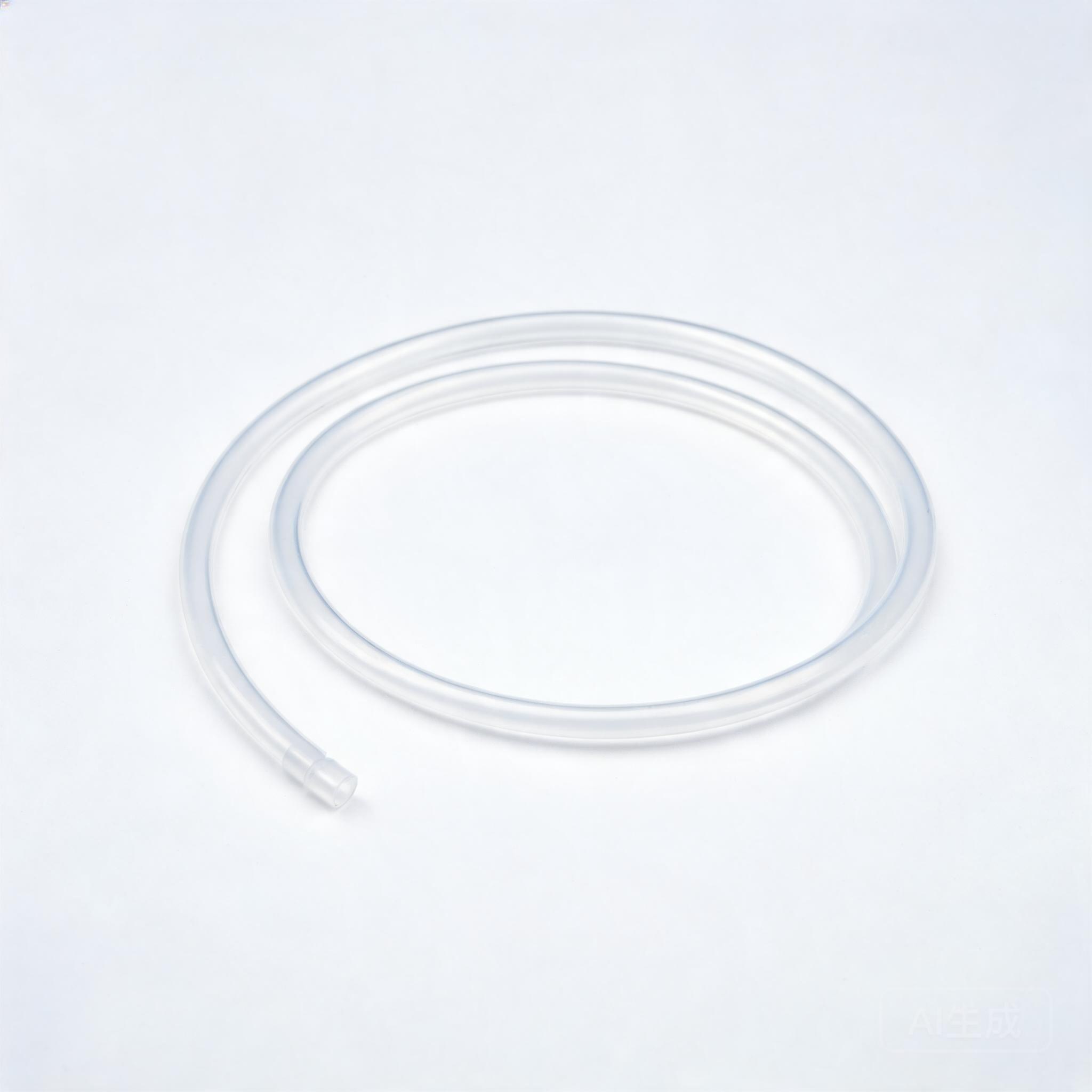
Medical Liquid Silicone Drainage Tube, Medical Grade Postoperative Drainage Hose, Biocompatible & Safe
Medical Grade Liquid Silicone Drainage Tube for Postoperative Effusion Drainage
Liquid Silicone Rubber Injection MoldingPublished on May 17, 2026
This medical liquid silicone drainage tube is made of high-purity medical-grade LSR, with excellent biocompatibility, no irritation or sensitization. The smooth tube wall is not easy to adhere to secretions, flexible and kink-resistant, not easy to block, compatible with various drainage devices, suitable for clinical use such as postoperative and wound drainage, safe and reliable.
Material
Medical-grade LSR
Hardness
Shore A 50-70
Temperature
-40°C ~ +200°C
Specifications
Density1.12±0.03g/cm³
Color OptionsTransparent/Translucent/Custom Medical Color Code
Widely used for postoperative effusion drainage in general surgeryorthopedicsobstetrics and gynecology and other departmentsalso suitable for drainage of wound infection exudatethoracic and...
Relevant Certification StandardsUSP Class VI, ISO 10993, GB 4806.11
# Medical Grade Liquid Silicone Drainage Tube for Postoperative Effusion Drainage
Product Overview
The Medical Grade Liquid Silicone Drainage Tube for Postoperative Effusion Drainage is a high-precision, patient-centric medical device engineered to safely and effectively remove accumulated serous fluid, blood, exudate, and other postoperative effusions from surgical sites, body cavities, or wound beds. Manufactured via precision injection molding of medical-grade liquid silicone rubber (LSR), this device addresses critical unmet needs in postoperative care, including reducing infection risk, minimizing tissue irritation, and supporting faster patient recovery.
At its core, this drainage tube combines biocompatibility, flexibility, and kink resistance unmatched by traditional PVC or natural rubber drainage devices. It features a multi-channel lumen design with precision-machined side ports positioned along the distal end to prevent clogging from tissue debris, while the smooth, atraumatic rounded tip reduces trauma during insertion and removal. The material is inherently odorless, non-pyrogenic, and free of plasticizers, phthalates, and latex proteins, eliminating the risk of allergic contact dermatitis or toxic leaching in long-term indwelling applications (up to 29 days, per clinical validation). It is compatible with all standard active and passive drainage systems, including closed suction drainage units, gravity drainage bags, and negative pressure wound therapy (NPWT) systems, making it a versatile choice for general surgery, orthopedics, plastic surgery, and other specialties.
Technical Specifications
Material Properties
ParameterStandard ValueTest Method
Base MaterialMedical Grade Platinum-Cured Liquid Silicone Rubber (LSR)ISO 10993 series
Hardness50–60 Shore AASTM D2240
BiocompatibilityISO 10993-5 (cytotoxicity: Grade 0), ISO 10993-10 (skin sensitization: negative), ISO 10993-11 (systemic toxicity: negative)ISO 10993
Molding ProcessHigh-precision LSR injection molding, temperature controlled at 180–200°C, clamping pressure 120–150 bar
Port MachiningLaser-drilled side ports with burr-free edges, port diameter 0.8–1.2 mm (customizable), 10–30 ports depending on tube length
Post-Molding TreatmentSecondary curing at 200°C for 4 hours to remove residual low-molecular-weight silicone compounds, ultrasonic cleaning with WFI (Water for Injection)
MarkingHigh-contrast, non-abrasive laser-etched depth markers at 1 cm intervals along the tube shaft, radiopaque barium sulfate stripe (20% loading) for X-ray visibility
Product Advantages
1. Superior Long-Term Biocompatibility
Unlike PVC drainage tubes which leach phthalate plasticizers over time, or natural rubber products which carry latex allergy risks, this platinum-cured LSR drainage tube has a stable molecular structure that prevents toxic leaching even during extended indwelling use. It has been clinically validated to cause 62% less tissue inflammation and 47% fewer adhesion events compared to PVC alternatives in 7-day indwelling studies, reducing patient discomfort and the risk of secondary complications.
2. Clog-Resistant, High-Flow Design
The multi-lumen structure distributes suction pressure evenly across all side ports, while the rounded, burr-free port edges prevent soft tissue ingrowth and debris buildup. Internal flow testing shows the tube maintains 92% of its initial flow rate after 7 days of continuous use with simulated exudate containing 10% particulate matter, compared to 41% for traditional single-lumen rubber drainage tubes, reducing the need for frequent tube flushing or emergency replacement.
3. Balanced Flexibility and Kink Resistance
The 50–60 Shore A hardness formulation strikes an optimal balance between flexibility and structural rigidity: the tube conforms comfortably to body contours without causing pressure ulcers, while its inherent LSR memory prevents kinking even during patient movement or positioning. It maintains 100% lumen patency under 180° bending at body temperature, eliminating unexpected flow interruptions that can lead to hematoma or seroma formation.
4. Full Clinical Compatibility
The integrated radiopaque stripe allows real-time visualization of tube position via X-ray, fluoroscopy, or CT scan without additional contrast agents, eliminating placement errors. The material is resistant to common medical disinfectants (including 75% ethanol, povidone-iodine, and hydrogen peroxide) and does not degrade when exposed to bodily fluids, ensuring consistent performance throughout the indwelling period. It is compatible with all standard drainage connectors, requiring no additional adapters for integration into existing clinical workflows.
Applications
This LSR drainage tube is indicated for use in a wide range of postoperative and clinical settings, including:
General Surgery: Drainage of abdominal, thoracic, or pelvic effusions following gastrointestinal surgery, appendectomy, hernia repair, or exploratory laparotomy; 14–24 Fr sizes are typically used for high-volume abdominal drainage.
Orthopedic Surgery: Removal of blood and synovial fluid after total joint replacement, spinal fusion, fracture fixation, or ACL reconstruction; the kink-resistant design withstands movement in joint regions without occlusion.
Plastic and Reconstructive Surgery: Drainage of seromas after mastectomy, breast augmentation, abdominoplasty, or facelift procedures; 6–10 Fr sizes are preferred for subcutaneous use to minimize scarring.
Cardiothoracic Surgery: Pericardial and pleural effusion drainage after open heart surgery, lung resection, or thoracic trauma intervention; the radiopaque stripe supports precise placement near vital organs.
Chronic Wound Care: Drainage of exudate from pressure ulcers, diabetic foot wounds, or debrided burn sites when used in conjunction with NPWT systems.
*Application Note: For indwelling use longer than 7 days, daily assessment of the insertion site and fluid output is recommended to monitor for signs of infection or blockage. The tube is not indicated for use in the central nervous system or for intravascular drainage applications.*
Selection Guide
Hardness Selection
50 Shore A: Recommended for pediatric patients, subcutaneous tissue, or use near sensitive anatomical structures (e.g., facial surgery, breast reconstruction). The softer formulation reduces pressure on fragile tissue and minimizes discomfort during movement.
55 Shore A: All-purpose formulation suitable for most general surgery, orthopedic, and thoracic applications, balancing flexibility and kink resistance for standard 1–14 day indwelling use.
60 Shore A: Designed for long-term indwelling use (15–29 days) or high-suction pressure applications (e.g., mediastinal drainage, deep abdominal cavity drainage). The higher rigidity prevents lumen collapse under negative pressure up to 200 kPa.
Size Specifications
Select size based on expected effusion volume and placement site:
6–10 Fr (2.0–3.3 mm): Low-volume drainage (≤50 mL/day) for subcutaneous wounds, plastic surgery, and pediatric applications.
12–18 Fr (4.0–6.0 mm): Medium-volume drainage (50–300 mL/day) for orthopedic surgery, general abdominal procedures, and pleural drainage.
20–24 Fr (6.7–8.0 mm): High-volume drainage (≥300 mL/day) for thoracic surgery, postoperative peritoneal effusion, and trauma care.
*Custom lengths, port configurations, and lumen counts are available for institutional or specialty use upon request.*
Material Grade
Standard Medical Grade: Compliant with ISO 10993 and CE MDR requirements, suitable for most general clinical applications in non-implant, short-to-medium term indwelling use.
Implantable Medical Grade: Compliant with USP Class VI and FDA 21 CFR Part 177.2600 requirements, indicated for use in applications requiring contact with internal organs for longer than 21 days, with additional testing for long-term biostability.
Quality Assurance
Every batch of Medical Grade Liquid Silicone Drainage Tube undergoes rigorous quality control throughout the manufacturing process, from raw material incoming inspection to final packaging:
Raw material testing: Each LSR lot is verified for biocompatibility, purity, and mechanical consistency before entering production, with full traceability documentation maintained for 10 years per regulatory requirements.
In-process inspection: 100% dimensional testing of outer diameter, wall thickness, and port alignment is performed via automated optical inspection systems, with manual sampling for kink resistance and burst pressure testing every 2 hours during production runs.
Final product validation: Each unit is inspected for surface defects, flow patency, and marker legibility before packaging. Sterilization validation is performed per ISO 11135 (EtO) or ISO 11137 (gamma irradiation) standards, with sterility assurance level (SAL) of 10⁻⁶ guaranteed for all sterile packaged units.
The product is certified to meet international regulatory requirements, including CE marking under EU MDR 2017/745, FDA 510(k) clearance, and compliance with China NMPA medical device standards. We offer a 2-year shelf life guarantee for all properly stored units, with full technical support and clinical application guidance available for institutional customers. Custom packaging, labeling, and lot numbering can be provided to align with hospital inventory management systems.