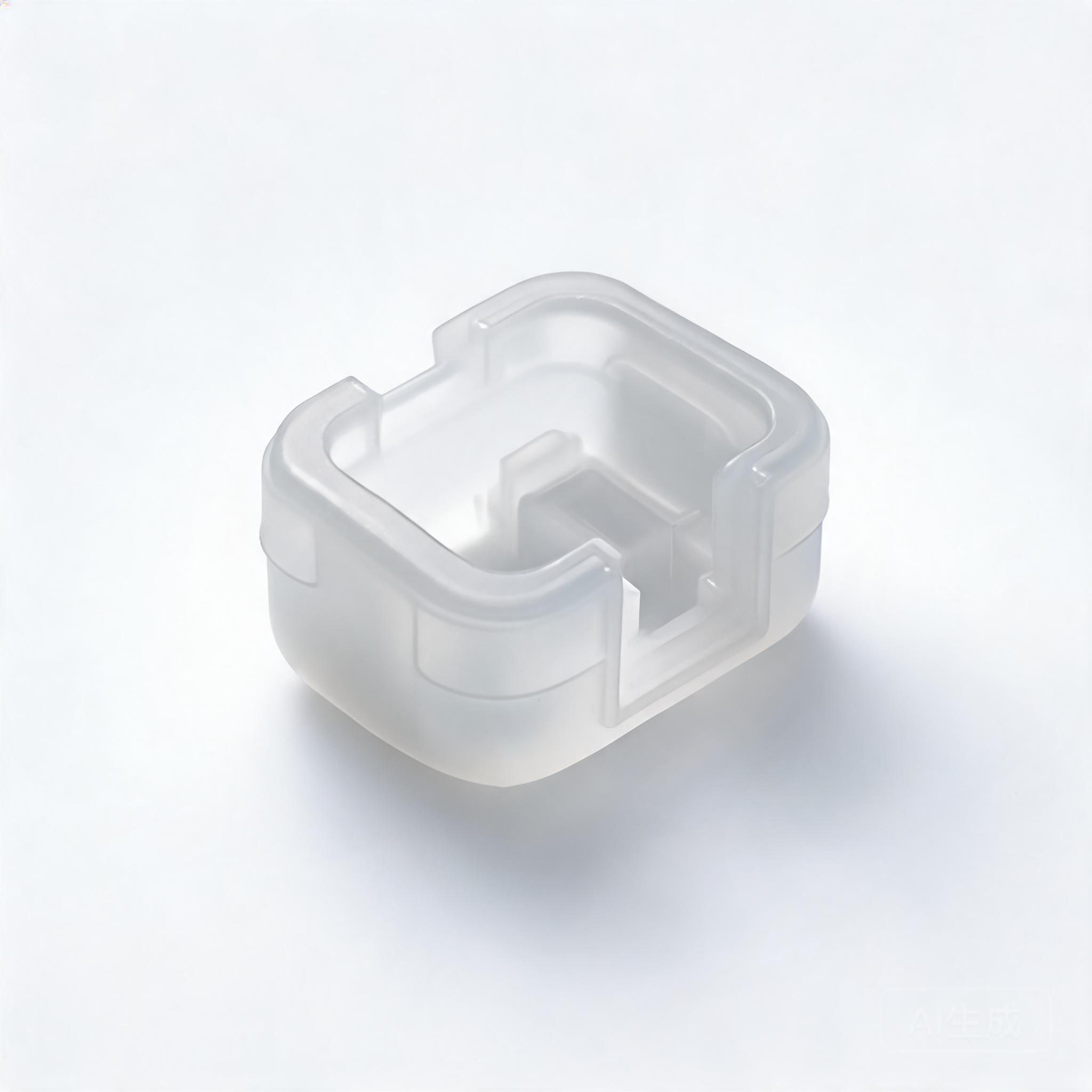
Industrial LSR Protective Shell for Power Sensors Waterproof Insulation
Liquid Silicone Protective Shell for Power Sensors
Liquid Silicone Rubber Injection MoldingPublished on May 17, 2026
This liquid silicone protective shell for power sensors is made of industrial-grade LSR via injection molding, with excellent insulation, waterproof, dustproof and impact resistance. It can effectively withstand harsh outdoor environments and electromagnetic interference, ensuring stable operation of sensors and greatly extending service life, suitable for most mainstream power sensor specifications.
Material
Industrial LSR
Hardness
Shore A 50-70
Temperature
-60°C ~ +200°C
Colors
Black, Gray, Transparent, Customizable
Certifications
ISO 9001RoHSUL94-V0 etc.
Applications
Widely used for external protection of power sensors in power transmission and distribution linessubstationssmart grid monitoring systemssuitable for complex working conditions such as outdoo...
# Liquid Silicone Protective Shell for Power Sensors
Product Overview
The Liquid Silicone Rubber (LSR) Protective Shell for Power Sensors is a high-performance enclosure solution purpose-engineered to safeguard critical power grid sensing components from extreme environmental, mechanical, and electrical stressors common in power transmission, distribution, and renewable energy infrastructure. Manufactured via precision injection molding of medical and industrial-grade liquid silicone rubber, this protective shell delivers a unique combination of weather resistance, electrical insulation, and mechanical durability that outperforms traditional thermoplastic, epoxy, and rubber alternatives for power sensor applications.
Core design features include a seamless, IP68-rated sealing structure, customizable fit for Rogowski coils, voltage sensors, temperature sensors, and fault current sensors, and inherent compliance with grid safety standards. Unlike conventional protective materials that degrade under prolonged UV exposure, temperature cycling, or electrical discharge, this LSR shell maintains dimensional stability and performance integrity over a 30-year design lifespan, reducing unplanned grid maintenance costs and minimizing sensor failure risks. It is available in standard and custom form factors to match both off-the-shelf and bespoke power sensor designs, with integrated mounting features for fast, tool-free installation in overhead lines, underground cable systems, and substation equipment.
Technical Specifications
Material Properties
All protective shells are formulated from high-purity addition-cure liquid silicone rubber, with material properties validated per IEC 60489 and ASTM D2000 standards for electrical applications:
ParameterTest StandardValue
Base Polymer-Methyl vinyl silicone rubber (VMQ)
Curing System-Platinum-catalyzed addition cure, no byproducts
DensityASTM D7921.12 ± 0.05 g/cm³
Flammability RatingUL 94V-0 (self-extinguishing, no dripping)
Tensile StrengthASTM D412≥ 6.5 MPa
Elongation at BreakASTM D412≥ 350%
Tear StrengthASTM D624 Die B≥ 25 kN/m
Compression Set (22h @ 175°C)ASTM D395 Method B≤ 10%
Water Absorption (24h @ 23°C)ASTM D570≤ 0.1%
Thermal ConductivityASTM C5180.25 W/(m·K) (0.8 W/(m·K) optional for high-heat applications)
Physical Performance
The shell’s structural performance is optimized for the harsh operating conditions of power systems:
ParameterValue
Operating Temperature Range-60°C to +200°C (short-term exposure up to 260°C for 4 hours)
IP Protection RatingIP68 (submersible to 10m for 72 hours, fully dust-tight)
Dielectric Strength≥ 22 kV/mm
Volume Resistivity≥ 1×10¹⁶ Ω·cm
Comparative Tracking Index (CTI)≥ 600V (Class CTI 0, no tracking under 600V wet contamination)
UV Resistance (1000h QUV-A exposure)< 5% change in tensile strength and elongation
Chemical ResistanceStable to transformer oil, dilute acids/alkalis, salt spray, and common grid cleaning agents
Impact Resistance2J impact energy (1kg weight dropped from 20cm) with no structural damage
Process Parameters
All shells are manufactured via high-precision LSR injection molding to ensure consistent dimensional accuracy:
ParameterSpecification
Molding Tolerance±0.02mm for features <10mm, ±0.1mm for features up to 200mm
Standard Wall Thickness1.5mm (0.8–3mm customizable for high-impact or low-profile requirements)
Insert Molding CompatibilitySupports overmolding onto metal mounting brackets, sensor circuit boards, and cable assemblies
Secondary ProcessingAvailable with plasma surface treatment for enhanced adhesion to adhesives, laser marking for serial number tracking, and pre-applied pressure-sensitive adhesive (PSA) for permanent sealing
Lead Time7–10 days for custom prototype tooling, 3–5 days for standard stock sizes
Product Advantages
1. Unmatched Long-Term Reliability in Harsh Grid Environments
Unlike polycarbonate or ABS thermoplastic shells that become brittle after 3–5 years of outdoor exposure, this LSR protective shell retains its elasticity and structural integrity across 30 years of temperature cycling, UV radiation, and salt spray exposure. Its 10% maximum compression set ensures consistent sealing pressure on sensor housing gaskets, eliminating water intrusion risks even after decades of thermal expansion and contraction. This reduces annual power sensor maintenance costs by up to 40% compared to traditional protective solutions.
2. Superior Electrical Insulation and Arc Safety
With a 22kV/mm dielectric strength and 600V CTI rating, the shell provides an extra layer of electrical protection against partial discharge, tracking, and flashover in high-voltage environments up to 35kV. Its UL 94 V-0 flammability rating prevents fire spread in the event of a sensor fault, supporting substation fire safety compliance. The material’s low dielectric constant (ε=3.0) also minimizes signal interference for high-sensitivity current and voltage sensors, ensuring <0.1% deviation in measurement accuracy.
3. Customizable Seamless Design for Perfect Sensor Fit
The injection molding process enables fully customized geometries with integrated sealing ribs, cable strain relief, and mounting features, eliminating the need for assembly adhesives or mechanical fasteners that create leak points. Seamless construction ensures no ingress of dust, water, or insect debris, even in underground cable vaults with high humidity and contamination. For retrofit projects, the shell’s high elasticity allows snap-on installation without disassembly of existing sensor wiring, cutting installation time by 70% compared to rigid epoxy enclosures.
4. Low Environmental Impact and Regulatory Compliance
LSR is a non-toxic, RoHS and REACH compliant material that does not leach harmful chemicals into soil or water, making it suitable for use in environmentally protected areas near rivers and wetlands. Unlike thermoset rubber, it is fully recyclable at the end of its lifespan, supporting grid operators’ carbon reduction and circular economy targets. The material is also resistant to fungal and bacterial growth, preventing performance degradation in tropical and subtropical climates with high humidity.
Applications
This LSR protective shell is deployed across global power infrastructure for the following use cases:
Overhead Line Sensors: Protects Rogowski coil current sensors, temperature sensors, and fault passage indicators mounted on 10kV–35kV distribution lines, withstanding wind-induced vibration, ice loading, and direct sunlight exposure.
Underground Cable Sensors: Seals cable joint temperature and partial discharge sensors installed in manholes and cable vaults, resisting long-term immersion in groundwater, transformer oil leakage, and rodent damage.
Substation Equipment Sensors: Safeguards busbar voltage sensors, transformer winding temperature sensors, and SF6 gas leak detectors in indoor and outdoor substations, withstanding high electromagnetic interference and occasional arc flash events.
Renewable Energy Grid Sensors: Used for inverter output current sensors and box transformer monitoring sensors in solar and wind farms, resistant to salt spray (coastal wind farms) and extreme temperature fluctuations (high-altitude solar plants).
Smart Grid IoT Sensors: Encloses low-power wireless communication sensors for edge grid monitoring, with a low signal loss design that supports unimpeded LoRa, NB-IoT, and 5G data transmission.
Selection Guide
Hardness Selection
30–40 Shore A: Recommended for sensors requiring frequent disassembly for calibration, with high elasticity for snap-on installation and minimal stress on delicate sensor components. Suitable for low-voltage (<1kV) indoor sensor applications.
50–60 Shore A: Standard grade for most overhead line, underground cable, and substation sensor applications, balancing elasticity, impact resistance, and dimensional stability.
70–80 Shore A: For high-impact environments (e.g., mountainous areas with frequent rockfall, offshore wind farms) and sensors with heavy metal mounting inserts, providing extra structural rigidity while retaining sealing performance.
Size Specifications
Standard stock sizes are available for common 10kV Rogowski coil sensors (inner diameter 35mm/50mm/70mm) and cable joint temperature sensors (length 80mm/120mm/150mm).
Custom sizes are available for all sensor form factors: provide 2D/3D CAD drawings of your sensor assembly, and our engineering team will design a shell with 0.1mm interference fit for optimal sealing. For overmolding applications, we offer free design for mold compatibility to avoid damage to electronic components during the molding process.
Material Grade
Industrial Grade (Standard): Compliant with RoHS 2.0 and REACH, suitable for most outdoor and indoor power sensor applications, with a 25-year design lifespan.
High-Temperature Grade: Formulated for high-heat environments (e.g., steel plant power distribution systems, desert solar farms), with an operating temperature range up to 230°C and enhanced thermal conductivity for heat dissipation.
Arc-Resistant Grade: Added alumina trihydrate fillers for extra arc and tracking resistance, with a CTI rating of 650V, recommended for 35kV+ high-voltage substation sensors with high contamination risks.
Quality Assurance
All Liquid Silicone Protective Shells for Power Sensors are manufactured in ISO 9001 and ISO 14001 certified facilities, with a strict multi-stage quality control process:
Incoming Material Inspection: Every batch of LSR raw material is tested for viscosity, curing time, and dielectric properties to ensure compliance with formulation specifications.
In-Process Quality Control: 100% dimensional inspection of molded shells via coordinate measuring machine (CMM), with random sampling for tensile strength, elongation, and compression set testing every 4 hours of production.
Finished Product Testing: All shells undergo IP68 leak testing (10m water immersion for 72 hours), dielectric strength testing, and UV accelerated aging testing before shipment. Custom products also undergo fit testing with customer-provided sensor samples to ensure perfect compatibility.
The product holds the following certifications: IEC 62108 (reliability for power system components), UL 94 V-0, RoHS 2.0, REACH, and CE. We offer a 5-year warranty against material defects and manufacturing faults, with free technical support for product design, installation, and application troubleshooting for the entire lifespan of the product. Customized certification testing for specific grid operator requirements is available on request.