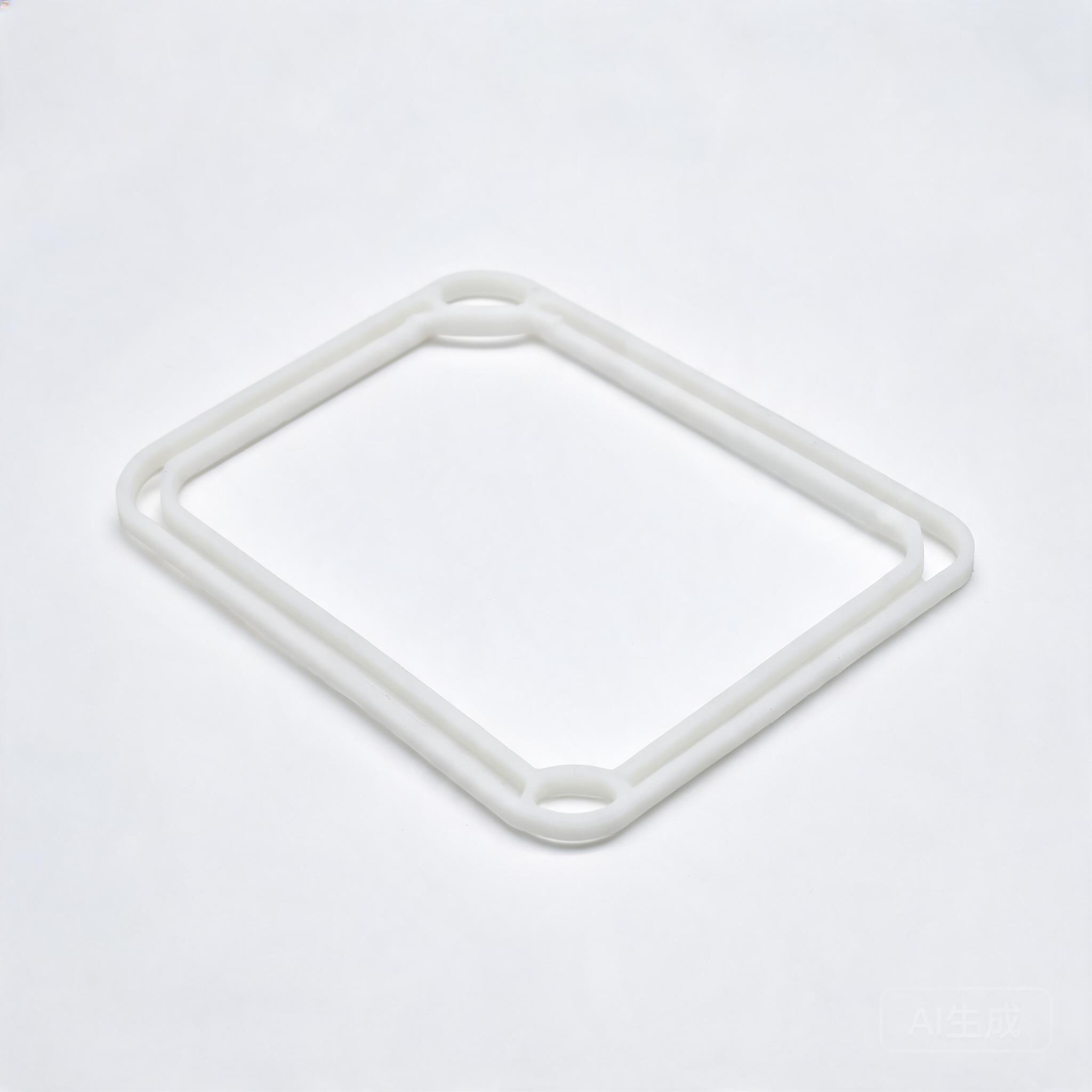
Liquid Silicone Power Battery Sealing Gasket Waterproof for New Energy Vehicles
Liquid Silicone Power Battery Sealing Gasket Shockproof Waterproof
Liquid Silicone Rubber Injection MoldingPublished on May 18, 2026
Made of high elasticity liquid silicone rubber via integrated injection molding, suitable for various power battery housing sealing needs, with excellent waterproof, dustproof, temperature resistance and anti-aging properties, not easy to deform after long-term use, effectively improving the operation safety and service life of power batteries.
Material
Industrial LSR
Hardness
Shore A 40-70
Temperature
-60°C ~ +220°C
Colors
Black, Gray, Customizable
Certifications
ISO 9001IATF 16949RoHSREACH etc.
Applications
Widely used in the sealing protection of new energy vehicle power battery packsenergy storage battery modulespower battery housing coversand also suitable for sealing needs of other new energ...
# Liquid Silicone Power Battery Sealing Gasket (Shockproof, Waterproof)
Product Overview
The Liquid Silicone Power Battery Sealing Gasket is a high-performance custom-molded sealing component engineered specifically for new energy vehicle (NEV) power battery systems, stationary energy storage stations, and commercial electric vehicle battery packs. Manufactured via high-precision liquid silicone rubber (LSR) injection molding, this gasket addresses the critical sealing, shock absorption, and environmental resistance demands of modern lithium-ion battery packs, which operate under extreme temperature fluctuations, vibration loads, and moisture exposure throughout their 10+ year service life.
Unlike traditional EPDM, polyurethane, or solid rubber sealing gaskets, this LSR-based component integrates three core functions: reliable hermetic sealing, high-efficiency vibration damping, and long-term weather resistance. Its precision-molded, uniform structure eliminates gaps between the battery pack upper/lower housing, module mounting brackets, and busbar interfaces, preventing electrolyte leakage, external moisture/dust intrusion, and short-circuit risks caused by component loosening during vehicle operation. The product is customizable for prismatic, cylindrical, and pouch battery pack designs, with optional integrated pressure relief valve cutouts, bolt hole positioning features, and conductive/insulating layers to match specific system requirements.
Technical Specifications
Material Properties
All gaskets are formulated with high-purity medical/food-grade liquid silicone raw materials, with optional flame-retardant and thermal conductive modifications to meet different application scenarios:
ParameterStandard ValueTest Standard
Base MaterialTwo-component addition-cured liquid silicone rubber (methyl vinyl silicone)ASTM D1418
Silicone Content≥92%Internal gravimetric test
Flame Retardant GradeUL94 V-0 (default for NEV applications), UL94 HB available for low-demand scenariosUL 94
Temperature Resistance Range-60°C to 220°C (long-term operation), 260°C short-term (≤30min)ASTM D1329
Electrical Insulation Strength≥20kV/mmIEC 60243-1
Compression Set (22h @ 150°C, 25% compression)≤5%ASTM D395 Method B
Tensile Strength≥6.5MPaASTM D412
Elongation at Break≥450%ASTM D412
Tear Strength≥25kN/mASTM D624 Die C
Chemical ResistanceNo swelling, cracking, or hardness change after 1000h immersion in common automotive coolants, lithium hexafluorophosphate electrolyte, and road salt solutionsISO 1817
Physical Performance
The finished gasket’s dimensional and functional performance meets the strict requirements of automotive-grade components:
ParameterStandard ValueTest Standard
Dimensional Tolerance±0.03mm for features ≤100mm, ±0.1mm for features ≤1000mmISO 3302-1 Class M2
IP RatingIP68 (2m water immersion for 72h, no water intrusion) when installed to specified torqueIEC 60529
Shock Absorption Efficiency≥85% under 10-2000Hz random vibration load (1g RMS)ISO 16750-3
Thermal Shock ResistanceNo cracking, delamination, or seal failure after 1000 cycles between -40°C and 125°C, 30min dwell time per extremeIEC 60068-2-14
Service Life≥15 years at -40°C to 125°C operating temperatureAccelerated aging test per ASTM D1149
Process Parameters
The LSR injection molding process is strictly controlled to ensure consistent batch quality:
ParameterSpecification
Injection Molding Temperature110°C to 150°C (barrel), 160°C to 180°C (mold cavity)
Curing Time30s to 120s, depending on gasket thickness
Mixing Ratio of A/B Components1:1 ±0.5%
Post-Curing Treatment2h at 200°C (optional, for low volatile organic compound (VOC) requirements)
Maximum Moldable Size2000mm × 1500mm (for large commercial vehicle battery packs)
Product Advantages
1. Extreme Long-Term Sealing Reliability
Unlike EPDM gaskets that suffer from compression set rates of 20-30% after 1000h of high-temperature aging, this LSR gasket maintains a compression set rate of ≤5% under the same conditions, ensuring consistent contact pressure between the sealing surface and housing throughout the battery pack’s entire service life. Its low temperature flexibility eliminates the risk of seal cracking in cold climate regions (down to -60°C), a common failure point for conventional rubber gaskets.
2. Superior Shock and Vibration Damping
The high elasticity and viscoelastic properties of LSR absorb 85% of mechanical vibration from road impacts, chassis torsion, and battery module operation, preventing loose fasteners, cracked housing welds, and internal component damage. The gasket’s uniform load distribution also reduces stress concentration at the battery pack corners, a frequent cause of housing deformation in high-load electric commercial vehicles.
3. Wide Chemical and Environmental Compatibility
The silicone material is inherently inert to lithium-ion battery electrolytes, automotive coolants, road salt, UV radiation, and ozone, with no swelling, hardening, or performance degradation after long-term exposure. This eliminates the need for regular gasket replacement, reducing battery pack maintenance costs by 40% compared to traditional sealing solutions.
4. Low VOC and Environmental Safety
The addition-cured LSR formulation contains no plasticizers, heavy metals, or harmful volatile compounds, meeting EU REACH and RoHS 2.0 requirements. Its low outgassing properties (total mass loss ≤0.1% per ASTM E595) prevent contamination of battery electrode materials and internal sensors, a critical requirement for high-energy-density battery packs.
Applications
This LSR sealing gasket is deployed across a wide range of power battery and energy storage scenarios:
Passenger Electric Vehicle Battery Packs: Sealing for prismatic, cylindrical, and pouch lithium-ion battery pack housings, module mounting interfaces, and high-voltage busbar penetration points, compatible with 400V and 800V electrical architectures.
Commercial Electric Vehicle Battery Systems: Sealing for heavy-duty truck, bus, and construction vehicle battery packs, which are exposed to higher vibration loads, temperature extremes, and road debris exposure.
Stationary Energy Storage Systems: Sealing for residential and grid-scale lithium iron phosphate (LFP) battery cabinets, preventing moisture and dust intrusion in outdoor and unconditioned indoor installation environments.
Specialized Electric Vehicle Applications: Sealing for electric off-road vehicles, marine battery systems, and aerospace power storage units, where extreme environmental resistance and reliability are mandatory.
Note for application: When installing the gasket, ensure the housing sealing surface is free of burrs, oil, and dust, and tighten bolts to the specified torque (8-12N·m for M6 bolts, adjustable based on housing material) to achieve the designed 15-25% compression ratio for optimal sealing performance.
Selection Guide
Hardness Selection
30-40 Shore A: Recommended for applications with uneven sealing surfaces or frequent disassembly requirements, offering high conformability and low installation torque. Suitable for low-vibration passenger vehicle battery packs.
50-60 Shore A (Default): Balances sealing performance, shock absorption, and structural support, ideal for most NEV and energy storage applications.
70-80 Shore A: Recommended for high-load commercial vehicle battery packs and scenarios requiring high structural rigidity, offering superior resistance to compression deformation under heavy static loads.
Size Specifications
Standard size ranges are available for common battery pack formats, with full custom design support for non-standard applications:
Full pack housing gaskets: Customizable from 300mm × 200mm (small light EV packs) to 2000mm × 1500mm (large commercial vehicle packs)
Optional features: Integrated bolt positioning holes, pressure relief valve cutouts, adhesive backing for easier installation, and conductive shielding layers for EMC requirements.
Material Grade
Standard Automotive Grade: UL94 V-0 flame retardant, meets GB/T 31485 NEV battery safety requirements, suitable for most mass-production applications.
Low VOC Grade: Post-cured to reduce outgassing, ideal for high-energy-density NMC battery packs and enclosed energy storage systems with sensitive internal sensors.
Thermally Conductive Grade: 1-5W/m·K thermal conductivity, transfers heat from the battery pack housing to the cooling system, suitable for fast-charging battery packs with high thermal management requirements.
Quality Assurance
All gaskets undergo a multi-stage quality control process to ensure zero defective products leave the factory:
Incoming Raw Material Inspection: Each batch of LSR raw material is tested for viscosity, curing performance, and impurity content before entering production, with traceability records maintained for 15 years.
In-Process Control: 100% dimensional inspection of key features (bolt hole position, sealing lip thickness) via automated vision systems, with real-time monitoring of injection molding temperature, pressure, and curing time.
Finished Product Testing: Each production batch undergoes random sampling for compression set, IP rating, temperature shock resistance, and flame retardant performance testing.
Certifications: The product is certified to IATF 16949 automotive quality management system, UL94 V-0 flame retardant, EU REACH, RoHS 2.0, and UN 38.3 battery transport safety requirements.
We offer a 12-month quality warranty from the date of delivery, with free replacement of any defective products caused by manufacturing defects, and 24/7 technical support for application design and installation guidance.