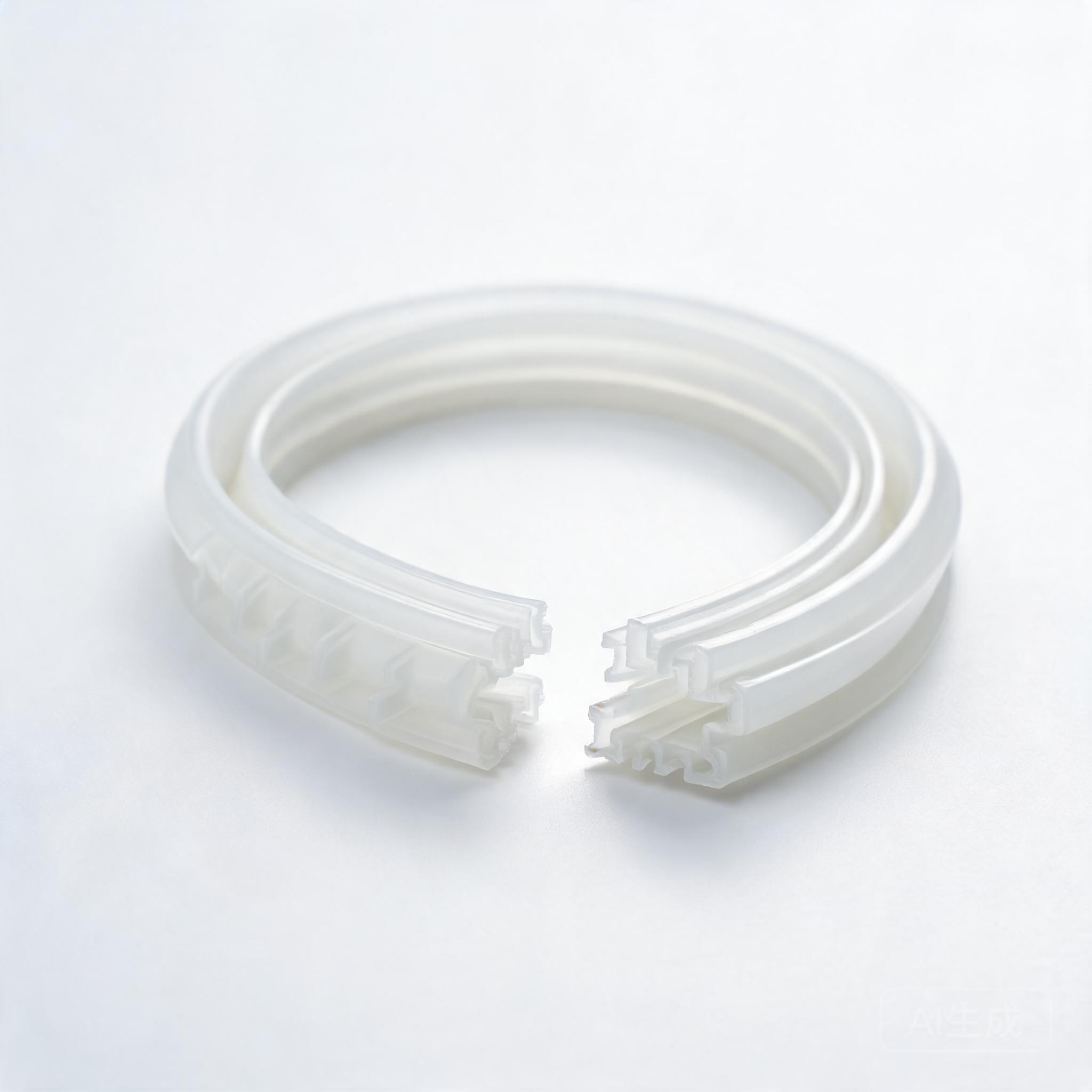
# Liquid Silicone New Energy Vehicle Weather Resistant Sealing Ring
Product Overview
The Liquid Silicone New Energy Vehicle (NEV) Weather Resistant Sealing Ring is a high-performance custom-molded sealing component engineered to address the extreme environmental, thermal, and operational demands of modern electric, plug-in hybrid, and fuel cell vehicles. Manufactured via injection molding from medical and automotive-grade liquid silicone rubber (LSR), this sealing ring delivers exceptional long-term reliability for critical NEV systems that require protection against moisture, dust, temperature fluctuations, and chemical exposure while maintaining consistent compression set resistance over the vehicle’s 15+ year service life.
Unlike traditional EPDM or nitrile rubber seals, this LSR-based sealing ring is purpose-built for NEV-specific use cases, where sealing integrity directly impacts battery safety, powertrain efficiency, and passenger comfort. It maintains stable performance across a -60°C to 220°C operating range, exhibits zero brittleness after 1000 hours of UV and humidity aging, and is compatible with common NEV coolants, lubricants, and battery electrolyte additives. Its precision-molded dimensional tolerance of up to ±0.02mm eliminates gaps in high-vibration environments, preventing water ingress that could trigger thermal runaway in battery packs or short circuits in high-voltage electrical systems.
Technical Specifications
Material Properties
All raw materials for the sealing ring comply with IATF 16949 automotive material standards and RoHS 2.0 restriction requirements, with custom formulations available to meet specific application needs. Typical material properties include:
ParameterStandard ValueCustomization Range
Base PolymerHigh-purity two-component addition-cured LSRSelf-lubricating, flame-retardant, or food-contact grade variants
Curing SystemPlatinum-catalyzed, no byproduct release--
Heavy Metal Content<10ppm total lead, cadmium, mercury, hexavalent chromiumMeets EU ELV end-of-life vehicle recycling requirements
Flame RetardancyUL 94 V-0 (for battery system variants)UL 94 HB for non-critical interior applications
Chemical CompatibilityResistant to deionized water, ethylene glycol coolants, lithium hexafluorophosphate electrolytes, road salt, and automotive cleaning agentsCustom formulation available for extreme chemical exposure
Physical Performance
The sealing ring’s physical properties are validated via third-party automotive testing laboratories to ensure compliance with ISO 10149 rubber seal standards:
ParameterTest MethodStandard Value
Hardness (Shore A)ASTM D224040–80 Shore A (customizable per application)
Tensile StrengthASTM D412≥8 MPa
Elongation at BreakASTM D412≥400%
Tear StrengthASTM D624 Die B≥30 kN/m
Compression Set (22h @ 150°C, 25% compression)ASTM D395 Method B≤5%
Compression Set (1000h @ 125°C, 25% compression)ASTM D395 Method B≤15%
UV Aging Resistance (1000h, 340nm UV, 60°C, 50% humidity)ASTM G154Hardness change ≤±2 Shore A, tensile strength retention ≥90%
Water Ingress ProtectionIEC 60529IP68 rated when installed per design guidelines
High-Voltage Insulation StrengthASTM D149≥20 kV/mm (for electrical system variants)
Process Parameters
The sealing ring is manufactured via high-precision liquid silicone injection molding with the following standard process parameters, adjustable for custom geometries:
ParameterStandard Range
Molding Temperature170–190°C (cavity side), 160–180°C (core side)
Injection Pressure80–120 bar
Curing Time30–90s (dependent on part wall thickness)
Post-Curing RequirementOptional 2h @ 200°C for applications requiring minimal volatile organic compound (VOC) emission
Dimensional Tolerance±0.02mm for parts ≤20mm outer diameter; ±0.1% of nominal dimension for parts >20mm outer diameter
Surface RoughnessRa ≤0.8μm for sealing contact surfaces
Product Advantages
1. Industry-Leading Weather and Aging Resistance
Unlike EPDM seals that degrade after 3–5 years of outdoor exposure, this LSR sealing ring retains 90% of its mechanical properties after 1000 hours of accelerated UV, humidity, and thermal cycling testing, equivalent to 15+ years of real-world NEV operation in extreme climates ranging from arctic cold zones to tropical coastal regions. It resists cracking, brittleness, and permanent deformation even after repeated exposure to road salt, acid rain, and bird droppings, eliminating the need for mid-life seal replacements that increase vehicle maintenance costs.
2. Ultra-Low Compression Set for Long-Term Sealing Integrity
With a 1000-hour high-temperature compression set of ≤15%, the sealing ring maintains consistent contact pressure against mating surfaces even under continuous 25% compression in high-heat powertrain and battery pack environments. This eliminates the risk of gradual sealing failure caused by rubber stress relaxation, a common failure point for thermoplastic elastomer seals that can lead to battery water ingress and high-voltage component short circuits.
3. Wide Temperature Operating Range for Extreme NEV Use Cases
The material maintains full flexibility at -60°C, preventing seal cracking during cold start operations in high-latitude regions, and retains its structural integrity at continuous 220°C operating temperatures, making it suitable for sealing around e-motor stator housings, fuel cell stack components, and high-voltage charging connectors that generate significant operational heat. Unlike nitrile rubber seals that harden below -20°C and degrade above 120°C, this LSR seal eliminates temperature-related sealing failure across all global NEV operating environments.
4. Customizable Formulations for Targeted System Requirements
We offer tailored material modifications to meet specific application needs: flame-retardant UL 94 V-0 grades for battery pack sealing to contain thermal runaway risks, self-lubricating grades for charging port seals to reduce plug insertion force by 30%, and low-VOC grades for interior cabin seals that meet ISO 10540 automotive air quality standards, eliminating unpleasant odors inside the passenger compartment.
Applications
This LSR weather-resistant sealing ring is deployed across all critical NEV systems where sealing reliability directly impacts vehicle safety and performance:
- Battery Energy Storage Systems (BESS): Sealing for battery pack upper and lower housing flanges, module end plates, coolant line connectors, and pressure relief valve interfaces. Its IP68 ingress protection prevents water and dust entry during wading and off-road use, while its electrolyte resistance ensures sealing integrity even if minor battery cell leakage occurs.
- High-Voltage Electrical Systems: Sealing for power distribution unit (PDU) housings, on-board charger (OBC) connectors, motor control unit (MCU) enclosures, and high-voltage wiring harness terminals. Its 20 kV/mm insulation strength prevents electrical arcing between high-voltage components, even in high-humidity environments.
- Charging Interface Systems: Sealing for AC and DC charging port sockets, charging plug internal gaskets, and charging cable entry points. Self-lubricating variants reduce plug insertion and extraction force, improving user experience while preventing water ingress that could cause charging short circuits.
- Thermal Management Systems: Sealing for ethylene glycol coolant line connectors, heat pump system valve seats, and chiller interface gaskets. Its resistance to automotive coolants and wide temperature range ensures consistent sealing across -40°C to 120°C thermal cycle operations.
- Fuel Cell Electric Vehicle (FCEV) Systems: Sealing for fuel cell stack bipolar plate interfaces, hydrogen supply line connectors, and cathode air filter housings. Its low hydrogen permeability prevents fuel leakage, while its platinum curing system avoids contamination of fuel cell catalyst layers.
- Exterior and Cabin Systems: Sealing for panoramic sunroof drain ports, ADAS sensor enclosures (lidar, radar, camera), and door/window secondary seals. Its UV resistance prevents yellowing and cracking, while its low-VOC formulation avoids unpleasant interior odors.
Selection Guide
Hardness Selection
- 40–50 Shore A: Recommended for uneven mating surfaces, low-compression force applications (e.g., ADAS sensor seals, interior cabin seals), where high flexibility is required to fill gaps of up to 0.5mm.
- 55–65 Shore A: General-purpose grade for most battery pack, PDU, and charging port sealing applications, balancing flexibility and compression resistance for typical 1–2mm compression design requirements.
- 70–80 Shore A: Recommended for high-pressure thermal management line seals, e-motor housing seals, and applications subject to high vibration loads, where high structural rigidity is required to prevent seal extrusion from mating gaps.
Size Specifications
Standard sealing rings are available in outer diameter ranges from 5mm to 500mm, with cross-sectional diameters ranging from 1mm to 10mm, with no minimum order quantity for custom sizes. When specifying dimensions, provide:
- Nominal outer diameter, inner diameter, and cross-sectional diameter
- Mating surface groove dimensions (groove width, depth, and corner radius)
- Required dimensional tolerance for sealing contact surfaces
Custom non-circular geometries (square, rectangular, irregular profiled seals) are also available upon request, with 3D prototype sampling completed within 7 working days.
Material Grade
- Standard Automotive Grade: Compliant with IATF 16949 and RoHS 2.0, suitable for general exterior and non-critical system sealing applications.
- Battery Safety Grade: UL 94 V-0 flame-retardant, electrolyte-resistant formulation, mandatory for all battery pack and high-voltage system sealing applications.
- Low-VOC Interior Grade: Post-cured to reduce total VOC emission to <10μg/m³, meeting EU VOC automotive interior standards for cabin and passenger contact applications.
- FCEV Grade: Low hydrogen permeability (<2×10⁻¹¹ cm³·cm/cm²·s·atm) and platinum-free surface treatment, suitable for fuel cell hydrogen system sealing.
Quality Assurance
All our Liquid Silicone NEV Weather Resistant Sealing Rings are manufactured in IATF 16949 certified production facilities, with a 0 PPM defect rate target for mass production. Our quality control process includes:
- Incoming Material Inspection: Every batch of LSR raw material is tested for hardness, tensile strength, and curing performance before production, with traceability codes linked to each production lot.
- In-Process Quality Control: 100% dimensional inspection of every 50 parts during production, with real-time monitoring of injection molding temperature, pressure, and curing time to ensure process consistency.
- Finished Product Testing: Each production lot undergoes performance testing including compression set, UV aging resistance, and water ingress testing, with test reports provided with every shipment.
- Certifications: All products are certified to IATF 16949, RoHS 2.0, REACH, and UL 94 (for flame-retardant variants), with custom PPAP level 3 documentation available for automotive OEM qualification requirements.
We offer a 5-year quality warranty for all sealing rings installed per our design guidelines, covering all defects in material and workmanship, with dedicated technical support teams available to assist with groove design, installation guidance, and failure analysis for field applications.