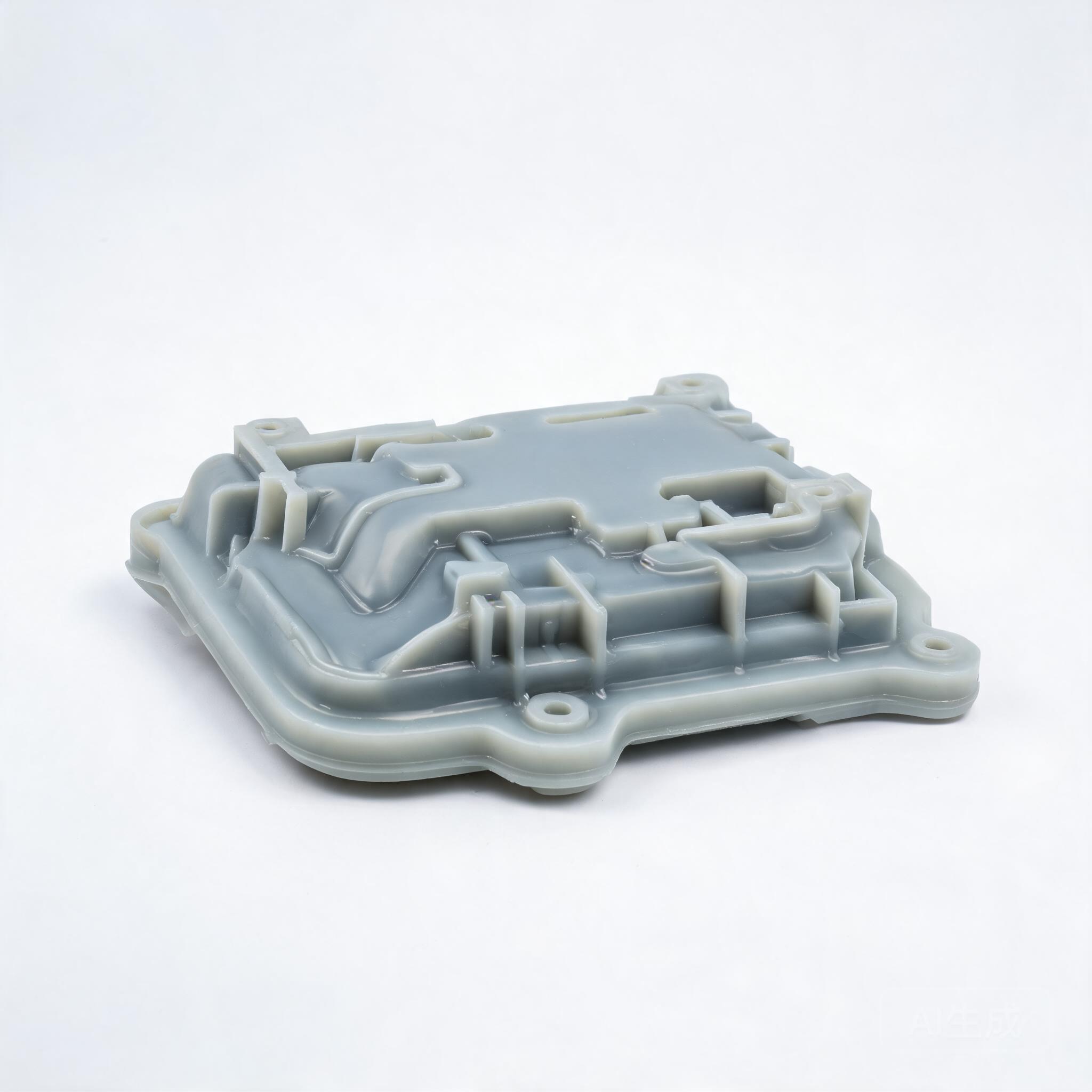
LSR Overmolded Structural Parts for New Energy Vehicles High Temp Resistant
Liquid Silicone New Energy Vehicle Overmolded Structural Parts
Liquid Silicone Rubber Injection MoldingPublished on May 29, 2026
This product is processed by high-quality LSR injection molding process, suitable for overmolding needs of internal structures of new energy vehicles. It has excellent shock absorption, high temperature resistance, aging resistance, waterproof and sealing performance, which can effectively improve the service life and operation stability of auto parts, and support multi-dimensional customization.
Material
Industrial LSR
Hardness
Shore A 50-70
Temperature
-40°C ~ +180°C
Colors
Black, Gray, Natural, Customizable
Certifications
ISO 9001IATF 16949RoHSREACH etc.
Applications
Widely used in new energy vehicle battery module fixing overmoldingwiring harness interface sealing overmoldinginterior structural parts shock absorption overmoldingcharging gun structural pa...
new energy vehicle silicone overmolded partsLSR automotive structural partsLSR auto overmolded componentsindustrial LSR partsvehicle overmolded structural parts
120-150℃
Volume Resistivity≥1.2×10^15 Ω·cm
Dielectric Strength≥22 kV/mm
Elongation at Break≥450%
Thermal Conductivity0.23 W/(m·K)
Operating Temperature Range-60℃~220℃
Coefficient of Linear Expansion2.6×10^-4 /℃
Relevant Certification StandardsIATF16949, ROHS 2.0, REACH, FDA
# Liquid Silicone New Energy Vehicle Overmolded Structural Parts
Product Overview
Liquid Silicone Rubber (LSR) overmolded structural parts for new energy vehicles (NEVs) are high-performance integrated components engineered to address the unique performance demands of electric, plug-in hybrid, and fuel cell vehicle systems. These parts combine rigid engineering substrates (including aluminum alloys, magnesium alloys, PC/ABS blends, and PA66 GF30) with precision-molded food/automotive-grade liquid silicone layers, delivering a unified structure that delivers sealing, vibration damping, electrical insulation, and environmental resistance in a single component.
Unlike traditional assembled parts that require separate gaskets, adhesives, and fasteners, our LSR overmolded structural parts eliminate assembly steps, reduce failure points, and cut long-term maintenance costs. Core features include a 25+ year service life under NEV operating conditions, compliance with global automotive safety standards, and customizability for specific vehicle system requirements. The parts are optimized for high-volume production via injection molding, making them suitable for mass-market NEV models as well as low-volume specialty commercial electric vehicles.
Technical Specifications
Material Properties
The LSR layer used in these structural parts is a two-part, platinum-catalyzed high-purity silicone formulated specifically for automotive applications, with the base substrate selected to match structural load requirements:
Volatile Organic Compound (VOC) Emission≤10 μg/m³ (meets GB/T 27630 and EU ELV standards)≤15 μg/m³≤5 μg/m³
RoHS ComplianceFully compliant, no heavy metals or restricted substancesFully compliantFully compliant
Physical Performance
Our overmolded parts are tested to withstand the extreme operating environments common in NEV systems:
Operating temperature range: -60°C to +220°C, with short-term exposure resistance up to 250°C for power battery system applications
Environmental resistance: IP67/IP6K9K ingress protection rating as standard, resistant to hydrolysis, automotive fluids (coolant, lubricating oil, battery electrolyte), UV radiation, and salt spray (1000+ hours of salt spray testing per ISO 9227 with no corrosion or delamination)
Electrical performance: Dielectric strength of 20–28 kV/mm, volume resistivity ≥1×10¹⁴ Ω·cm, and tracking resistance CTI ≥600V for high-voltage component applications
Adhesion strength between LSR and substrate: ≥4 N/mm (for PA66 GF30 substrate) and ≥6 N/mm (for anodized aluminum), with no delamination after 1000 thermal shock cycles (-40°C to 125°C, 30min dwell per cycle)
Vibration resistance: Passes 10–2000 Hz, 10g random vibration testing per ISO 16750-3 with no structural damage or performance degradation
Process Parameters
All parts are manufactured via high-precision LSR injection overmolding with strict process control to ensure consistent quality:
Mold tolerance: ±0.02 mm for precision sealing surfaces, ±0.05 mm for structural mating surfaces
Injection pressure: 80–120 bar for LSR layer, 800–1200 bar for thermoplastic substrates
Curing temperature: 120–150°C, with curing time of 30–90 seconds depending on part thickness
Maximum part size: 800 mm × 600 mm × 300 mm, with LSR layer thickness ranging from 0.5 mm to 15 mm (custom thicknesses available for specialized applications)
Production lead time: 15–25 days for tooling fabrication, 3–7 days for mass production runs once tooling is validated
Product Advantages
1. Superior Integrated Sealing and Structural Performance
Unlike assembled structures that rely on glued or clamped gaskets, our overmolded parts form a permanent, molecular bond between the LSR layer and rigid substrate, eliminating the risk of gasket misalignment, adhesive failure, or fluid ingress. This integrated design reduces part count by up to 60% compared to traditional assemblies, cutting assembly labor costs and reducing the total weight of NEV systems by 15–30% to support extended driving range.
2. Extreme Durability for NEV Operating Conditions
The platinum-cured LSR layer is inherently resistant to the wide temperature swings, chemical exposure, and mechanical stress common in NEV powertrain and battery systems. Unlike EPDM rubber or thermoplastic elastomers (TPE), LSR does not become brittle at low temperatures or soften at high operating temperatures, maintaining consistent sealing and insulation performance for the full 15+ year service life of the vehicle. Parts are validated to pass 10,000+ hours of accelerated aging testing with less than 10% change in hardness and tensile strength.
3. Enhanced Electrical and Thermal Safety
Our LSR formulation offers superior electrical insulation and flame retardancy without relying on halogenated additives, making it ideal for high-voltage NEV components. The material is self-extinguishing and produces low smoke and toxic fumes in the event of a fire, supporting compliance with global NEV safety standards. The LSR layer also acts as a thermal buffer, protecting sensitive electronic components from rapid temperature changes and reducing the risk of thermal runaway propagation in battery packs.
4. Customizable Design for Complex Geometries
LSR overmolding supports highly complex part geometries, including undercuts, micro-sealing features, and integrated fastening points, that cannot be achieved with traditional assembling processes. Our engineering team works directly with customers to optimize part design for manufacturability, reducing tooling costs and production lead times while ensuring full compliance with vehicle system performance requirements. We also offer custom color coding for parts to simplify assembly line identification and reduce installation errors.
Applications
Our LSR overmolded structural parts are deployed across all core NEV systems, with common use cases including:
Power Battery Systems: Battery pack sealing gaskets integrated with structural end plates, module vibration damping pads, busbar insulation covers, and cooling tube sealing connectors. These parts provide IP68 ingress protection for battery packs, reduce vibration transmission to battery cells, and support thermal management system performance.
High-Voltage Powertrain Systems: Motor housing sealing end caps, high-voltage connector insulation and sealing components, inverter housing gaskets, and OBC (on-board charger) structural sealing parts. The parts offer CTI 600V tracking resistance to prevent electrical arcing and withstand the high operating temperatures of NEV powertrains.
Charging Systems: DC fast charging port sealing components, charging cable connector overmolded inserts, and wireless charging pad vibration damping and sealing structures. The parts resist UV exposure and weathering for outdoor charging applications and maintain sealing performance after 10,000+ charging plug cycles.
Thermal Management Systems: Coolant manifold sealing structures, PTC heater insulation components, and heat exchanger mounting vibration damping pads. The LSR layer is compatible with all common NEV coolants, including ethylene glycol mixtures and dielectric fluids, with no degradation after 5000 hours of fluid immersion testing.
Interior and Exterior Systems: ADAS sensor mounting vibration damping brackets, exterior door handle sealing and anti-freeze structures, and battery management system (BMS) housing sealing components. The parts meet strict low-VOC requirements for interior applications and resist road salt and debris impact for exterior use.
Selection Guide
Hardness Selection
Shore A 30–40: Recommended for vibration damping applications (e.g., battery module pads, sensor mounting brackets) where high elasticity and shock absorption are required. This hardness range offers maximum vibration attenuation of up to 40% for frequencies between 100 and 2000 Hz.
Shore A 50–60: General-purpose hardness for most sealing and insulation applications (e.g., battery pack gaskets, high-voltage connector seals). Balances elasticity and compression resistance for long-term sealing performance.
Shore A 60–70: Recommended for high-pressure sealing applications (e.g., coolant manifold seals, charging port components) where resistance to fluid pressure and mechanical wear is required.
Size Specifications
All parts are custom-fabricated to match customer design requirements, with standard design guidelines:
Minimum LSR layer thickness: 0.5 mm for flat sealing surfaces, 1.0 mm for 3D contoured surfaces
Maximum overmold part dimension: 800 mm × 600 mm × 300 mm; larger sizes available via specialized multi-cavity tooling upon request
Tolerance: ±0.02 mm for critical sealing features, ±0.1 mm for non-critical structural surfaces. Tighter tolerances available for precision applications with prior design validation.
Material Grade
Standard Automotive Grade: IATF 16949 compliant, meets EU ELV and RoHS requirements, suitable for most NEV structural and sealing applications.
Food-Grade LSR Option: FDA 21 CFR 177.2600 compliant, recommended for cooling system components in contact with potable water or food-grade dielectric fluids.
High-Temperature Grade: LSR formulated for continuous operation up to 250°C, ideal for fuel cell vehicle components and high-power motor sealing applications.
Quality Assurance
Our LSR overmolded NEV structural parts are manufactured in IATF 16949 certified production facilities, with a multi-stage quality control process to ensure zero defects:
Incoming material inspection: All LSR and substrate materials are tested for composition, hardness, and flame retardancy upon receipt, with material traceability maintained for every production batch.
In-process quality control: 100% inspection of mold parameters (temperature, injection pressure, curing time) during production, with dimensional checks performed on every 50th part to ensure compliance with tolerance requirements.
Finished product testing: Every production batch undergoes adhesion strength testing, compression set testing, salt spray testing, and ingress protection validation. Custom performance testing (e.g., thermal shock, vibration, fluid immersion) is available upon customer request.
Certification: All parts come with full material test reports (MTRs) and compliance documentation, including IATF 16949, RoHS, REACH, and UL94 certification. We also support PPAP (Production Part Approval Process) level 3 validation as standard, with higher PPAP levels available for specialized automotive programs.
We offer a 5-year performance warranty for all parts, with a guaranteed service life of 15 years or 300,000 km under normal NEV operating conditions. Our engineering team provides full design support from prototyping to mass production, including mold flow analysis and material compatibility testing to ensure optimal part performance for your specific application.