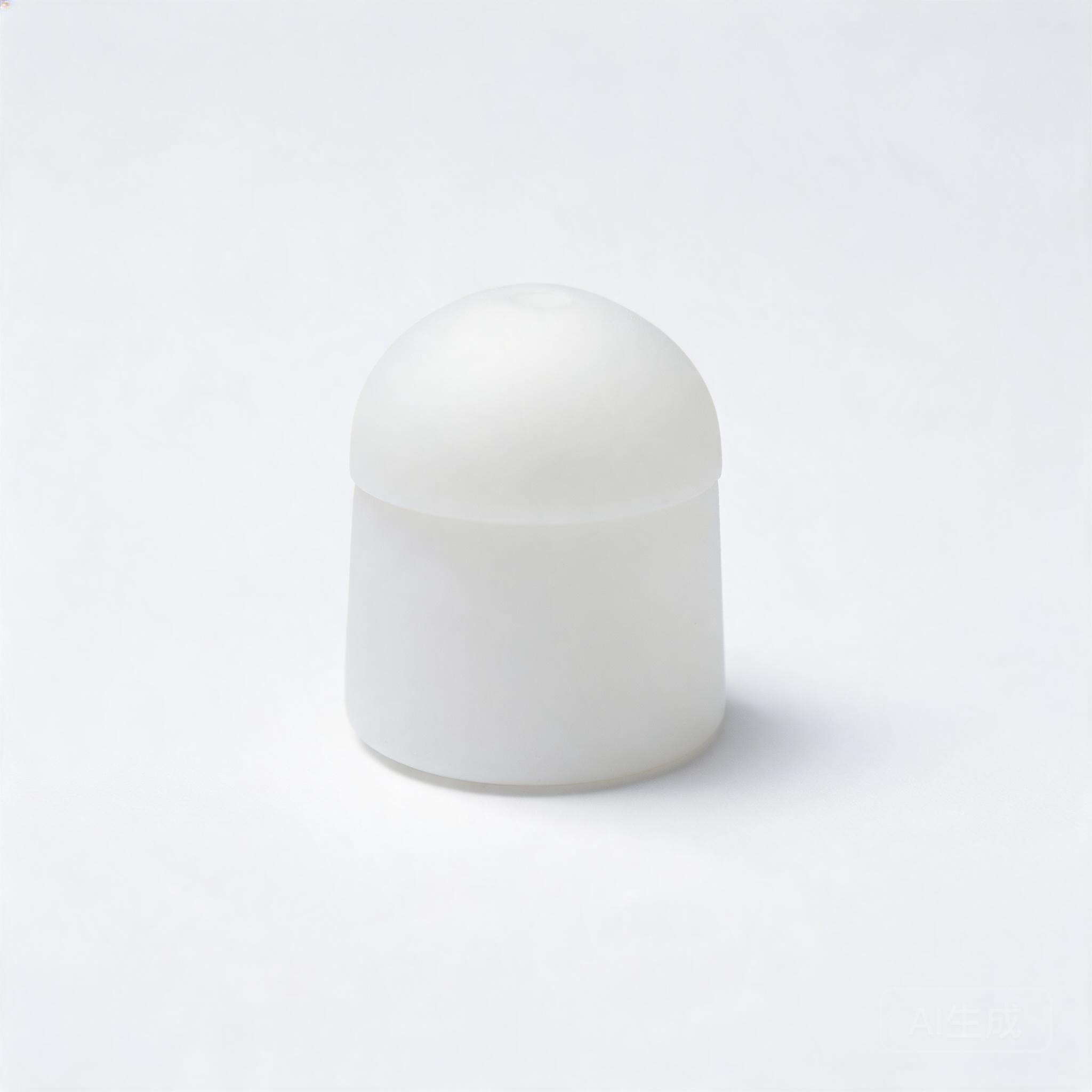
Liquid Silicone Insulation Protective Cap Waterproof High Temperature Resistant Electronic Component Cover
High Insulation Liquid Silicone Electronic Component Protective Cap
Liquid Silicone Rubber Injection MoldingPublished on May 17, 2026
Integrally molded with high-quality liquid silicone, it has excellent insulation, waterproof, dustproof, high and low temperature resistance, effectively protects electronic components from environmental erosion, easy to install, strong weather resistance, no cracking or deformation for long-term use, suitable for various conventional electronic connector sizes.
Material
Industrial LSR
Hardness
Shore A 40-70
Temperature
-60°C ~ +200°C
Colors
Black, White, Transparent, Customizable
Certifications
ISO 9001RoHSREACH etc.
Applications
Widely used for insulation protection of electronic circuit connectorssensor pinscommunication equipment portshome appliance wiring terminalsetc.suitable for industrial automation
liquid silicone protective capinsulation silicone capelectronic component protective coverwaterproof silicone caphigh temperature resistant silicone protective cap
consum...
Volume Resistivity
≥1×10^16Ω·cm
Dielectric Strength≥22kV/mm
Elongation at Break≥450%
Thermal Conductivity0.23W/(m·K)
Certification StandardsRoHS 2.0/REACH/UL94 V-0
Operating Temperature Range-60℃~220℃
Linear Expansion Coefficient2.4×10^-4/℃
# High Insulation Liquid Silicone Electronic Component Protective Cap
Product Overview
The High Insulation Liquid Silicone Electronic Component Protective Cap is a precision-molded protective solution manufactured from food-grade, high-purity liquid silicone rubber (LSR) via injection molding processes, designed exclusively for insulating, sealing, and safeguarding vulnerable electronic components in harsh operating environments. As a member of the 8-series liquid silicone insulation protection product line, this cap combines exceptional dielectric performance, extreme temperature resistance, and long-term environmental stability to address the limitations of traditional PVC, EPDM, or thermoplastic protective caps, which often degrade under high voltage, extreme temperature fluctuations, or prolonged exposure to UV radiation and corrosive agents.
Core selling points of this product include a 22kV/mm dielectric breakdown strength, a wide operating temperature range of -60°C to 220°C, IP67-rated ingress protection when properly installed, and compliance with international safety standards including UL94 V-0 flammability resistance and RoHS 2.0 restrictions on hazardous substances. The elastic, low-compression-set silicone material ensures a tight, consistent fit over irregular component geometries, eliminating gaps that could lead to insulation failure, while its chemically inert formulation prevents corrosion of underlying metal or plastic component surfaces during years of service. Customizable configurations such as internal ribbing, adhesive backing, and color coding are available to meet application-specific installation and identification requirements.
Technical Specifications
Material Properties
All protective caps are formulated from platinum-cured medical/industrial grade liquid silicone rubber with no added plasticizers, phthalates, or heavy metals that could leach into electronic assemblies. Key material properties include:
ParameterStandard ValueTest Method
Base PolymerHigh-purity polydimethylsiloxane (PDMS)ASTM D395
Curing SystemPlatinum addition cureInternal QC standard
Chemical CompatibilityResistant to dilute acids, alkalis, alcohols, glycols, and most non-polar solventsASTM D543
UV Resistance<5% mechanical property degradation after 1000 hours of UV-A exposureASTM G154
Physical Performance
The cap’s mechanical properties are optimized for repeated installation, long-term sealing, and resistance to mechanical stress during component handling and equipment operation:
ParameterStandard ValueTest Method
Shore Hardness40–70 Shore A (customizable in 5 Shore A increments)ASTM D2240
Tensile Strength≥7.5 MPaASTM D412
Elongation at Break≥450%ASTM D412
Tear Strength≥25 kN/mASTM D624 Die B
Compression Set (22h @ 150°C)≤8%ASTM D395 Method B
Operating Temperature Range-60°C to 220°C (short-term up to 250°C for 100 hours)UL 746B
Water Absorption<0.1% after 24 hours immersion in 25°C deionized waterASTM D570
IP RatingIP67 (when installed on components with ≤0.1mm surface roughness)IEC 60529
Process Parameters
All caps are manufactured to tight dimensional tolerances to ensure consistent fit across high-volume production runs:
ParameterStandard ValueNote
Standard Internal Diameter Range2mm–50mmCustom sizes available up to 150mm on request
Standard Wall Thickness0.5mm–3mmThickness optimized based on insulation voltage requirements
Dimensional Tolerance±0.05mm for sizes <10mm; ±0.5% of nominal size for sizes ≥10mmISO 3302-1 Class M2
Surface Roughness (Inner Wall)Ra ≤0.8μmPrevents scratching of component surfaces during installation
Post-Curing Requirement4 hours @ 200°CEliminates residual low-molecular-weight siloxanes for high-vacuum or aerospace applications
Product Advantages
1. Industry-Leading Insulation Performance
With a dielectric breakdown strength of 22kV/mm, this protective cap provides reliable insulation for components operating at voltages up to 15kV (when using a 1mm wall thickness), exceeding the performance of most thermoplastic insulation solutions by 300%. The consistent dielectric properties across the entire operating temperature range eliminate the risk of insulation failure in high-heat environments such as electric vehicle powertrains or industrial power supplies, where traditional materials often experience a 50%+ drop in insulation resistance at temperatures above 100°C.
2. Long-Term Durability in Harsh Environments
Unlike PVC or rubber caps that become brittle, crack, or lose elasticity after 2–3 years of outdoor use, this LSR cap maintains 90% of its original mechanical and insulation properties after 10 years of exposure to temperature cycles, UV radiation, and atmospheric moisture. Its <8% compression set ensures that the cap remains tightly secured to components even after repeated thermal cycling, preventing the ingress of dust, moisture, or corrosive agents that could cause short circuits or component corrosion.
3. Versatile Compatibility and Easy Installation
The soft, elastic silicone material conforms to irregular component geometries, including threaded connectors, pin headers, and sensor leads, eliminating the need for custom tooling for minor dimensional variations in components. The non-stick, low-friction surface allows for tool-free installation and removal during maintenance, while optional internal ribbing or pressure-sensitive acrylic adhesive backing can be added for permanent, vibration-resistant installation in high-shock applications such as industrial machinery or aerospace avionics.
4. Safety and Environmental Compliance
All caps are free of BPA, phthalates, lead, cadmium, and other restricted substances, fully complying with RoHS 2.0, REACH SVHC, and California Prop 65 requirements. The UL94 V-0 flammability rating ensures that the cap will self-extinguish within 10 seconds of exposure to an open flame, with no flaming drips that could spread fires in electronic enclosures. Medical-grade and food-grade formulations are also available for applications in medical devices and food processing equipment electronics.
Applications
This protective cap is widely used across the following industries for critical component protection:
New Energy Automotive: Insulation and sealing of high-voltage connector pins, battery module terminal lugs, motor winding leads, and on-board charger (OBC) components, where it prevents arc flash and corrosion in environments exposed to battery electrolytes, road salt, and temperature fluctuations from -40°C to 180°C.
Industrial Automation: Protection of sensor leads, PLC input/output pin headers, power distribution terminal blocks, and servo motor connectors in factory floor environments exposed to lubricating oils, cleaning chemicals, and high levels of electrical noise.
Telecommunications: Weatherproofing of 5G base station RF connector interfaces, fiber optic transceiver terminals, and outdoor power supply units, where its UV resistance and low-temperature flexibility ensure reliable performance in extreme cold and high-altitude environments.
Medical Devices: Insulation of surgical equipment power connectors, patient monitor sensor terminals, and implantable device lead interfaces, where biocompatible medical-grade formulations meet ISO 10993 biocompatibility requirements and withstand repeated autoclave sterilization cycles.
Consumer Electronics: Sealing of smart watch charging port terminals, outdoor camera power connectors, and electric toothbrush battery contacts, where its water resistance and non-toxic formulation meet food-contact and skin-contact safety standards.
Aerospace and Defense: Protection of avionics circuit board connectors, satellite sensor terminals, and military communication equipment interfaces, where low outgassing properties (≤0.1% total mass loss per ASTM E595) make it suitable for high-vacuum and low-earth orbit applications.
Selection Guide
Hardness Selection
40–50 Shore A: Recommended for applications requiring frequent removal and re-installation, or for components with irregular, fragile geometries, as the softer material provides a tight seal without scratching or damaging component surfaces.
55–65 Shore A: The standard choice for most static insulation and sealing applications, balancing elasticity, mechanical strength, and resistance to pressure from fluid or dust ingress.
70 Shore A: Ideal for high-vibration, high-pressure environments such as automotive powertrains or heavy industrial machinery, where higher hardness ensures the cap does not dislodge under mechanical stress.
Size Specifications
To ensure a proper fit, select a cap with an internal diameter 0.2–0.5mm smaller than the outer diameter of the component to be protected, as the silicone material will stretch to conform to the component surface while maintaining consistent sealing pressure. For non-circular components, measure the maximum cross-sectional dimension of the part and select a cap with an internal diameter matching 95–98% of that dimension. Custom sizes, non-circular profiles, and multi-cavity caps for multi-pin connectors are available with a 2-week lead time for tooling and sampling.
Material Grade
Industrial Grade: The standard formulation for most general electronics, industrial, and consumer applications, meeting RoHS 2.0 and REACH compliance requirements at the lowest cost point.
Flame-Retardant Grade: Formulated with additional halogen-free flame retardants to meet UL94 V-0 requirements for applications in enclosed electronic enclosures, automotive, and aerospace where fire safety is a critical requirement.
Medical Grade: Platinum-cured, high-purity formulation meeting ISO 10993-5 cytotoxicity and ISO 10993-10 skin irritation requirements, suitable for direct contact with human skin or bodily fluids in medical device applications.
Low-Outgassing Grade: Post-cured to eliminate residual volatile siloxanes, meeting ASTM E595 requirements for space, aerospace, and high-vacuum applications where outgassed materials could contaminate sensitive optics or electronic components.
Quality Assurance
All High Insulation Liquid Silicone Electronic Component Protective Caps are manufactured in ISO 9001:2015 and IATF 16949:2016 certified facilities, with a rigorous three-stage quality control process to ensure consistent performance across every production batch:
Incoming Material Inspection: Every lot of LSR raw material is tested for dielectric strength, volume resistivity, and impurity content before being released to production, with traceability codes maintained for all raw material batches.
In-Process Quality Control: 100% dimensional inspection is conducted for every 100 parts produced, with random sampling of 5 parts per hour to test for tensile strength, compression set, and dielectric performance. In-line camera inspection is used to detect cosmetic defects such as flash, bubbles, or discoloration.
Final Batch Testing: Each finished production lot undergoes full performance validation, including dielectric breakdown testing, IP ingress protection testing, and flammability testing, with a detailed test report provided with every shipment.
All products come with a 5-year limited warranty against defects in materials and workmanship under normal operating conditions. Upon request, we can provide third-party test reports from UL, SGS, or TÜV to validate compliance with regional safety and environmental regulations for your specific market. Custom performance validation testing for application-specific requirements such as chemical resistance, vibration durability, or thermal cycling is also available on request.