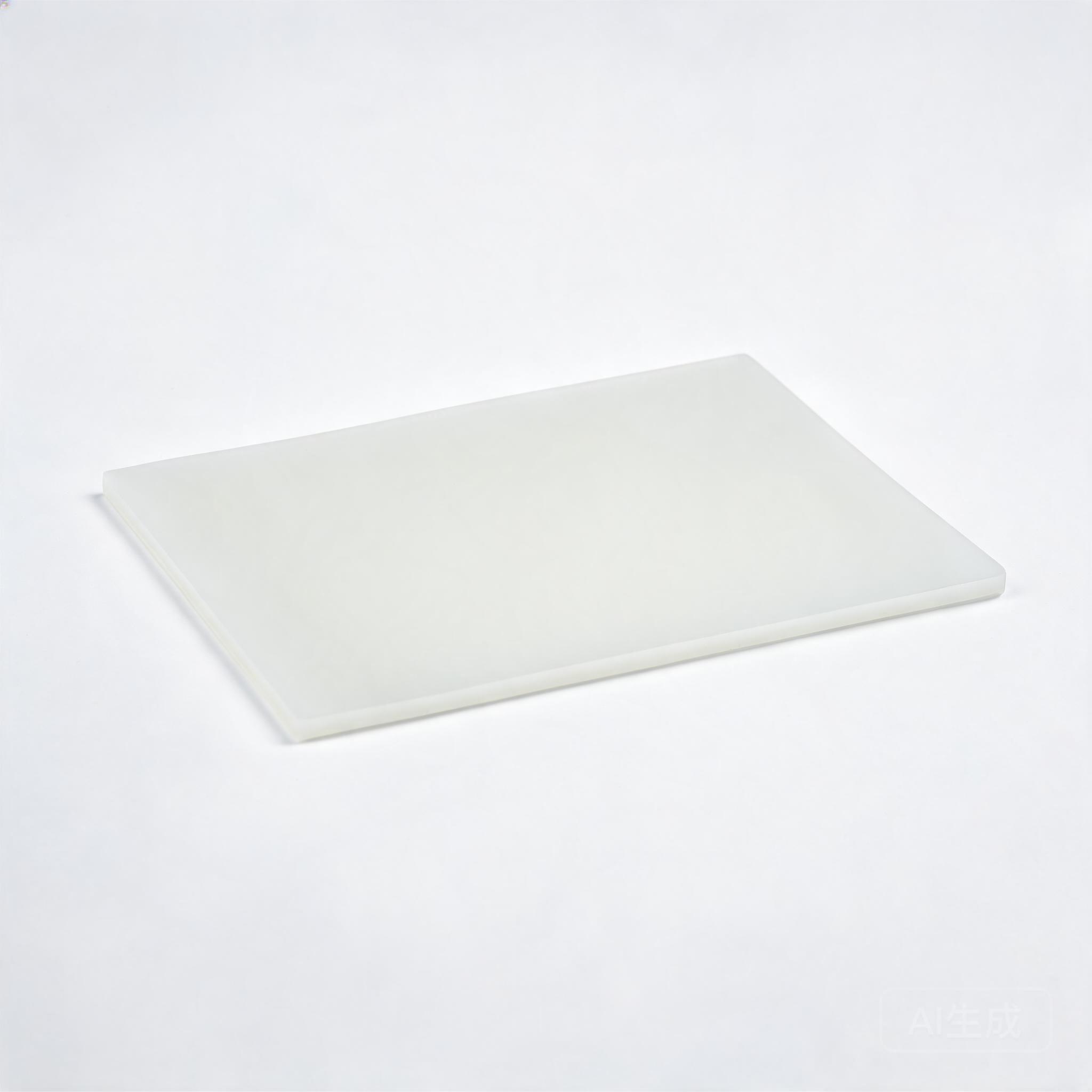
Liquid Silicone Automotive Electronics Insulation Gasket, High Low Temperature Resistant Vehicle Electrical Insulation Pad Manufacturer
High Temperature Resistant Liquid Silicone Insulation Gasket for Automotive Electronics
Liquid Silicone Rubber Injection MoldingPublished on May 23, 2026
Liquid silicone insulation gasket specially developed for automotive electronics scenarios, with excellent electrical insulation performance, high and low temperature resistance and aging resistance, can effectively isolate the risk of circuit short circuit, buffer the vibration impact generated by vehicle driving, suitable for the protection needs of core electronic components such as on-board controllers and sensors.
Widely used in insulation protection and shock buffering scenarios for automotive electronic components such as on-board BMS battery management systemsbody controllersmillimeter wave radarsan...
The High Temperature Resistant Liquid Silicone Insulation Gasket for Automotive Electronics is a high-performance dielectric component precision-molded from medical/automotive-grade liquid silicone rubber (LSR), engineered to address the strict insulation, environmental resilience, and long-term reliability requirements of modern automotive electronic systems. Designed for 150°C continuous operating environments with transient peak temperature resistance up to 280°C, this insulation gasket eliminates electrical arcing, short-circuit, and signal interference risks across high-voltage vehicle architectures, ADAS sensor suites, and powertrain control modules.
Unlike traditional polyimide (PI) films or rigid epoxy insulation sheets, this LSR gasket features inherent elasticity that delivers consistent 0.8~2.5 N/mm² surface contact pressure even under thermal expansion, vibration, and mechanical shock loads common in automotive operating conditions. It combines UL94 V-0 flame retardancy, IP67 ingress protection compatibility, and zero halogen content to meet global automotive safety and environmental regulations. The product is available in custom die-cut, compression-molded, and injection-molded formats with tolerance precision down to ±0.02mm, enabling seamless integration into complex, space-constrained automotive electronic assemblies.
Technical Specifications
Material Properties
ParameterStandard ValueTest MethodNotes
Base MaterialMedical/AEC-Q200 Grade Liquid Silicone Rubber-Two-part addition-cured, no plasticizer migration
Silicone Content≥92%ISO 7721Reinforced with fumed silica for structural stability
Flame Retardant RatingUL94 V-0UL 94Halogen-free, phosphorus-nitrogen based flame retardant system
Volume Resistivity≥1×10¹⁶ Ω·cmIEC 60093Tested at 23°C / 50% RH, remains ≥1×10¹⁴ Ω·cm at 150°C
Operating Temperature Range-60°C ~ 220°C (continuous), 280°C (10min transient)IEC 60068-2-1/2Suitable for under-hood and near-engine mounting positions
Water Absorption≤0.05% @ 23°C / 24hASTM D570Prevents insulation performance degradation in high-humidity environments
UV ResistancePasses 1000h accelerated weathering testISO 4892-2Suitable for exterior-mounted sensor and control module applications
Vibration Resistance10~2000Hz, 20G acceleration, no cracking or displacementIEC 60068-2-6Validated for automotive road load conditions
Process Parameters
ParameterRecommended ValueNotes
Molding ProcessInjection Molding / Compression MoldingInjection molding recommended for complex geometries with ±0.02mm tolerance; die-cutting available for flat, high-volume low-complexity parts
Curing Temperature120~150°C3~5min curing time for injection molding, post-curing at 180°C for 2h recommended for optimal high-temperature stability
Adhesion CompatibilityCompatible with acrylic, silicone, and epoxy pressure-sensitive adhesives (PSA)PSA lamination available as a value-added service for easy assembly, with peel strength ≥6 N/25mm
Customization ToleranceThickness: ±0.03mm for <1mm parts, ±0.05mm for 1~3mm parts; Linear dimension: ±0.02mm for <50mm parts, ±0.1% for >50mm parts
Surface TreatmentMatte, glossy, or plasma-treated surfaces availablePlasma treatment improves adhesion to metal and PCB substrates by 40%
Unlike PI films that experience 50% dielectric strength loss at 180°C and epoxy sheets that become brittle above 120°C, this LSR insulation gasket retains ≥90% of its initial dielectric properties after 3000h of aging at 180°C. It maintains structural integrity even during transient under-hood temperature spikes from engine or battery thermal events, eliminating insulation failure risks in high-voltage 400V/800V electric vehicle architectures.
2. Long-Term Durability Under Harsh Automotive Conditions
The gasket’s low compression set and high elongation enable it to withstand 1500+ cycles of -40°C to 180°C thermal shock without cracking, delaminating, or losing contact pressure. Its inherent resistance to automotive fluids (engine oil, coolant, battery electrolyte, and road salt) reduces insulation performance degradation by 85% compared to traditional polymer insulation materials, supporting a 15-year / 250,000km vehicle service life.
3. Precision Customization for Complex Electronic Assemblies
Advanced LSR injection molding technology allows for the integration of mounting holes, positioning notches, and partial conductive regions in a single production step, eliminating secondary processing costs and reducing assembly tolerance stack-up. The gasket can be produced in thicknesses as low as 0.2mm for space-constrained ADAS sensor modules and as thick as 3mm for high-voltage battery management system (BMS) isolation requirements.
4. Safety and Environmental Compliance
The halogen-free, low-toxicity material formulation emits no corrosive gases during combustion, reducing injury risk to passengers in vehicle fire events. It meets all global automotive regulatory requirements including AEC-Q200 reliability standards, EU RoHS 2.0, REACH SVHC, and China’s GB/T 30512 automotive material restriction standards, supporting global vehicle platform development.
Applications
This high-temperature LSR insulation gasket is widely deployed across four core automotive electronic segments:
Electric Vehicle (EV) Powertrain Systems: Used as insulation between high-voltage busbars and metal housings in traction inverters, on-board chargers (OBC), and DC-DC converters, preventing short-circuit faults caused by busbar vibration and thermal expansion. 0.5mm thick 60 Shore A variants are standard for 800V EV platform applications.
ADAS and Autonomous Driving Systems: Serves as dielectric isolation between radar PCB assemblies and aluminum sensor housings, with a stable dielectric constant that minimizes 77GHz radar signal attenuation by <0.2dB. 0.3mm thick 40 Shore A variants are optimized for automotive radar and LiDAR modules.
Body Control and Infotainment Systems: Applied between PCBs and metal chassis in body control modules (BCM), head units, and digital instrument clusters to suppress electromagnetic interference (EMI) and prevent electrical leakage caused by liquid ingress. Adhesive-backed 0.25mm thick variants simplify assembly for high-volume production lines.
Battery Management Systems (BMS): Provides gap insulation between cell monitoring PCBs and battery module housings, with resistance to electrolyte corrosion that prevents insulation failure over the battery pack’s 8-year service life. 2mm thick 70 Shore A variants offer additional mechanical impact protection for BMS components.
Selection Guide
Hardness Selection
30~40 Shore A: Recommended for applications requiring high conformability, such as uneven PCB surfaces and ADAS sensor modules where consistent low contact pressure is needed to avoid stress on sensitive electronic components.
50~60 Shore A: The standard grade for most powertrain and BMS applications, balancing elasticity and structural stability to maintain insulation performance under moderate vibration and thermal expansion loads.
65~70 Shore A: Designed for high-load applications such as high-voltage busbar isolation and under-hood mounting positions where resistance to mechanical impact and extrusion is required.
Size Specifications
Thickness: Ranges from 0.2mm to 3mm. For systems operating at <400V, a minimum thickness of 0.3mm is recommended; for 800V high-voltage systems, select a minimum thickness of 0.8mm to ensure sufficient dielectric safety margin.
Linear Dimensions: Customizable up to 300mm × 400mm for large-format BMS and traction inverter applications. For parts with complex cutouts or mounting features, provide 2D DXF or 3D STEP files for mold design validation.
Tolerance: For high-precision applications such as ADAS sensor mounting, specify precision-grade tolerance (±0.02mm for linear dimensions <50mm) to ensure alignment accuracy.
Material Grade
Standard Automotive Grade: Meets AEC-Q200 and RoHS requirements, suitable for most under-hood and interior electronic applications with operating temperatures up to 180°C.
High-Temperature Grade: Reinforced with high-temperature resistant fillers for continuous operating temperatures up to 220°C, recommended for near-engine and exhaust system electronic control units.
Medical-Grade: USP Class VI certified, intended for in-cabin medical and health monitoring devices in passenger vehicles where low VOC emission and biocompatibility are required.
Quality Assurance
All High Temperature Resistant Liquid Silicone Insulation Gaskets are manufactured in IATF 16949 certified production facilities, with a multi-stage quality control process that ensures 100% compliance with automotive reliability standards:
Incoming Material Inspection: Each batch of LSR raw material is tested for viscosity, curing time, and volume resistivity to ensure consistency with material specifications, with traceability codes recorded for every production lot.
In-Process Quality Control: Real-time monitoring of molding temperature, pressure, and curing time ensures dimensional tolerance and material performance consistency. Every 100th part is inspected for thickness, dimension, and surface defects.
Finished Product Testing: Each production lot undergoes type testing including dielectric strength verification, compression set testing, thermal shock cycling, and flame retardancy validation. Optional 100% electrical withstand voltage testing (2.5× operating voltage for 1min) is available for high-voltage safety-critical applications.
Certifications: The product holds UL94 V-0 flame retardant certification, RoHS 2.0 and REACH compliance reports, AEC-Q200 reliability test reports, and material declaration sheets (MDS) compliant with global automotive OEM supply chain requirements.
Warranty: We offer a 5-year shelf life warranty for properly stored products, and a performance warranty matching the vehicle’s service life for parts validated through our application engineering team’s design review. Our technical support team provides 48-hour response for custom material and design inquiries, including finite element analysis (FEA) simulation of gasket performance under specific operating conditions.