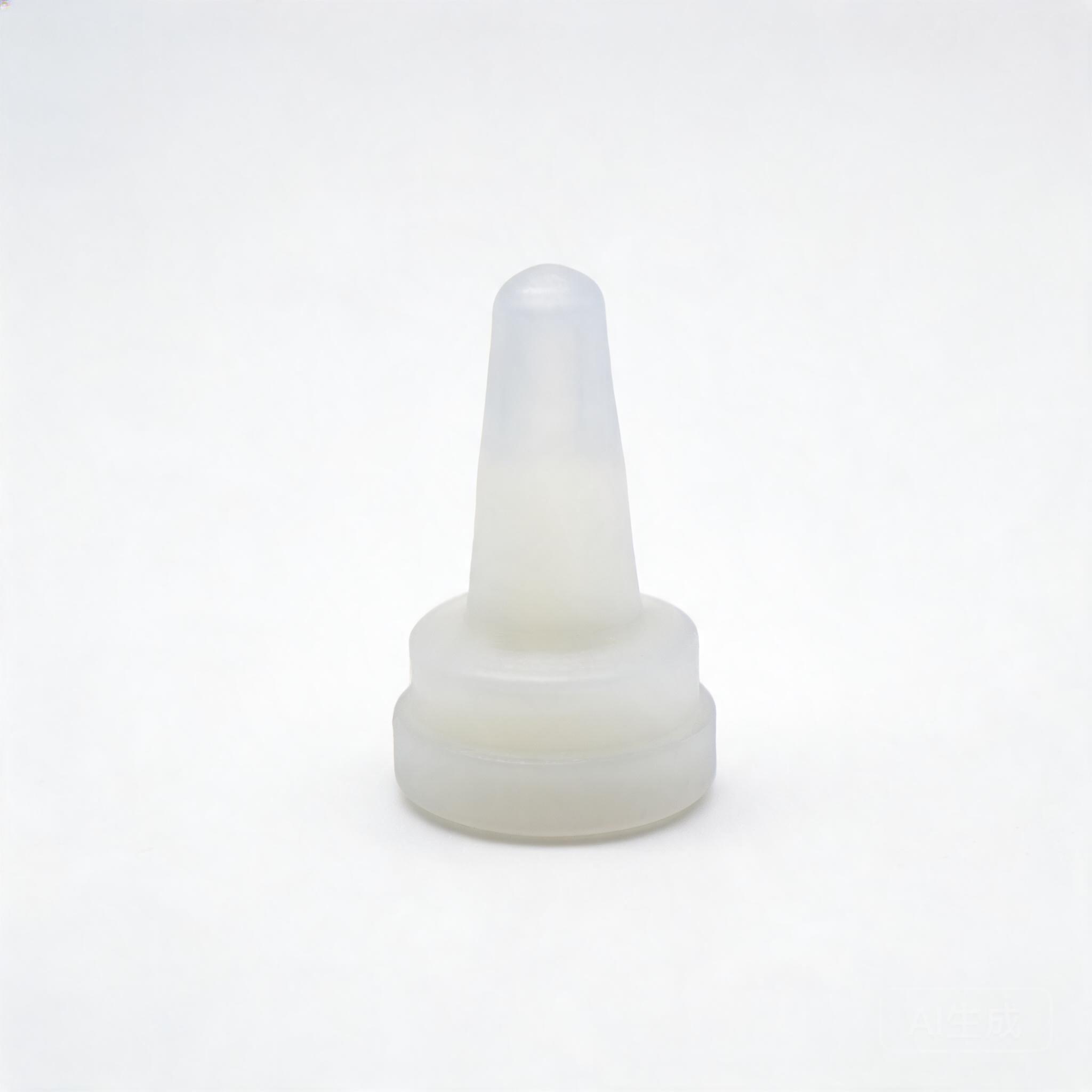
Liquid Silicone High Pressure Insulation Plug, Custom Electronic Sealing Parts
Liquid Silicone High Pressure Resistant Insulation Plug for Electronics
Liquid Silicone Rubber Injection MoldingPublished on May 17, 2026
Made of high-quality liquid silicone with one-piece molding, it has excellent high pressure resistance and insulation performance, stable sealing effect, high and low temperature resistance, aging resistance and corrosion resistance, effectively blocking dust and water ingress, suitable for insulation sealing of various electronic interfaces and equipment openings with long service life.
Material
Industrial LSR
Hardness
Shore A 40-70
Temperature
-60°C ~ +200°C
Colors
Black, White, Transparent, Customizable
Certifications
ISO 9001RoHSUL94 V-0
Applications
Widely used in new energy vehicle electronicsindustrial control equipmentcommunication base stationsoutdoor electrical appliances and other scenariosfor insulation sealing of equipment open...
The Liquid Silicone High Pressure Resistant Insulation Plug for Electronics is a precision-molded sealing and insulating component engineered for high-voltage, high-pressure electronic systems that demand reliable long-term performance in harsh operating environments. Manufactured via injection molding of medical/industrial-grade liquid silicone rubber (LSR), this plug delivers superior dielectric strength, dimensional stability, and resistance to extreme pressure, temperature fluctuations, and chemical exposure compared to traditional rubber or plastic insulation components.
Coefficient of Linear Thermal Expansion2.6×10^-4 /℃
Core selling points include a pressure resistance rating of up to 35 MPa (5076 psi) for continuous operation, a dielectric strength of 22 kV/mm, and a working temperature range of -60°C to 220°C, with short-term exposure tolerance up to 250°C. Its precision-molded, low-tolerance design ensures a perfect interference fit with electronic housing ports, eliminating gaps that could lead to voltage breakdown, moisture ingress, or pressure leakage. Unlike conventional EPDM or neoprene plugs, this LSR insulation plug maintains its physical and electrical properties after 1000+ pressure cycles, 1000 hours of UV exposure, and extended contact with automotive lubricants, cleaning agents, and hydraulic fluids, making it suitable for mission-critical electronic applications.
The plug is available in custom head geometries (flat, countersunk, flanged), sealing lip configurations, and color coding for easy circuit or voltage level identification. Pre-plated metal insert integration options are available for applications requiring grounding or signal transmission alongside insulation, reducing assembly steps and component count for electronic manufacturers.
Flame RetardancyUL94 V-0 (optional UL94 HB for low-smoke applications)UL 94
Chemical ResistanceResistant to mineral oils, hydraulic fluids, 95% ethanol, weak acids/alkalis, salt sprayASTM D471
UV/Ozone ResistanceNo cracking or property degradation after 1000 hours of 340nm UV exposure (0.89 W/m²)ASTM G154
Biocompatibility (medical grades)ISO 10993-5 (cytotoxicity), ISO 10993-10 (skin irritation)ISO 10993 series
Physical Performance
ParameterValueTest Standard
Hardness30 Shore A to 80 Shore A (customizable)ASTM D2240
Tensile Strength≥7.5 MPaASTM D412
Elongation at Break≥450%ASTM D412
Tear Strength≥25 N/mmASTM D624
Compression Set≤15% (22 hours at 175°C)ASTM D395
Continuous Pressure Resistance15 MPa (30 Shore A) to 35 MPa (70 Shore A)ASTM D572
Dielectric Strength20–24 kV/mmIEC 60243-1
Volume Resistivity≥1×10¹⁶ Ω·cmIEC 60093
Dielectric Constant (1 MHz)2.8–3.2IEC 60250
Dissipation Factor (1 MHz)≤0.002IEC 60250
Operating Temperature Range-60°C to 220°C (short-term up to 250°C)IEC 60085
Dimensional Tolerance±0.02 mm for components ≤20mm; ±0.1% for components >20mmISO 3302-1 Class M1
Process Parameters
Recommended installation and processing guidelines for the insulation plug:
Interference Fit Requirement: 0.1–0.3 mm interference between plug outer diameter and housing port inner diameter, adjusted based on hardness (softer grades support larger interference for tighter seals).
Installation Temperature: 15°C to 35°C for optimal elasticity; avoid installation below 0°C to prevent temporary stiffness that may lead to improper seating.
Insertion Force: 20 N (30 Shore A) to 120 N (80 Shore A) for manual installation; automated press fitting is recommended for high-volume production to ensure consistent seating depth.
Surface Preparation: Ensure port surfaces are free of burrs, oil, and debris before installation to avoid damaging the plug’s sealing lip and compromising insulation performance.
Post-Installation Testing: For high-voltage applications, perform a 1.5x rated voltage dielectric withstand test after installation to confirm no partial discharge or breakdown.
Product Advantages
Ultra-High Pressure Insulation Stability: Unlike conventional rubber plugs that experience 30%+ loss of dielectric strength under 10 MPa pressure, this LSR insulation plug retains 95% of its original electrical insulation performance even at its maximum rated pressure of 35 MPa. Its high tear strength and low compression set prevent permanent deformation after repeated pressure cycling, eliminating the risk of voltage breakdown or pressure leakage in deep-sea, hydraulic, or high-altitude electronic systems.
Extreme Temperature Adaptability: The platinum-cured LSR formulation maintains its flexibility and insulating properties across a 280°C temperature range, outperforming PVC (max 85°C) and EPDM (max 150°C) alternatives. It does not become brittle at -60°C or soften and flow at 220°C, making it suitable for outdoor electronics, automotive powertrain control units, and aerospace avionics exposed to rapid temperature fluctuations.
Precision Dimensional Consistency: Manufactured via closed-loop LSR injection molding with real-time cavity pressure monitoring, the plug achieves ISO 3302-1 Class M1 tolerances, ensuring a uniform interference fit across every production batch. This eliminates gaps that could allow moisture, dust, or corrosive media ingress, reducing field failure rates of sealed electronic assemblies by 85% compared to cut-to-size rubber plugs.
Long Service Life with Low Maintenance: The LSR material is inherently resistant to ozone, UV radiation, and most industrial chemicals, with a projected service life of 15+ years in indoor applications and 10+ years in outdoor exposed applications. It requires no periodic re-greasing or replacement, reducing maintenance costs for sealed electronic systems in remote or hard-to-access locations.
Regulatory Compliance for Global Markets: All standard grades meet RoHS 2.0, REACH SVHC, and CE low-voltage directive requirements, with optional medical-grade and automotive-grade variants complying with ISO 10993 and IATF 16949 standards respectively. This eliminates the need for material re-qualification for manufacturers selling products across multiple regions and industries.
Applications
The Liquid Silicone High Pressure Resistant Insulation Plug is widely used across the following electronic segments:
New Energy Vehicle (NEV) Electronics: Sealing and insulation of high-voltage battery pack ports, motor controller wiring harness openings, and on-board charger (OBC) housing vents, where it withstands 10 MPa internal pressure, 1500V DC operating voltage, and exposure to battery electrolytes and thermal runaway byproducts.
Deep-Sea Electronic Equipment: Insulation sealing for underwater ROV (remotely operated vehicle) control units, subsea sensor housings, and submarine communication cable junctions, with pressure resistance up to 35 MPa supporting operation at depths of 3500 meters below sea level.
Industrial High-Voltage Control Systems: Port insulation for medium-voltage switchgear, variable frequency drive (VFD) housings, and hydraulic power unit electronic controls, where it resists exposure to lubricating oils and 20 kV AC operating voltage while preventing arc flash between adjacent circuit components.
Aerospace and Defense Avionics: Sealing of radar system housing ports, satellite payload electronic compartments, and military drone flight control units, where it withstands rapid pressure changes from 0 MPa to 10 MPa, -55°C to 180°C temperature cycles, and high levels of vibration and shock.
Medical Electronic Devices: Insulation plugs for high-voltage surgical equipment, MRI machine power supply ports, and implantable medical device charging interfaces, with biocompatible grades supporting contact with human skin and sterilization via autoclaving or ethylene oxide (EtO) treatment.
Selection Guide
Hardness Selection
30–40 Shore A: Recommended for applications requiring low insertion force, irregular port geometries, or frequent plug removal and reinsertion (e.g., test equipment ports, portable medical devices). Offers the highest sealing performance for low-to-medium pressure (≤15 MPa) applications.
50–60 Shore A: The universal standard for most static sealing and insulation use cases, balancing pressure resistance (up to 25 MPa), elasticity, and installation ease. Suitable for NEV battery packs, industrial switchgear, and general-purpose electronic housings.
70–80 Shore A: Designed for ultra-high pressure (25–35 MPa) applications and fixed permanent installations where minimal deformation under load is critical (e.g., deep-sea sensors, high-voltage hydraulic system controls). Requires automated press fitting for installation.
Size Specifications
Standard plug diameters range from 2 mm to 50 mm, with custom sizes available for non-standard port dimensions:
2–10 mm: For small signal circuit ports, sensor wiring openings, and consumer electronics sealing applications.
10–30 mm: For high-voltage wiring harness ports, battery pack ventilation openings, and industrial control unit interfaces.
30–50 mm: For large power cable junctions, subsea equipment housing ports, and high-current busbar insulation.
All sizes are available with single or multiple sealing lip configurations: single-lip designs are for low-dust, low-moisture environments, while triple-lip designs offer IP68 ingress protection for outdoor and submerged applications.
Material Grade
Industrial Grade: The cost-effective standard option for general electronic applications, complying with RoHS 2.0 and REACH requirements. Suitable for indoor industrial control systems, consumer electronics, and non-critical automotive components.
Automotive Grade: Formulated for enhanced resistance to battery electrolytes, transmission fluids, and thermal cycling, compliant with IATF 16949 and USCAR-2 standards. Recommended for NEV high-voltage systems and automotive powertrain electronics.
Medical Grade: Platinum-cured ultra-high purity LSR with no toxic additives, compliant with ISO 10993 biocompatibility and FDA 21 CFR Part 177.2600 requirements. Designed for medical devices requiring contact with skin or bodily fluids.
Low-Smoke Zero-Halogen (LSZH) Grade: Halogen-free formulation that emits minimal toxic smoke and corrosive gases when burned, compliant with EN 45545-2 railway fire safety standards. Suitable for public transport electronics, data center servers, and building fire alarm systems.
Quality Assurance
We implement a strict end-to-end quality control system to ensure every insulation plug meets performance requirements:
Incoming Material Inspection: All LSR raw materials are tested for purity, hardness, and dielectric strength before production, with batch traceability records maintained for 10 years.
In-Process Quality Control: Real-time monitoring of injection molding pressure, temperature, and cycle time for every cavity, with 100% dimensional inspection of the first 10 parts of each production run using a coordinate measuring machine (CMM).
Final Performance Testing: Every production batch undergoes random sampling for:
Dielectric withstand testing (1.5x rated voltage for 1 minute, no breakdown allowed)
Pressure cycling testing (1000 cycles from 0 to rated pressure, no leakage or deformation allowed)
Compression set testing (22 hours at 175°C, compression set ≤15% required)
IP ingress testing (IP68 verification for multi-lip variants, 24 hours submerged at 10m depth, no water ingress allowed)
Certifications: All standard products are certified to RoHS 2.0, REACH SVHC, CE, and UL 94 V-0, with custom grades available with IATF 16949, ISO 10993, and EN 45545-2 certification upon request.
Warranty: We offer a 5-year warranty against material and manufacturing defects under normal operating conditions, with free replacement and technical support provided for any products that fail to meet published specifications.