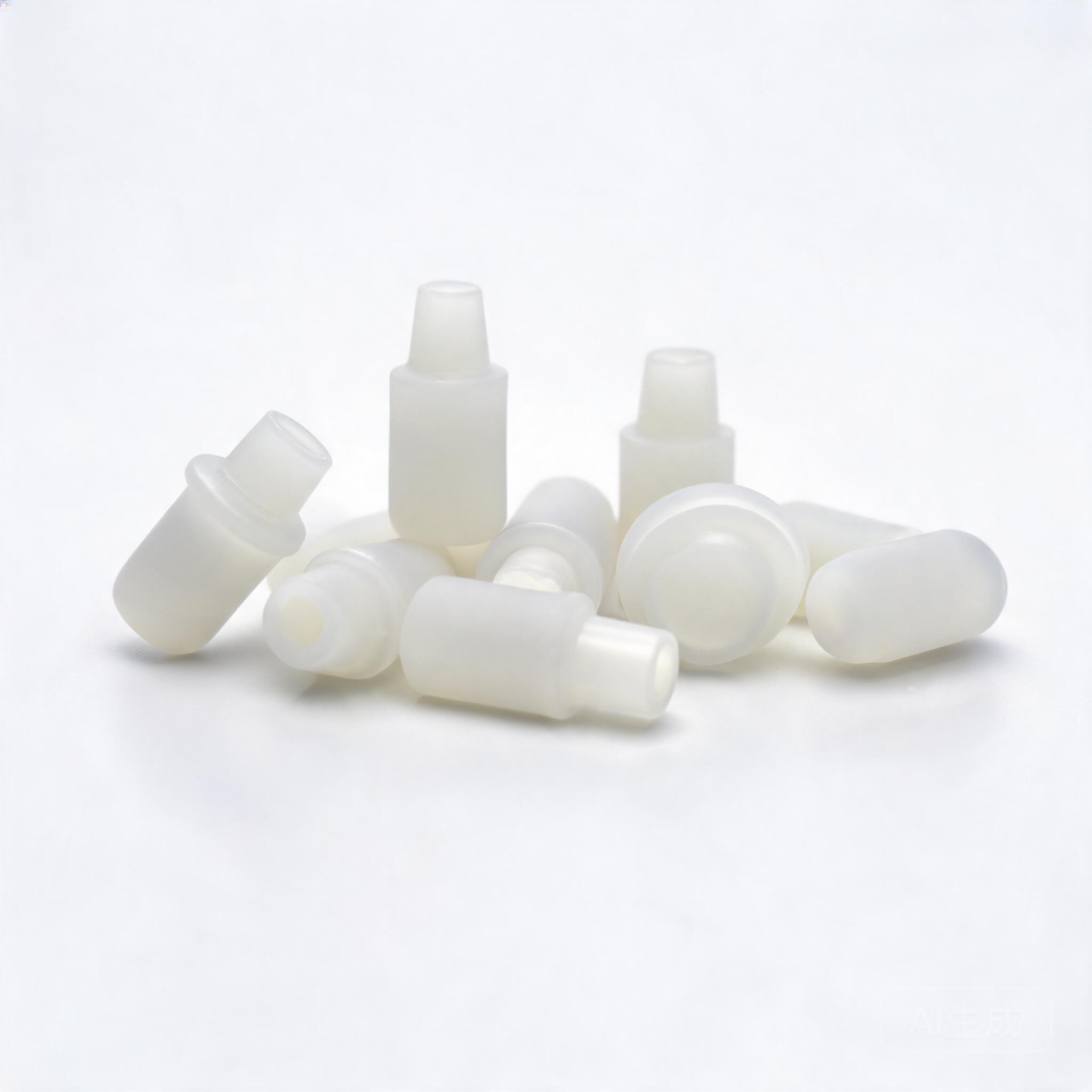
LSR Dust Plug for Power Equipment, Waterproof Heat Resistant Industrial Seal
Liquid Silicone Rubber Dust Plug for Electrical Power Equipment
Liquid Silicone Rubber Injection MoldingPublished on May 17, 2026
This food-grade liquid silicone dust plug is specially designed for electrical power equipment, with excellent dustproof, waterproof and sealing performance, resistant to high and low temperature, aging and UV, effectively protecting equipment interfaces from dust and moisture, extending service life, easy to install with good adaptability.
Material
Industrial LSR
Hardness
Shore A 50-70
Temperature
-40°C ~ +200°C
Colors
Black, White, Transparent, Customizable
Certifications
ISO 9001RoHSUL94-V0
Applications
Widely used for dustproof and sealing protection of various power switchgeartransformer interfacesoutdoor power terminal boxescommunication power equipment interfacesetc.suitable for comp...
Relevant Certification StandardsCompliant with ROHS, REACH, GB/T 11026 electrical insulating material standards
# Liquid Silicone Rubber Dust Plug for Electrical Power Equipment
Product Overview
The Liquid Silicone Rubber (LSR) Dust Plug for Electrical Power Equipment is a high-performance sealing and protection component engineered specifically for the harsh operating conditions of power transmission, distribution, and generation infrastructure. Designed to block environmental contaminants including dust, moisture, particulate debris, and chemical corrosives from entering unused or temporarily exposed openings of power equipment, this dust plug eliminates a common root cause of insulation degradation, short circuits, and premature component failure.
Manufactured via precision injection molding of medical and industrial-grade liquid silicone rubber, these plugs deliver consistent performance across extreme temperature fluctuations, high voltage exposure, and long-term outdoor deployment without hardening, cracking, or losing sealing pressure. Core selling points include a tight interference fit design that requires no adhesives for installation, resistance to UV radiation and ozone, inherent flame retardancy, and compatibility with all common power equipment opening standards across substations, transformers, switchgear, and overhead line fittings. Unlike traditional rubber or plastic dust plugs, these LSR components have a service life of over 25 years, reducing maintenance frequency and unplanned downtime for power grid operators.
Technical Specifications
Material Properties
ParameterStandard ValueTest Method
Base MaterialMedical/food-grade addition-cured liquid silicone rubberISO 10993-5
Ozone ResistanceNo cracking after 1000h exposure to 200pphm ozone at 40°CASTM D1149
Corrosion ResistanceNo visible change after 72h immersion in 10% H₂SO₄, 10% NaOH, and 10% NaCl solutionsASTM D543
Physical Performance
ParameterStandard ValueTest Method
Hardness Range30~70 Shore A (customizable)ASTM D2240
Operating Temperature Range-60°C to +220°CASTM D1329
Tensile Strength≥7.5 MPaASTM D412
Elongation at Break≥450%ASTM D412
Tear Strength≥25 kN/mASTM D624
Compression Set≤10% (22h at 150°C)ASTM D395
Interference Fit Sealing Pressure≥0.3 MPaIEC 60529
IP Protection RatingIP67 when installed correctlyIEC 60529
Service Life≥25 years (outdoor deployment)GB/T 3512 accelerated aging test
Process Parameters
ParameterSpecification
Molding Tolerance±0.05mm for diameters ≤20mm; ±0.1mm for diameters 20~100mm
Standard Size Range6mm to 120mm inner diameter (custom sizes available for non-standard openings)
Installation Force15~50 N (varies by size, no special tools required for standard models)
Removal Force10~40 N (no residual adhesive or deformation after repeated installation/removal)
Color OptionsStandard red, gray, black (custom colors available for equipment identification coding)
Product Advantages
1. Extreme Environmental Adaptability
Unlike nitrile rubber or PVC alternatives that harden below -20°C or soften above 80°C, this LSR dust plug maintains consistent elasticity and sealing performance across -60°C to 220°C, making it suitable for deployment in alpine, desert, coastal, and high-temperature industrial power facilities. Its UV and ozone resistance eliminates surface cracking and brittleness caused by long-term outdoor exposure, reducing the need for annual replacement cycles required for traditional rubber plugs.
2. Superior Electrical Insulation Performance
With a dielectric strength of 22 kV/mm and volume resistivity exceeding 1×10¹⁶ Ω·cm, the plug acts as a supplementary insulation layer for exposed electrical interfaces, preventing flashover and creepage discharge even in high-humidity, high-pollution environments. The material does not generate conductive carbonized residues when exposed to arc discharge, further reducing the risk of short circuit accidents in medium and high voltage equipment.
3. Tool-Free, Non-Damaging Installation
The optimized interference fit design creates a uniform radial sealing pressure without the need for adhesives, fasteners, or special installation tools. The plug can be inserted by hand in 5 seconds or less, and removed without leaving residual glue or causing surface damage to equipment openings, making it ideal for both long-term sealing of unused ports and temporary protection during equipment transportation, maintenance, or construction.
4. Long-Term Low Total Cost of Ownership
While the upfront cost of LSR dust plugs is 20~30% higher than traditional rubber alternatives, their 25+ year service life reduces annual replacement and labor costs by 80% over the product lifecycle. Independent testing by power grid operators shows that widespread deployment of these plugs reduces equipment failure rates caused by foreign object intrusion by 92%, delivering a full return on investment within 18 months of installation.
Applications
These LSR dust plugs are designed for universal use across all types of electrical power equipment, with common use cases including:
Substation Equipment: Sealing unused secondary terminal ports, cable entry openings, and sensor interfaces on switchgear, circuit breakers, disconnectors, and current/voltage transformers. The UL94 V-0 flame retardant rating meets mandatory safety requirements for indoor and outdoor substation deployment.
Power Transmission and Distribution Lines: Protecting exposed bolt holes, grounding terminal openings, and insulator cavity interfaces on overhead line towers, pole-mounted transformers, and distribution boxes. Their IP67 sealing rating prevents water and dust ingress in areas with heavy rain, snow, or wind-blown sand.
New Energy Power Generation Facilities: Sealing reserved cable openings and communication port interfaces on solar inverter combiner boxes, wind turbine nacelle electrical cabinets, and energy storage system battery racks. The material’s resistance to salt spray corrosion makes it suitable for coastal wind farms and offshore photovoltaic projects.
**Electrical Equipment Manufacturing and Transportation: Temporary protection of internal component openings during factory assembly, transportation, and on-site installation of power equipment, preventing welding slag, dust, and construction debris from entering precision components before commissioning.
Selection Guide
Hardness Selection
30~40 Shore A: Recommended for irregularly shaped openings, temporary sealing applications, or equipment with thin-wall plastic interfaces that are prone to deformation. The lower hardness provides greater conformity to uneven surfaces and lower installation force.
40~55 Shore A: Standard grade for most static sealing applications on substation switchgear, transformer openings, and distribution box ports, balancing sealing pressure and installation convenience.
55~70 Shore A: Recommended for high-vibration environments such as wind turbine nacelles, overhead line fittings, or areas with long-term exposure to high wind pressure. The higher hardness improves resistance to dislodgement and long-term compression set.
Size Specifications
Measure the inner diameter of the target opening with a vernier caliper, taking 3 measurements at different angles to account for out-of-roundness.
Select a plug with an outer diameter 0.3~0.5mm larger than the maximum measured inner diameter of the opening to ensure sufficient interference for IP67 sealing.
For non-standard openings, tapered plugs with 2~3 degree taper angles are available to accommodate diameter variations of up to 3mm. Custom molding services are provided for opening sizes outside the standard 6~120mm range, with a minimum order quantity of 100 units for custom sizes.
Material Grade
Industrial Grade (Standard): Meets all electrical and mechanical performance requirements for most outdoor and indoor power equipment applications, certified to RoHS 2.0 and REACH standards.
Flame-Retardant Enhanced Grade: Added aluminum hydroxide fillers for improved arc resistance, recommended for high-voltage equipment above 35kV and indoor switchgear rooms with strict fire safety requirements.
Food-Grade: For use in power equipment installed in food processing plants, pharmaceutical factories, and drinking water treatment facilities, certified to FDA 21 CFR 177.2600 and EU 10/2011 standards.
Quality Assurance
All LSR dust plugs are manufactured in ISO 9001:2015 certified facilities, with a three-stage quality control process covering raw material incoming inspection, in-process production testing, and finished product validation:
Raw Material Inspection: Each batch of LSR raw material is tested for viscosity, cure time, and electrical performance before entering the production line, with traceability codes assigned to all material lots.
In-Process Testing: 100% of molded plugs undergo dimensional inspection, visual defect screening, and hardness testing during production, with SPC (statistical process control) monitoring to ensure consistent tolerance compliance.
Finished Product Validation: Each production batch undergoes random sampling for compression set, dielectric strength, and IP sealing performance testing, with test reports provided with all bulk orders.
Products are certified to IEC 60335-1 electrical safety standards, UL94 V-0 flame retardant standards, and meet the technical requirements of GB/T 11026 for electrical insulating silicone rubber components. All standard products come with a 5-year warranty against manufacturing defects, with extended warranty options available for custom bulk orders for large power grid projects.