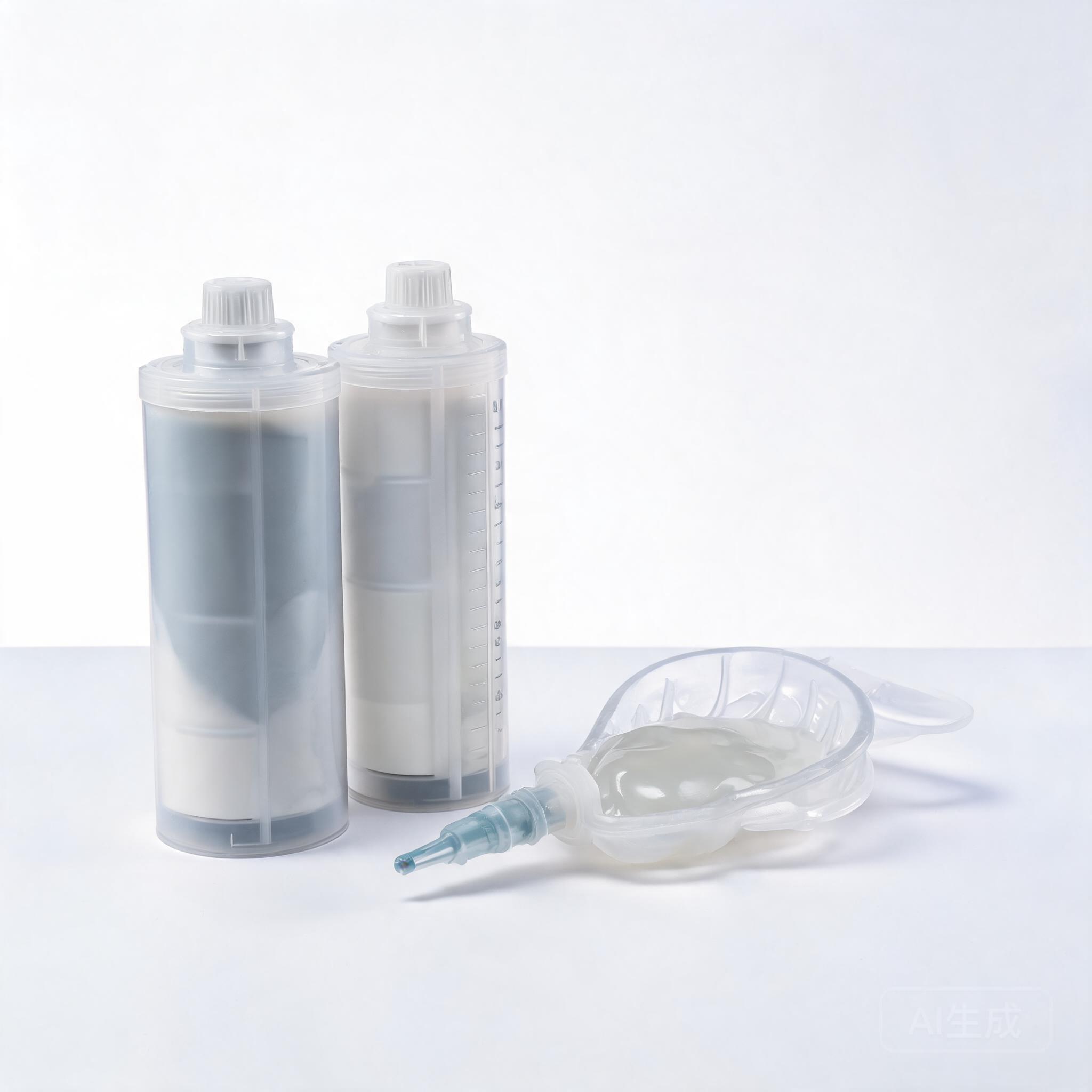
Medical Grade LSR Dental Impression Accessories High Precision Oral Molding Supplies
Liquid Silicone Dental Impression Accessories for Oral Molding
Liquid Silicone Rubber Injection MoldingPublished on May 17, 2026
Made of medical-grade liquid silicone rubber, these dental impression accessories feature high resilience, high-precision replication performance, no odor and no irritation. They can clearly restore the details of oral soft and hard tissues, resist disinfection and are not easy to deform, effectively improving the success rate of dental impression taking and the adaptation accuracy of restorations.
Material
Medical-grade LSR
Hardness
Shore A 30-50
Temperature
-40°C ~ +180°C
Specifications
Density1.12~1.16g/cm³
Curing Time3~5min (120℃ heat curing)/15~20min (25℃ room temperature curing)
Color OptionsConventional light purple/light pink/translucent, customizable
Tear Strength≥22kN/m
Hardness Range35~45 Shore A
Material GradeMedical food grade, meeting the requirements of dental contact materials
Suitable for denture restoration impression takingorthodontic impression takingimplant restoration impression taking and other scenarios in dental clinics and stomatological hospitalsand can ...
110~130℃ (heat curing)/23~25℃ (room temperature curing)
Volume Resistivity≥1×10^14Ω·cm
Dielectric Strength≥22kV/mm
Elongation at Break≥450%
Thermal Conductivity0.21W/(m·K)
Operating Temperature Range-40℃~200℃
Coefficient of Linear Expansion2.2×10^-4℃^-1
Relevant Certification StandardsGB 4806.10, FDA 21 CFR 177.2600, ISO 10993-5, YY/T 0268
# Liquid Silicone Dental Impression Accessories for Oral Molding
Product Overview
Our Liquid Silicone Rubber (LSR) Dental Impression Accessories are purpose-engineered components for precision oral molding workflows, designed to address the core pain points of dental clinics, dental laboratories, and orthodontic device manufacturers: inconsistent impression accuracy, material biocompatibility risks, and short service life of disposable impression aids. Made from medical-grade addition-cure liquid silicone, these accessories deliver exceptional dimensional stability, soft tissue compliance, and chemical resistance across all stages of impression taking, cast pouring, and orthodontic model verification.
Unlike conventional polyvinyl chloride (PVC) or disposable thermoplastic impression accessories, our LSR components are autoclavable up to 134°C for repeated use, eliminating cross-contamination risks while reducing per-patient clinical costs. The formulation is optimized to resist deformation under the pressure of intraoral tissue and the exothermic reaction of gypsum casting materials, ensuring zero distortion of impression margins and soft tissue profiles critical for crown, bridge, implant, and clear aligner fabrication. All accessories are compatible with all mainstream impression materials on the market, including vinyl polysiloxane (VPS), polyether, and alginate, with a non-stick surface that allows for clean demolding without residue transfer to the final impression.
Technical Specifications
Material Properties
ParameterValueTest Standard
Base MaterialMedical-grade addition-cure LSR (platinum-catalyzed)ISO 10993-1
Biocompatibility ClassificationClass IIa medical device materialFDA 21 CFR Part 177.2600
Cure Shrinkage< 0.1%ASTM D2566
Water Absorption< 0.05%ASTM D570
Chemical ResistanceResistant to 75% ethanol, 2% glutaraldehyde, dental gypsum, and VPS impression materialsISO 10993-18
Operating Temperature Range-40°C to 200°CASTM D792
Autoclave Cycle Durability≥ 100 cycles at 134°C, 2.2 barISO 17665-1
Dimensional Accuracy Tolerance± 0.02 mm for critical fitting surfacesISO 2768-m
Process Parameters
All LSR dental impression accessories are manufactured via precision injection molding with a closed-loop process control system to ensure batch-to-batch consistency:
Curing time: 25–40s (depending on part thickness, max 6mm)
Injection pressure: 80–120 bar
Post-curing: 2h at 150°C under nitrogen atmosphere to eliminate residual volatile organic compounds (VOCs)
No secondary processing required for fitting surfaces; flash control ≤ 0.01mm to avoid intraoral irritation.
Product Advantages
1. Unmatched Intraoral Dimensional Stability
The low cure shrinkage (<0.1%) and high tear resistance of our LSR formulation ensure that impression accessories maintain their exact shape during and after insertion into the oral cavity, even when pressed against mobile soft tissue or tight interproximal spaces. Unlike disposable plastic accessories that may warp under body temperature or impression material pressure, our components deliver consistent margin definition with less than 0.03mm deviation across 100 consecutive uses, eliminating the need for repeat impressions due to accessory distortion.
2. Medical-Grade Biocompatibility for Patient Safety
All materials are certified to ISO 10993-1, -5, and -10 standards, with zero cytotoxicity, skin irritation, or allergic potential even for patients with sensitive oral mucosa. The platinum-cured formulation contains no BPA, phthalates, or residual peroxide catalysts common in lower-grade silicone products, eliminating the risk of adverse reactions and ensuring compliance with global medical device regulations for intraoral use.
3. Long Service Life and Cost Efficiency
With a compression set of ≤3% after 22 hours of heat exposure, these accessories retain their elasticity and structural integrity for over 100 autoclave cycles, reducing per-use cost by up to 85% compared to single-use plastic alternatives. The non-porous, hydrophobic surface resists staining from dental materials and disinfectants, maintaining a smooth, lint-free finish for years of clinical use.
4. Universal Compatibility and Ease of Use
The optimized surface energy of the LSR ensures that impression materials adhere only to the target dental structure, not to the accessory itself, enabling clean, one-step demolding without tearing the impression or leaving residue. Accessories are designed to fit all standard impression trays (stock and custom) on the market, with no special training required for clinical staff to integrate them into existing workflows.
Applications
Our LSR dental impression accessories are suitable for a wide range of clinical and laboratory use cases:
Restorative Dentistry: Custom impression trays liners, gingival retraction cord holders, and margin replication sleeves for crown, bridge, inlay, and onlay impressions, ensuring accurate capture of subgingival finish lines.
Implant Dentistry: Implant impression coping sleeves, open/closed tray transfer adapters, and soft tissue modeling shims that replicate the peri-implant soft tissue profile for accurate abutment and final crown fabrication.
Orthodontics: Bracket positioning jigs, clear aligner attachment templates, and arch form replication components that eliminate distortion during model scanning for digital orthodontic treatment planning.
Prosthodontics: Edentulous jaw impression support pads, removable partial denture framework registration aids, and soft tissue moulage components for complete and partial denture fabrication, ensuring optimal fit and patient comfort.
Dental Education: Reusable oral anatomy model components and practice impression aids for dental school training programs, reducing material waste during hands-on clinical training.
Selection Guide
Hardness Selection
30A Shore Hardness: Recommended for soft tissue replication and gingival margin modeling, as the soft, flexible material conforms to mobile mucosal tissue without causing patient discomfort or tissue blanching. Ideal for patients with thin gingival biotypes or sensitive oral tissue.
40A Shore Hardness: The standard all-purpose option for most impression workflows, balancing flexibility and structural rigidity for crown, bridge, and routine implant impressions. Suitable for 90% of clinical cases.
50A Shore Hardness: Designed for high-pressure impression scenarios, such as full-arch implant cases and orthodontic arch form registration, where high dimensional stability under load is required. Not recommended for direct contact with sensitive soft tissue for extended periods.
Size Specifications
All accessories are available in three universal sizing categories to accommodate different oral anatomies:
Small (S): For pediatric patients and adult patients with narrow dental arches, with fitting surfaces optimized for trays sized 35mm (anterior width) and below.
Medium (M): The standard size for most adult patients, compatible with trays 35–45mm in anterior width.
Large (L): For adult patients with broad dental arches, compatible with trays 45mm and above in anterior width.
Custom sizes and geometry modifications are available for bulk orders (minimum order quantity: 500 units) to fit custom tray systems or specialized clinical workflows.
Material Grade
Clinical Grade: The standard option for in-clinic impression taking, with full autoclave compatibility and ISO 13485 certification for direct patient contact.
Laboratory Grade: A more cost-effective option for dental laboratory use (e.g., cast trimming jigs, model replication components), not suitable for intraoral use but compatible with all gypsum and resin casting materials.
Low-Temperature Sterilization Grade: For facilities using ethylene oxide (EtO) or gamma sterilization instead of autoclaving, with a formulation optimized to resist discoloration and property degradation after repeated low-temperature sterilization cycles.
Quality Assurance
Our LSR dental impression accessories are manufactured in an ISO 13485:2016 certified cleanroom facility (Class 100,000) with strict end-to-end quality control protocols:
Incoming Material Inspection: Every batch of LSR raw material is tested for biocompatibility, cure profile, and mechanical properties prior to production, with traceability documentation maintained for 10 years per medical device regulations.
In-Process Quality Control: 100% dimensional inspection of critical fitting surfaces using a coordinate measuring machine (CMM) with ±0.005mm accuracy, plus random sampling for tensile strength and compression set testing every 2 hours of production.
Final Product Testing: Every unit undergoes visual inspection for flash, defects, and surface finish, followed by batch testing for autoclave durability, biocompatibility, and chemical resistance prior to shipment.
Certifications: All products are CE marked under the EU Medical Device Regulation (MDR 2017/745) and FDA 510(k) cleared for intraoral use, with full technical documentation and declaration of conformity available upon request.
We offer a 12-month warranty against manufacturing defects, with free replacement for any units that fail to meet published performance specifications under normal clinical use.