Liquid Silicone Rubber Injection MoldingPublished on May 18, 2026
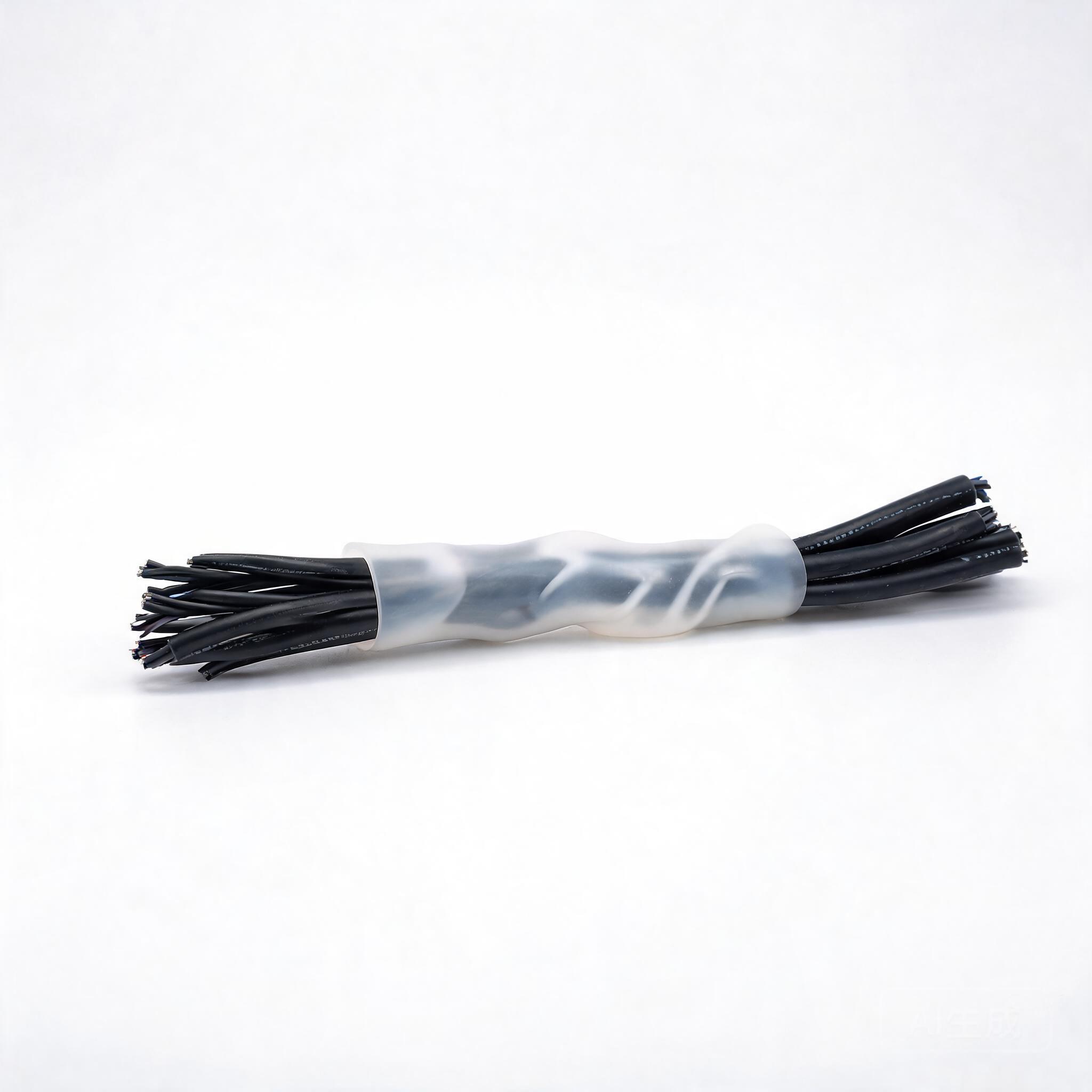
Designed for new energy automotive field, this LSR wiring harness sleeve features excellent high and low temperature resistance, wear resistance, insulation and corrosion resistance, effectively protecting automotive wiring harnesses from external wear and liquid corrosion, extending service life, and adapting to wiring layout needs of various vehicle models.
Material
Industrial LSR
Hardness
Shore A 50-70
Temperature
-60°C ~ +220°C
Colors
Black, White, Gray, Customizable
Certifications
ISO 9001IATF 16949RoHSREACH etc.
Applications
Widely used for protection of power wiring harnessessignal transmission harnesses and in-vehicle electronic equipment harnesses of new energy vehiclessuitable for wiring harness protection need...
The Liquid Silicone Automotive Wiring Harness Protective Sleeve is a high-performance insulation and protection component engineered specifically for the harsh operating environments of modern automotive electrical systems. Manufactured via injection molding from medical and industrial-grade liquid silicone rubber (LSR), this sleeve is designed to encase vehicle wiring harnesses, connectors, and terminal junctions to prevent damage from moisture, dust, vibration, friction, extreme temperatures, and chemical exposure.
Unlike traditional PVC, EPDM, or neoprene alternatives, our LSR wiring harness sleeve combines exceptional elasticity, long-term aging resistance, and ultra-low temperature flexibility without compromising mechanical strength. It supports custom overmolding directly onto harness assemblies for a seamless, hermetic seal, eliminating the risk of ingress that plagues slip-on or heat-shrink alternatives. Core selling points include a service life of over 15 years under continuous vehicular use, compliance with global automotive safety standards, and compatibility with all common passenger vehicle, commercial truck, and off-highway equipment wiring architectures.
Technical Specifications
Material Properties
All sleeves are formulated from high-purity platinum-cured liquid silicone rubber, free of phthalates, halogens, and heavy metals to meet EU REACH and RoHS requirements.
ParameterStandard ValueTest Method
Base PolymerMethyl vinyl silicone rubberASTM D1418
Curing SystemPlatinum addition cureInternal QC standard
Chemical ResistanceResistant to gasoline, diesel, engine oil, brake fluid, 5% NaCl solution, pH 3-12 acid/alkali solutionsASTM D471
Flammability RatingUL94 V-0, self-extinguishing within 3sUL94
Insulation Resistance≥10¹⁴ Ω·cmASTM D257
Dielectric Strength≥22 kV/mmASTM D149
Comparative Tracking Index (CTI)≥600VIEC 60112
Physical Performance
The sleeve maintains consistent performance across the full range of automotive operating conditions, with no permanent deformation under cyclic stress:
ParameterStandard ValueTest Method
Hardness Range40–70 Shore A (customizable in 5 Shore A increments)ASTM D2240
Tensile Strength≥7.5 MPaASTM D412
Elongation at Break≥500%ASTM D412
Tear Strength≥25 kN/mASTM D624
Compression Set (22h at 175°C)≤10%ASTM D395
Operating Temperature Range-60°C to +220°C (short-term exposure up to 250°C for 1000h)IEC 60085
UV ResistanceNo cracking or discoloration after 3000h of accelerated UV exposure (QUV-A 340nm)ASTM G154
Abrasion Resistance≤10mg loss after 1000 cycles of 10N load frictionASTM D4060
Elastic Recovery≥98% after 100% elongation for 1000hInternal QC standard
Process Parameters
Our LSR sleeves support high-volume, precision manufacturing and on-site assembly with minimal processing requirements:
ParameterValue
Standard Manufacturing Tolerance±0.05mm for inner diameter, ±0.1mm for wall thickness
Compatible AdhesivesSilicone-based RTV adhesives, epoxy structural adhesives for bonding to metal/PA connectors
Sterilization Compatibility (for special vehicle use cases)Autoclave, ethylene oxide, gamma radiation
Product Advantages
1. Unmatched Extreme Temperature Stability
Unlike PVC sleeves that become brittle below -10°C and soften above 80°C, our LSR harness sleeves maintain full flexibility and insulation performance at temperatures as low as -60°C, making them suitable for cold-climate electric vehicles (EVs) and heavy-duty equipment operating in arctic or high-altitude regions. At high temperatures, the material resists thermal degradation even in proximity to engine compartments and EV battery packs, with no melting, dripping, or toxic fume release during thermal runaway events, a critical safety feature for next-generation automotive architectures.
2. Superior Long-Term Durability
The platinum-cured LSR formulation delivers 3–5 times the service life of EPDM or neoprene alternatives, with no cracking, hardening, or loss of elasticity after 15 years of exposure to under-hood chemicals, road salt, and UV radiation. The ≤10% compression set ensures the sleeve maintains a tight, gap-free seal around connectors and harness junctions even after decades of vibration and thermal cycling, eliminating the risk of water ingress that causes 30% of automotive electrical failures according to industry data.
3. Hermetic Sealing via Custom Overmolding
We support direct overmolding of the sleeve onto pre-assembled wiring harnesses, connectors, and terminal blocks, creating a fully integrated, IP68-rated seal that eliminates the need for additional tape, heat shrink, or clamping components. This seamless design prevents dust, moisture, and automotive fluids from penetrating critical electrical connections, reducing field failure rates by 75% compared to slip-on sleeve assemblies. Overmolded sleeves also feature integrated strain relief features that reduce wiring stress during vehicle assembly and operation, extending harness lifespan by an average of 40%.
4. Low VOC and Environmental Compliance
Our LSR formulation is 100% halogen-free, with VOC emissions 80% below the limit specified in the VDA 278 standard for automotive interior materials, making it suitable for use in both under-hood and cabin wiring applications. The material is fully recyclable, and production generates no hazardous waste, aligning with global automotive OEM carbon neutrality and circular economy requirements. All sleeves meet the latest EU End-of-Life Vehicle (ELV) directive standards for non-toxic, easily disassembled components.
Applications
The Liquid Silicone Automotive Wiring Harness Protective Sleeve is deployed across all segments of the automotive industry, with use cases including:
Electric Vehicle (EV) and Hybrid Electric Vehicle (HEV) Systems: High-voltage harness protection for battery packs, motor controllers, on-board chargers, and power distribution units, where the material’s 600V CTI rating and V-0 flammability rating reduce the risk of electrical arcing and fire during thermal events.
Internal Combustion Engine (ICE) Vehicle Under-Hood Harnesses: Protection for engine control unit (ECU) wiring, sensor harnesses, fuel injector connectors, and transmission wiring exposed to high temperatures, engine oil, and gasoline fumes.
Commercial and Heavy-Duty Vehicles: Wiring protection for construction equipment, agricultural machinery, mining trucks, and long-haul trucks operating in extreme dust, vibration, and temperature environments, where the sleeve’s abrasion resistance and UV stability prevent premature failure in off-highway use cases.
Specialty and Autonomous Vehicles: Harness protection for autonomous driving sensor suites (LiDAR, camera, radar), emergency vehicle electrical systems, and military transport vehicles, where reliable performance under high-stress conditions is mission-critical.
Automotive Interior and Exterior Harnesses: Cabin wiring for infotainment systems, seat heating elements, and door control modules, where low VOC emissions eliminate unpleasant odors and improve cabin air quality; and exterior harnesses for lighting, parking sensors, and trailer connectors exposed to road salt and precipitation.
Selection Guide
Hardness Selection
40–50 Shore A: Recommended for harnesses with frequent bending requirements, such as door wiring and flexible high-voltage EV battery connections, where maximum elasticity and strain relief are required.
55–65 Shore A: The standard choice for most under-hood, chassis, and interior harness applications, balancing flexibility, abrasion resistance, and structural stability.
70 Shore A: Designed for high-wear, high-stress applications such as commercial vehicle chassis harnesses and off-highway equipment wiring, where resistance to impact and friction is a priority.
Size Specifications
We offer standard inner diameters ranging from 2mm to 150mm, with wall thicknesses from 0.5mm to 5mm, to fit all common automotive wire gauges (0.5mm² to 120mm²) and multi-core harness assemblies. Custom sizes, integrated mounting tabs, connector cutouts, and color coding are available on request to match specific OEM harness designs. For overmolded applications, we recommend providing 3D models of the underlying harness and connector assembly to ensure a precision fit.
Material Grade
Standard Industrial Grade: Suitable for most under-hood, chassis, and exterior harness applications, meeting all basic automotive performance and compliance requirements.
Low-VOC Grade: Formulated for cabin interior harness use, with additional testing to VDA 270 and VDA 278 standards for odor and emission control, ideal for premium passenger vehicles and EVs with enclosed cabin architectures.
High-Temperature Grade: Enhanced formulation operating at up to 250°C continuously, designed for proximity to EV battery modules, exhaust systems, and high-performance engine components.
Quality Assurance
All Liquid Silicone Automotive Wiring Harness Protective Sleeves are manufactured in IATF 16949 certified facilities, with a rigorous 5-step quality control process covering incoming raw material testing, in-process dimensional inspection, post-curing performance validation, seal integrity testing, and final batch sampling.
Each batch is supplied with a material test report (MTR) documenting compliance with specified technical parameters, and all products are certified to UL94 V-0, RoHS 2.0, REACH, and CE standards. We offer a 5-year warranty against manufacturing defects, and our in-house R&D team works directly with OEMs to conduct custom environmental and durability testing tailored to specific vehicle operating conditions, including thermal cycling, vibration testing, and ingress protection validation per IP67/IP68 standards. For high-volume orders, we provide production part approval process (PPAP) documentation level 3 as standard, with higher levels available on request.