
橡楚编辑部 6/14/2026 44 min read
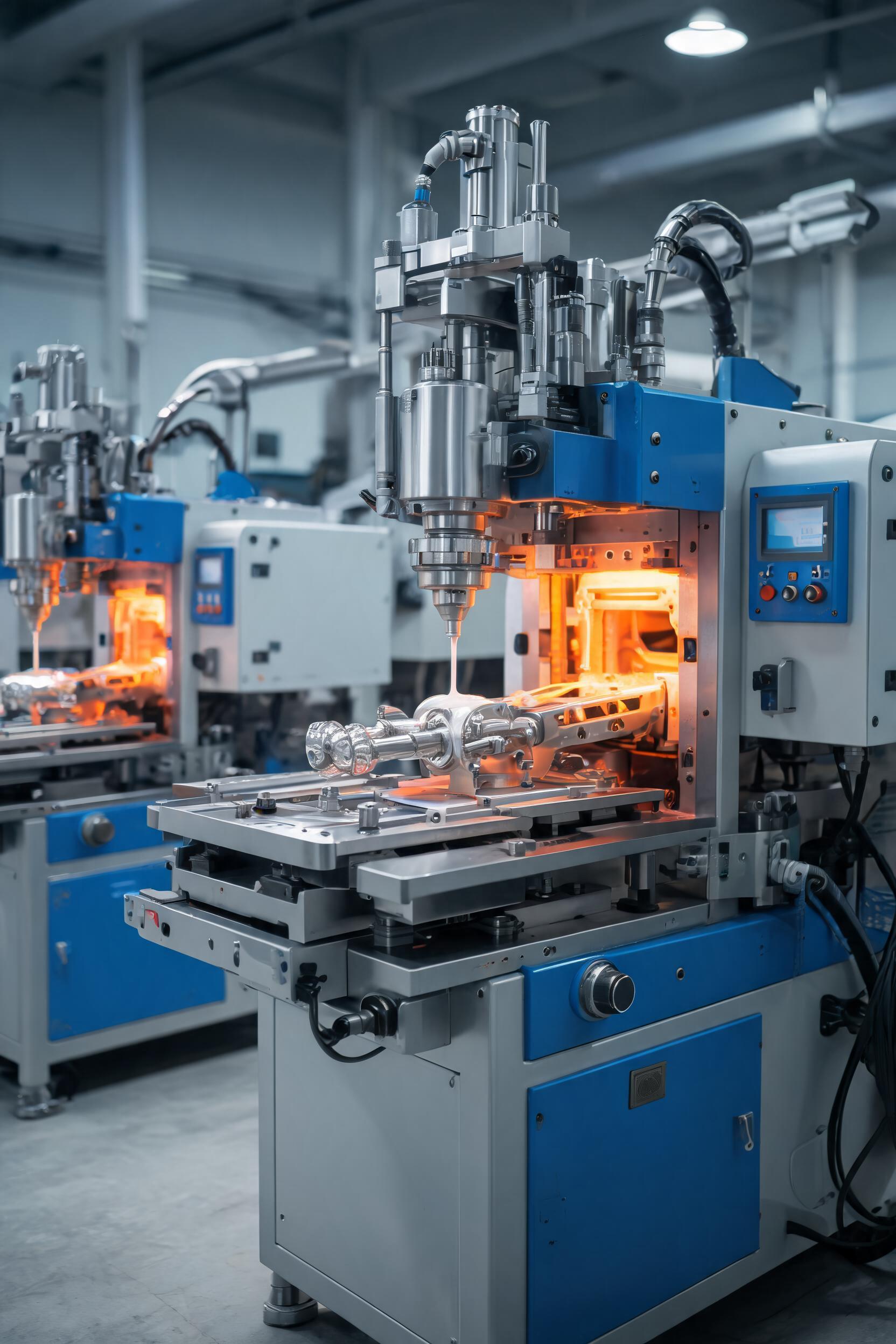
Failure in silicone over-molding on metal is a common issue in LSR manufacturing, most often caused by improper bonding process selection. This article breaks down the underlying logic of the solid-to-liquid composite process, clarifying core points for successful silicone over-molding on metal. Xiangchu (Hubei) Rubber Co., Ltd. holds ISO 9001 certification and specializes in LSR products production and development.
Silicone-metal composite components are ubiquitous across modern industries: from waterproof sealing gaskets for automotive sensor housings to biocompatible handles for surgical instruments, and from insulating connectors for consumer electronics to anti-vibration mounts for industrial machinery. When designed correctly, these components combine the elasticity, chemical resistance, and biocompatibility of liquid silicone rubber (LSR) with the rigidity, strength, and dimensional stability of metal, delivering performance that monolithic materials cannot match.
Yet, many manufacturers encounter a recurring, costly problem: post-molding silicone peeling, bubbling, or complete debonding from metal inserts, even when following standard bonding agent application protocols. Rejected components, extended production lead times, and increased material waste erode profit margins and damage customer trust. The root of this issue often lies in a misunderstanding of bonding mechanisms: most conventional bonding processes rely on surface adhesion between cured solid silicone and pre-treated metal, which is inherently prone to failure under thermal cycling, mechanical stress, or chemical exposure.
At 橡楚(湖北)橡胶有限公司, located at 湖北省鄂州市鄂城区经济开发区凡口街道内河巷54号, we specialize in custom LSR products and have spent years refining solid-to-liquid (S-to-L) composite molding processes for silicone-metal bonding. This article breaks down the common causes of silicone-metal bonding failure, explains the underlying technical logic of the solid-to-liquid composite process, and outlines how this method addresses core bonding challenges to deliver consistent, long-lasting adhesion.
---
Before exploring the solid-to-liquid process, it is critical to diagnose why most conventional bonding approaches fail. Bonding failure stems from three interconnected categories of issues: surface preparation defects, incompatible adhesion mechanisms, and process-related inconsistencies.
Metal inserts used in conventional molding are often fabricated via stamping, casting, or CNC machining, leaving residual contaminants that directly interfere with bonding. Common contaminants include:
Even minor residual contamination (as little as 0.1mg/cm² of oil) can reduce bond strength by 30-50% according to internal testing conducted at 橡楚(湖北)橡胶有限公司. Many manufacturers attempt to resolve this with standard solvent washing, but volatile residue often remains in micro-pores and crevices on the metal surface, creating hidden failure points that only emerge after molding or end-use.
Most conventional silicone-metal bonding uses one of two approaches, both of which rely on surface-level adhesion rather than integrated bonding:
In both cases, the maximum achievable bond strength is rarely higher than 2MPa, and failure almost always occurs at the interface between silicone and metal.
Even with correct surface preparation and the right bonding agent, inconsistent process parameters lead to variable bonding results:
---
The solid-to-liquid composite process addresses the shortcomings of conventional methods by fundamentally changing how silicone and metal integrate. Instead of relying on secondary surface adhesion, S-to-L creates a micro-mechanical interlocking structure combined with chemical bonding, delivering far higher and more consistent bond strength.
Unlike conventional insert molding that inserts pre-cut solid metal into a mold for liquid silicone injection, the solid-to-liquid process follows this core workflow:
The name "solid-to-liquid" refers to the combination of pre-formed solid metal inserts with in-situ cured liquid silicone, distinguishing it from solid-to-solid bonding (cured silicone bonded to metal) or all-liquid molding processes.
The core advantage of the S-to-L process is its dual bonding mechanism, which eliminates the interface failure common in conventional processes. The two mechanisms work synergistically:
Low-viscosity LSR (typical viscosity for injection molding is 10,000-100,000 mPa·s, far lower than solid silicone rubber compound) can fully wet and penetrate micro-scale roughness on treated metal surfaces. When cured, the silicone solidifies around the micro-protrusions and pits on the metal, creating a mechanical interlocking effect that is far more resistant to stress than surface adhesion.
For higher load applications, we often design macro-scale undercuts or porous structures on the metal insert (per customer product requirements) that liquid silicone flows into during injection. After curing, these structures create a positive lock that prevents debonding even under extreme tensile or peel stress. Table 1 below compares the peel strength of S-to-L versus conventional bonding for a common 304 stainless steel silicone handle component, based on internal tests at 橡楚(湖北)橡胶有限公司:
*Cohesive failure of silicone (failure of the silicone bulk material rather than the interface) confirms that the bond between silicone and metal is stronger than the silicone itself, which is the ideal outcome for structural composite components.
Alongside mechanical interlocking, the S-to-L process is designed to maximize chemical covalent bonding between LSR and the metal surface. During pre-treatment, the metal surface is etched to create active hydroxyl groups (-OH) that react with functional groups in the LSR (typically vinyl or hydride groups added to the LSR formulation for bonding). Unlike primer-based adhesion, which relies on a middleman primer layer, this direct reaction between LSR and metal creates a stronger, more heat-resistant bond.
At 橡楚(湖北)橡胶有限公司, we adjust the LSR formulation based on the specific metal type (aluminum, stainless steel, copper, brass, etc.) to match the active surface groups, further improving bonding consistency.
A key advantage of the S-to-L process is that it can be fully integrated into automated injection molding, reducing the human error that plagues manual primer application in conventional processes. Critical controlled parameters for S-to-L include:
As an ISO 9001 certified manufacturer of LSR products, 橡楚(湖北)橡胶有限公司 implements statistical process control (SPC) for all these parameters to ensure consistent bonding quality across every production run.
---
While the S-to-L process delivers far more reliable bonding than conventional methods, poor implementation can still lead to failure. Below we address the most common misconceptions and troubleshooting steps based on our production experience.
Many manufacturers assume that increasing metal surface roughness will always improve bonding, but this is not the case. Excessively rough surfaces (Ra > 12.5μm) have deep, narrow micro-grooves that trap air during LSR injection. The low-viscosity LSR cannot displace the trapped air, creating voids at the interface that reduce overall bond strength. Additionally, overly aggressive etching to create high roughness can weaken the bulk metal surface, making it prone to breaking under load.
Corrective Practice: For most applications, we recommend a controlled grit blasting or chemical etching process to achieve Ra 1.6-6.3μm. This provides enough surface area for micro-interlocking without creating air-trapping grooves. For porous metal sintered inserts, we add a pre-evacuation step to the molding process to remove trapped air from pores before LSR injection.
Another common misconception is that the mechanical interlocking of S-to-L is strong enough to overcome surface contamination. This is incorrect: even with interlocking, any residual oil or release agent will prevent the LSR from wetting the metal surface and forming chemical bonds, leading to localized debonding. In our testing, contaminated metal inserts with the correct roughness had 40% lower average bond strength than properly cleaned inserts with the same roughness.
Corrective Practice: All metal inserts for S-to-L process go through a three-step cleaning process at 橡楚(湖北)橡胶有限公司:
Even with correct process design, occasional bonding defects can occur. Table 2 outlines the most common issues and our standard troubleshooting approach:
---
The solid-to-liquid composite process is not a one-size-fits-all solution, but it outperforms conventional bonding processes for many high-demand silicone-metal composite applications. Below we outline its key advantages for major industry use cases.
Automotive and new energy applications require silicone-metal composites that withstand wide temperature swings (-40°C to 150°C), repeated vibration, and exposure to fuels and lubricants. Conventional bonded components often fail after 500+ thermal cycles due to interface delamination. The S-to-L process’s interlocking structure accommodates the differential thermal expansion between silicone and metal, reducing stress concentration at the interface. We have found that S-to-L bonded components retain 90% of their initial peel strength after 1000 thermal cycles, compared to just 45% for conventional primer-bonded components.
Common suitable applications include: sensor sealing gaskets, battery module anti-vibration mounts, and steering wheel control button components.
Medical devices require biocompatible, sterilizable silicone-metal composites with zero risk of debonding (debonding can create a serious hazard for invasive or implantable devices). The S-to-L process eliminates the need for excess primer or structural adhesive, reducing the risk of leachable contaminants. At 橡楚(湖北)橡胶有限公司, we use medical-grade LSR formulated for direct bonding to metal, meeting ISO 10993 biocompatibility requirements for long-term contact. Suitable applications include: surgical instrument handles, orthopedic implant components, and medical pump sealing elements.
Electronics applications require silicone-metal composites with excellent insulation, electromagnetic shielding (for certain components), and resistance to moisture and dust. The S-to-L process enables high-precision molding of thin-wall silicone layers on metal inserts, with consistent bonding that prevents moisture intrusion along the interface. Suitable applications include: connector insulators, smart watch casing components, and motor anti-vibration mounts.
---
The most common reason silicone fails to bond to metal is not poor quality silicone or improper primer, but a fundamental flaw in conventional bonding processes that rely solely on surface-level adhesion. The solid-to-liquid composite process solves this problem by creating a dual bonding mechanism of micro-mechanical interlocking and direct chemical covalent bonding, eliminating the interface failure that plagues conventional methods.
At 橡楚(湖北)橡胶有限公司, located at 湖北省鄂州市鄂城区经济开发区凡口街道内河巷54号, we are an ISO 9001 certified manufacturer specializing in custom Liquid Silicone Rubber (LSR) products, with extensive experience implementing the solid-to-liquid composite process for silicone-metal components across industries. If you are facing recurring silicone-metal bonding failure issues, or are looking to optimize your production process for higher quality and lower reject rates, we can support you with formulation development, process design, and mass production.
Contact us: Phone: 18071171144 | Email: churubber@163.com to discuss your specific application requirements.