
橡楚编辑部 6/13/2026 39 min read
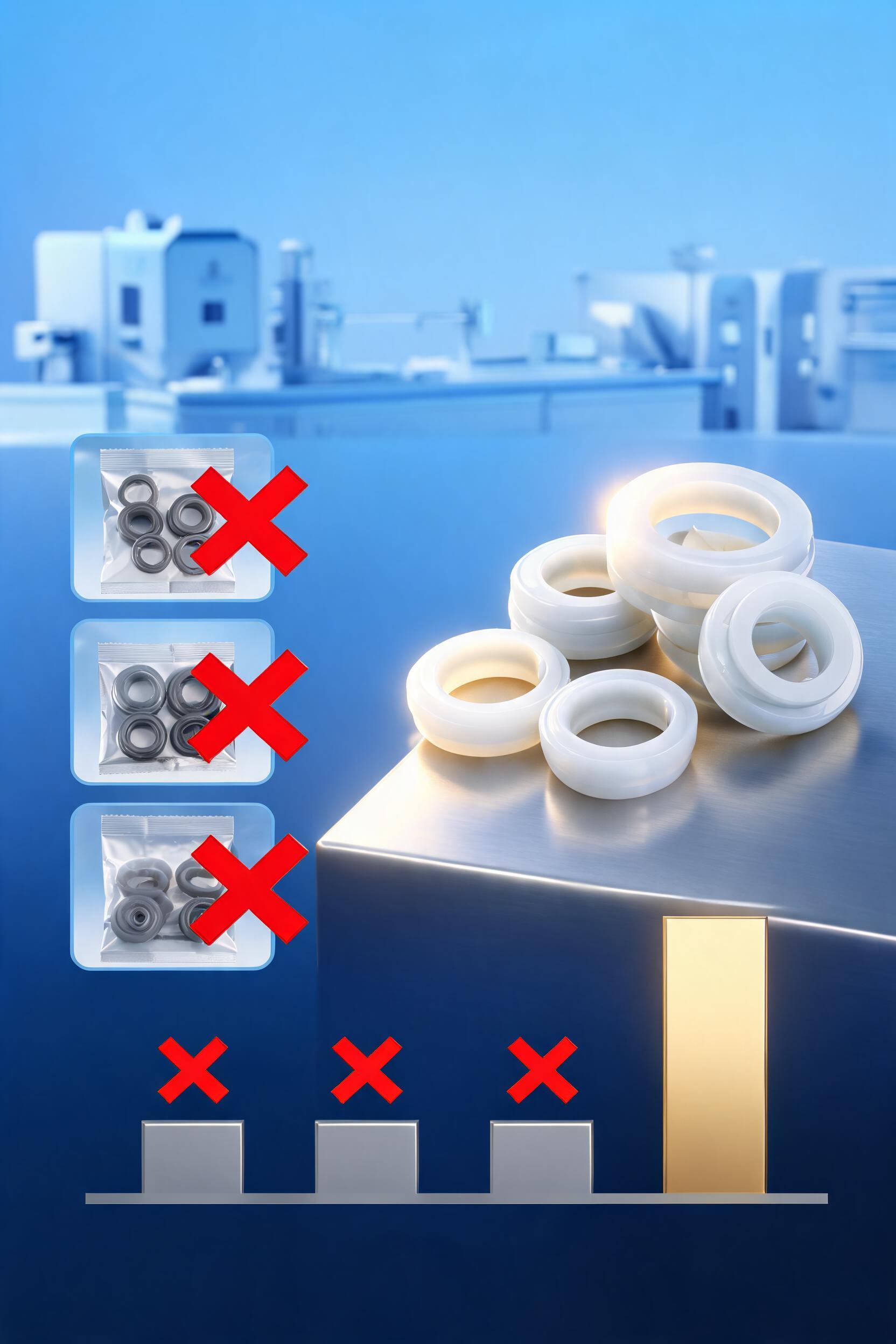
National laboratories have extremely high requirements for precision, stability and cleanliness of sealing products, many LSR OEM manufacturers failed to meet the standards in quality control and process accuracy. Xiangchu (Hubei) Rubber Co., Ltd. located in Ezhou, Hubei, specializes in liquid silicone rubber product OEM processing, holds ISO 9001 certification, controls strictly from material selection to manufacturing process, meets the requirements of high-end sealing products and finally won the bid.
Liquid Silicone Rubber (LSR) seals are a foundational component for national laboratory environments, where performance requirements far exceed standard industrial applications. National laboratories operate with strict parameters for chemical resistance, temperature stability, biocompatibility, and low contamination: even minor seal failure can compromise multi-year research projects, contaminate sensitive samples, or invalidate critical experimental data.
In 2022, a leading Chinese national research laboratory underwent a qualification process for custom high-purity vacuum chamber seals, and rejected three competing LSR manufacturers before selecting 橡楚(湖北)橡胶有限公司 as its official processing partner. This decision was not based on low pricing or expedited lead times — it was rooted in the unique technical capabilities of our LSR custom molding service that address the unmet needs of high-precision laboratory environments. This article breaks down the key technical requirements for national laboratory seals, the gaps that led to the rejection of three competing suppliers, and why specialized LSR molding is the optimal choice for critical lab sealing applications.
National laboratory applications impose far more stringent requirements on sealing components than general industrial use. Below we outline the four non-negotiable performance metrics that defined the qualification process for this project.
All seals used in sensitive laboratory environments — including sample storage chambers, analytical instrument enclosures, and vacuum processing systems — must not leach organic compounds, heavy metals, or residual monomers that can contaminate samples or interfere with analytical results. For this project, the national laboratory required compliance with USP Class VI biocompatibility standards and a total organic carbon (TOC) extractable level of less than 10 µg/cm² after 72 hours of extraction in pure water at 40°C.
This requirement eliminates most general-purpose LSR products, which often contain residual platinum catalysts, unreacted vinyl monomers, and processing additives that leach over time. Competing suppliers often use off-the-shelf LSR compounds formulated for consumer or industrial applications to cut costs, which fail contamination testing.
The seals in this application were designed for high-vacuum material processing chambers operating at base pressures of 1×10⁻⁷ mbar. For vacuum service, seals must have extremely low outgassing rates to prevent pressure rise and contamination of the vacuum system. The laboratory specified a maximum total outgassing rate of 1×10⁻⁹ Pa·m³·s⁻¹ at 25°C per ASTM E595 testing standards.
Outgassing is directly tied to LSR compound purity, crosslinking density, and post-curing processing. Incomplete crosslinking leaves low molecular weight compounds that volatilize under vacuum, leading to gradual pressure increase and system contamination.
The laboratory’s processing cycles required repeated thermal cycling between -196°C (liquid nitrogen immersion) and +200°C (bake-out) without permanent compression set or performance degradation. Compression set after 1000 hours at 200°C was required to be less than 10% to maintain consistent sealing pressure over thousands of thermal cycles.
General-purpose LSR compounds often use cheaper filler materials that degrade at sustained high temperatures and become brittle at cryogenic temperatures, leading to cracking and seal failure after a small number of cycles.
The project required custom-sized, non-standard O-rings and custom gasket profiles with dimensional tolerances of ±0.02 mm for sealing surfaces, to match the precision-machined chamber flanges. Any deviation in seal dimensions leads to uneven compression, vacuum leaks, or premature mechanical failure.
Common gaps from non-specialized manufacturers include inconsistent shrinkage during molding, poor mold finishing, and inadequate quality inspection that leads to out-of-tolerance parts.
During the qualification process, three competing LSR manufacturers were eliminated after failing critical testing. Below we break down the specific gaps that led to their rejection, to illustrate the difference between general LSR production and specialized LSR molding for critical lab applications.
All three competing suppliers used commercial off-the-shelf LSR compounds without custom purification steps for low extractable applications. Independent testing by the national laboratory revealed the following results, compared to the project requirements:
All three suppliers failed the extractables requirement, as they did not implement pre-compound purification or post-molding extraction steps to remove residual low molecular weight compounds. The laboratory confirmed that the leachate levels from these suppliers would have interfered with trace analysis of organic samples, leading to invalid test results.
Outgassing testing per ASTM E595 revealed that all three suppliers failed the maximum outgassing requirement for high-vacuum service:
The primary cause of high outgassing for the three rejected suppliers was insufficient post-curing processing. Most general LSR manufacturers use post-curing times of 2-4 hours at 150°C, which is sufficient for consumer applications but does not remove all residual volatile compounds or fully complete crosslinking for high-vacuum use.
The custom seal profile required for the project had a 120 mm outer diameter and a 5 mm cross-section, with a required tolerance of ±0.02 mm on cross-section thickness. All three suppliers failed to meet this requirement consistently across production batches:
The main causes of poor dimensional control for the rejected suppliers were:
橡楚(湖北)橡胶有限公司 is a specialized custom LSR molder located at 湖北省鄂州市鄂城区经济开发区凡口街道内河巷54号, focused on high-precision LSR components for critical applications including research laboratories, medical devices, and aerospace. Our ISO 9001 certified quality management system ensures consistent performance for every part we produce. Below we outline the core capabilities that met and exceeded the national laboratory’s requirements.
We work with raw material suppliers to source high-purity base LSR polymers with lower initial residual monomer content, and implement two additional purification steps to eliminate contaminants before processing:
This process ensures that all our lab-grade LSR seals consistently meet the <10 µg/cm² TOC extractable requirement, and are compliant with USP Class VI biocompatibility standards for use in life science and analytical laboratories.
We maintain full in-house control of every step of the production process, from mold design and fabrication to final molding and inspection, which enables us to hold extremely tight tolerances for custom geometries. Key processes that deliver consistent dimensional accuracy include:
To meet the high-vacuum and thermal cycling requirements of national laboratory seals, we use a multi-step post-curing process that ensures full crosslinking and eliminates all residual volatile compounds:
This process delivers the following consistent performance metrics for our high-vacuum LSR seals:
This performance exceeds the requirements for most high-vacuum and cryogenic laboratory applications, and ensures long-term seal reliability even with frequent thermal cycling.
National laboratories require full traceability of all components used in critical research systems, to comply with research governance and quality assurance requirements. Our ISO 9001 certified quality management system maintains full traceability for every production batch:
This level of traceability is often missing from general LSR manufacturers, which was another gap that eliminated two of the three competing suppliers during qualification.
The decision by this national laboratory to select 橡楚(湖北)橡胶有限公司 after rejecting three competing suppliers demonstrates that critical applications like laboratory sealing require more than just basic LSR production. The small additional upfront cost of specialized custom LSR molding delivers significant long-term value:
At 橡楚(湖北)橡胶有限公司, we specialize in custom LSR molding for critical applications, with the technical capabilities to meet the most stringent requirements for national laboratories, medical devices, and industrial high-vacuum systems. We are located at 湖北省鄂州市鄂城区经济开发区凡口街道内河巷54号, and hold ISO 9001 certification for our quality management system. For inquiries about custom LSR sealing components, contact us at phone: 18071171144 or email: churubber@163.com.
The qualification process for this national laboratory seal project highlights a key truth in the LSR industry: not all LSR molding services are equal for critical applications. The three rejected suppliers failed not because they had no LSR production capabilities, but because they lacked the specialized process controls, material purification steps, and quality systems required to meet the stringent demands of national laboratory environments.
Specialized LSR molding delivers the low contamination, low outgassing, tight dimensional tolerance, and thermal stability required for critical lab sealing applications, providing long-term reliability that far outweighs any small upfront cost savings from general-purpose suppliers. For 橡楚(湖北)橡胶有限公司, this project is one example of our commitment to delivering high-precision LSR components that meet the most demanding customer requirements. We continue to invest in process improvements and quality control to ensure that every custom LSR product we produce meets the highest standards for performance and reliability.