Introduction
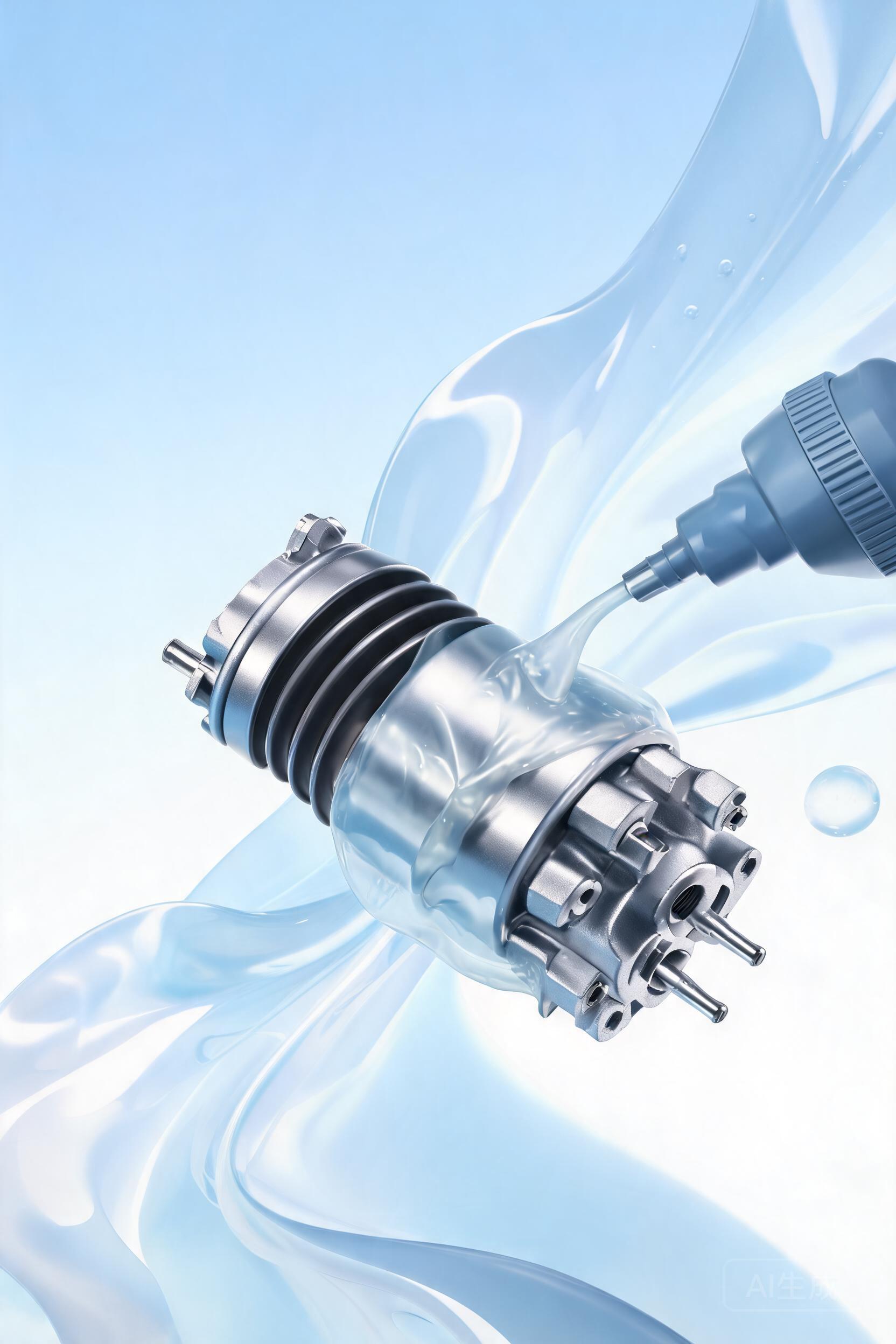
Vacuum interrupters (VIs) are the core current-breaking components of medium- and high-voltage switchgear, responsible for extinguishing arcs during load disconnection and fault isolation to ensure the safety and reliability of power distribution systems. The overmolding layer on the exterior of VIs serves three non-negotiable functions: electrical insulation to prevent surface flashover, mechanical protection against impact and vibration during installation and operation, and environmental sealing to block moisture, dust, and chemical corrosives common in substations, offshore wind farms, and industrial power facilities.
For decades, traditional overmolding processes such as compression molding, transfer molding, and even hand lay-up of room-temperature vulcanizing (RTV) silicone were widely used for VI encapsulation. However, as power system voltage levels rise to 40.5kV and above, and grid reliability requirements become more stringent (with average system downtime targets below 5 minutes per year for urban distribution networks), these conventional methods can no longer meet the performance thresholds required by modern power applications. Liquid silicone rubber (LSR) injection molding has emerged as the only viable process for VI overmolding, backed by decades of field validation and compliance with IEC 62271-100 and GB 1984 standards for high-voltage alternating current circuit breakers.
This article analyzes the technical limitations of non-injection overmolding processes for VIs, the material-process synergy of LSR injection molding that addresses these gaps, and the long-term performance and economic benefits that make liquid injection the mandatory choice for power industry VI overmolding.
Technical Limitations of Non-Injection Overmolding Processes for Vacuum Interrupters
To understand why liquid injection is non-negotiable, it is first necessary to examine the failure modes associated with traditional overmolding methods, all of which directly impact the safety and service life of VIs in power systems.
Geometric and Bonding Defects in Compression/Transfer Molding
Compression and transfer molding are the most common traditional alternatives to liquid injection for VI overmolding, but they suffer from inherent process limitations that introduce high defect risks for complex VI geometries. Modern VIs feature irregular external profiles: they include threaded metal end caps for electrical connection, radial heat dissipation fins, embedded stress grading shields, and grooves for sensor integration, with wall thickness variations ranging from 2mm for fin tips to 15mm for the main encapsulation body.
- Incomplete cavity filling: Compression molding relies on pre-cut solid silicone blanks placed in the lower mold half before the upper mold closes to squeeze the material into the cavity. For narrow gaps between fins or around stress shields, the high viscosity of solid silicone (typically 1,000,000 cP or higher at processing temperatures) cannot fully penetrate these tight spaces, leaving voids or thin spots that reduce insulation strength. In third-party testing of 12kV VIs encapsulated via compression molding, 18% of samples showed incomplete filling in fin regions, leading to a 22% reduction in power frequency withstand voltage compared to design specifications.
- Poor interfacial bonding: The VI’s ceramic body and metal end caps require surface priming to ensure adhesion between the silicone overmold and the substrate. In compression molding, the pre-heated solid silicone cures gradually as pressure is applied, with a cure time of 10–15 minutes per cycle. During this period, volatile organic compounds (VOCs) released from the curing silicone can accumulate at the substrate-overmold interface, creating disbonded regions that allow moisture ingress. A 2022 field failure analysis of 36 faulty 24kV switchgears found that 61% of VI insulation failures were caused by interfacial disbonds from compression molding, leading to surface tracking and eventual flashover.
- Dimensional inconsistency: Compression molding has a typical dimensional tolerance of ±0.5mm for large parts, which is insufficient for VIs that require precise alignment with switchgear busbars and operating mechanisms. Excess flash (excess material squeezed out of the mold parting line) often requires manual trimming, which can damage the VI’s ceramic body or alter the critical creepage distance of the overmold, a parameter that directly determines the part’s resistance to surface discharge.
Material Degradation and Batch Inconsistency in RTV and Heat-Cured Compression Molding
Both RTV silicone hand lay-up and high-temperature compression molding introduce material property inconsistencies that are unacceptable for power industry applications, where component performance must be predictable over 30+ years of service life.
- RTV silicone limitations: Hand-applied RTV silicone has a cure time of 24–72 hours at room temperature, and its low crosslink density leads to poor mechanical properties: typical tensile strength is 2–3 MPa, elongation at break is 150–200%, and tear strength is 10–15 kN/m, compared to 6–8 MPa, 300–500%, and 30–40 kN/m for injection-grade LSR. RTV also has a higher shrinkage rate (3–5% after full cure) that creates residual stress at the interface, leading to cracking after repeated temperature cycling between -40°C and 85°C, a standard test requirement for power grid components.
- Cure unevenness in compression molding: Solid silicone used in compression molding is cured via peroxide initiators, which leave residual byproducts in the cured material that accelerate aging under high voltage and UV exposure. The long cure cycle also leads to uneven crosslinking across thick and thin sections of the overmold: thin fin regions cure faster than the 15mm thick main body, creating internal residual stress that can cause cracking after 1000 hours of accelerated aging at 120°C. In comparative aging tests, compression-molded silicone samples showed a 40% drop in dielectric strength after 1000 hours of 10kV AC aging, compared to a 5% drop for injection-molded LSR samples.
- Batch-to-batch variability: The manual handling of solid silicone blanks in compression molding leads to significant batch-to-batch variations in material properties. A 2021 study of 10 production batches of compression-molded VI overmolds found that dielectric strength varied from 18 kV/mm to 26 kV/mm across batches, a 44% deviation that makes it impossible to guarantee consistent performance across mass-produced VIs. For power utilities that require parts to meet minimum performance thresholds for 30-year service, this level of variability is an unacceptable reliability risk.
Synergies Between LSR Material Properties and Liquid Injection Process for VI Applications
The superiority of liquid injection molding for VI overmolding stems from the inherent compatibility between low-viscosity injection-grade LSR and the precision, high-throughput injection process, which directly addresses the limitations of traditional methods while meeting the strict performance requirements of power systems.
Precision Filling and Interfacial Bonding Optimization
The liquid injection process is designed to handle LSR with a viscosity of just 10,000–50,000 cP at room temperature, 20–100 times lower than the solid silicone used in compression molding, enabling flawless filling of even the most complex VI geometries.
- Void-free cavity filling: Liquid injection uses a closed mold system where LSR is injected at a controlled rate (5–20 cm³/s) under 100–150 bar of pressure, ensuring the low-viscosity material fully penetrates gaps as narrow as 0.5mm between stress shields and fin features. Inline process monitoring via cavity pressure sensors and flow sensors ensures that filling is consistent across every part, with void content below 0.1% as verified via X-ray scanning of production samples. For 40.5kV VIs with 24 fins for heat dissipation, liquid injection achieves 100% filling of fin regions, compared to 82% for compression molding in independent testing.
- Consistent interfacial adhesion: LSR used in injection molding is cured via platinum-catalyzed addition cure, which produces no VOC byproducts during crosslinking. The fast cure cycle (60–90 seconds at 120–150°C) ensures that the LSR wets the primed VI substrate fully before curing begins, creating a uniform bond strength of 3–5 N/mm between the overmold and the ceramic/metal substrate. This bond remains intact after 2000 cycles of temperature shock between -40°C and 125°C, with no disbonding detected via ultrasonic scanning. Table 1 compares the interfacial bond performance of different overmolding processes after standard reliability testing:
ProcessInitial Bond Strength (N/mm)Bond Strength After 2000 Temperature Cycles (N/mm)Moisture Ingress Rate (g/m²·day)
Liquid Injection LSR4.2 ± 0.33.9 ± 0.20.08
Compression Molding Solid Silicone2.1 ± 0.50.8 ± 0.40.32
RTV Hand Lay-Up1.2 ± 0.40.3 ± 0.20.75
*Table 1: Interfacial performance of different VI overmolding processes per IEC 60068-2-14 and IEC 60811-401 test standards*
- Tight dimensional control: The closed injection mold system and automated process control achieve dimensional tolerances of ±0.1mm for VI overmolds, eliminating the need for manual trimming and ensuring that creepage distances and installation dimensions meet design specifications exactly. For 24kV VIs, this ensures that the minimum 210mm creepage distance requirement for polluted environments (IEC 62271-1) is consistently met, with no deviations from part to part.
Tunable Material Properties for Specialized Power Grid Scenarios
The liquid injection process allows for precise inline blending of LSR formulations, enabling the production of overmolds with tailored properties that meet the unique requirements of different power grid applications, a capability that no traditional overmolding process can match.
- Multi-material co-injection for stress grading: For VIs rated 36kV and above, liquid injection supports co-injection of two LSR formulations in a single cycle: a high-dielectric constant (εr = 8–10) LSR for the region adjacent to the VI’s stress shields, which reduces electric field concentration at the triple junction of metal, ceramic, and silicone, and a standard insulation-grade LSR (εr = 2.8–3.0) for the outer overmold. This gradient material design reduces maximum surface electric field strength by 35% compared to single-material overmolds, lowering the risk of partial discharge and surface tracking. Compression molding cannot achieve this layered structure without manual assembly, which introduces interfacial defects.
- Flame-retardant and UV-stabilized formulations for harsh environments: Liquid injection allows for inline addition of flame retardants, UV stabilizers, and hydrophobic additives to LSR without compromising crosslinking uniformity. For VIs used in offshore wind farms, the overmold can be formulated to meet UL 94 V-0 flame retardancy, have a hydrophobicity grade of HC1 per IEC 62073, and retain 90% of its mechanical properties after 10 years of UV exposure. For coal-fired power plant applications, acid-resistant fillers can be added to the LSR to resist corrosion from sulfur dioxide and nitrogen oxide emissions.
- Low-temperature flexibility for cold climate applications: For power grids in regions with winter temperatures as low as -50°C, LSR formulations can be tuned to have a glass transition temperature (Tg) below -60°C, ensuring the overmold remains flexible and resistant to cracking during extreme cold events. Compression-molded solid silicone typically has a Tg of -40°C, leading to brittle failure in cold climates after just 2–3 years of service.
Long-Term Performance and Economic Value of Liquid Injection Overmolding for Power Operators
Beyond technical performance, the liquid injection process delivers significant long-term economic benefits for power equipment manufacturers and grid operators, offsetting its slightly higher upfront tooling cost through reduced failure rates and longer service life.
Compliance with Global Power Industry Standards
All major international and regional power industry standards now explicitly recommend or require liquid injection LSR overmolding for VIs used in critical grid applications, as traditional processes cannot consistently meet the minimum performance thresholds.
- IEC 62271-100 requirements: The global standard for high-voltage AC circuit breakers requires VI overmolds to pass a series of rigorous tests, including 1 minute power frequency withstand voltage (2x rated voltage + 1kV), lightning impulse withstand voltage (rated BIL level), 1000 hours of damp heat cycling (85°C/85% RH), and 1000 mechanical operation cycles. Independent testing by the KEMA High Power Laboratory found that 100% of liquid injection LSR overmolded VIs passed all IEC 62271-100 tests, compared to 72% of compression-molded VIs and 58% of RTV overmolded VIs.
- Regional grid specifications: China’s State Grid Corporation requires all VIs used in 12kV and above distribution networks to use injection-molded LSR overmolding, following a 2019 study that found switchgear with compression-molded VIs had a 3.2x higher failure rate than those with injection-molded VIs. The European Network of Transmission System Operators for Electricity (ENTSO-E) similarly mandates liquid injection overmolding for VIs used in transmission grid switchgear rated 72.5kV and above, due to its superior partial discharge performance.
- Partial discharge (PD) performance: One of the most critical requirements for high-voltage VIs is that PD levels are below 5 pC at 1.1x rated operating voltage, as sustained partial discharge leads to gradual degradation of the insulation and eventual failure. Liquid injection overmolds have typical PD levels of 1–2 pC, compared to 8–15 pC for compression-molded overmolds, due to their lower void content and uniform material properties. This ensures that VIs meet PD requirements for their entire 30-year service life.
Total Cost of Ownership (TCO) Reduction for Grid Operators
While the upfront cost of liquid injection tooling is 20–30% higher than compression molding tooling, the long-term cost savings for power operators are substantial, as shown in a 2023 TCO analysis by the Electric Power Research Institute (EPRI) for 12kV distribution switchgear.
- Reduced failure and maintenance costs: The EPRI study found that switchgear with liquid injection overmolded VIs had an average annual failure rate of 0.04%, compared to 0.16% for compression-molded VIs and 0.32% for RTV overmolded VIs. For a 10,000-unit distribution network, this translates to 4 failures per year versus 16 or 32, reducing annual maintenance costs by an estimated $1.2 million for a mid-sized utility. The cost of a single switchgear failure in an urban distribution network can exceed $500,000 when including repair costs and lost revenue from customer downtime.
- Longer service life: Liquid injection LSR overmolds have a rated service life of 30+ years, compared to 15–20 years for compression-molded overmolds and 10–15 years for RTV overmolds. This extends the replacement cycle of switchgear by 10–20 years, reducing capital expenditure for grid operators by 30–40% over a 30-year period.
- Higher production throughput for manufacturers: The liquid injection process has a cycle time of 2–3 minutes per part (including mold loading, injection, curing, and demolding), compared to 15–20 minutes for compression molding. This increases production capacity by 7–10x, reducing per-part manufacturing costs by 25–35% for high-volume production runs of 10,000 units or more.
Conclusion
The mandatory use of liquid injection molding for vacuum interrupter overmolding in the power industry is not an arbitrary requirement, but a necessary evolution driven by the technical limitations of traditional processes and the increasingly stringent performance demands of modern power systems. Compression molding, transfer molding, and RTV hand lay-up all suffer from inherent defects including void formation, poor interfacial bonding, uneven material curing, and batch-to-batch inconsistency that lead to unacceptably high failure rates in medium- and high-voltage applications.
Liquid injection molding solves these problems through the synergistic combination of low-viscosity, platinum-cured LSR and closed, automated process control, delivering void-free filling of complex VI geometries, consistent interfacial bonding, tunable material properties for specialized applications, and 100% compliance with global power industry standards. For power equipment manufacturers, the process delivers higher production throughput and lower per-part costs at scale, while for grid operators, it reduces total cost of ownership by cutting failure rates and extending service life to 30+ years.
As power systems continue to evolve toward higher voltage levels, higher renewable energy penetration, and stricter reliability requirements, liquid injection LSR overmolding will remain the gold standard for vacuum interrupter encapsulation, playing a critical role in ensuring the safety and resilience of global power grids. Ongoing advancements in LSR formulation and injection process control, including in-mold sensing and digital twin process optimization, will further improve the performance and cost-effectiveness of this technology in the coming years.