
橡楚编辑部 6/13/2026 50 min read
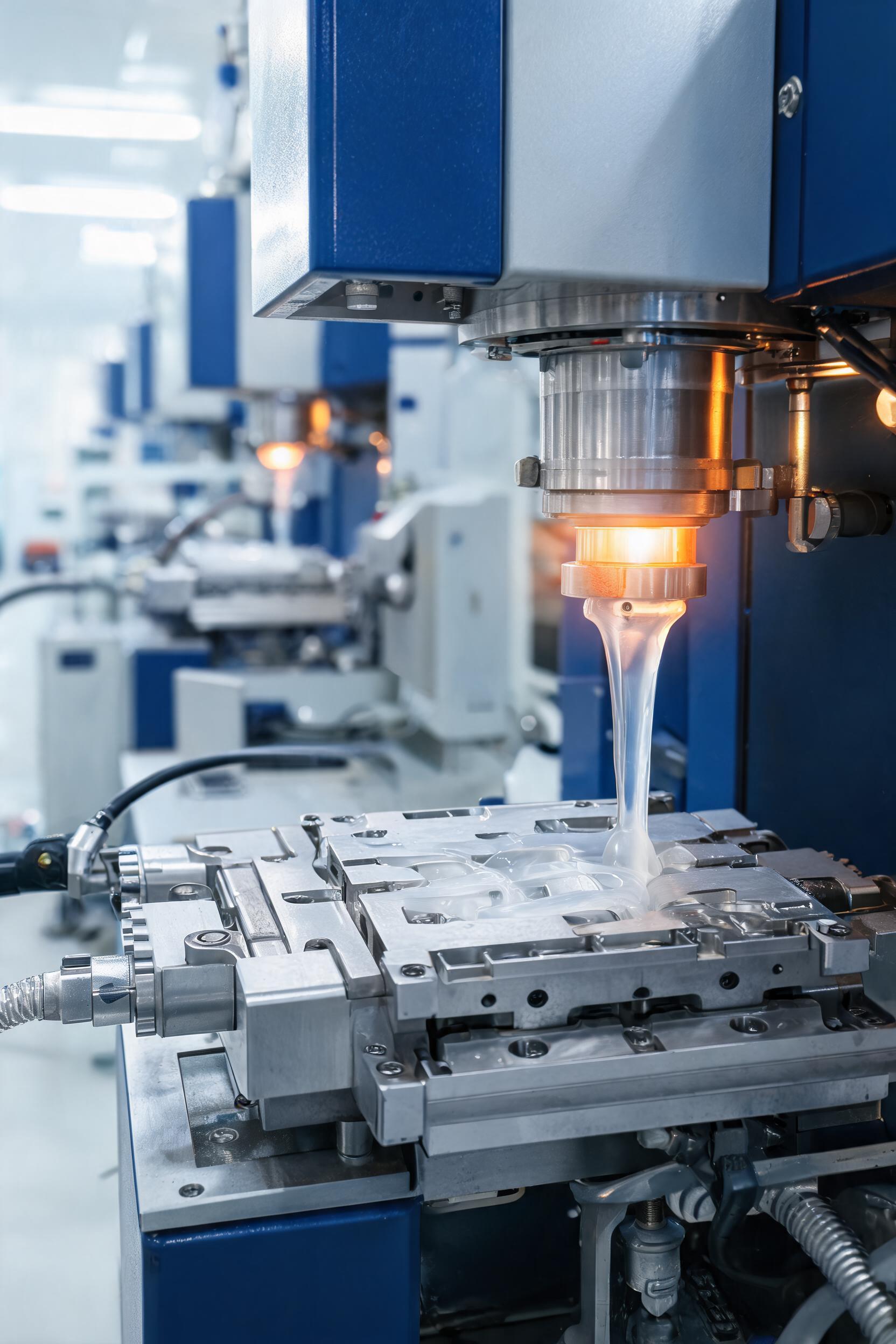
When it comes to liquid silicone rubber (LSR) injection molding, many custom drawings from cross-border customers get rejected by multiple factories. This article analyzes common reasons for rejections of LSR injection molding projects, discusses the matching points between design and processing technology, and helps customers optimize their design schemes. Xiangchu (Hubei) Rubber focuses on custom LSR products, with ISO 9001 certification.
Custom liquid silicone rubber (LSR) injection molding is a high-precision manufacturing process that caters to a wide range of cross-border industries, from medical devices and consumer electronics to automotive components and baby products. For cross-border clients, working with multiple Chinese LSR manufacturers often leads to a frustrating common outcome: when submitting a custom part drawing, three or more factories all respond that they cannot produce the part. This outcome surprises many clients, who often assume that any LSR injection molding facility can handle any custom design, especially when the part appears simple at first glance.
At 橡楚(湖北)橡胶有限公司, we work with cross-border clients daily to resolve manufacturability issues in custom LSR designs, operating from our facility at 湖北省鄂州市鄂城区经济开发区凡口街道内河巷54号, holding ISO 9001 certification, and focusing exclusively on liquid silicone rubber products. In this article, we break down the most common technical reasons custom LSR injection molding drawings get rejected by multiple manufacturers, clarify the gap between client design requirements and actual LSR manufacturing capabilities, and provide actionable adjustments to help cross-border clients get their custom LSR parts into production smoothly.
One of the most common root causes of rejected drawings is a mismatch between the material properties specified in the drawing and the standard material inventory and processing capabilities of most LSR manufacturers. Many cross-border clients source design specifications from material datasheets produced by raw material brands, but fail to account for practical supply and processing constraints in Chinese manufacturing.
LSR manufacturers typically stock raw materials in a limited range of standard hardness grades to keep inventory costs low and processing consistent. Most standard LSR hardness ranges from 10 ShA to 80 ShA, with 5 ShA increments for common grades. When a drawing specifies a hardness outside this range or requires a non-standard increment, most factories will reject the order, because the cost of custom compounding a small batch of LSR is uneconomical for both the manufacturer and the client.
The table below shows common standard LSR hardness grades stocked by most Chinese LSR manufacturers, and the rejection likelihood for non-standard specifications:
For example, a cross-border client designing a wearable silicone cushion recently submitted a drawing specifying 27 ShA LSR. Three manufacturers rejected the order because none had 27 ShA in stock, and the client’s total finished part order was only 12kg, which did not justify the 300kg minimum for custom compounding. Adjusting the specification to 25 ShA or 30 ShA (depending on functional requirements) would resolve the issue immediately.
Many cross-border drawings only call out "food-grade LSR" or "medical-grade LSR" without specifying additional performance requirements, but embed implicit requirements in the notes that most manufacturers cannot meet at the quoted price point. For example, a drawing may require low volatile organic compound (VOC) content for indoor air quality compliance, or high resistance to specific automotive fluids, but only note these requirements in a secondary compliance section that many manufacturers miss during initial quotation.
When the manufacturer discovers these hidden requirements after preliminary quotation, they often have to reject the order because the required raw material is far more expensive than the standard grade they quoted for, and the client is unwilling to absorb the cost increase. This is especially common for cross-border orders where communication is asynchronous, and drawing notes are often translated incorrectly or overlooked.
Cross-border clients often require full traceability of raw materials to meet regulatory requirements in their home markets (such as FDA 21 CFR for the US or EU 10/2011 for food contact). While many LSR manufacturers can source compliant raw materials, small and medium-sized factories often cannot provide the batch-level traceability documentation that clients require. When a drawing explicitly requires batch-specific COAs (Certificates of Analysis) and raw material origin documentation, many smaller factories will reject the order because they do not have the quality management processes to provide this documentation. At 橡楚(湖北)橡胶有限公司, our ISO 9001 quality management system allows us to provide full batch traceability for all orders, which resolves this issue for many clients who have faced multiple rejections.
Even when material specifications are correct, custom LSR drawings are often rejected because the geometric design and tolerance requirements exceed the natural capabilities of the LSR injection molding process. Many clients design LSR parts using the same tolerance standards they use for plastic injection molding or CNC machined parts, not accounting for the unique material properties of LSR that affect dimensional accuracy.
LSR has a higher coefficient of thermal expansion than engineering plastics, and shrinks more after demolding, which means it cannot hold the same tight tolerances as rigid plastic or metal parts. The table below shows the standard achievable tolerances for LSR injection molding, and the likelihood of rejection for tolerances tighter than these standards:
Many cross-border clients used to working with rigid engineering plastics will apply ±0.05mm tolerances to a 100mm LSR part, which is impossible for any standard LSR injection molding process to hold consistently. Even with expensive mold adjustments, the natural shrinkage variation of LSR will cause 10-20% of parts to fall out of tolerance, leading to high scrap rates that most manufacturers are unwilling to absorb.
Another common issue is extremely small or extremely thin features. LSR has a low viscosity when injected, but features thinner than 0.2mm are very difficult to fill completely, especially for large parts. Features thicker than 10mm also cause issues, because thick LSR sections take longer to cure, leading to long cycle times and high internal stress that causes cracking after demolding. Most manufacturers will reject drawings with features thinner than 0.2mm or thicker than 12mm, because the scrap rate is too high to make production profitable.
Unlike rigid plastics, LSR is flexible after curing, which allows for some undercut features that would be impossible for rigid plastic injection molding. However, extreme undercuts or zero draft angles still lead to rejection because they damage the part during demolding or require extremely complex mold designs that are uneconomical for small to medium batch sizes.
Common problematic design choices that lead to rejection include:
Many client drawings specify where the gate (the entry point for molten LSR into the mold cavity) must be located, without accounting for how LSR flows during injection. LSR has a low viscosity, but it can trap air if the gate is located in the wrong position, leading to short shots or bubble defects. For example, a drawing for a deep cup-shaped LSR part may specify a gate on the outer edge of the part, which forces LSR to flow around the edge and trap air in the center of the cup bottom, leading to consistent short shots. Most manufacturers will reject this drawing rather than re-engineer the gate location, because clients often insist that the gate must be in the specified position to meet aesthetic requirements, and are unwilling to compromise.
The same issue applies to ejection: large flat LSR parts require multiple ejection pins to remove the part from the mold without stretching or tearing. If a drawing specifies a smooth back surface with no allowed ejection pin marks, most manufacturers will reject the order, because there is no way to eject the part without leaving marks, and vacuum ejection is only feasible for small parts.
Many cross-border clients approach LSR manufacturers with a custom drawing and a small order quantity, without understanding the high upfront cost of LSR injection molding tools. This misalignment often leads to rejection, because the total order value does not cover the cost of the custom mold.
LSR injection molding requires custom steel or aluminum molds tailored to the exact geometry of the part. The cost of a simple LSR mold ranges from $1,500 to $5,000, while more complex molds with multiple cavities or side actions can cost $10,000 or more. Most manufacturers require the client to pay for the mold tooling upfront, before production starts.
When a client submits a drawing for a complex part that requires a $3,000 mold, and their total order quantity is only 100 units with a target part price of $2 each, the total order value is only $200, which does not even cover 10% of the mold cost. Most manufacturers will reject this order outright, because they cannot absorb the mold cost, and the client is unwilling to pay the full mold cost upfront.
The table below shows the typical relationship between part complexity, mold cost, and minimum order quantity that most LSR manufacturers require to accept an order:
Many cross-border clients new to LSR injection molding expect prototyping services with custom molds for small 50-100 unit batches, but do not realize that the unit economics do not work for most manufacturers. For prototyping, clients should use 3D printed LSR or compression molding instead, but if they submit an injection molding drawing for a 100-unit batch, most manufacturers will reject it.
Many cross-border clients require that they own the custom mold, and that the manufacturer store the mold for future orders for free. Most small to medium-sized LSR manufacturers have limited factory space, and cannot store molds for years for free for clients who place an order once every 2-3 years. If a drawing explicitly requires free mold storage for 5+ years, most manufacturers will reject the order, because the cost of storing the mold outweighs the profit from future small orders.
Another common issue is clients requiring the mold to be manufactured by a specific third-party mold shop that the manufacturer does not work with. Most LSR manufacturers work with a small network of trusted mold shops that understand the specific requirements of LSR molds (such as tighter cavity polishing to account for LSR's fluidity). If a client insists on using an unproven mold shop that the manufacturer has not worked with before, most manufacturers will reject the order to avoid the risk of poor mold quality that leads to production issues later.
Even when the design and commercial terms are correct, poor communication and incomplete documentation often lead to unnecessary rejections. Cross-border orders face language barriers, time zone differences, and differing standards for technical drawing documentation, which can lead to manufacturers misunderstanding the requirements and rejecting the order when they think it cannot be produced.
Many cross-border clients submit only a 2D PDF drawing without a 3D STEP or IGES file, which is the standard format that manufacturers use to program CNC machines for mold manufacturing. If a manufacturer only has a 2D drawing, they have to reverse-engineer the 3D model themselves, which takes extra time and introduces the risk of dimensional errors. Most manufacturers will reject an order that only has a 2D drawing without a 3D model, especially for complex parts, because the time and risk of reverse engineering is too high.
Another common issue is missing material compliance requirements in the main drawing, with requirements only included in a separate document that the client does not share with the manufacturer during initial inquiry. For example, a client may require LSR that meets the EU REACH regulation for restricted substances, but only mention this requirement after the manufacturer has quoted based on standard non-compliant material. When the manufacturer realizes they have to source more expensive compliant material, and the client will not accept a price increase, they have to reject the order.
LSR injection molding can produce high-quality aesthetic parts, but many clients have aesthetic requirements that are impossible to meet at standard price points. For example, a drawing for a visible consumer product may specify zero visible flash, zero gate mark, and zero blemishes on all surfaces. While it is possible to eliminate flash with tight mold tolerances, it adds significant cost to mold manufacturing and requires extra trimming labor after molding, which increases the part price. Most manufacturers will reject the drawing if the client does not accept the higher price required to meet strict aesthetic requirements, because they cannot meet the aesthetic standard at the client's target price.
Common aesthetic requirements that lead to unnecessary rejection include:
When three different LSR manufacturers all reject the same custom injection molding drawing, it is almost never because the manufacturers lack capability—it is almost always because of misalignment between the client's design, material requirements, commercial expectations, and the standard capabilities of LSR injection molding manufacturing. The most common causes of rejection include non-standard material specifications that require uneconomical custom compounding, tolerance and geometric designs that exceed the natural limits of the LSR process, misalignment between small order quantities and high upfront mold costs, and communication gaps that hide critical requirements from manufacturers during the initial inquiry stage.
At 橡楚(湖北)橡胶有限公司, we specialize in helping cross-border clients resolve manufacturability issues for custom LSR injection molding. Based at 湖北省鄂州市鄂城区经济开发区凡口街道内河巷54号, we hold ISO 9001 certification and focus exclusively on liquid silicone rubber products, so we can work with clients to adjust designs to meet both functional requirements and manufacturing capabilities. If you have a custom LSR drawing that has been rejected by multiple manufacturers, you can contact us at phone 18071171144 or email churubber@163.com for a free manufacturability review and design adjustment suggestions.
By understanding the common issues that lead to rejection, and making small adjustments to material specifications, tolerances, and design geometry, cross-border clients can significantly increase the chance that their custom LSR part will be accepted for production, reducing lead times and avoiding the frustration of multiple rejections.