Introduction
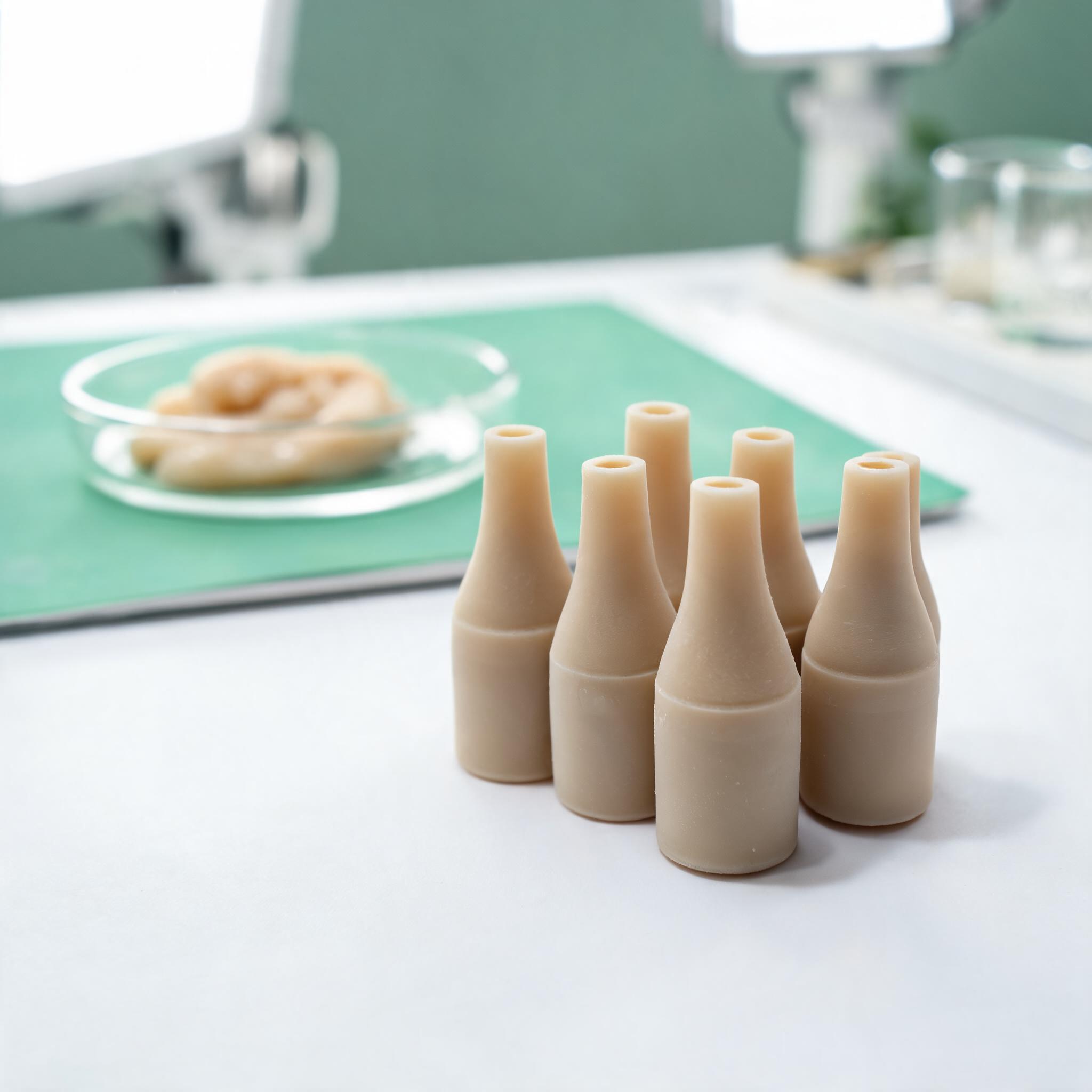
With the continuous improvement of ingress protection (IP) requirements for consumer electronics, industrial control devices, and automotive electronic systems, waterproof silicone plugs have become a critical component to prevent liquid, dust, and chemical corrosion from invading internal circuits. Liquid Silicone Rubber (LSR), the core material of these plugs, exhibits exceptional properties including high elasticity, wide temperature resistance, UV stability, and biocompatibility, making it far superior to traditional rubber or plastic sealing components in long-term reliability. According to 2024 industry statistics, the global demand for waterproof silicone plugs for electronic devices will exceed 12.7 billion units, with a failure rate of less than 0.03% for high-quality LSR plugs under standard operating conditions, which is 12 times lower than that of nitrile rubber (NBR) plugs. This article systematically analyzes the performance characteristics, material formulation optimization, application validation criteria, and selection framework of electronic device waterproof silicone plugs, providing technical guidance for design engineers and procurement personnel to choose appropriate products.
Core Performance Metrics of Waterproof Silicone Plugs
The performance of waterproof silicone plugs directly determines the long-term sealing reliability of electronic devices, and core indicators cover sealing performance, mechanical properties, environmental adaptability, and electrical safety. Each indicator requires targeted testing and validation to match the operating scenarios of the end product.
Sealing Performance and IP Rating Compliance
Sealing performance is the primary functional indicator of waterproof silicone plugs, usually measured by IP rating defined in the IEC 60529 standard, as well as pressure decay and water immersion testing results. The IP rating consists of two digits: the first represents solid particle protection (0-6), and the second represents liquid ingress protection (0-8). For mainstream electronic device applications, the required IP levels and corresponding test conditions are shown in Table 1.
IP RatingTypical Application ScenariosTest Standard RequirementsAllowable Leakage Rate
IPX4Wearable devices, household appliancesSplashing water from any direction, 10L/min flow rate, 5min durationNo water ingress affecting normal operation
IPX6Outdoor monitoring equipment, mobile phonesStrong water jet from any direction, 100L/min flow rate, 3min durationNo water ingress into the cavity
IPX7Smart watches, underwater sensors1m depth immersion for 30minNo water ingress
IPX8Submarine equipment, automotive electronic control units (ECUs)Custom depth (usually 10m or more) immersion for 24hZero leakage
To achieve the above sealing performance, the interference fit between the plug and the housing mounting hole is a key design parameter. For LSR plugs with a Shore A hardness of 40-60, the recommended radial interference is 0.15-0.3mm for holes with a diameter of 2-10mm, and 0.3-0.5mm for holes with a diameter of 10-30mm. Pressure decay testing, a more precise quantitative evaluation method, requires that under a test pressure of 1.5 times the maximum working pressure, the pressure drop within 30s is less than 10Pa for plugs applied to high-sealing scenarios such as automotive electronics.
Mechanical and Durability Performance
The mechanical properties of waterproof silicone plugs determine their service life under repeated assembly, disassembly, and long-term stress loading. Key indicators include tensile strength, tear strength, compression set, and insertion/extraction force.
- Tensile strength: High-quality LSR plugs for electronic applications usually have a tensile strength of 7-12 MPa, which ensures that the plug will not fracture during assembly and disassembly. For plugs with complex structures such as buckle or positioning ribs, the tensile strength is recommended to be no less than 9 MPa.
- Tear strength: The typical range is 15-30 kN/m, which prevents edge tearing when the plug is inserted into an irregular mounting hole.
- Compression set: This is the core indicator affecting long-term sealing performance. Under the test condition of 70°C for 22h, the compression set of high-performance LSR plugs is less than 10%, while the value for ordinary food-grade LSR is usually 15-20%. Plugs with a compression set of more than 20% will experience sealing failure after 1-2 years of use due to stress relaxation.
- Insertion/extraction force: For manual assembly scenarios, the single insertion force is recommended to be 5-20N, and the extraction force is not less than 10N to prevent accidental falling off. For automated assembly scenarios, the insertion force can be increased to 30N, and the cycle life of insertion and extraction should reach more than 50 times without obvious performance degradation.
Environmental Adaptability Performance
Electronic devices are often used in complex and changeable environments, so waterproof silicone plugs need to maintain stable performance under extreme temperatures, chemical corrosion, and UV radiation.
- Temperature resistance: The operating temperature range of standard LSR plugs is -40°C to 200°C, which can meet the needs of most consumer and industrial applications. For automotive under-hood electronic applications, high-temperature resistant LSR formulations can achieve long-term stable operation at 230°C, while low-temperature modified formulations can maintain elasticity at -60°C without brittle cracking.
- Chemical resistance: For devices used in industrial or outdoor scenarios, plugs need to resist corrosion from common substances such as lubricants, cleaning agents, salt spray, and acid rain. As shown in Table 2, the volume change rate of LSR after immersion in different media for 72h is an important evaluation indicator.
- UV and ozone resistance: After 1000h of UV aging test (UVB 313nm, 0.63W/m²), the hardness change of LSR plugs is less than 5 Shore A, and the tensile strength retention rate is more than 80%, which is far superior to NBR and EPDM materials.
Corrosive MediumAllowable Volume Change RateApplication Scenario
5% NaCl solution≤2%Outdoor coastal devices
pH 4-9 acid/alkali solution≤3%Industrial control equipment
Gasoline, engine oil≤5%Automotive electronic components
Ethanol, cleaning agents≤3%Medical and consumer electronics
Material Formulation and Process Optimization of LSR Plugs
The performance of waterproof silicone plugs depends not only on the basic properties of LSR but also on the optimization of material formulation and molding process. Different application scenarios require targeted adjustment of formulation systems and process parameters to achieve the best balance of performance and cost.
LSR Formulation Modification for Special Application Scenarios
The basic LSR formulation consists of vinyl polysiloxane, fumed silica filler, platinum catalyst, and crosslinking agent. For the special needs of electronic devices, functional additives are added to achieve targeted performance improvement.
- Flame-retardant modification: For power electronic devices such as new energy vehicle on-board chargers and industrial power supplies, adding 5-10% of nitrogen-phosphorus flame retardants or platinum-based flame retardant systems can make the plug reach UL94 V-0 flame retardant grade, while maintaining the original elasticity and sealing performance, and the volume resistivity remains above 10¹⁴ Ω·cm.
- Conductive and electromagnetic shielding modification: For plugs applied to high-frequency communication devices, adding 15-25% of silver-plated glass beads or carbon nanotubes can make the surface resistivity of the plug reach 10³-10⁵ Ω, which can not only realize electrostatic discharge (ESD) protection but also reduce electromagnetic interference (EMI) leakage at the opening position. It should be noted that the addition of conductive fillers will slightly reduce the tensile strength of LSR, so the interference fit needs to be increased by 0.05-0.1mm during design to compensate for the decrease in elasticity.
- Low volatile modification: For sealed precision electronic components such as camera modules and sensor chips, low volatile organic compound (VOC) LSR formulations are required to avoid pollution to optical components or sensitive chips. The total volatile content of such formulations after 120°C baking for 1h is less than 0.1%, and the content of siloxane small molecules is less than 50ppm, which meets the requirements of IPC-TM-650 standard.
Precision Molding Process Control
LSR waterproof plugs are usually molded by injection molding, and the control of process parameters directly affects the dimensional accuracy, defect rate, and long-term performance of the product.
- Dimensional accuracy control: For plugs with mounting holes of 2-10mm, the dimensional tolerance of the sealing part should be controlled within ±0.03mm, and for plugs with a diameter of more than 10mm, the tolerance should be controlled within ±0.05mm. To achieve this accuracy, the mold cavity tolerance needs to be controlled within ±0.01mm, and the injection molding parameters are set as follows: material temperature 25-30°C, mold temperature 150-180°C, injection pressure 80-120bar, curing time 30-60s depending on the product thickness.
- Defect prevention: Common molding defects include flash, air bubbles, and incomplete curing. Flash with a thickness of more than 0.02mm will lead to a reduction in interference fit and cause sealing failure, so the mold parting surface accuracy needs to reach 0.01mm, and the clamping force is set to 3-5 tons per square centimeter of projected area. Air bubbles will reduce the mechanical strength of the plug, so the LSR material needs to be vacuum degassed before injection, and the vacuum degree in the barrel is maintained below 10mbar. Incomplete curing will lead to an increase in compression set, so it is necessary to regularly test the curing degree of the product by the solvent extraction method, and the extractable content should be less than 3%.
- Secondary process treatment: For plugs requiring improved surface lubricity to reduce insertion force, plasma coating or parylene coating treatment can be carried out. The 1-2μm thick parylene coating can reduce the surface friction coefficient of LSR from 0.8 to 0.2, and the insertion force is reduced by more than 40%, while the coating has good adhesion and will not fall off after repeated insertion and extraction.
Performance Validation and Testing Standards
Before mass application of waterproof silicone plugs, a series of reliability tests must be carried out to verify that their performance meets the design requirements. The testing system covers functional testing, accelerated aging testing, and application scenario simulation testing.
Routine Performance Testing
Routine testing is a necessary item for incoming inspection of plugs, which can quickly screen out unqualified products.
- Dimensional and appearance inspection: Use a coordinate measuring machine (CMM) or optical projector to check the key dimensions of the plug, including sealing outer diameter, groove size, and overall length, to ensure that they meet the tolerance requirements. Appearance inspection requires no obvious defects such as flash, bubbles, scratches, or foreign matter, and the surface roughness of the sealing part is Ra ≤ 0.8μm.
- Hardness and mechanical property testing: Use a Shore A durometer to test the hardness, and the deviation from the nominal value should not exceed ±3 Shore A. Tensile strength and tear strength are tested according to GB/T 528 and GB/T 529 standards respectively, and the test speed is 500mm/min.
- Sealing performance pre-test: Install the plug into the standard test fixture, carry out the IPX7 water immersion test for 30min, and check whether there is water ingress inside the fixture. For high-pressure sealing scenarios, a pressure decay test is carried out, and the pressure drop within 30s under 1.5 times the working pressure is less than 10Pa as qualified.
Accelerated Aging and Reliability Testing
Accelerated aging testing is used to evaluate the long-term service performance of plugs in a short time, which is the core basis for predicting the service life of products.
- Thermal aging test: Place the plug in a high-temperature oven at 125°C for 1000h, and test the changes in hardness, tensile strength, and compression set. Qualified products require hardness change ≤ 5 Shore A, tensile strength retention rate ≥ 70%, and compression set ≤ 20%. According to the Arrhenius model, this test result is equivalent to 5-8 years of use at room temperature.
- Temperature cycle test: The plug is cycled between -40°C and 85°C for 100 cycles, with a dwell time of 30min at each extreme temperature and a temperature conversion time of less than 1min. After the test, the appearance of the plug should have no cracks, and the sealing performance should still meet the original IP rating requirements.
- Chemical corrosion test: Immerse the plug in the corresponding corrosive medium according to the application scenario for 72h, take it out and wipe it clean, then test the volume change rate and sealing performance. The volume change rate should be within the range specified in Table 2, and no leakage occurs in the pressure decay test.
- Insertion and extraction cycle test: Insert and extract the plug into the standard test hole for 50 times according to the standard assembly force, and the extraction force after the cycle should be maintained at more than 70% of the initial value, and the sealing performance is still qualified.
Application Scenario Simulation Testing
In addition to standard tests, targeted simulation tests need to be carried out according to the actual use scenarios of the end product. For example:
- For automotive electronic plugs, it is necessary to increase the vibration test: install the plug on the test fixture, apply vibration with a frequency of 10-2000Hz, acceleration of 10g, and duration of 24h in three directions, and no loosening or leakage of the plug occurs after the test.
- For wearable device plugs, it is necessary to increase the sweat corrosion test: immerse the plug in artificial sweat (pH 4.7, containing 0.5% sodium chloride, 0.1% lactic acid, 0.1% urea) for 168h, and the surface of the plug has no discoloration, sticky, or cracking phenomena, and the sealing performance is qualified.
- For outdoor device plugs, it is necessary to increase the UV aging test: irradiate with UVB 313nm light source for 1000h, the hardness change of the plug is ≤ 5 Shore A, and the tensile strength retention rate is ≥ 80%.
Selection Guide for Waterproof Silicone Plugs
Selecting the appropriate waterproof silicone plug requires comprehensive consideration of application scenarios, design matching, cost control, and supply chain stability. The following selection framework can help engineers make correct decisions quickly.
Step 1: Determine Performance Requirements Based on Application Scenarios
First, clarify the operating environment and functional requirements of the end product to determine the key performance indicators of the plug:
- Sealing level requirements: According to the IP rating required by the product, determine the interference fit design and sealing structure. For IPX7 and above, it is recommended to use a plug with a multi-ring sealing rib structure, which can form multiple sealing barriers and reduce the risk of leakage caused by single rib damage.
- Environmental condition limits: According to the operating temperature range, contact media, and radiation conditions, select the appropriate LSR formulation. For example, automotive under-hood applications choose high-temperature resistant LSR, industrial equipment applications choose chemical corrosion resistant LSR, and outdoor applications choose UV resistant LSR.
- Special functional requirements: If flame retardant, ESD protection, or low VOC requirements are needed, select the corresponding modified LSR material, and confirm that the material has passed the relevant certification such as UL94, RoHS, or REACH.
Step 2: Design Matching and Structural Selection
The structural design of the plug needs to match the mounting hole design of the product housing to achieve the best sealing effect:
- Mounting hole parameter matching: The roughness of the mounting hole wall is recommended to be Ra ≤ 1.6μm, and the hole tolerance is H8. For through-hole installation, it is recommended to choose a plug with a positioning flange to control the insertion depth and avoid over-insertion. For blind hole installation, it is recommended to choose a plug with an air guide groove to prevent air pressure from affecting the assembly in place.
- Insertion and extraction method matching: For plugs that need to be disassembled frequently, choose a plug with a pull handle structure, and the insertion force is controlled at 5-15N. For plugs that are permanently installed after one assembly, choose a plug with a buckle or barb structure, and the extraction force is not less than 30N to prevent falling off.
- Cable application matching: For plugs used for cable outlet sealing, it is necessary to confirm the cable outer diameter tolerance, and the inner diameter of the plug cable hole should have an interference of 0.1-0.2mm with the cable outer diameter. For multi-core cable applications, it is recommended to use an integrated LSR plug with a sealing rib design corresponding to the number of cores to avoid mutual interference between cables affecting the sealing effect.
Step 3: Cost and Supply Chain Verification
While meeting the performance requirements, optimizing the cost and ensuring the stability of the supply chain are also important factors in the selection process:
- Cost balance: The price of standard LSR plugs is usually 0.05-0.5 USD per piece, depending on the size, material formulation, and structural complexity. Modified LSR materials such as flame retardant and conductive will increase the cost by 20-50%, so it is necessary to avoid over-design. For example, if the product only needs to meet IPX4, there is no need to choose an expensive IPX8 grade plug with a multi-sealing rib structure.
- Certification and compliance: Confirm that the plug material meets the relevant regulatory requirements of the target market. For consumer electronics, it needs to meet RoHS and REACH standards; for medical electronic devices, it needs to meet ISO 10993 biocompatibility standards; for automotive electronics, it needs to meet IATF 16949 system requirements.
- Supply chain stability: Choose suppliers with mature LSR molding process experience and complete testing capabilities, and require suppliers to provide a complete material performance report and reliability test report. For mass demand products, it is recommended to choose at least two qualified suppliers to avoid supply interruption caused by capacity constraints.
Conclusion
Waterproof silicone plugs are key components to