
橡楚编辑部 6/18/2026 44 min read
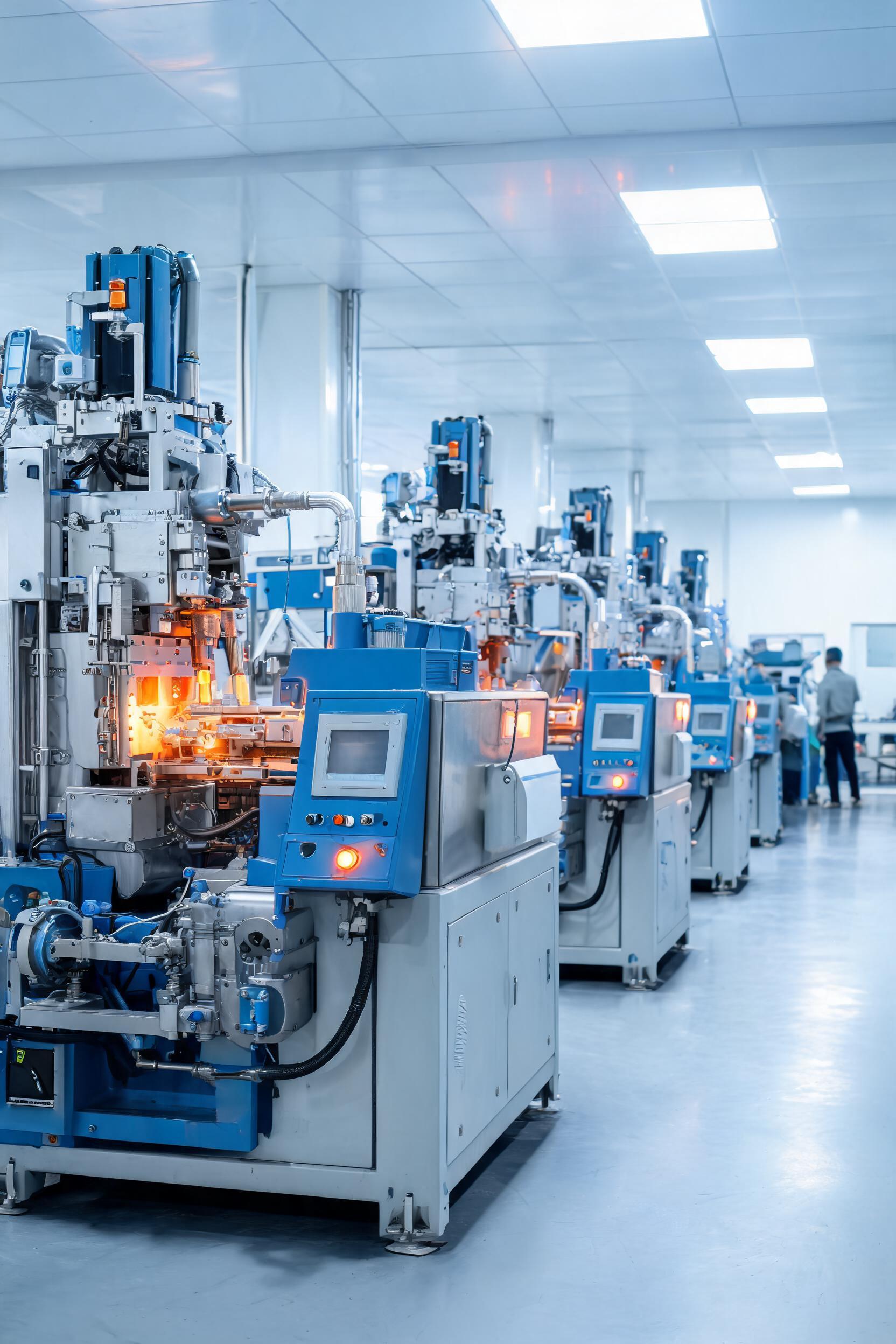
Delamination in silicone overmolding has troubled many manufacturers. Xiangchu (Hubei) Rubber Co., Ltd., located at No. 54, Neihe Lane, Fankou Street, Echeng District, Ezhou City, Hubei Province, is a professional liquid silicone rubber (LSR) products manufacturer. We reveal the core technology of solid-to-liquid composite process to help you figure out solutions to delamination problems. We hold ISO 9001 certification for stable LSR product supply.
Liquid Silicone Rubber (LSR) overmolding, also known as LSR insert molding, is a widely used manufacturing process that bonds liquid silicone rubber to rigid substrates such as polycarbonate (PC), acrylonitrile butadiene styrene (ABS), nylon (PA), stainless steel, and aluminum to produce multi-material components with combined functional properties: the rigid substrate provides structural strength and dimensional stability, while the LSR layer adds soft touch, sealing, insulation, or impact resistance. This process is critical for products across automotive, consumer electronics, medical devices, and household appliance industries, from waterproof watch gaskets and electric toothbrush handles to automotive sensor seals and kitchen utensil grips.
However, one persistent, costly challenge plagues manufacturers at every production scale: interfacial delamination. Delamination occurs when the LSR layer separates from the rigid substrate during molding, post-curing, or end-use service, leading to rejected parts, lost production time, increased material waste, and damaged customer trust. For many operations, delamination rejection rates can reach as high as 15-25%, cutting into profit margins and delaying product delivery. At 橡楚(湖北)橡胶有限公司, we have spent years working with overmolding manufacturers to address this exact pain point, developing a refined solid-to-liquid (solid-to-rubber) composite bonding process that consistently delivers strong, durable interfacial adhesion without the added cost of secondary primers or surface treatments. Based in 湖北省鄂州市鄂城区经济开发区凡口街道内河巷54号, we hold ISO 9001 certification for all our LSR production and process development, and we are excited to share the core technical insights of our solution with the global manufacturing community.
Before introducing our solid-to-liquid composite bonding process, it is critical to break down the most common technical causes of delamination, as many manufacturers misdiagnose the issue and waste resources on ineffective fixes.
Adhesion between two materials relies on sufficient interfacial wetting: the molten LSR must spread evenly across the rigid substrate surface to form molecular-level contact, rather than beading up or leaving micro-voids. Interfacial wetting is governed by surface energy: for good adhesion, the surface energy of the molten LSR must be lower than or equal to the surface energy of the substrate to enable spontaneous spreading.
Table 1: Typical surface energy values for common overmolding substrates and uncured LSR
As shown in Table 1, even for higher surface energy metals and engineering plastics, the difference between LSR and substrate surface energy is often not large enough to enable complete wetting. For lower surface energy materials like PP or thermoplastic elastomers (TPE), the mismatch is even more severe, leading to spontaneous de-wetting and micro-void formation at the interface that grow into full delamination under stress.
Even when surface energy is properly matched, residual contamination from substrate manufacturing or handling can block molecular adhesion between LSR and the substrate. Common contaminants include:
These contaminants form a weak boundary layer between the two materials that has far lower cohesive strength than either the LSR or the substrate, so delamination occurs along this weak layer under even low mechanical stress. Many manufacturers address this with ultrasonic cleaning or plasma treatment, but these processes add cycle time and cost, and can be inconsistent for high-volume production.
Most commercial LSR formulations for overmolding are designed to cure through platinum-catalyzed hydrosilylation, where vinyl-functionalized silicone polymers crosslink with hydride-functionalized crosslinkers. For adhesion to rigid substrates, many formulations rely on added adhesion promoters that can bond to both the silicone network and functional groups on the substrate surface. However, if the adhesion promoter concentration is too low, or if the molding temperature is insufficient to activate the promoter, no permanent covalent bonds form between the LSR and substrate, leading to weak adhesion that fails over time with temperature or humidity cycling.
Traditional LSR overmolding follows two primary process routes: insert molding, where a pre-formed rigid substrate is loaded into an LSR mold, and two-shot injection molding, where the rigid substrate is molded first in one cavity, then transferred to a second cavity for LSR overmolding. The solid-to-liquid (固转液) composite process that 橡楚(湖北)橡胶有限公司 has developed is a third route that pre-integrates adhesion-promoting components into the substrate before LSR molding, eliminating the root causes of delamination at the source.
The core principle of our solid-to-liquid composite process is the creation of a gradient interface between the rigid solid substrate and the liquid silicone rubber, rather than a sharp, discrete two-material boundary. The gradient interface transitions gradually from 100% rigid substrate at the core to a mix of rigid substrate and silicone-compatible functional groups near the surface, ending at 100% LSR at the outer layer. This gradient achieves two key improvements over traditional overmolding:
Unlike primer-based adhesion solutions, which only add a thin layer of adhesion promoter to the substrate surface, our process integrates adhesion compatibility throughout the near-surface region of the substrate, resulting in much more robust adhesion that resists delamination even after long-term exposure to harsh environmental conditions.
The solid-to-liquid composite process is compatible with most existing injection molding and LSR overmolding equipment, requiring minimal modifications to existing production lines. The core process steps are as follows:
We modify the rigid substrate compound (for plastic substrates) or prepare the surface alloy (for metal substrates) with silicone-compatible co-reactants that are chemically stable during substrate molding, but become activated during the LSR curing step. For plastic substrates, this is done by blending a small loading (2-5% by weight) of functionalized silicone masterbatch into the rigid polymer resin before injection molding. For metal substrates, we apply a thin (10-20 μm) layer of modified solid silicone resin that bonds to the metal surface during pre-treatment.
The modified compound is injection molded into the final rigid substrate geometry using standard processing parameters for the base polymer. No changes to mold temperature, injection pressure, or cycle time are required for most common engineering plastics.
The pre-molded rigid substrate is placed into the LSR mold, and our customized LSR formulation is injected directly over the substrate, followed by standard curing at 120-160°C (depending on part thickness). During the curing process, the co-reactants in the substrate near-surface region react with the LSR's crosslinking system to form covalent bonds across the interface.
For high-performance applications requiring extreme temperature or chemical resistance, a low-temperature post-curing step (4 hours at 100°C) can be used to complete crosslinking, but most general-purpose applications do not require this step.
Our refined solid-to-liquid process, developed through years of process testing and optimization at our facility in 湖北省鄂州市鄂城区经济开发区凡口街道内河巷54号, addresses the main causes of delamination outlined earlier, with measurable performance improvements over traditional overmolding methods. All our process development follows ISO 9001 quality management standards to ensure consistent performance across production batches.
The most immediate cost and efficiency benefit of our process is that it eliminates the need for secondary surface pre-treatment steps that are standard in traditional overmolding. Common pre-treatment methods include:
Each of these steps adds 10-30 seconds of cycle time per part, as well as the capital cost of pre-treatment equipment and ongoing material cost for primers and solvents. Primer application also introduces variability: uneven primer coating leads to inconsistent adhesion, and excess primer can bleed out onto visible part surfaces, causing cosmetic defects.
Table 2: Comparative production cost analysis for 100,000 units of 50g PC + LSR overmolded automotive handle
As shown in the comparative analysis in Table 2, our solid-to-liquid process reduces total per-unit production cost by approximately 17-21% compared to traditional overmolding methods, primarily through lower rejection rates and eliminated pre-treatment costs.
Beyond cost savings, our gradient interface design creates much more durable adhesion that resists delamination after long-term exposure to thermal cycling, humidity, and chemical exposure. We conducted standardized adhesion testing per ASTM D429-21 Method B (adhesion of rubber to rigid substrates) to compare the performance of our process with traditional primer-based adhesion.
Test parameters:
Table 3: Peel adhesion strength retention after accelerated aging
The test results confirm that our process delivers not only higher initial adhesion strength, but also far better retention of adhesion after exposure to extreme thermal cycling, which is a common failure mode for automotive and outdoor electronic components. The gradient interface prevents crack propagation along the material boundary, even as the two materials expand and contract at different rates during temperature changes.
One of the biggest advantages of our process approach is that it can be adapted to almost any combination of rigid substrate and LSR formulation, including lower surface energy substrates that are notoriously difficult for traditional overmolding. We have validated the process for the following common material combinations:
For custom applications, our technical team can adjust the co-reactant loading and LSR formulation to match specific performance requirements, such as food contact approval, medical biocompatibility, or high-temperature resistance.
Even with a robust core technology, consistent adhesion performance in high-volume mass production requires standardized quality control and process optimization. At 橡楚(湖北)橡胶有限公司, we provide full technical support to our customers to integrate the solid-to-liquid process into their existing production lines, with clear guidelines for quality checks at each stage of production.
The first step to consistent adhesion is controlling the quality of incoming modified substrate compounds and LSR formulations. We recommend the following incoming quality checks for all materials:
While our process is compatible with most standard LSR molding parameters, small adjustments to injection temperature, pressure, and hold time can further improve adhesion performance. Our key guidelines for in-process optimization are:
LSR overmolding delamination is a costly, persistent problem that has plagued manufacturers for decades, but it is not an unavoidable issue. By addressing the root causes of poor adhesion at the molecular and interface design level, 橡楚(湖北)橡胶有限公司's solid-to-liquid composite overmolding technology delivers consistent, durable adhesion that eliminates delamination, reduces production costs, and improves end-product service life. Unlike quick fixes such as primers or plasma treatment that only address the symptoms of delamination, our gradient interface design creates covalent bonds throughout the interfacial region, resulting in adhesion that holds up even under harsh environmental and mechanical stress.
Based in 湖北省鄂州市鄂城区经济开发区凡口街道内河巷54号, we are an ISO 9001 certified manufacturer of custom LSR products and process solutions, with decades of experience developing LSR overmolding solutions for global industrial clients. If you are still struggling with high delamination rejection rates in your LSR overmolding production, we invite you to explore our new official website, contact our technical team to discuss your specific application requirements. You can reach us by phone at +86 18071171144 or by email at churubber@163.com, and our team will work with you to test and implement our solid-to-liquid composite process in your production line.