
橡楚编辑部 7/20/2026 42 min read
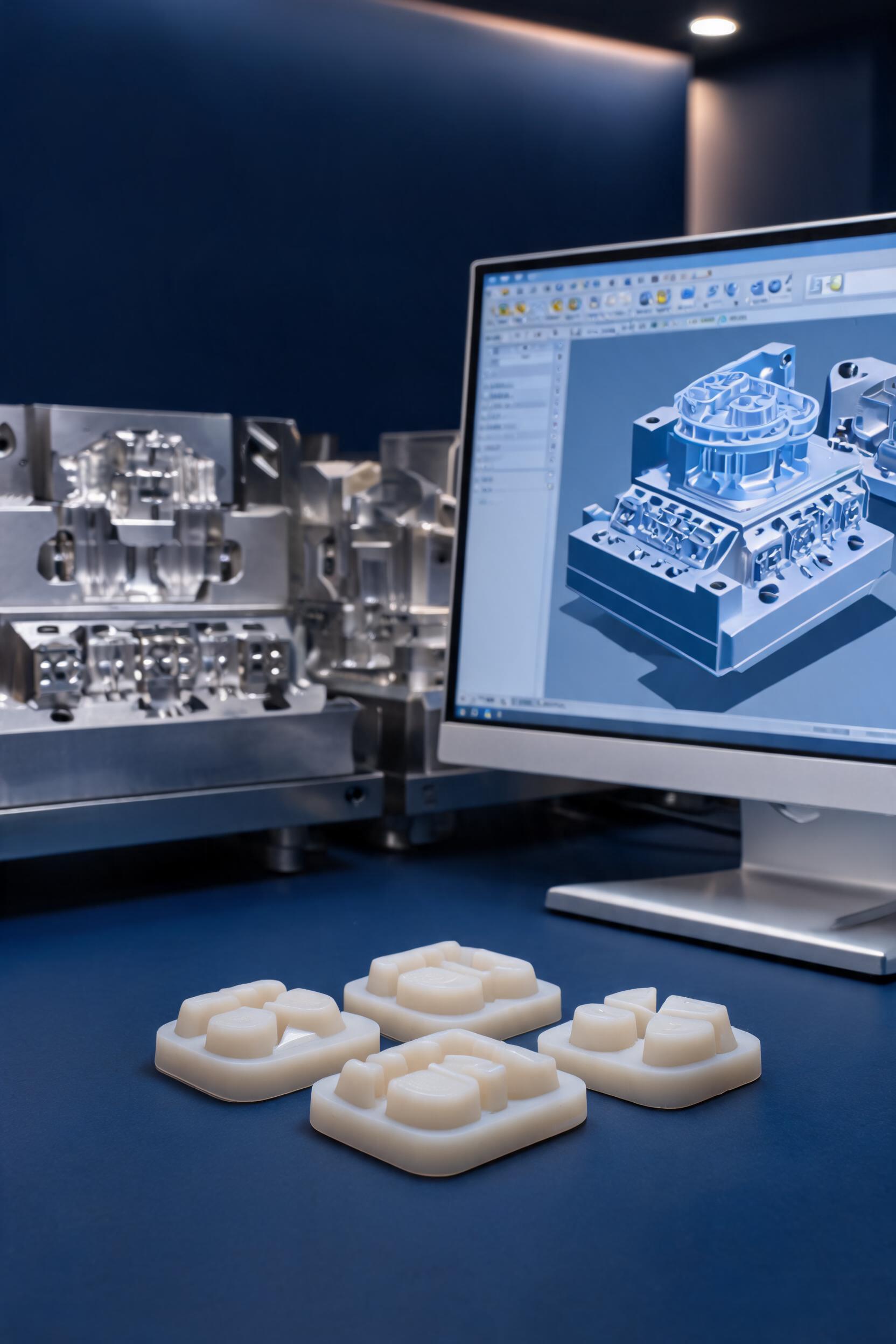
This article sorts out the key points of the whole process of small precision silicone button molding, covering core links such as early demand assessment, mold structure design, machining accuracy control, and trial mold adjustment. It provides corresponding solutions to common problems in the molding process, such as size deviation, burrs, and uneven button feel, helping practitioners improve molding efficiency and yield to meet the production requirements of high-precision silicone buttons in consumer electronics, medical equipment and other fields.
Liquid Silicone Rubber (LSR) is the dominant material for small precision silicone buttons used in consumer electronics, medical devices, automotive human-machine interface (HMI) systems, and industrial control equipment due to its exceptional temperature resistance (-60°C to 220°C), biocompatibility, low compression set (<10% after 22 hours at 175°C per ISO 815), and 10+ million cycle durability. Small precision silicone buttons, defined as units with total dimensions under 10mm, feature tolerance requirements as tight as ±0.02mm for actuation surfaces, ±0.01mm for contact leg positioning, and actuation force tolerance within ±5g. Achieving these specifications relies on optimized mold design, precise process control, and systematic validation. This guide breaks down end-to-end technical considerations for small precision silicone button molding, from material selection to mass production qualification, addressing common failure modes and industry-specific compliance requirements.
DFM is the foundational step in small precision silicone button molding, as even minor design oversights can lead to 30% higher scrap rates and 2x longer lead times for mold revisions. The goal of DFM is to balance functional requirements with LSR processing characteristics, eliminating unmanufacturable features before mold fabrication begins.
LSR grades are formulated with varying polymer chain lengths, filler content, and additives to meet specific performance criteria, and material selection directly impacts mold design parameters such as gating size and curing temperature. Table 1 outlines common LSR grades for small precision button applications and their corresponding use cases:
For small precision buttons, materials with Shore A hardness between 40 and 50 are most common, as they balance actuation feel (100–250g actuation force) and dimensional stability. Conductive grades require special consideration: carbon black or silver-plated copper fillers increase material viscosity by 15–20%, requiring larger gating diameters and higher injection pressure to prevent short shots in micro features such as 0.3mm-diameter contact legs.
Small precision buttons have three critical functional features: the actuation top surface, the elastic support web, and the conductive contact leg. Each feature requires targeted tolerance adjustments to align with LSR’s shrinkage behavior (2.0–3.5% depending on grade) and molding process variability.
Key design rules for manufacturability include:
For buttons with laser-etched backlit symbols, design a 0.1mm thick clear LSR inner layer and a 0.2mm thick pigmented outer layer in the DFM stage, requiring a two-shot mold structure to ensure layer alignment tolerance within ±0.03mm.
The mold is the core determinant of small precision silicone button quality, as 70% of dimensional non-conformities stem from inadequate mold design or fabrication accuracy. Small precision button molds typically use 4–32 cavity configurations to balance production output and dimensional consistency, with higher cavity counts requiring stricter fabrication tolerance control.
Three primary mold design elements are critical for small precision LSR button molding: gating systems, venting, and temperature control.
LSR has a lower viscosity (10,000–1,000,000 cP) than thermoplastics, requiring gating designs that prevent material backflow and ensure uniform cavity filling. For small precision buttons, the recommended gating options are:
For 32-cavity molds, use a hot runner system with individual valve gates to control fill time variation between cavities to under 0.05 seconds, ensuring actuation force consistency across all parts within ±5g.
LSR curing generates volatile byproducts, and air trapped in the cavity during injection can cause voids, incomplete filling, or surface pitting on micro button features. For small precision button molds:
Venting depth must be strictly controlled: vents deeper than 0.01mm will cause LSR flash, while vents shallower than 0.005mm will not provide sufficient air evacuation, leading to a 25% higher scrap rate.
LSR cures via a platinum-catalyzed addition reaction that is highly sensitive to temperature variations: a 5°C difference between cavity halves can cause 10% variation in curing speed, leading to dimensional deviation and inconsistent actuation force. For small precision button molds:
For high-volume production molds, incorporate water cooling channels in the ejector plate to prevent overheating of demolding components, ensuring consistent cycle times of 20–30 seconds per shot.
Mold material and fabrication accuracy directly impact mold lifespan and part consistency, especially for high-cavity molds running 24/7 production.
For small precision silicone button molds, the recommended materials are:
Cavity surfaces require polishing to a Ra ≤ 0.05μm finish to reduce demolding force and prevent LSR adhesion, with textured surfaces requiring electrical discharge machining (EDM) with a ±0.01mm depth tolerance to ensure consistent tactile feel.
Small precision button molds require micron-level fabrication accuracy to meet part tolerance requirements. The key fabrication steps and tolerance controls are:
After fabrication, perform a 100-shot test run with the selected LSR grade to validate cavity dimensions, adjusting for shrinkage variation before full production approval.
Even with a perfectly designed and fabricated mold, incorrect process parameters can lead to 40% higher scrap rates for small precision silicone buttons. LSR molding is a temperature-sensitive process, requiring tight control of injection, curing, and demolding parameters to ensure consistent part quality.
LSR injection molding differs significantly from thermoplastic molding, as LSR is injected cold and cures under heat in the cavity. The key parameters for small precision buttons are outlined below:
LSR is supplied as a two-part (A/B) liquid mixture, with a 1:1 mixing ratio required for consistent curing. For small precision buttons:
Curing temperature and time directly impact LSR cross-linking density, which determines button hardness, actuation force, and dimensional stability. For small precision buttons:
Insufficient curing time will cause parts to deform during demolding, with actuation force varying by ±20g across batches, while over-curing will lead to brittleness, reducing button cycle life by 30%.
Small precision buttons are prone to deformation during demolding due to their small size and low stiffness. Optimized demolding parameters include:
For high-cavity molds, use an automated demolding robot with suction cups to remove parts from the mold, reducing manual handling damage by 90%.
Small precision silicone buttons require 100% inspection of critical functional parameters, as a single defective button can lead to device failure in medical or automotive applications. Table 2 outlines common defects, root causes, and mitigation strategies:
For medical and automotive applications, implement statistical process control (SPC) to monitor key parameters (cavity temperature, injection pressure, actuation force) in real time, with control limits set at ±3σ to detect process drift before defects occur.
Many small precision silicone buttons require secondary processing to meet functional and aesthetic requirements, with strict process controls to avoid damaging micro features:
All secondary processes must be validated for compatibility with the LSR grade, with testing to confirm that treatment does not increase compression set by more than 2% or reduce cycle life by more than 10%.
Small precision silicone button molding is a highly specialized process that requires integrated optimization of DFM, mold design, fabrication, and process control. Key success factors include: selecting LSR grades matched to application performance and compliance requirements, designing mold structures with micron-level tolerance control for gating, venting, and temperature uniformity, and tuning process parameters to maintain ±2°C cavity temperature stability and ±0.5% A/B mixing accuracy. For medical and automotive applications, additional validation steps including ISO 10993 biocompatibility testing and 10 million cycle durability testing are required to ensure long-term reliability. As demand for smaller, higher-precision HMI components grows in wearable electronics and autonomous vehicle controls, future advancements in micro 3D-printed mold inserts and in-line AI-powered optical inspection will further reduce tolerance limits to ±0.01mm and cut scrap rates to below 1% for high-volume production. By following the technical guidelines outlined in this guide, manufacturers can achieve consistent, cost-effective production of small precision silicone buttons that meet the most stringent industry requirements.