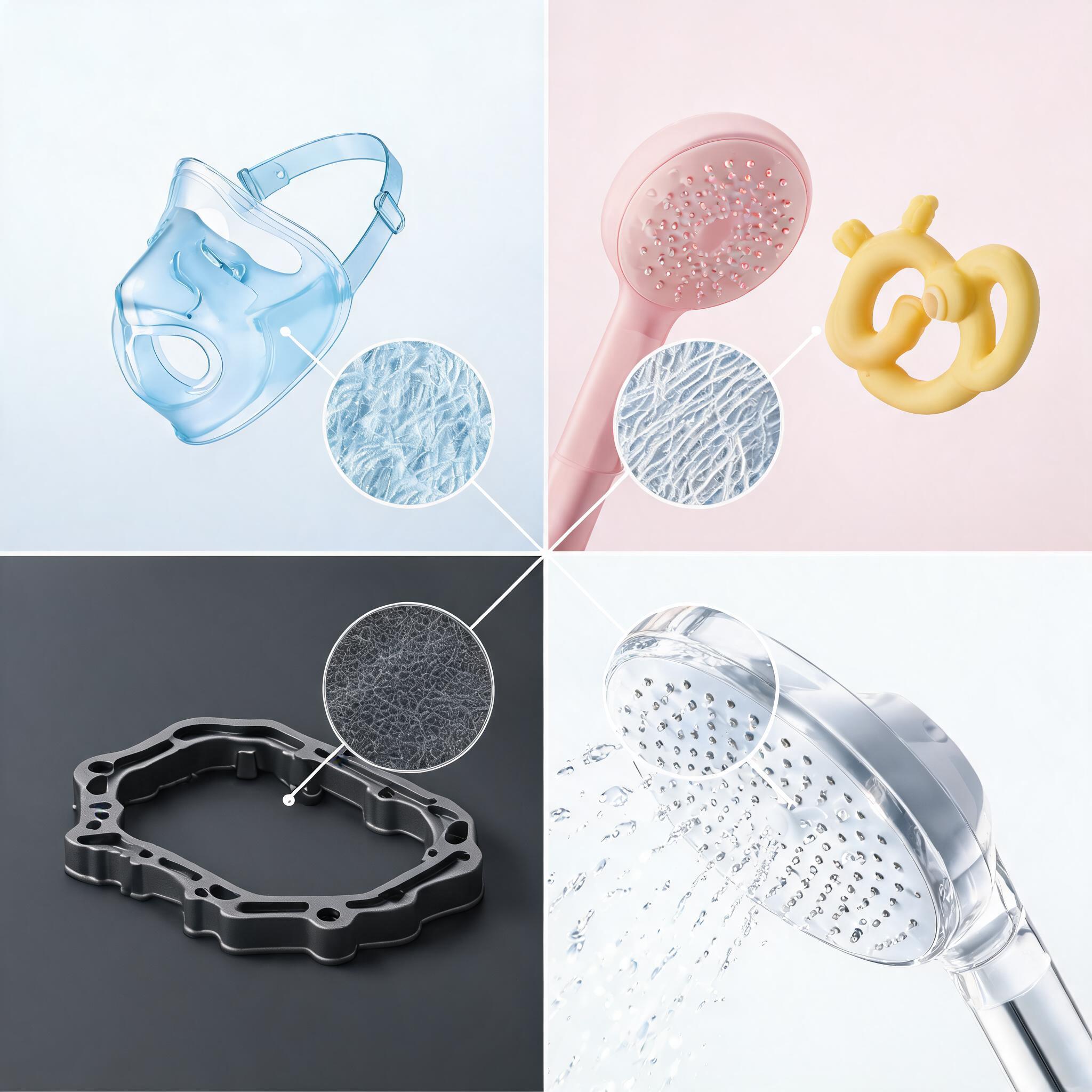
For global bathroom fixture brands, integrating liquid silicone rubber (LSR) components into shower heads has become a core strategy to differentiate products in a crowded market, driven by growing consumer demand for durable, hygienic, and user-friendly bathroom solutions. However, in-house LSR manufacturing requires specialized injection molding equipment, cleanroom facilities, material science expertise, and compliance with global drinking water and safety standards—investments that often exceed the operational capacity and budget of small to mid-sized brands, or even larger enterprises looking to streamline their product development cycles. 硅胶花洒代工 (silicone shower head OEM services) address this gap by offering end-to-end manufacturing support, from material formulation to final assembly, that enables brands to bring high-quality LSR shower heads to market without heavy upfront capital expenditure. This guide breaks down the technical specifications, service workflows, quality control frameworks, and cost optimization strategies for partnering with silicone shower head OEM providers, helping brands make informed decisions that align with their product performance, regulatory, and commercial goals.
Core Technical Advantages of LSR for Silicone Shower Head Components
LSR is a two-part, platinum-cured elastomer that outperforms traditional shower head materials (including engineering plastics, metal, and thermoplastic rubber) across all critical performance metrics for bathroom applications. Silicone shower head OEM providers leverage these inherent material properties to deliver components that meet the most stringent consumer and regulatory requirements.
Comparative Material Performance for Shower Head Nozzles
The nozzle is the most high-stress component of any shower head, as it is exposed to constant water pressure, temperature fluctuations, mineral deposits, and cleaning chemicals. Table 1 compares the performance of LSR against competing materials used for shower head nozzles, based on standardized ASTM and NSF testing protocols:
Performance MetricPlatinum-Cured LSREngineering ABS PlasticTPE (Thermoplastic Elastomer)Chrome-Plated Brass
Operating Temperature Range-60°C to 220°C-20°C to 80°C-40°C to 100°C-20°C to 250°C
Hardness (Shore A)30–80 (customizable)65–75 (fixed)20–90 (customizable)>100 (rigid)
Limescale Adhesion Strength0.8 N/cm²3.2 N/cm²2.1 N/cm²4.7 N/cm²
Chemical Resistance (pH 2–12 cleaning agents)No degradation after 1,000 hours of immersion12% weight loss after 500 hours8% weight loss after 500 hoursCorrosion pitting after 300 hours
NSF/ANSI 61 Drinking Water ComplianceStandard for food-grade LSRRequires specialized coatingRequires material formulation adjustmentRequires lead-free plating treatment
Average Service Lifespan (under normal use)15+ years3–5 years5–7 years7–10 years
Flex Fatigue Resistance (water pressure 0.8 MPa, 10 million cycles)No cracking, <2% flow rate deviation18% of samples cracked, >10% flow rate deviation7% of samples cracked, >5% flow rate deviationNo cracking, but 22% of nozzles blocked by limescale
The low limescale adhesion of LSR is a particularly high-value consumer benefit: silicone shower head nozzles can be cleaned of mineral deposits with a single finger wipe, eliminating the need for harsh chemical cleaners or scrubbing that damages other materials. Platinum-cured LSR also does not leach volatile organic compounds (VOCs), phthalates, or heavy metals into hot water, making it safe for use with drinking water and sensitive skin.
Customizable LSR Material Formulations for Niche Use Cases
Experienced silicone shower head OEM providers offer tailored material formulations to address specific brand and market requirements, beyond the standard food-grade LSR baseline:
- Antimicrobial LSR: Infused with 0.5–2% silver ion additives, this formulation inhibits 99.9% of *E. coli*, *Staphylococcus aureus*, and mold growth on nozzle surfaces, per ISO 22196 testing. It is ideal for premium bathroom brands targeting hospitality, healthcare, and family households with young children, and commands a 15–25% price premium in end markets.
- High-Temperature Resistant LSR: Modified with fumed silica fillers, this grade maintains dimensional stability at temperatures up to 260°C, making it suitable for shower systems with instant boiling water functions or commercial high-temperature sanitation applications.
- Low-Compression Set LSR: Formulated to have a compression set of <10% after 22 hours at 120°C (per ASTM D395), this material retains its elasticity after years of repeated water pressure cycles, preventing nozzle leakage or flow rate deviation over the product lifespan.
- Color-Stable LSR: Blended with UV-resistant pigments, this grade resists yellowing and discoloration after 1,000 hours of UV exposure (per ASTM G154), making it ideal for outdoor shower installations or bathrooms with extensive natural light.
All custom formulations are tested for compliance with regional regulatory requirements before mass production, ensuring no unexpected certification delays.
End-to-End Silicone Shower Head OEM Service Workflow
A full-service silicone shower head OEM partner does not merely manufacture components; they support brands through every stage of product development, from initial design validation to post-sales support. This end-to-end workflow reduces development timelines by 30–40% compared to managing multiple disjointed suppliers.
Design and Prototyping Phase
The OEM partner first collaborates with the brand’s engineering team to optimize the shower head design for LSR manufacturability, performance, and cost efficiency:
- DFM (Design for Manufacturing) Analysis: Engineers conduct a full review of the design to identify potential production risks, such as undercuts that require complex side-action molds, uneven wall thickness that causes warping, or nozzle apertures that are too small for consistent molding. For example, a common design adjustment is increasing the minimum nozzle wall thickness from 0.3 mm to 0.5 mm, which reduces molding defect rates by 27% with no impact on spray performance.
- Flow Simulation Testing: Using Moldflow software, the OEM simulates LSR injection into the mold cavity to identify air traps, weld lines, and incomplete filling issues before mold fabrication. This step reduces the number of mold revision cycles by an average of 2–3, cutting prototyping timelines from 8–10 weeks to 4–6 weeks.
- Rapid Prototyping: For initial performance testing, the OEM can produce low-volume batches of 10–50 units via CNC machining of LSR blocks or 3D printed soft tooling. These prototypes undergo functional testing, including spray pattern uniformity, pressure resistance (up to 1.5 MPa, 150% of standard household water pressure), and limescale cleaning performance, to validate the design before expensive steel mold fabrication.
Once the prototype is approved, the OEM fabricates the production-grade mold, typically made of P20 or S136 stainless steel for high wear resistance. A standard 16-cavity nozzle mold has a lifespan of 500,000–1,000,000 production cycles, sufficient for 2–3 years of mass production.
Mass Production and Assembly
LSR shower head manufacturing requires strict process control to ensure consistent part quality across thousands or millions of units:
- Cleanroom Molding: Medical-grade LSR components are molded in Class 100,000 cleanrooms to prevent contamination from dust or foreign particles, which is critical for compliance with drinking water standards. The molding process uses closed-loop injection systems with precision metering of the two-part LSR base and catalyst, with a mixing ratio tolerance of ±0.5% to ensure consistent material curing.
- In-Mold Bonding (IMB) Integration: Most shower heads combine LSR nozzles with a rigid plastic or metal shower faceplate. Advanced OEMs use in-mold bonding, where the rigid substrate is inserted into the mold cavity before LSR injection, eliminating the need for adhesives or mechanical fasteners. IMB creates a permanent, leak-proof bond between the LSR and substrate, with a pull strength of >15 N per nozzle, and reduces assembly time by 40% compared to manual bonding.
- Modular Assembly: OEMs can source and assemble all shower head components (including the LSR nozzle array, plastic body, flow regulator, hose, and mounting hardware) under one roof, reducing logistics costs and quality risks associated with managing multiple suppliers. For example, a mid-sized brand ordering 100,000 fully assembled shower heads per year can save $120,000–$180,000 annually by using a single OEM for LSR molding and full product assembly.
Production lead times for mass orders range from 2–4 weeks for existing designs with pre-fabricated molds, to 8–12 weeks for new designs requiring mold fabrication and regulatory certification.
Regulatory Compliance and Certification Support
Global bathroom fixture markets have strict safety and performance standards for products that come into contact with drinking water, and experienced silicone shower head OEMs handle all certification processes on behalf of their clients:
- Global Standard Coverage: The most common required certifications include NSF/ANSI 61 (drinking water system components, U.S. and Canada), WRAS (Water Regulations Advisory Scheme, UK), KTW/W270 (German drinking water standards), ACS (Attestation de Conformité Sanitaire, France), and GB 4806.11 (Chinese food contact silicone standard).
- Documentation Support: The OEM provides all required test reports, material safety data sheets (MSDS), and production traceability records to streamline the certification application process, reducing the time to obtain regulatory approval by 2–3 months compared to brands applying independently.
- **Regional Customization: For brands selling to multiple markets, the OEM can adjust material formulations or component specifications to meet local requirements. For example, shower heads sold in California require a maximum flow rate of 1.8 gallons per minute (gpm), while EU markets require a maximum of 9 liters per minute (2.38 gpm); the OEM can integrate region-specific flow regulators during assembly to eliminate the need for separate product SKUs.
Quality Control (QC) Framework for Silicone Shower Head OEM
A rigorous QC framework is critical to ensuring that silicone shower head components meet performance and safety standards across entire production batches. Leading OEMs implement a three-stage QC process that covers incoming materials, in-process production, and finished goods.
Incoming Material and In-Process QC
Quality control begins before production even starts, to prevent defective materials from entering the manufacturing line:
- Incoming LSR Material Inspection: Each batch of LSR is tested for viscosity, curing time, and hardness before use, with material lot numbers recorded for full traceability. Food-grade LSR batches are also tested for heavy metal and VOC content to ensure compliance with food contact standards, with any batch failing these tests rejected immediately.
- First Article Inspection (FAI): For each production run, the first 5–10 parts out of the mold are fully inspected for dimensional accuracy (using a coordinate measuring machine, CMM, with a tolerance of ±0.02 mm), surface defects, and bond strength (for in-mold bonded components). Production only proceeds once the FAI sample is approved by both the OEM’s QC team and the client.
- In-Line Process Monitoring: During mass production, automated vision inspection systems check every part for defects including flash, air bubbles, incomplete filling, and nozzle aperture blockages, with a detection accuracy of 99.8%. Operators also conduct manual spot checks every 30 minutes, testing 10 parts per batch for dimensional consistency and curing quality.
This in-process QC framework reduces post-production defect rates to <0.3%, well below the industry average of 1–2% for LSR components.
Finished Product Performance Testing
All completed shower head components or fully assembled units undergo a battery of performance tests before shipment, tailored to the product’s end use case:
- Hydrostatic Pressure Test: Components are subjected to 1.5 MPa water pressure for 24 hours to check for leaks, cracking, or deformation. For commercial shower heads designed for high-pressure plumbing systems, this test is increased to 2.0 MPa for 48 hours.
- Thermal Shock Testing: Units are cycled between 5°C cold water and 80°C hot water for 1,000 cycles, with no degradation in LSR elasticity or bond strength allowed.
- Flow Rate and Spray Pattern Testing: Every assembled shower head is tested at 0.3 MPa (standard household water pressure) to ensure flow rate is within ±5% of the specified value, and spray patterns are uniform with no skewed or blocked nozzles.
- Limescale Accumulation Testing: Samples are exposed to hard water (300 ppm calcium carbonate concentration) for 100 hours, after which 100% of limescale deposits must be removable with a finger wipe, with no permanent staining or nozzle blockage.
- Pull Strength Testing: For nozzle arrays bonded to faceplates, random samples undergo pull testing to ensure the LSR nozzles can withstand a minimum of 15 N of force before detaching, preventing nozzle loss during use or cleaning.
OEMs provide a detailed test report for each production batch, which brands can use to demonstrate compliance to retailers and regulatory bodies. All products are covered by a 2–5 year warranty, with the OEM covering the cost of replacement or repair for any manufacturing defects.
Cost Optimization and Risk Mitigation for Silicone Shower Head OEM Partnerships
While LSR shower head OEM services offer significant cost savings compared to in-house manufacturing, brands can further optimize costs and reduce operational risks by aligning their ordering strategy and partner selection with their long-term business goals.
Cost Structure and Volume-Based Savings
The total cost of silicone shower head OEM services is broken down into four core components, with opportunities for savings at each stage:
Cost ComponentShare of Total CostCost Optimization Strategies
LSR Material Cost35–45%Consolidate orders to qualify for bulk material discounts; use standard material grades instead of custom formulations for non-specialized products.
Tooling Cost10–20% (one-time)Use multi-cavity molds for high-volume orders (a 32-cavity mold has 2x the production capacity of a 16-cavity mold, with only a 30% higher tooling cost); amortize tooling costs over 1–2 years of production to reduce upfront expenditure.
Production and Labor Cost25–35%Partner with OEMs in regions with competitive labor costs and established LSR manufacturing ecosystems (such as the Guangdong province in China, which accounts for 65% of global LSR bathroom component production); use automated assembly for high-volume orders to reduce labor costs by 20–30%.
Logistics and Certification Cost10–15%Combine shipments of multiple product lines to reduce per-unit freight costs; use OEMs with pre-certified material grades to avoid expensive re-testing for regulatory compliance.
Volume is the largest driver of cost savings: for a standard silicone shower head nozzle array, the per-unit cost drops from $1.20 for orders of 10,000 units, to $0.45 for orders of 1,000,000 units, a 62.5% reduction. For brands with variable demand, many OEMs offer flexible order terms, with minimum order quantities (MOQs) as low as 5,000 units for existing designs, to reduce inventory risk for new product launches.
Partner Selection Criteria and Risk Mitigation
Not all silicone shower head OEMs have the expertise or capabilities to deliver consistent, high-quality products, so brands should evaluate potential partners against the following criteria:
- LSR Specialization: Prioritize OEMs with at least 5 years of experience manufacturing LSR components for bathroom fixtures, rather than general plastic injection molders. Specialized providers will have existing material formulations, mold design expertise, and regulatory certification experience specific to shower heads, reducing development risks.
- Facility Capabilities: Verify that the OEM has cleanroom molding facilities, in-house mold fabrication capabilities, and automated testing equipment. Avoid partners that outsource LSR molding to third parties, as this reduces quality control and traceability.
- Client Track Record: Ask for references from other bathroom fixture brands, and request sample products to test independently before signing a long-term contract. Reputable OEMs will be transparent about their defect rates, warranty terms, and contingency plans for production disruptions.
- Intellectual Property (IP) Protection: Ensure the OEM has a formal IP protection policy, and include non-disclosure agreements (NDAs) and IP ownership clauses in the contract to prevent design or product counterfeiting. Leading OEMs also offer exclusive production rights for custom designs, preventing competitors from using the same mold or material formulation.
To mitigate supply chain risks, brands can also consider dual-sourcing strategy, working with two OEMs in different regions to ensure continuity of supply in the event of production disruptions, trade tariffs, or logistics delays.
Conclusion
硅胶花洒代工 (silicone shower head OEM services) provide a low-risk, cost-effective pathway for bathroom fixture brands to leverage the superior performance of LSR without the high upfront investment required for in-house manufacturing. By partnering with an experienced OEM, brands can access tailored material formulations, end-to-end product development support, and rigorous quality control frameworks that ensure their products meet global regulatory standards and consumer expectations for durability, hygiene, and ease of use. To maximize the value of the partnership, brands should prioritize OEMs with specialized LSR expertise, a proven track record in the bathroom fixture industry, and flexible terms that align with their volume and product customization requirements. As consumer demand for high-quality, low-maintenance bathroom products continues to grow, silicone shower head OEM services will remain a critical strategic resource for brands looking to innovate and capture market share in the global bathroom fixture space.