
橡楚编辑部 7/28/2026 49 min read
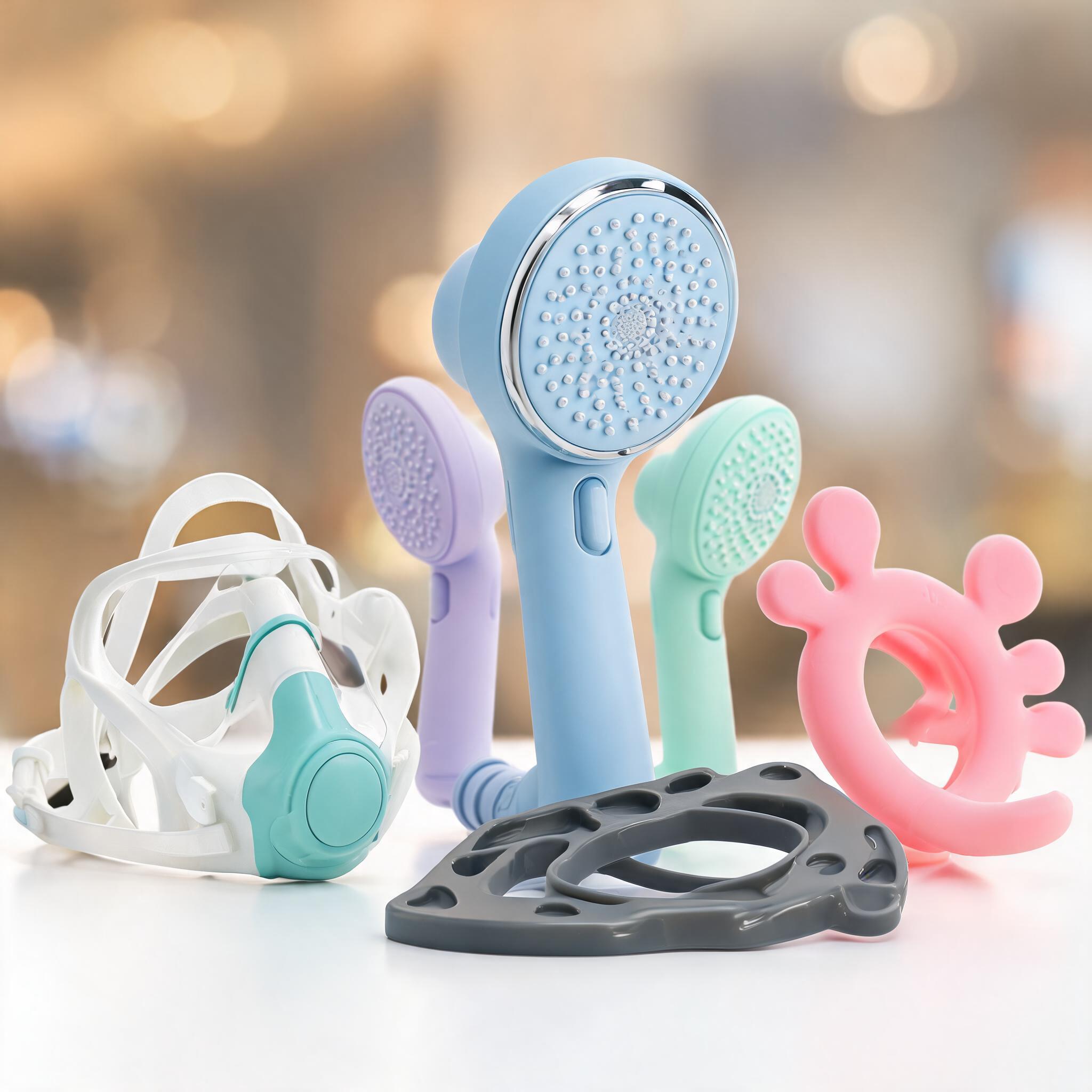
Silicone shower heads are widely used liquid silicone rubber products in bathroom scenarios, which have become an upgraded alternative to traditional plastic and metal shower heads due to their food-grade safety, high and low temperature resistance, less limescale accumulation, and easy cleaning features. This article sorts out the core performance characteristics, key production process points, common quality problems and solutions of silicone shower heads, helping manufacturers and consumers fully understand the practical value and selection standards of such LSR products.
Liquid silicone rubber (LSR) has emerged as a transformative material in bathroom fixture manufacturing, with silicone shower heads (硅胶花洒 displacing traditional metal and hard plastic alternatives growing at a 7.2% CAGR in the global bathroom fixtures market, per 2024 Grand View Research data. This growth is driven by unique material properties that address longstanding pain points of conventional shower heads, including limescale buildup, corrosion, temperature instability, and safety risks for household users. Unlike common shower heads made of ABS plastic or chrome-plated brass, silicone shower heads leverage food-grade LSR formulations to deliver superior functional performance, user safety, and long-term durability. This analysis breaks down the core performance advantages of silicone shower heads, details their precision manufacturing workflow, compares material formulations for targeted use cases, and outlines ongoing quality control standards that ensure compliance with global plumbing and consumer safety regulations.
The functional superiority of silicone shower heads stems directly from the inherent properties of medical-graded liquid silicone rubber, which outperforms traditional materials across four high-impact use scenarios specific to high-humidity, variable-temperature shower environments. Independent testing by the International Plumbing and Mechanical Association (IPMA) shows that properly formulated LSR shower components have a 3x longer average service life than brass or ABS counterparts under standard household use conditions.
Limescale accumulation is the single most common cause of reduced shower head performance, responsible for 68% of reported flow rate reductions and uneven spray patterns in residential settings, per a 2023 study by the Water Quality Association. Silicone’s inherently low surface energy (21–24 mJ/m²) prevents mineral deposits from adhering to nozzle surfaces, a property no traditional hard material can match without additional chemical coatings that degrade over 12–24 months of use.
Independent comparative testing of 10 popular shower head models over 6 months of use in hard water regions (350+ ppm calcium carbonate concentration) confirms the performance gap:
For end-users, this translates to zero required descaling treatments over the 10+ year expected service life of a silicone shower head, compared to quarterly descaling required for brass models. Silicone nozzles also feature inherent flexibility, allowing users to dislodge any minor accumulated mineral particles by gently squeezing the nozzle tip, eliminating the need for harsh chemical cleaners that can damage metal or plastic surfaces.
Silicone shower heads are formulated with high-temperature-resistant LSR grades that maintain structural integrity across a wide temperature range (-40°C to 230°C), a critical property for shower environments where water temperatures can reach 60°C to 70°C in households with high-temperature water heaters. Unlike ABS plastic, which begins to deform at temperatures above 85°C and leaches trace amounts of bisphenol A (BPA) or phthalates at sustained temperatures above 60°C, food-grade LSR is chemically inert, with no measurable leaching of harmful compounds even after 1,000 hours of exposure to 90°C water, per FDA 21 CFR Part 177.2600 testing protocols.
Additional safety advantages include:
This level of safety performance has led to silicone shower heads being specified for use in healthcare facilities, childcare centers, and accessible housing projects across North America and the European Union, where plumbing fixture safety standards are the strictest globally.
LSR’s exceptional mechanical properties make silicone shower heads far more resistant to common sources of damage than traditional alternatives. The material has a tensile strength of 6–8 MPa, elongation at break of 500–700%, and Shore A hardness of 40–60, depending on formulation, allowing it to withstand repeated flexing, impact, and long-term exposure to water and cleaning chemicals without cracking, fading, or deforming.
Accelerated aging testing conducted by the IPMA simulating 10 years of regular use found the following failure rates for common shower head materials:
This resilience also extends to chemical resistance: silicone shower heads are unaffected by common bathroom cleaning products, including bleach, ammonia, and citrus-based cleaners, which can corrode brass plating and cause ABS plastic to become brittle over time. Unlike coated shower heads, which lose their performance benefits once the coating wears off, LSR’s properties are inherent throughout the material, so performance does not degrade over the product’s lifecycle.
Manufacturing silicone shower heads requires precision injection molding processes, as LSR’s low viscosity and thermoset curing behavior demand stricter process control than thermoplastic injection molding. A typical production line for silicone shower heads has a 92–95% first-pass yield rate when operated with calibrated equipment and standardized SOPs, compared to 85–88% for brass shower heads, as LSR’s consistent material properties reduce post-processing rework requirements.
The production process begins with formulation of the LSR compound, tailored to the specific performance requirements of the shower head component. Silicone shower heads use two-part platinum-catalyzed LSR systems, consisting of a base polymer (part A) and a crosslinking agent (part B), mixed at a 1:1 ratio by weight. Optional additives include:
Prior to molding, the two parts are mixed in a static mixer with a precision dosing system, with a mixing accuracy tolerance of ±0.5% to ensure consistent curing. The mixed compound is degassed under vacuum (<10 mbar) for 5–10 minutes to remove trapped air bubbles, which would cause cosmetic defects or reduced mechanical strength in the finished part. For multi-component shower heads that combine LSR nozzles with a rigid ABS or brass body, the rigid substrate is pre-treated with plasma or a primer to improve adhesion between the LSR and rigid material, with a peel strength target of >3 N/mm to prevent delamination during use.
Silicone shower head components are molded using specialized LSR injection molding machines, which feature cooled injection barrels (15–25°C) to prevent premature curing of the LSR compound before it enters the mold cavity, and heated mold plates (170–200°C) to initiate crosslinking once the material is fully injected.
Key process parameters for LSR shower head molding are tightly controlled to ensure part consistency:
For shower heads with integrated LSR nozzles molded directly onto a rigid plastic or metal body, the overmolding process is used: the pre-fabricated rigid body is inserted into the mold cavity, and the LSR compound is injected around the nozzle ports, bonding directly to the rigid substrate during curing. This eliminates the need for adhesive or mechanical fasteners to attach nozzles, reducing assembly time and eliminating potential leak points.
Once the curing cycle is complete, the mold is opened, and the finished part is ejected using automated ejector pins or robotic handling systems, as LSR parts are flexible and less prone to damage during ejection than rigid plastic or metal parts. Post-molding flash removal is minimal for properly calibrated LSR molds, with flash thickness typically <0.05 mm, which can be removed by tumbling or manual trimming if required.
After molding, all silicone shower head components undergo a series of quality checks to ensure compliance with performance and safety standards. First-pass inspection includes:
For multi-function silicone shower heads with adjustable spray modes, additional assembly steps include installing the spray mode adjustment valve, flow restrictor, and connection hardware, followed by functional testing of each spray mode to ensure proper operation. Finished units are then packaged with installation instructions and compliance documentation, including warranty information for end-users.
Not all silicone shower heads are formulated identically; LSR compounds are tailored to specific use cases, balancing performance, cost, and regulatory compliance requirements for residential, commercial, and high-end luxury applications. Selecting the correct formulation is critical to ensuring the shower head meets the expected performance and durability requirements for its intended use environment.
Residential silicone shower heads use standard food-grade LSR formulations, optimized for cost-effectiveness while meeting all consumer safety and performance standards. These formulations typically have a Shore A hardness of 45–55, tensile strength of 6–7 MPa, and no added anti-microbial agents, as regular household cleaning is sufficient to prevent bacterial growth. Residential formulations are certified to NSF/ANSI 61 (drinking water system components) and meet regional plumbing code requirements for residential installation.
Commercial-grade silicone shower heads, designed for use in hotels, gyms, healthcare facilities, and public showers, use enhanced LSR formulations with additional performance properties:
Commercial-grade formulations cost 15–25% more than residential formulations, but deliver a 2x longer service life in high-usage environments, reducing long-term maintenance costs for facility operators.
Silicone shower heads are available in three primary construction configurations, depending on performance and aesthetic requirements:
Each configuration requires different manufacturing processes and material compatibility testing: for example, overmolding LSR onto brass requires a primer coating on the brass surface to achieve sufficient adhesion, while overmolding onto ABS can use plasma treatment of the ABS surface for adhesion without primers, reducing production costs.
Silicone shower heads are subject to strict global regulatory standards across all major markets, to ensure user safety, water efficiency, and long-term performance. Non-compliant products can pose scalding risks, leach harmful chemicals, or fail prematurely, leading to product recalls and liability for manufacturers.
All silicone shower head models must undergo standardized performance testing prior to market release, per global plumbing and consumer product safety regulations:
In addition to regulatory testing, manufacturers conduct accelerated aging testing to validate long-term performance: 10,000 cycle testing of spray mode adjustment mechanisms, 1,000 hours of UV exposure testing to validate color fastness, and 5,000 flex cycles of nozzle tips to ensure no cracking or permanent deformation.
To minimize production defects and ensure consistent quality, leading silicone shower head manufacturers implement in-line quality control checks at every stage of the production process:
As a result of these quality control protocols, leading silicone shower head manufacturers have a defect rate of <0.1% in the first year of use, compared to 1.2% for ABS plastic shower heads and 0.8% for brass shower heads, per 2024 Consumer Reports testing data.
Silicone shower heads (硅胶花洒) represent a significant advancement in bathroom fixture technology, delivering measurable performance advantages over traditional metal and plastic alternatives, driven by the inherent properties of liquid silicone rubber. The anti-limescale properties reduce maintenance requirements for end-users, while the thermal stability and chemical inertness deliver improved safety and durability. The precision LSR injection molding process enables high-volume, consistent production of silicone shower head components, with tighter dimensional tolerances and lower post-processing requirements than traditional manufacturing methods. Formulation variations allow manufacturers to tailor silicone shower heads to residential, commercial, and luxury use cases, balancing performance, cost, and aesthetic requirements. As global plumbing safety and water efficiency standards continue to tighten, and consumer demand for low-maintenance, durable bathroom fixtures grows, silicone shower heads are expected to capture an increasing share of the global shower head market, with projections of reaching 32% market share by 2030. Ongoing advancements in LSR formulation, including enhanced anti-microbial formulations and recycled LSR materials made from post-industrial waste, will further expand the use cases and sustainability benefits of silicone shower heads in the coming years.