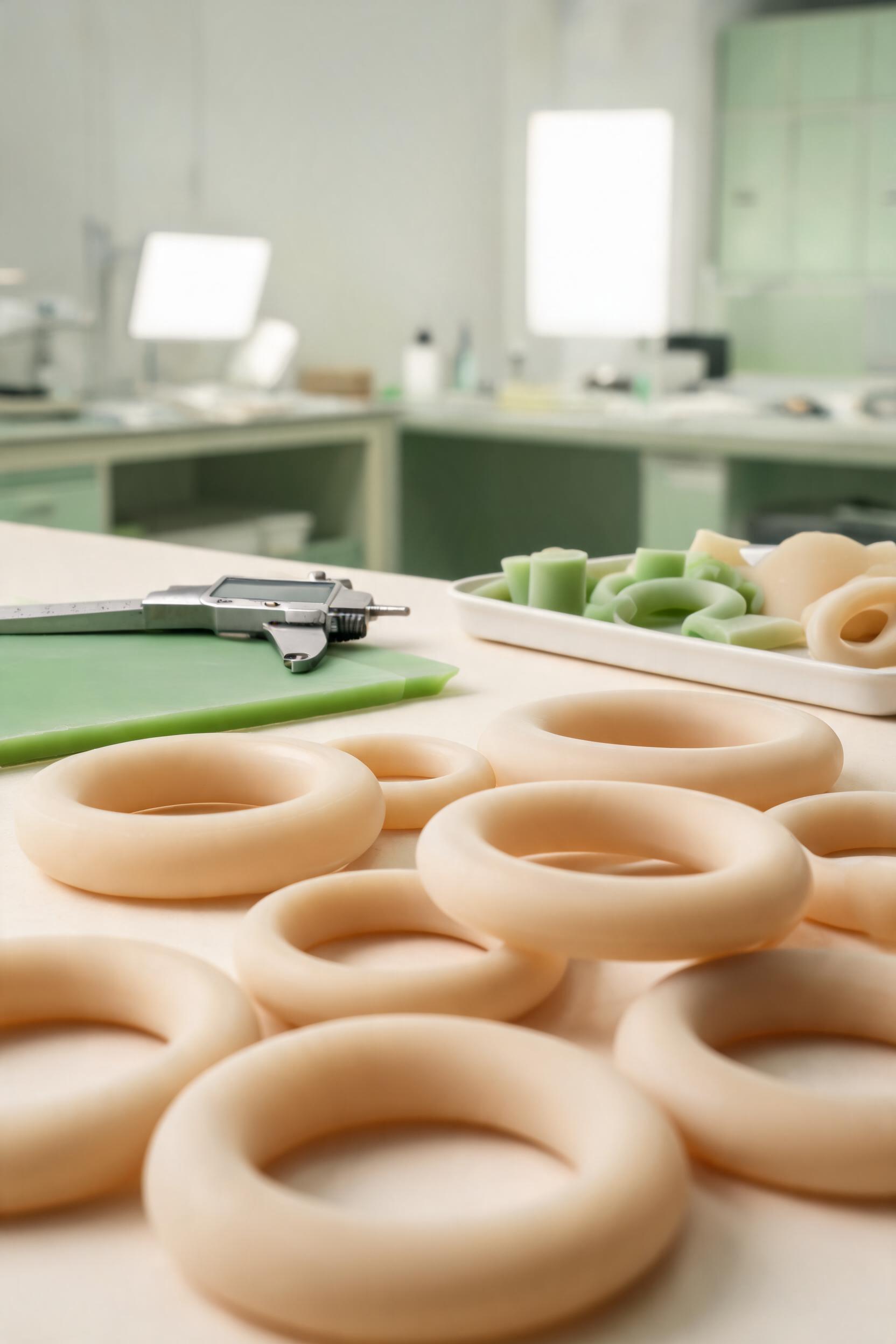
Liquid silicone rubber (LSR) silicone sealing rings are among the most widely used elastomeric sealing components across industrial, consumer, medical, and automotive sectors, valued for their unique balance of thermal stability, chemical compatibility, and biocompatibility that outperforms most conventional rubber sealing materials such as nitrile rubber (NBR), ethylene propylene diene monomer (EPDM), and fluororubber (FKM) in targeted use cases. As global demand for reliable, long-lasting sealing solutions rises—driven by trends in electric vehicle (EV) manufacturing, minimally invasive medical devices, and energy-efficient household appliances—understanding the core performance metrics, application-specific suitability, and standardized selection criteria for silicone sealing rings is critical to avoiding premature component failure, reducing operational downtime, and optimizing total cost of ownership. This guide provides a technically rigorous breakdown of silicone sealing ring properties, real-world deployment use cases, and a data-backed selection framework to support engineers, procurement teams, and product designers in making informed material and design choices.
Core Performance Metrics and Material Properties of Silicone Sealing Rings
The performance of a silicone sealing ring is defined by standardized test parameters that quantify its mechanical, thermal, and chemical resistance characteristics, with formulation adjustments allowing for tailored properties to match specific operating environments. Unlike generic rubber seals, LSR-based silicone sealing rings are manufactured via injection molding with cross-linked polysiloxane polymer chains, which contribute to their distinctive performance advantages over thermoplastic or organic rubber alternatives.
Mechanical and Durability Performance Parameters
Mechanical properties determine a silicone sealing ring’s ability to maintain structural integrity and sealing force under repeated compression, dynamic motion, and mechanical stress. Table 1 outlines the typical performance ranges for standard and high-performance silicone sealing ring grades, tested per ASTM international standards:
ParameterTest StandardStandard LSR GradeHigh-Temperature LSR GradeFluorosilicone LSR Grade
Shore A HardnessASTM D224030–8040–7050–80
Tensile StrengthASTM D4125–12 MPa7–10 MPa6–9 MPa
Elongation at BreakASTM D412100–700%150–400%100–300%
Compression Set (22h at 177°C)ASTM D395 Method B10–30%5–15%10–20%
Tear StrengthASTM D624 Die B15–45 kN/m20–35 kN/m15–30 kN/m
Operating Temperature Range—-60°C to +230°C-70°C to +310°C-40°C to +230°C
Compression set is the most critical mechanical parameter for sealing applications, as it measures the permanent deformation of the ring after prolonged exposure to compressive load. Standard LSR silicone sealing rings exhibit 20–30% compression set after 1000 hours of compression at 150°C, compared to 40–60% for EPDM seals under identical conditions, meaning silicone seals retain 70–80% of their initial sealing force over extended use, reducing the risk of leaks from material relaxation. For dynamic sealing applications involving repeated motion (e.g., rotating shaft seals, actuator piston seals), manufacturers often incorporate fumed silica fillers into LSR formulations to boost tear strength by 20–30% and reduce wear rates to less than 0.1 mm³ per 1000 cycles under 0.5 MPa contact pressure, extending service life by 3–5 times relative to unfilled silicone grades.
Thermal, Chemical, and Specialized Performance Characteristics
Silicone sealing rings are distinguished by their exceptional thermal stability, a property derived from the strong silicon-oxygen (Si-O) backbone of the polymer, which has a bond energy of 452 kJ/mol, 30% higher than the carbon-carbon (C-C) bond energy of organic rubbers (347 kJ/mol). This structure allows silicone seals to operate continuously at 200°C with less than 10% change in hardness or tensile strength over 10,000 hours, and to withstand short-term excursions up to 350°C without melting or structural degradation. At low temperatures, standard silicone seals remain flexible down to -60°C, while specially formulated phenyl-modified LSR grades can retain elastomeric properties at temperatures as low as -110°C, making them suitable for aerospace cryogenic applications.
Chemical compatibility varies significantly by silicone formulation, as outlined in Table 2:
Fluid TypeStandard LSR CompatibilityFluorosilicone LSR Compatibility
Water (neutral, pH 5–9)Excellent: <1% weight change after 1000h at 100°CExcellent: <1% weight change after 1000h at 100°C
Weak Acids/Bases (pH 2–11)Good: <5% weight change after 1000h at 25°CGood: <5% weight change after 1000h at 25°C
Strong Mineral Acids (pH <2)Poor: >20% weight change, surface cracking after 100hPoor: >15% weight change after 100h
Aliphatic Hydrocarbons (gasoline, diesel)Poor: 10–50% swelling after 1000h at 25°CExcellent: <5% swelling after 1000h at 25°C
Aromatic Hydrocarbons (toluene, benzene)Very Poor: >50% swelling, dissolution riskFair: 10–15% swelling after 1000h at 25°C
Polar Solvents (ethanol, acetone)Good: <5% weight change after 1000hGood: <5% weight change after 1000h
Silicone Oils and GreasesPoor: 10–30% swelling over timePoor: 10–25% swelling over time
For specialized use cases, silicone sealing rings can be formulated with additive packages to deliver targeted performance:
- Food-contact and medical grades: Comply with FDA 21 CFR Part 177.2600, EU Regulation 10/2011, and ISO 10993 biocompatibility standards, with no extractable heavy metals or volatile organic compounds (VOCs) above 0.1% by weight.
- Flame-retardant grades: Meet UL 94 V-0 flammability ratings, with self-extinguishing properties and minimal smoke emission, suitable for electrical and aerospace applications.
- Conductive grades: Filled with carbon black or silver-plated glass particles to achieve surface resistivities of 10–100 Ω/sq, providing electromagnetic interference (EMI) shielding and static dissipation for electronic sealing applications.
Industry-Specific Applications of Silicone Sealing Rings
The unique property profile of silicone sealing rings makes them the preferred choice across a diverse range of industries, where they address unmet needs of conventional sealing materials related to temperature resistance, biocompatibility, and long-term reliability.
Medical and Life Sciences Applications
Silicone sealing rings are the gold standard for medical device sealing, as they meet the strict regulatory requirements for biocompatibility, sterilization resistance, and low extractables that are non-negotiable for patient-facing equipment. Key use cases include:
- Surgical and minimally invasive device seals: Used in endoscopic trocars, surgical staplers, and insulin pump reservoirs, where they maintain a hermetic seal during repeated autoclave, ethylene oxide (EtO), or gamma sterilization cycles. Medical-grade silicone sealing rings can withstand up to 100 autoclave cycles (121°C, 15 psi) with less than 5% change in hardness and no loss of sealing integrity, compared to 10–15 cycles for EPDM seals before degradation occurs.
- Pharmaceutical manufacturing equipment: Installed in bioreactor ports, fluid transfer line connections, and sterile filling machine nozzles, where they resist repeated exposure to cleaning-in-place (CIP) and sterilization-in-place (SIP) processes involving 140°C steam, 2% sodium hydroxide solutions, and peracetic acid disinfectants. These seals are often manufactured to ISO 14644-1 Class 7 cleanroom standards, with zero visible particulates and extractable levels below 0.5 mg/cm² to avoid contaminating pharmaceutical products.
- Implantable and wearable medical devices: Used in pacemaker feedthroughs, continuous glucose monitor (CGM) sensor housings, and hearing aid components, where they provide long-term biocompatibility and resistance to bodily fluids. For implantable applications, platinum-cured LSR silicone sealing rings have a demonstrated service life of 10+ years inside the human body with no adverse tissue reaction, as confirmed by ISO 10993-5 and -10 cytotoxicity and skin sensitization testing.
Automotive and New Energy Industry Applications
The global shift to electric vehicles (EVs) and advanced driver assistance systems (ADAS) has driven exponential growth in demand for silicone sealing rings, as they address the unique thermal and environmental challenges of automotive electrification.
- EV battery system seals: Deployed in battery pack enclosure gaskets, cell module vent seals, and high-voltage connector seals, where they provide ingress protection (IP) against dust and water, thermal stability during battery charging and discharging cycles, and resistance to thermal runaway events. Silicone sealing rings for battery applications are typically formulated to achieve IP67/IP68 ingress protection, maintain sealing force across -40°C to 150°C operating temperatures, and resist swelling from exposure to electrolyte solvents such as ethylene carbonate and dimethyl carbonate. A 2023 study by the Society of Automotive Engineers (SAE) found that silicone seals reduced EV battery pack leak rates by 85% compared to EPDM seals during 1000 hours of thermal cycling testing, lowering the risk of short circuits and battery failure.
- ADAS sensor seals: Used in radar, LiDAR, and camera module housings, where they maintain a hermetic seal to prevent moisture and dust ingress that could impair sensor performance. These seals are often low-shrinkage, precision-molded LSR grades with dimensional tolerances of ±0.02 mm, ensuring a perfect fit with sensor housings that require consistent optical alignment.
- Internal combustion engine (ICE) and thermal management seals: Used in coolant system hoses, turbocharger wastegate seals, and air conditioning system gaskets, where they withstand continuous exposure to 175°C engine coolant and refrigerant gases. Fluorosilicone sealing rings are preferred for fuel system seals in ICE vehicles, as they resist swelling from gasoline and ethanol blends up to E85, with less than 3% volume change after 1000 hours of immersion at 60°C.
Consumer and Industrial Equipment Applications
Silicone sealing rings are ubiquitous in consumer goods and industrial equipment, where their non-toxicity, temperature resistance, and long service life reduce maintenance requirements and improve user safety.
- Food and beverage processing equipment: Installed in coffee machine brew heads, pressure cooker lids, food processing conveyor line connections, and water dispenser fittings, where they comply with food contact regulations and resist repeated exposure to hot water, food oils, and cleaning detergents. Food-grade silicone sealing rings can withstand temperatures up to 230°C for oven and sous vide applications, with no transfer of taste or odor to food products, a key advantage over NBR seals which often leach plasticizers at high temperatures.
- Plumbing and HVAC systems: Used in faucet valve cartridges, water heater pipe connections, and HVAC duct gaskets, where they provide long-term resistance to chlorinated water and temperature fluctuations. Unlike NBR seals, which harden and crack after 3–5 years of exposure to chlorinated municipal water, silicone sealing rings have a service life of 10+ years in plumbing applications, reducing leak-related water waste and repair costs.
- Industrial hydraulic and pneumatic systems: Deployed in pneumatic actuator piston seals, valve manifold gaskets, and low-pressure hydraulic line connections, where they provide consistent sealing performance across wide temperature ranges with minimal maintenance. For pneumatic systems operating at 0.5–1 MPa pressure, silicone sealing rings have a service life of up to 1 million cycles, compared to 200,000 cycles for NBR seals under identical operating conditions.
Standardized Selection Framework for Silicone Sealing Rings
Selecting the right silicone sealing ring for a specific application requires a systematic assessment of operating conditions, regulatory requirements, and cost constraints, to avoid over-specifying unnecessary high-performance grades or under-specifying seals that will fail prematurely.
Step 1: Define Operating Environment and Performance Requirements
The first step in the selection process is to map all environmental stressors that the seal will be exposed to during its intended service life:
- Temperature profile: Document both continuous operating temperature and short-term temperature excursions, as well as any rapid thermal cycling requirements. For applications with continuous temperatures above 230°C, select high-temperature phenyl-modified LSR grades; for cryogenic applications below -60°C, select low-temperature silicone grades with a glass transition temperature (Tg) of -100°C or lower.
- Fluid and chemical exposure: Conduct a full audit of all fluids the seal will come into contact with, including process fluids, cleaning agents, lubricants, and environmental contaminants. As a rule of thumb:
- Use standard LSR seals for applications involving water, weak acids/bases, and polar solvents
- Use fluorosilicone LSR seals for applications involving aliphatic hydrocarbons (fuels, oils)
- Avoid silicone seals for applications involving strong acids, strong bases, or aromatic hydrocarbons, where FKM or perfluoroelastomer (FFKM) seals are more suitable
- Mechanical load conditions: Classify the application as static or dynamic:
- For static seals (e.g., enclosure gaskets, fixed pipe connections), prioritize low compression set and appropriate hardness to match the flange surface finish. A Shore A hardness of 50–60 is recommended for most static applications, as it balances conformability to surface irregularities and resistance to extrusion under pressure.
- For dynamic seals (e.g., piston seals, rotating shaft seals), prioritize high tear strength, low friction, and wear resistance, and consider adding a PTFE coating to reduce friction coefficient by 70–80% from 0.8 to 0.15–0.2, extending wear life by 2–3 times.
- Pressure requirements: For operating pressures above 5 MPa, incorporate anti-extrusion rings (backup rings) made of PEEK or nylon to prevent the silicone seal from being squeezed into the gap between mating components, which is the most common cause of seal failure in high-pressure applications.
Step 2: Validate Dimensional Specifications, Regulatory Compliance, and Cost
Once performance requirements are defined, the next step is to confirm dimensional, regulatory, and economic suitability:
- Dimensional and tolerance requirements: Silicone sealing rings are typically manufactured to ISO 3601 standard sizes for O-rings, with standard tolerance grades as follows:
- Grade N (general purpose): ±0.07 mm for cross-sections up to 1.5 mm, ±0.1 mm for cross-sections 1.5–5 mm
- Grade S (precision): ±0.03 mm for cross-sections up to 1.5 mm, ±0.05 mm for cross-sections 1.5–5 mm, recommended for medical device and ADAS sensor applications requiring tight sealing.
Always calculate the appropriate compression ratio for the application: 15–25% for static seals, 10–20% for dynamic seals, to balance sealing force and compression set over time.
- Regulatory and certification requirements: Verify that the selected seal meets all industry-specific regulatory standards:
- Medical applications: ISO 10993 biocompatibility, FDA 21 CFR Part 177, or CE marked for medical devices
- Food contact applications: FDA 21 CFR Part 177.2600, EU 10/2011, or GB 4806.11 (China)
- Automotive applications: IATF 16949 manufacturing quality standard, RoHS 2.0 compliance for hazardous substance limits
- Electrical applications: UL 94 flammability rating, CTI (comparative tracking index) rating for high-voltage applications
- Total cost of ownership (TCO) assessment: While high-performance silicone sealing rings have a 20–50% higher upfront cost than NBR or EPDM seals, their 2–5 times longer service life often reduces TCO by 30–60% over the product lifecycle, particularly for applications where seal failure leads to high maintenance costs or safety risks. For example, replacing an NBR battery pack seal with a silicone seal in an EV adds approximately $1.20 to upfront material cost, but reduces the risk of battery warranty claims by an estimated $150 per vehicle over a 10-year service life.
Step 3: Prototype Testing and Qualification
Before full-scale production deployment, conduct qualification testing to validate seal performance under simulated operating conditions:
- Accelerated aging testing: Expose prototype seals to 1.5–2 times the maximum operating temperature for 1000 hours to evaluate long-term compression set and mechanical property retention. A passing result is less than 20% compression set and less than 10% change in hardness after testing.
- Fluid immersion testing: Immerse seals in all relevant process fluids for 1000 hours at maximum operating temperature, with a passing result of less than 5% volume change and no surface cracking or degradation.
- Pressure and leak testing: Test seals under maximum operating pressure and temperature to confirm leak rates are below acceptable limits (typically <1×10⁻⁶ mbar·L/s for hermetic seals, <10 drops per hour for fluid seals).
- Life cycle testing: For dynamic applications, test seals under repeated motion for the required number of cycles, verifying no measurable wear or loss of sealing force.
Conclusion