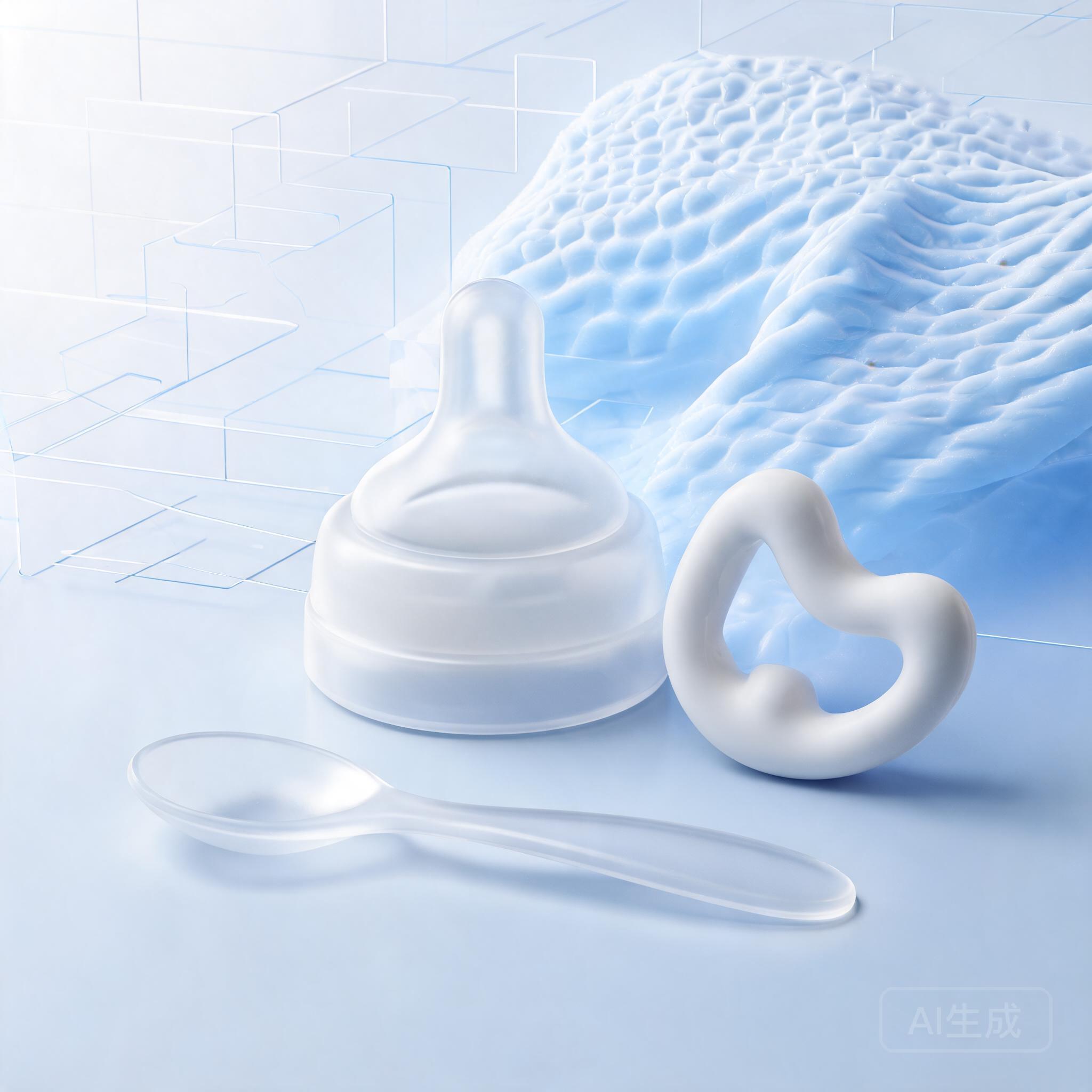
Silicone baby products have become a staple in modern parenting, with 68% of U.S. households reporting ownership of at least three silicone infant care items as of 2024, per data from the Juvenile Products Manufacturers Association (JPMA). This explosive growth is driven by parental demand for non-toxic, durable, and easy-to-clean alternatives to traditional plastic, rubber, and glass baby products. Unlike conventional materials, liquid silicone rubber (LSR) — the primary material used in premium silicone baby goods — offers a unique combination of biocompatibility, temperature resistance, and mechanical performance that aligns with the strict safety and usability requirements of infant care. However, not all silicone baby products are created equal: variations in material grade, manufacturing processes, and certification standards can lead to significant differences in product safety and longevity. This guide breaks down the core features and advantages of high-quality silicone baby products, outlines key material performance metrics for different use cases, and provides a practical selection framework to help parents, manufacturers, and regulators identify safe, reliable options.
Core Performance Features of Medical-Grade Silicone for Baby Products
LSR used in baby products is a two-part, platinum-cured elastomer composed of polydimethylsiloxane (PDMS) polymers, reinforcing fillers, and food-safe crosslinking agents. Unlike commodity silicone cured with peroxide, platinum-cured LSR produces no harmful byproducts during manufacturing, making it suitable for direct, prolonged contact with infant skin and food. Its inherent properties address the most pressing pain points of traditional baby product materials, from BPA leaching in plastic to breakage risk in glass.
Biocompatibility and Non-Toxicity Profiles
The primary differentiator of medical/food-grade LSR for baby applications is its unmatched biocompatibility, which meets or exceeds global regulatory requirements for infant care goods. Table 1 outlines key safety certifications and their corresponding test criteria for silicone baby products:
Certification BodyStandardKey Test RequirementsApplicable Product Categories
U.S. Food and Drug Administration (FDA)21 CFR 177.2600Extractable heavy metals < 1 ppm; total organic carbon (TOC) leachate < 0.5 mg/L after 24-hour immersion in 100°C waterTeethers, feeding nipples, food storage containers
European UnionEN 14350-2Migration of BPA, phthalates, and volatile organic compounds (VOCs) < 0.1 mg/kg; no skin irritation per ISO 10993-10All products intended for children under 3 years
International Organization for StandardizationISO 10993-50% cytotoxicity in fibroblast cell culture testsMedical silicone pacifiers, neonatal feeding tools
China National StandardGB 4806.11-2016Volatile matter content < 0.5% after 4-hour 200°C curingSilicone tableware, snack cups
Platinum-cured LSR is inherently free of BPA, phthalates, PVC, and melamine — all chemicals linked to developmental issues in infants, per the American Academy of Pediatrics (AAP). Unlike polypropylene (PP) plastic, which can leach microplastics when exposed to heat during sterilization, LSR releases no detectable microplastics even after 100 cycles of autoclaving at 121°C, per a 2023 study in the *Journal of Environmental Science and Health*. For products that come into contact with sensitive infant skin, such as bath toys and teething mitts, LSR’s hypoallergenic properties eliminate the risk of contact dermatitis, a common issue with natural rubber products that contain latex proteins.
Temperature and Mechanical Durability
LSR’s wide operating temperature range and resistance to degradation make it uniquely suited for the rigorous cleaning and use cycles of baby products. Premium food-grade LSR can withstand temperatures from -60°C to 230°C, allowing it to be used in freezers for breast milk storage, microwaves for food warming, and autoclaves or boiling water for sterilization without warping, discoloration, or structural damage. In comparison, PP plastic has a maximum heat resistance of 110°C, meaning it can deform during high-temperature sterilization, while glass is resistant to heat but prone to shattering if dropped.
Mechanical performance metrics for baby-grade LSR are tailored to specific use cases, as outlined in Table 2:
PropertyStandard Teether GradeFeeding Nipple GradeFood Storage Container Grade
Shore Hardness (A Scale)50–6030–4070–80
Tensile Strength≥ 7 MPa≥ 8 MPa≥ 6 MPa
Elongation at Break≥ 500%≥ 700%≥ 300%
Tear Strength≥ 15 kN/m≥ 20 kN/m≥ 12 kN/m
Compression Set (22h at 100°C)≤ 10%≤ 8%≤ 15%
For feeding nipples, the lower Shore hardness and high elongation allow for a natural, breast-like feel that supports latching, while the high tear strength prevents small pieces from breaking off if a baby chews through the product, eliminating choking hazards. For teething products, the moderate hardness provides sufficient pressure to soothe sore gums without damaging emerging tooth enamel, which is 50% thinner than adult enamel. LSR is also highly resistant to staining from acidic foods such as tomato sauce, carrots, and berries: in accelerated aging tests, food-grade LSR showed no visible discoloration after 30 days of exposure to common baby food pigments, compared to PP plastic which stained permanently after just 7 days of exposure.
Functional Advantages of Silicone Baby Products Across Use Cases
The unique properties of LSR translate to tangible benefits for both parents and infants across every category of baby care products, from feeding tools to safety accessories. Unlike single-use or short-lived plastic alternatives, high-quality silicone baby products often last through multiple stages of infant development, reducing long-term costs and environmental waste.
Feeding and Weaning Product Advantages
Silicone dominates the infant feeding category, accounting for 72% of all baby feeding nipples sold globally in 2023, per Grand View Research. The key advantages in this category include:
- Latching support for breastfed infants: The soft, pliable texture of 30–40 Shore A LSR mimics the elasticity of human breast tissue, reducing nipple confusion for babies who switch between breast and bottle feeding. A 2022 randomized controlled trial published in *Breastfeeding Medicine* found that 81% of breastfed infants accepted silicone nipples on their first attempt, compared to 52% for latex nipples and 47% for hard plastic nipples.
- Anti-colic design flexibility: LSR’s moldability allows manufacturers to integrate micro-vent systems into feeding nipples that prevent air ingestion during feeding, reducing colic, gas, and spit-up. These micro-vents, which are as small as 0.1mm in diameter, cannot be reliably produced in rigid plastic due to material brittleness.
- Stable food storage performance: Silicone breast milk bags and food storage containers are airtight, leak-proof, and do not absorb odors from stored food. Unlike plastic storage bags, which can leach estrogenic chemicals when frozen, LSR maintains its chemical stability at sub-zero temperatures, preserving the nutritional quality of breast milk for up to 12 months in deep freezers. Silicone feeding plates and bowls also feature integrated suction bases made of low-durometer LSR that adhere to high chairs, reducing spills during the weaning stage, when infants are learning to self-feed.
Safety and Personal Care Product Advantages
Silicone’s hypoallergenic and soft properties make it ideal for products that come into direct contact with infant skin or are used in safety applications:
- Teething and oral care products: Silicone teethers and finger brushes are free of hard edges, and their flexible structure reduces the risk of mouth injury if a baby falls while using them. Many teething products are also designed with textured surfaces that massage gums, and they can be chilled in the refrigerator to provide additional pain relief — a use case that is not safe for plastic products, which can become brittle at low temperatures. Silicone pacifiers, meanwhile, retain their shape for longer than latex pacifiers, which can degrade after 2–3 weeks of use, and they do not have the distinct rubber odor that some infants find unpleasant.
- Bath and safety accessories: Silicone bath mats have a non-slip surface that prevents infants from slipping in the tub, and they are resistant to mold and mildew growth, a common issue with PVC bath mats that trap moisture in their porous structure. Silicone baby bath toys are also non-porous, so they do not accumulate bacteria inside if they are properly cleaned, unlike plastic squeeze toys that often develop black mold in their internal cavities. For childproofing, silicone corner protectors and edge guards absorb impact better than foam alternatives, and they do not peel or leave adhesive residue on furniture when removed.
- Wearable baby products: Silicone teething necklaces worn by caregivers are designed to be safe if a baby chews on them, and their soft structure eliminates the risk of choking if the necklace breaks, compared to beaded necklaces made of wood or plastic. Silicone baby wristbands for sensory play are also hypoallergenic, making them suitable for infants with eczema or sensitive skin who cannot wear fabric accessories.
Material Selection Framework for Silicone Baby Products
With a wide range of silicone grades and product quality levels on the market, selecting safe, high-performance silicone baby products requires evaluating material grade, manufacturing quality, and relevant certifications. The following framework helps distinguish between premium medical-grade products and low-quality commodity silicone alternatives that may pose safety risks.
Silicone Grade Classification and Elimination of Inferior Products
Silicone products are categorized into four primary grades based on their purity and intended use, and only the top two grades are suitable for baby products:
- Medical-grade LSR: The highest purity grade, platinum-cured, with zero volatile organic compounds (VOCs) and 0% cytotoxicity. This grade is required for products that come into contact with broken skin, such as neonatal feeding tubes, or for pacifiers and teething products intended for premature infants with weakened immune systems.
- Food-grade LSR: Also platinum-cured, meets FDA 21 CFR 177.2600 and EN 14350 standards, and is suitable for all general baby products including feeding nipples, tableware, and teethers.
- Industrial-grade silicone: Peroxide-cured, contains residual curing byproducts, and is designed for non-contact applications such as seals and gaskets. This grade may leach harmful chemicals when exposed to heat, and it should never be used for baby products.
- Recycled silicone: Made from post-consumer or post-industrial silicone waste, with unknown levels of contaminants and reduced mechanical performance. Recycled silicone often has a dull finish and a distinct chemical odor, and it may break easily during use, creating choking hazards.
To identify inferior silicone products, consumers and manufacturers can conduct three simple, non-destructive tests:
- Pull test: Stretch a small section of the product. Premium food-grade LSR will return to its original shape immediately, with no white discoloration (known as “whitening” or “frosting”) when stretched. Inferior silicone contains high levels of filler materials such as calcium carbonate, which causes whitening when stretched and may leach into food over time.
- Odor test: Premium LSR has no noticeable odor, even when heated to 100°C in boiling water. Low-quality silicone will have a strong plastic or rubber odor when heated, indicating the presence of residual VOCs.
- Stain test: Rub a small amount of tomato sauce or turmeric on the product, leave it for 24 hours, then wash with mild soap. High-grade LSR will wipe clean with no residual staining, while low-quality silicone will retain discoloration due to its porous structure.
Use Case-Specific Selection Criteria
Different silicone baby product categories have unique performance requirements, so material selection should be tailored to the intended use case:
Feeding Products (Nipples, Bottles, Tableware)
Prioritize LSR with a Shore hardness of 30–40 A for nipples, 60–70 A for bottle sleeves, and 70–80 A for plates and bowls. Verify that the product is certified to both FDA 21 CFR 177.2600 and EN 14350-2 standards, and confirm that it is compatible with all common sterilization methods (boiling, autoclaving, microwave steam sterilizers). Avoid products with printed designs on surfaces that come into contact with food, as even food-safe inks may wear off over time and be ingested by infants.
Teething and Oral Care Products
Select LSR with a Shore hardness of 50–60 A to balance gum soothing performance and enamel safety. Ensure the product has no small parts that can break off, and check that it has a tear strength of at least 15 kN/m to prevent choking hazards. For teething toys that are intended to be chilled, confirm that the material remains flexible at 0°C and does not become brittle. Avoid liquid-filled teething products, which can leak if punctured, even if the outer shell is made of silicone.
Safety and Bath Products
For bath mats and toys, select non-porous LSR with a low water absorption rate (< 0.1% per ASTM D471) to prevent mold growth. For corner protectors, choose LSR with a compression set of ≤ 15% to ensure it retains its shock-absorbing properties over time. For wearable products such as teething necklaces, confirm that the material has a break strength of at least 5 lbf (22 N), which is the maximum pull force an infant can exert, per JPMA safety standards.
Conclusion
Silicone baby products represent a significant advancement in infant care safety and usability, driven by the unique performance properties of platinum-cured LSR. Its inherent biocompatibility, temperature resistance, and mechanical durability eliminate many of the risks associated with traditional plastic, rubber, and glass products, from chemical leaching to breakage and choking hazards. However, the growing demand for silicone baby products has led to a flood of low-quality, industrial-grade silicone alternatives on the market, making rigorous material selection critical for parents and manufacturers. By prioritizing medical or food-grade platinum-cured silicone, verifying relevant global safety certifications, and tailoring material performance metrics to specific use cases, stakeholders can ensure that silicone baby products deliver on their promise of safe, long-lasting performance. As regulatory standards for infant care products continue to evolve, LSR is expected to remain the material of choice for premium baby goods, with ongoing innovations such as antimicrobial LSR additives and self-sterilizing silicone formulations further enhancing their safety and functionality in the coming years.