
橡楚编辑部 8/13/2026 46 min read
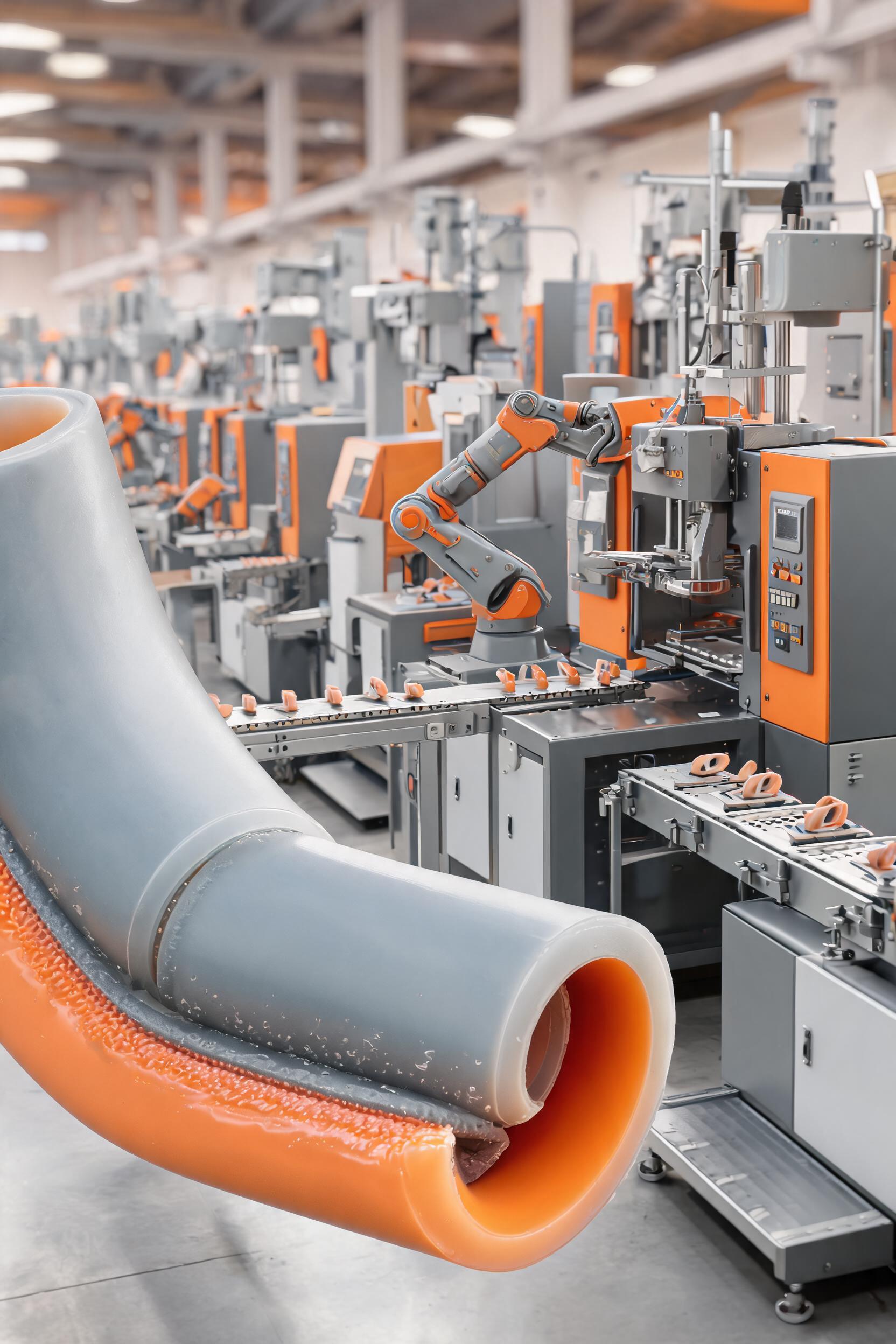
This article covers the full processing flow of self-adhesive waterproof silicone rubber sheaths, sorting out technical requirements for key processes including raw material selection, injection molding, surface treatment, and self-adhesive layer lamination. It analyzes causes of common problems such as poor adhesion, waterproof failure and size deviation, and provides targeted optimization solutions combined with mass production practice, helping manufacturers improve the waterproof sealing performance and self-adhesion reliability of sheaths to meet the application needs of outdoor electronics, new energy cables and other fields.
Self-adhesive waterproof silicone rubber (SR) sheaths are critical protective components for outdoor electronic devices, automotive wiring harnesses, solar junction boxes, and marine electrical systems, combining excellent UV resistance, low-temperature flexibility, and inherent water repellency of liquid silicone rubber (LSR) with pressure-sensitive self-adhesive layers that eliminate the need for secondary fastening. Unlike traditional extruded rubber sheaths, these components require strict control of substrate formulation, adhesive bonding interface, and curing synchronization to meet IP67/IP68 waterproof ratings and 10+ year service life in harsh environments. This guide systematically breaks down the entire processing workflow, from material selection to quality validation, addressing common failure points such as adhesive delamination, insufficient waterproof sealing, and poor dimensional stability during mass production.
The performance of the final sheath is 70% determined by the LSR substrate formulation, which must balance mechanical properties, weather resistance, and compatibility with the self-adhesive layer. Unlike general-purpose LSR, formulations for self-adhesive waterproof applications require targeted modifications to improve interfacial bonding and long-term water immersion stability.
The base polymer for self-adhesive sheaths is typically vinyl-terminated polydimethylsiloxane (PDMS) with a molecular weight range of 60,000–80,000 g/mol, chosen to balance flowability during molding and mechanical strength after curing. A dual crosslinking system combining hydrogen-containing silicone oil (crosslinker) and a platinum-based catalyst is standard, with the hydrogen-to-vinyl (H/Vi) molar ratio adjusted to 1.2:1–1.5:1 to avoid unreacted residual groups that could migrate to the adhesive interface and cause delamination.
Table 1: Standard LSR Substrate Formulation for Self-adhesive Waterproof Sheaths
For applications requiring long-term water immersion (e.g., marine equipment), 5–8 phr of fluorinated silicone oil is added to the formulation to reduce water absorption by 40–50% compared to standard LSR, with water absorption rate dropping to <0.1% after 1000 hours of 30°C water immersion. For low-temperature applications down to -60°C, 10–15 phr of phenyl-modified PDMS is incorporated to maintain a glass transition temperature (Tg) of ≤-70°C, preventing brittleness and cracking in cold climates.
Poor compatibility between the LSR substrate and pressure-sensitive adhesive (PSA) layer is the leading cause of sheath delamination and waterproof failure. The key to improving compatibility is introducing reactive functional groups on the LSR surface that can covalently bond with the adhesive, rather than relying solely on physical adsorption.
Two common modification strategies are used in production:
It is critical to avoid adding excess low-molecular-weight silicone oil to the LSR formulation, as these components will bloom to the surface over time, forming a weak boundary layer that reduces adhesive bond strength by 60% or more within 6 months of service. Formulations for self-adhesive sheaths must limit free low-molecular-weight silicone content to <0.5 wt%, verified via solvent extraction testing.
The molding process directly impacts the dimensional accuracy, flash control, and internal defect rate of the SR sheath, all of which are critical for achieving consistent waterproof performance. Self-adhesive sheaths often have complex geometries, including sealing ribs, wire entry ports, and mounting tabs, requiring tight dimensional tolerances of ±0.05 mm for sealing surfaces to ensure a perfect fit with the protected component.
LSR injection molding is the most efficient process for mass-producing self-adhesive sheaths, with a typical cycle time of 30–60 seconds per part depending on wall thickness. Unlike thermoplastic injection molding, LSR processing requires precise control of material temperature, injection speed, and curing conditions to avoid defects such as air bubbles, incomplete filling, and under-curing.
Table 2: Standard LSR Injection Molding Parameters for Self-adhesive Sheaths
For sheaths with integrated sealing ribs (0.3–0.5 mm height), a sequential injection strategy is used, filling the rib features first at low speed (20–30 mm/s) before increasing speed to fill the main body of the sheath. This reduces shear stress on the thin rib sections, preventing breakage or dimensional deviation. Vacuum venting of the mold cavity (vacuum level ≤ -0.09 MPa) is mandatory to eliminate air bubbles, which would create leakage paths that compromise waterproof performance.
Part ejection requires special attention to avoid damaging the soft LSR surface. Ejector pins with rounded edges and a polished surface finish (Ra ≤ 0.2 μm) are used, and a low-release-force mold coating (e.g., PTFE-based nanocoating) is applied to reduce ejection force by 40–50% compared to uncoated steel molds. This eliminates the need for external release agents, which would contaminate the adhesive bonding surface and reduce peel strength.
Even with optimized in-mold curing, 2–5% of unreacted crosslinker and low-molecular-weight components remain in the LSR part, which can migrate to the adhesive interface over time. Post-molding baking (secondary curing) is required to remove these residual components and complete the crosslinking reaction.
The standard secondary curing process for self-adhesive sheath substrates is 2 hours at 120°C in a forced-air oven. This process:
Common post-molding defects and their mitigation strategies include:
The self-adhesive layer is the core functional component that ensures the sheath adheres tightly to the protected surface and maintains waterproof integrity. The adhesive layer must balance high initial tack, long-term bonding durability, and water resistance, while maintaining flexibility to match the LSR substrate’s elongation at break.
Acrylic PSAs are the most common choice for self-adhesive waterproof SR sheaths, as they offer excellent UV resistance, low water absorption, and good compatibility with modified LSR surfaces. For high-temperature applications (≥120°C), silicone-based PSAs are used, offering continuous service temperatures up to 180°C, though at a 2–3x higher cost than acrylic alternatives.
Table 3: Performance Comparison of Common Adhesive Materials for SR Sheaths
For most outdoor applications, a crosslinked acrylic PSA with a glass transition temperature of -40°C to -30°C is selected, offering a good balance of low-temperature flexibility and high-temperature shear resistance. The adhesive is typically coated in a solvent-based form (30–40% solid content) to ensure uniform wetting of the LSR surface, though water-based acrylics are increasingly used for low-VOC production requirements.
The coating process uses a precision slot-die coater, which can control adhesive thickness with an accuracy of ±5 μm. Standard adhesive thickness for waterproof sheaths is 50–80 μm: too thin (<40 μm) leads to insufficient tack and poor gap-filling ability for rough surfaces, while too thick (>100 μm) increases the risk of adhesive oozing during application and reduces high-temperature shear resistance.
Key coating process parameters:
After coating, the adhesive layer and LSR substrate must undergo a series of validation tests to ensure long-term performance in harsh environments. The minimum performance requirements for IP68-rated self-adhesive sheaths are listed below:
For automotive wiring harness applications, additional resistance to engine oil, transmission fluid, and road salt is required, with peel strength retention ≥70% after 500 hours of immersion in the relevant fluids at 60°C.
Even with optimized material and process parameters, mass production of self-adhesive waterproof SR sheaths requires strict quality control at every stage to avoid batch failures. The following section outlines key quality inspection points and root cause analysis for common failure modes.
Quality control must be implemented at three key stages of production to catch defects early and reduce scrap rates:
Table 4: Common Failure Modes and Root Cause Solutions
| Adhesive delamination after 3–6 months of outdoor use | 1. Excess low-m