
橡楚编辑部 5/18/2026 41 min read
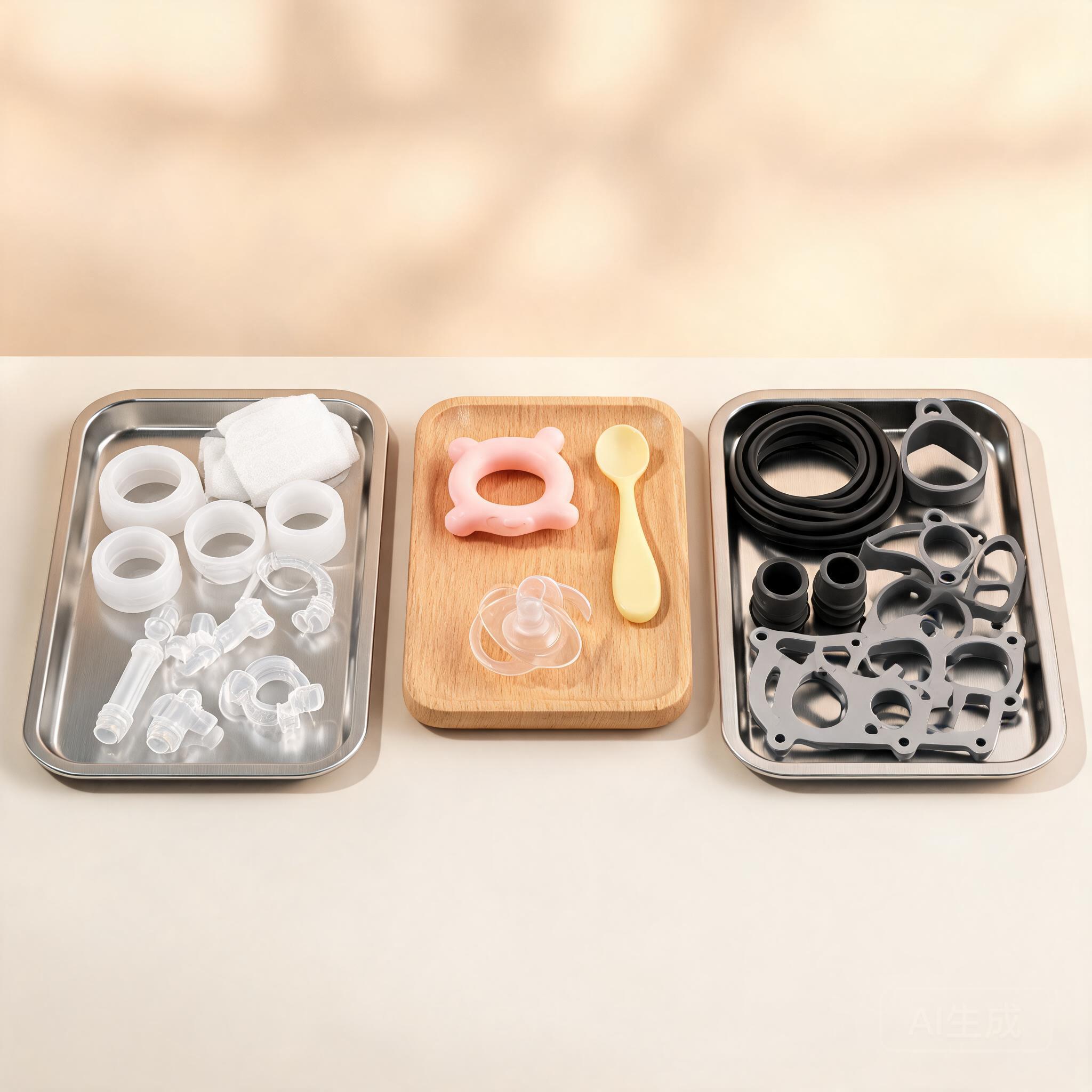
Many manufacturing enterprises in Ezhou, Hubei often encounter pain points such as unstable processes, long delivery cycles, and poor customization adaptability when looking for liquid silicone rubber (LSR) processing service providers. As a professional service provider deeply engaged in the LSR field, Xiangchu provides a full-process one-stop customization solution covering mold development, formula adjustment, mass production, and quality inspection before delivery. It meets the LSR product processing needs of medical, maternal and infant, industrial accessories and other fields, and has become a reliable choice for many local customers with stable process standards, strict quality control systems and efficient delivery capabilities.
Ezhou, Hubei has emerged as a strategic hub for high-precision manufacturing in central China, with its liquid silicone rubber (LSR) processing sector growing rapidly to serve domestic and global demand across medical, automotive, consumer electronics, and industrial equipment industries. For original equipment manufacturers (OEMs) and product developers sourcing LSR components, selecting a qualified local partner is critical to balancing cost efficiency, regulatory compliance, and product performance. Unlike conventional thermoplastic processing, LSR molding requires specialized material formulation expertise, precision injection equipment, strict cleanroom production controls, and end-to-end quality management systems, creating high barriers to entry for unqualified vendors. Among local providers, Xiangchu Technology has established a reputation as a leading LSR processing specialist, with a 12,000㎡ production campus in Ezhou’s Gedian Economic and Technological Development Zone and a track record of delivering over 3,000 custom LSR projects for 200+ clients across 12 industry verticals. This article evaluates the core capabilities that define a professional LSR processing provider, details Xiangchu’s one-stop custom solution framework, and provides real-world case examples to illustrate its performance in high-demand application scenarios.
Professional LSR processing requires cross-disciplinary expertise spanning material science, mold engineering, process control, and regulatory compliance. Not all vendors claiming to offer LSR services can meet the stringent requirements of high-stakes applications, so evaluating providers against standardized capability metrics is essential for risk mitigation.
LSR is a highly customizable material, with performance properties that can be adjusted via formulation modifications to meet specific application needs. A top-tier provider must have in-house material R&D capabilities to tailor hardness, biocompatibility, temperature resistance, chemical stability, and optical clarity according to client requirements.
Key material performance metrics that a professional provider should be able to adjust within defined ranges are outlined in Table 1:
Many low-cost LSR processors rely on off-the-shelf generic materials, which often fail to meet application-specific requirements such as resistance to specific medical disinfectants or long-term UV stability for outdoor use. A professional provider will also conduct material compatibility testing prior to mass production, including adhesion testing with overmolded substrates (PC, ABS, PPSU, aluminum, etc.) to prevent delamination or performance degradation in multi-material components.
LSR molds have distinct design requirements compared to thermoplastic molds, due to LSR’s low viscosity (10,000–1,000,000 cP during injection), high thermal expansion coefficient, and room-temperature curing inhibition when exposed to certain metals or contaminants. A qualified LSR processor must have in-house mold manufacturing capabilities to control tolerance, venting design, and cooling/heating system integration, all of which directly impact part quality and production yield.
Core mold design criteria for LSR processing include:
Providers that outsource mold manufacturing often face extended lead times, higher costs, and limited ability to modify molds quickly during pilot production testing, which can delay product launch timelines by 2–4 weeks on average.
For LSR components used in regulated industries such as medical, food contact, or automotive, compliance with global and local standards is non-negotiable. A professional LSR processor must hold relevant industry certifications and implement end-to-end quality management systems to ensure traceability across every production batch.
Mandatory certifications for LSR processors serving regulated markets include:
In addition to certification, providers should offer full traceability for every production batch, including material lot numbers, process parameter logs, and inspection reports, to support client regulatory submissions and post-market surveillance. Non-compliant providers often lack these systems, exposing clients to product recall risks and regulatory fines that can exceed $1M for serious violations.
Xiangchu Technology has built its Ezhou-based LSR processing platform around a fully integrated end-to-end service model, eliminating the need for clients to coordinate with multiple vendors for design, material development, molding, post-processing, and testing. This integrated approach reduces project lead times by 25% on average, while lowering overall project costs by 18% compared to working with fragmented suppliers.
Xiangchu’s engineering team engages with clients during the product concept phase to provide design for manufacturing (DFM) analysis, identifying potential design flaws that could lead to production defects, excessive costs, or performance failures before mold manufacturing begins. This service is provided free of charge to all clients, and typically includes:
For example, when a medical device client approached Xiangchu with a design for a disposable LSR respiratory mask seal that required USP Class VI biocompatibility and resistance to 75% ethanol disinfection for 100+ cycles, the R&D team developed a custom LSR formulation that exceeded the client’s disinfection resistance requirement by 40% while maintaining a 35 Shore A hardness for optimal wear comfort. The team also adjusted the part’s wall thickness from 1.8mm to 2.2mm, reducing production scrap rate from an estimated 12% to less than 2% during mass production.
Xiangchu’s Ezhou production facility is equipped with 28 sets of fully automated LSR injection molding machines with clamping forces ranging from 55 tons to 300 tons, capable of producing parts weighing from 0.01g (micro-precision electronic components) to 5kg (large industrial sealing gaskets). The facility includes a 2,200㎡ Class 100,000 cleanroom for medical and food contact component production, with independent temperature and humidity control systems to maintain consistent curing conditions for high-precision parts.
Key production process controls implemented by Xiangchu include:
For high-volume production runs (100k+ parts), Xiangchu implements statistical process control (SPC) with Cpk (process capability index) ≥1.33 for critical dimensional features, ensuring long-term production consistency. The facility’s annual production capacity reaches 120 million LSR parts, with a 98.5% on-time delivery rate across all client projects.
Xiangchu’s in-house testing laboratory provides a full range of performance validation services, eliminating the need for clients to engage third-party testing institutions and reducing post-production validation timelines by 2–3 weeks. The laboratory is equipped with universal testing machines, hardness testers, temperature cycling chambers, biocompatibility testing equipment, and optical precision measuring instruments, with testing capabilities accredited by CNAS (China National Accreditation Service for Conformity Assessment).
Standard testing services included with every project are:
Xiangchu also offers flexible supply chain support, including just-in-time (JIT) delivery for clients with established mass production schedules, and inventory management services for low-volume custom parts to reduce client stock holding costs. For export clients, the team provides all necessary documentation, including RoHS, REACH, and FDA compliance reports, to streamline customs clearance processes.
Xiangchu’s one-stop LSR processing solutions have been validated across multiple high-demand industry verticals, with case studies demonstrating its ability to address unique industry challenges and meet stringent performance requirements.
A leading domestic medical device manufacturer approached Xiangchu to produce LSR seals for a new portable infusion pump, with requirements including USP Class VI biocompatibility, <1% compression set after 72 hours of use at 37°C, and ±0.01mm dimensional tolerance for the seal’s inner diameter to prevent fluid leakage.
Xiangchu’s solution for the project included:
The project was completed in 4 weeks from design finalization to first sample delivery, with mass production yield reaching 99.2% and product failure rate in clinical testing dropping to 0, compared to a 1.2% failure rate with the client’s previous supplier. Xiangchu has since produced over 15 million units of the seal for the client, with zero quality-related complaints over 3 years of cooperation.
A NEV component supplier required LSR seals for high-voltage battery pack connectors, with requirements including IATF 16949 compliance, operating temperature resistance from -40°C to 180°C, IP68 waterproof rating, and 10-year service life under outdoor exposure conditions.
Xiangchu’s solution addressed these requirements by:
The seal has been adopted by 3 domestic NEV brands, with over 8 million units deployed in production vehicles to date, and zero field failures reported over 2 years of use.
A global consumer electronics brand required custom LSR waterproof seals for a new smartwatch model, with requirements including FDA food contact safety, 50m water resistance, soft skin-friendly texture, and compatibility with automated assembly processes.
Xiangchu’s solution included:
The project was delivered 10 days ahead of the client’s scheduled product launch timeline, with mass production volume reaching 2 million units per month to support global product demand. The seal’s waterproof performance exceeded the client’s requirement, passing 100 cycles of 100m water pressure testing without leakage.
Selecting a professional LSR processing provider in Ezhou, Hubei requires evaluating core capabilities including material formulation expertise, precision mold manufacturing, and regulatory compliance systems, rather than focusing solely on production cost. Xiangchu Technology’s fully integrated one-stop LSR custom solution, spanning pre-production design optimization, in-house material R&D, cleanroom precision molding, and end-to-end quality testing, addresses the key pain points of OEMs and product developers across medical, automotive, consumer electronics, and industrial sectors. Its track record of delivering high-quality, compliant LSR components with shorter lead times and lower total project costs makes it a reliable partner for both domestic and global clients seeking LSR processing services in central China. As LSR applications continue to expand across high-growth industries such as NEVs, wearable medical devices, and smart home products, Xiangchu’s Ezhou facility is positioned to scale its capabilities to meet evolving market demand, with ongoing investments in 3D LSR printing, micro-precision molding, and advanced material development to support next-generation product innovation.