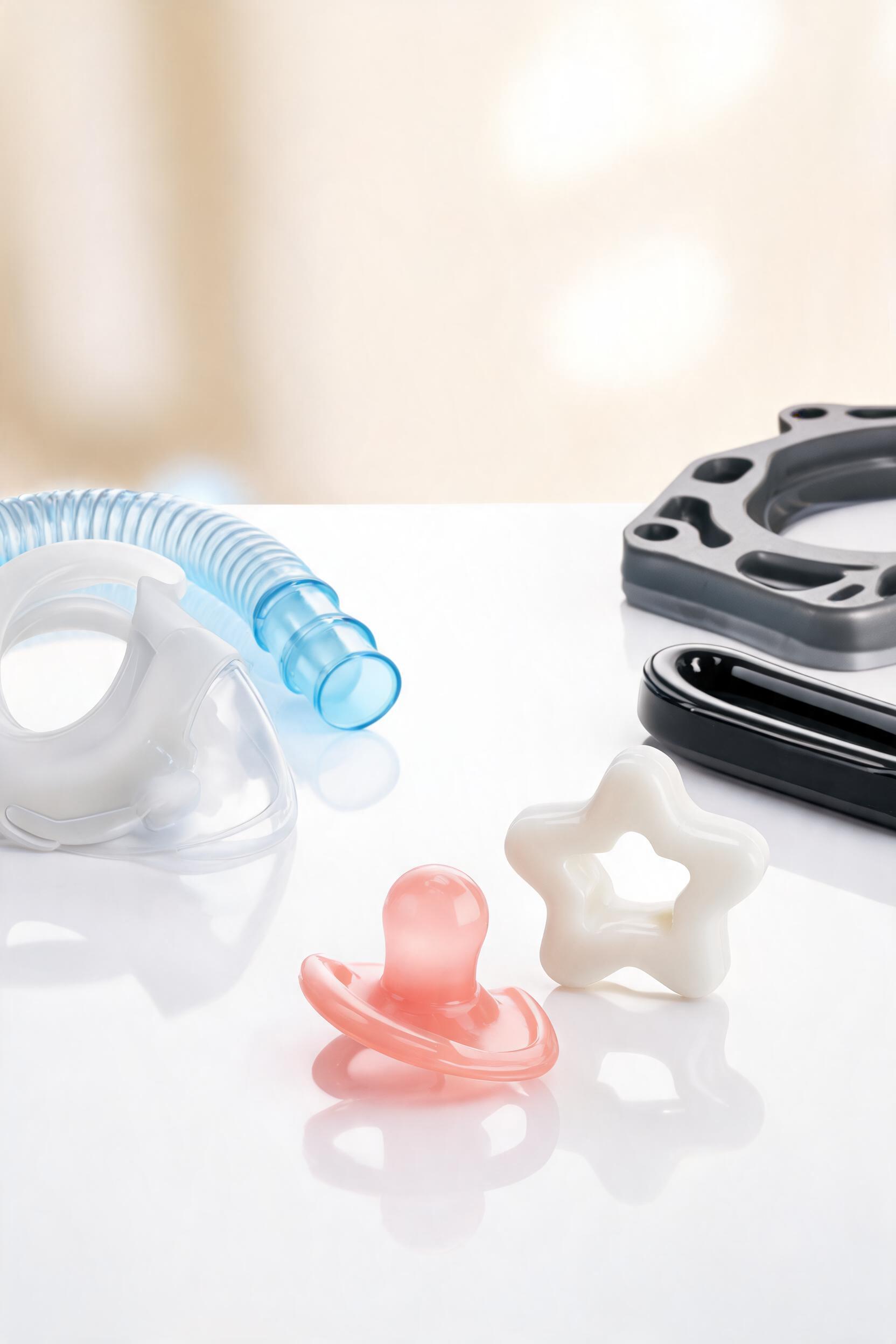
Liquid silicone rubber (LSR) has emerged as a preferred material for critical applications across medical, automotive, consumer electronics, and food contact industries due to its exceptional biocompatibility, thermal stability (-60°C to 220°C operating range), UV resistance, and long-term durability. For brands and original equipment manufacturers (OEMs) seeking to leverage LSR’s unique properties, OEM/ODM liquid silicone product customization offers a tailored pathway to turn conceptual designs into high-volume, performance-validated end products. Unlike off-the-shelf LSR components, customized solutions address specific application constraints, from strict regulatory compliance requirements to complex geometric features that cannot be achieved with standard molding processes.
This guide provides a structured framework for navigating the OEM/ODM LSR customization process, from initial partner selection to post-launch quality control, with actionable technical benchmarks and best practices to minimize production risks and ensure end-product performance aligns with design intent.
Pre-Customization Planning: Defining Project Requirements and Material Selection
The success of any LSR customization project depends on clear, quantified requirement definition before engaging a manufacturing partner. Ambiguous specifications are the leading cause of production delays, cost overruns, and performance failures, accounting for 32% of LSR customization project setbacks according to a 2024 industry survey by the Liquid Silicone Rubber Association.
Core Performance and Regulatory Requirement Documentation
First, teams must formalize all non-negotiable performance and compliance criteria, organized by priority to avoid tradeoffs that compromise core functionality. Key parameters to document include:
- Mechanical specifications: Tensile strength (minimum 3-12 MPa for most applications), elongation at break (100-1000%), shore hardness (Shore 00-10 to Shore A 70 for most LSR grades), tear resistance, and compression set (<10% for 22 hours at 150°C for sealing applications)
- Environmental operating conditions: Temperature range, exposure to chemicals (oils, acids, bases), UV radiation, or sterilization cycles (autoclaving, ethylene oxide (EtO), gamma irradiation)
- Regulatory compliance mandates: List of applicable standards including FDA 21 CFR Part 177.2600 for food contact, ISO 10993 for medical devices, IATF 16949 for automotive components, or RoHS 2.0 for consumer electronics
- Volume and cost targets: Expected annual production volume, unit cost ceiling, and lead time constraints for prototyping and mass production
For cross-functional alignment, all requirements should be documented in a product requirement document (PRD) shared with all stakeholders, including design, quality, and supply chain teams, before approaching ODM partners.
LSR Material Grade Selection for Custom Applications
LSR is available in hundreds of formulated grades, each optimized for specific use cases. Selecting the wrong grade is a common avoidable error, as material properties directly impact part performance and regulatory eligibility. The table below outlines common LSR grades and their applicable use cases:
LSR Grade TypeKey PropertiesTypical ApplicationsCompliance Standards
Standard Industrial LSRGood electrical insulation, moderate thermal resistanceConsumer electronics gaskets, keypad buttonsRoHS 2.0, REACH
Food Contact LSRNon-toxic, odorless, resistant to oil and high temperaturesBaby bottle nipples, baking molds, kitchen utensilsFDA 21 CFR Part 177.2600, EU 10/2011, GB 4806.11 (China)
Medical Grade LSRBiocompatible, sterilization-resistant, low extractablesSurgical instruments, implantable components, wound dressingsISO 10993 (parts 1,5,10), USP Class VI
High-Temperature LSROperating range up to 300°C, low thermal degradationAutomotive under-hood seals, industrial oven gasketsIATF 16949, UL 94 V-0 flame retardant
Self-Lubricating LSRInternal lubricant additives reduce friction by 30-50%O-rings for dynamic sealing, medical device moving componentsISO 10993, FDA food contact (selected grades)
For applications with unique requirements, such as electrical conductivity or optical transparency, ODM partners can develop custom LSR blends with additives including carbon black, aluminum oxide, or optical brighteners. It is critical to validate that any custom additives do not compromise regulatory compliance for the target market.
Selecting a Qualified OEM/ODM LSR Customization Partner
Not all LSR manufacturers have the capabilities to deliver high-quality customized parts at scale. Partner selection requires evaluating technical capabilities, regulatory expertise, and end-to-end support, rather than choosing based solely on unit cost. A 2023 case study by a leading medical device manufacturer found that selecting a low-cost LSR partner without medical certification led to a 6-month product launch delay and $2.1M in rework costs.
Core Manufacturing Capability Assessment
First, verify that the partner has the equipment and process expertise to produce your part design at the required volume. Key capabilities to evaluate include:
- Molding equipment capacity: Confirm the number and tonnage of LSR injection molding machines (standard range: 50-500 tons) to match your part size and production volume. For high-volume projects (>1M units/year), look for partners with automated injection lines with robotic part removal to reduce labor costs and minimize human error.
- Tooling in-house capabilities: LSR tooling requires precision machining with tolerances as tight as ±0.005 mm, due to the low viscosity of LSR raw material that can cause flash even with minor tool gaps. Partners with in-house CNC and EDM tooling shops can reduce tooling lead times by 30-50% and resolve tooling defects faster than outsourced providers.
- Secondary processing capacity: Many custom LSR parts require post-molding processing including:
- Overmolding to thermoplastics (PC, ABS, PA) or metal inserts for multi-material assemblies
- Plasma treatment for improved adhesion to other materials
- Die-cutting, printing, or assembly of sub-components
- Cleanroom facilities: For medical or food contact applications, verify the partner has ISO Class 7 or 8 cleanroom production environments, with regular environmental monitoring for particulate and microbial contamination.
Regulatory and Quality Management System Verification
Compliance is non-negotiable for regulated industries, so partners must have documented quality systems and third-party certifications. Required verifications include:
- Validated certifications: Request current copies of ISO 9001 (general quality), plus industry-specific certifications (IATF 16949 for automotive, ISO 13485 for medical) relevant to your product. Certifications should be issued by accredited third-party bodies such as TÜV SÜD or SGS.
- Material traceability systems: The partner should have a batch traceability system that tracks raw material lots from receipt to finished product shipment, with records retained for 3-10 years depending on regulatory requirements. For medical devices, traceability must extend to individual serial numbers for implantable components.
- Testing laboratory capabilities: In-house testing labs reduce validation timelines by eliminating the need for third-party testing for routine parameters. Look for labs equipped to perform:
- Mechanical testing (tensile, tear, compression set)
- Material composition analysis (FTIR, DSC)
- Regulatory compliance testing (extractables and leachables for medical products, migration testing for food contact)
- Accelerated aging testing to validate product shelf life
Before finalizing a partnership, request references from customers in your industry with similar part complexity and compliance requirements, and conduct an on-site audit if possible to verify stated capabilities.
Customization Process Workflow: From Prototyping to Mass Production
A structured, transparent workflow is critical to minimizing delays and ensuring the final product meets all specifications. Experienced LSR ODM partners follow a standardized phase-gated process, with formal sign-offs at each stage before moving to the next.
Prototyping and Design for Manufacturing (DFM) Optimization
The prototyping phase validates design functionality and identifies manufacturing feasibility issues before investing in high-cost production tooling. Common LSR prototyping methods include:
- CNC milling of solid LSR blocks: Best for low-volume prototypes (1-10 units) with simple geometries, with a lead time of 3-7 days. Tolerance range is ±0.05 mm, and material properties are consistent with production-grade LSR.
- 3D printing with liquid photopolymer LSR: Suitable for complex geometries with undercuts or internal channels, with a lead time of 1-3 days. Note that printed LSR has slightly lower mechanical performance (10-15% lower tensile strength) than molded LSR, so it is best for form and fit testing, not performance validation.
- Soft aluminum prototype tooling: For prototype runs of 50-500 units, soft aluminum tooling offers production-equivalent material performance at 50-70% lower cost than steel production tooling, with a lead time of 10-15 days. This method is ideal for performance and regulatory validation testing.
After initial prototyping, the ODM partner will conduct a formal DFM analysis to identify design modifications that reduce production cost and improve part quality. Common DFM recommendations for LSR include:
- Adding draft angles of 1-3° to vertical walls to facilitate part ejection
- Increasing minimum wall thickness to 0.2-0.5 mm (depending on part size) to avoid incomplete filling
- Eliminating sharp corners that can cause stress concentrations and reduce part lifespan
- Designing flash grooves into the tool to contain excess material, reducing post-molding trimming labor
All DFM modifications should be documented and signed off by your design team before proceeding to production tooling fabrication.
Tooling Fabrication and Process Validation
Production tooling for LSR is typically made of P20 or S136 hardened steel, with a lifespan of 500,000 to 2 million molding cycles depending on part complexity and abrasive content in the LSR formulation. The tooling fabrication process includes:
- Tool design finalization: 3D CAD models of the mold, including gating systems, cooling channels, and ejection mechanisms, are shared for customer approval. LSR molds use cold runner systems for most applications to reduce material waste, while hot runner systems are used for high-volume production of small parts to reduce cycle time.
- Machining and surface treatment: Tool cavities are machined to the required tolerance, with surface finishes ranging from SPI A-1 (high gloss) to SPI D-3 (matte) depending on part requirements. For medical parts, electropolishing of tool cavities reduces microbial adhesion and simplifies cleanroom cleaning.
- Trial runs (T0, T1, T2 phases):
- T0 trial: First molding run with the new tool to identify tooling defects such as flash, incomplete filling, or dimensional deviations. 5-50 samples are produced for inspection.
- T1 trial: After tooling adjustments, 50-200 samples are produced for dimensional, performance, and compliance testing.
- T2 trial: Final validation run of 200-500 samples to confirm process stability, with all samples meeting specification limits.
- Process parameter validation: The ODM will document all molding parameters including injection pressure (100-200 bar), mold temperature (150-200°C), cure time (10-60 seconds depending on part thickness), and raw material pre-treatment conditions. These parameters are locked in for mass production to ensure consistent part quality.
A production part approval process (PPAP) package, including dimensional inspection reports, material test certificates, and compliance documentation, is provided for customer sign-off before mass production begins.
Mass Production and Quality Control
During mass production, the ODM implements a layered quality control system to ensure 100% of parts meet specifications. Standard quality control measures include:
- In-process inspection: Line operators perform visual checks for flash, bubbles, and dimensional deviations every 30 minutes, with SPC (statistical process control) monitoring of key parameters to detect process drift before it causes defects.
- Batch testing: For every 5,000-10,000 parts produced, a sample is pulled for mechanical and compliance testing to confirm consistency with PPAP-approved samples.
- Final inspection: 100% of finished parts undergo visual inspection, with dimensional inspection of 0.5-5% of parts depending on application criticality. For medical devices, 100% dimensional inspection may be required for high-risk components.
For custom projects, customers can request tailored quality control measures, such as unique serialization of each part, custom packaging, or third-party inspection of finished batches before shipment.
Cost Optimization and Risk Mitigation in LSR Customization
LSR customization costs can vary by 200-300% depending on design choices, material selection, and production planning. Proactive cost optimization and risk mitigation can reduce total project costs by 20-40% while minimizing the likelihood of production disruptions.
Key Cost Drivers and Reduction Strategies
The largest cost components of LSR customization are tooling (15-30% of total project cost for low-volume runs), raw material (30-50% of unit cost), and labor (20-35% of unit cost). The following strategies reduce costs without compromising quality:
- Tooling cost optimization: For multi-part product lines, design family molds that produce multiple part types in a single molding cycle, reducing total tooling cost by 30-50% compared to individual molds for each part. For low-volume projects (<100,000 units/year), use semi-hardened P20 steel tooling instead of S136 steel to reduce tooling cost by 25-35%, with a still-acceptable lifespan of 100,000-300,000 cycles.
- Material cost reduction: Work with your ODM to select the lowest-cost material grade that meets all performance and compliance requirements. For example, standard food contact LSR is 20-30% cheaper than medical grade LSR, and is sufficient for many kitchen and baby product applications that do not require biocompatibility for implantation. Avoid over-specifying material properties (e.g., selecting a 10 MPa tensile strength grade when 5 MPa is sufficient) to reduce raw material costs.
- Labor cost reduction: Design parts to minimize post-molding processing. For example, adding flash grooves to the tool eliminates the need for manual trimming, reducing labor cost by 10-20% per part. For overmolded parts, design the assembly to eliminate the need for adhesive bonding, which is labor-intensive and increases defect risk.
Table 2 shows a sample cost breakdown for a custom LSR baby bottle nipple project, with cost reduction impacts:
Cost ComponentBaseline CostOptimized CostReduction Strategy
Tooling$12,000$8,400Use P20 steel instead of S136, add 2 cavities to increase output
Raw Material$0.18/unit$0.14/unitSwitch from medical grade to food contact LSR (sufficient for FDA requirements)
Labor$0.07/unit$0.04/unitAdd flash grooves to tool to eliminate manual trimming
Total Unit Cost (1M units)$0.30/unit$0.24/unit20% total cost reduction
Common Risk Factors and Mitigation Plans
Even with thorough planning, LSR customization projects face common risks that can delay launches or increase costs. Proactive mitigation addresses these risks before they impact the project:
- Material supply chain disruptions: LSR raw material lead times can increase to 8-12 weeks during global supply shortages. Mitigate this risk by approving 1-2 alternate LSR grades from different suppliers during the DFM phase, and requiring your ODM to maintain 4-8 weeks of safety stock of raw material for your project.
- Regulatory non-compliance: Changes to regional regulations (e.g., updated EU food contact migration limits) can make previously approved parts non-compliant. Mitigate this by selecting an ODM with a dedicated regulatory team that monitors global standard updates, and including regulatory change clauses in your manufacturing contract that require advance notification of required material or process modifications.
- Unforeseen tooling wear: For high-volume projects, tool wear can cause dimensional deviations before the end of the tool’s expected lifespan. Mitigate this by including a tool maintenance clause in your contract that requires the ODM to perform regular tool inspections and repairs at their cost, and to have a backup tool available for production if the primary tool requires maintenance.
Conclusion
OEM/ODM liquid silicone product customization is a highly collaborative process that requires clear requirement definition, careful partner selection, and structured workflow management to deliver high-performance, cost-effective parts that meet industry-specific regulatory requirements. By documenting performance and compliance criteria upfront, selecting a partner with proven LSR expertise and relevant certifications, and leveraging DFM optimization and cost reduction strategies, brands can reduce project risks, shorten time-to-market, and maximize the value of their LSR product investments.
As LSR material formulations and molding technologies continue to advance, customization partners are increasingly offering value-added services including sustainable LSR grades (30-50% recycled content) and digital twin simulation of molding processes to further reduce prototyping timelines and production waste. For brands looking to differentiate their products in regulated markets, partnering with an experienced LSR ODM is not just a manufacturing decision, but a strategic investment in long-term product performance and customer satisfaction.