
橡楚编辑部 7/17/2026 47 min read
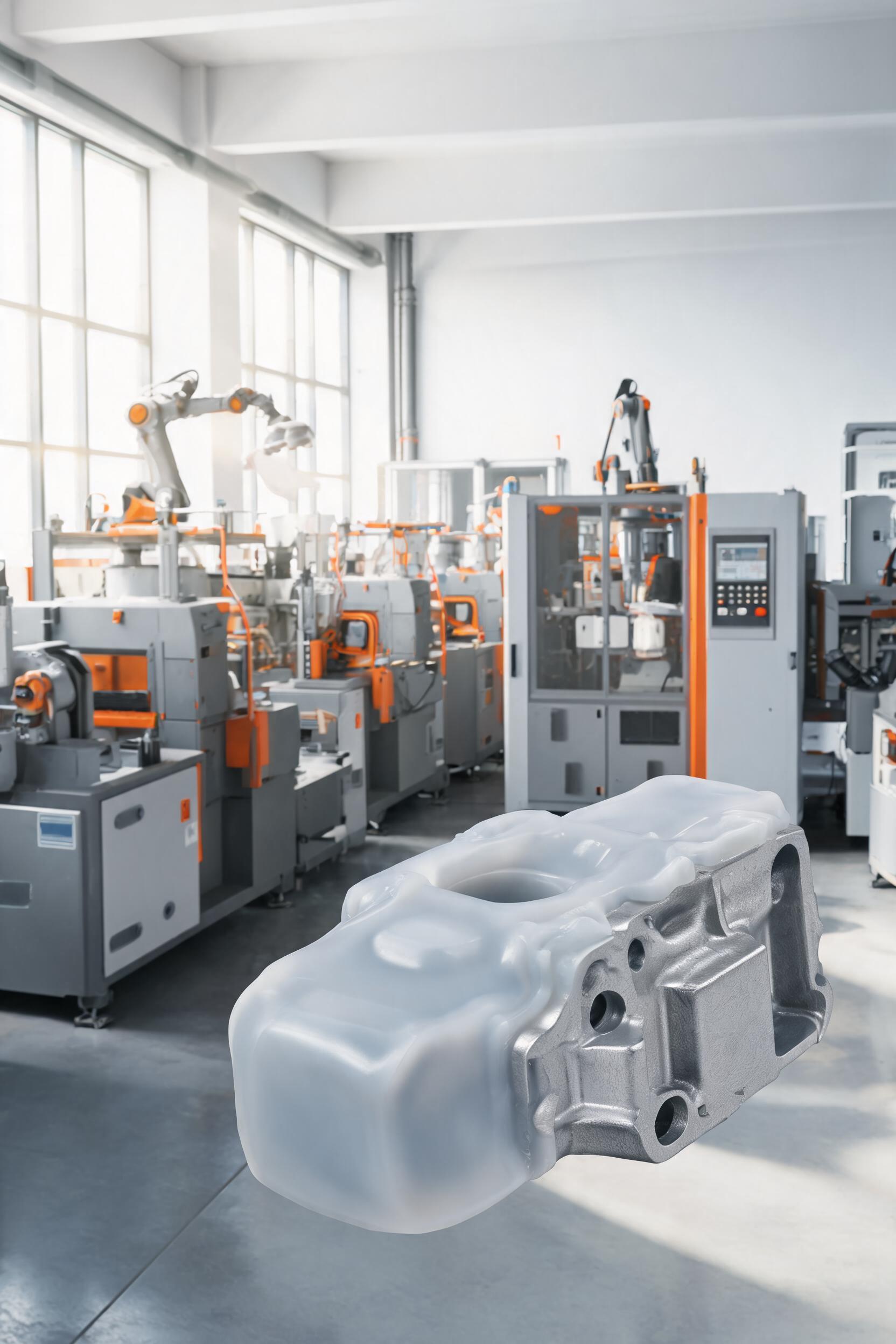
Metal composite silicone molded parts are composite components manufactured by integrating liquid silicone rubber (LSR) and metal substrates through one-step molding process. They combine the high elasticity, temperature resistance, insulation and sealing properties of silicone with the structural strength, thermal and electrical conductivity of metals, meeting special application requirements in medical, automotive, electronics and other industries. This article systematically sorts out the key preparation process points, performance optimization methods and typical application directions of such molded parts, providing references for production selection and quality control.
Metal composite silicone molded parts, or 金属复合硅胶成型件 in Chinese, are advanced multi-material components that integrate the high strength, rigidity, and dimensional stability of metals with the unique elasticity, biocompatibility, temperature resistance, and electrical insulation of liquid silicone rubber (LSR). These hybrid parts address critical performance gaps that single materials cannot fill, making them indispensable across medical devices, automotive electronics, new energy systems, and industrial sealing applications. For example, a high-voltage electric vehicle (EV) battery pack sealing plug combines an aluminum alloy structural insert for bolted mounting and load bearing with a flame-retardant LSR outer layer for IP68 ingress protection and thermal cycling resistance, a function that neither material could deliver independently.
The global market for metal-LSR composite parts is projected to grow at a 7.2% CAGR through 2030, driven by rising demand for miniaturized, high-reliability components in harsh-environment applications. However, their production presents unique technical challenges: achieving consistent, high-strength bonding between dissimilar materials, controlling dimensional accuracy across materials with vastly different shrinkage rates, and scaling production without compromising performance. This analysis systematically evaluates the material selection framework, advanced molding processes, performance validation methodologies, and emerging application trends of metal composite silicone molded parts, providing actionable insights for design engineers and manufacturing teams.
The performance of 金属复合硅胶成型件 is fundamentally determined by the compatibility between the metal substrate and LSR formulation, as well as the alignment of material properties with end-use operating conditions. A systematic selection process requires balancing structural requirements, environmental resistance, cost, and manufacturability.
The choice of metal substrate depends on load-bearing requirements, corrosion resistance, weight constraints, and thermal/electrical conductivity needs. Table 1 summarizes the most commonly used metals in composite parts, their key properties, and typical application scenarios:
CTE matching between the metal and LSR is a critical design parameter to avoid delamination under thermal cycling. For LSR grades with a typical CTE of 200-300 ppm/°C, CTE mismatch can generate interfacial stress up to 12 MPa during temperature swings from -40°C to 150°C, exceeding the typical LSR peel strength of 8-10 N/mm. Design teams often apply one of three mitigation strategies: selecting metals with CTE closer to LSR (e.g., aluminum alloy over stainless steel for high-temperature applications), adding a flexible adhesive intermediate layer, or incorporating stress relief grooves at the metal-LSR interface to dissipate thermally induced stress.
Standard LSR grades exhibit poor natural adhesion to metal surfaces, as their non-polar molecular structure and low surface energy prevent wetting of the high-energy metal substrate. Specialized LSR grades for composite bonding are formulated with functional additives to improve interfacial bonding, with key modifications outlined below:
For medical applications, LSR formulations must comply with ISO 10993 biocompatibility standards, requiring adhesion promoters that do not leach toxic residues during autoclaving or long-term implantation. For example, platinum-catalyzed medical-grade LSR with a silane adhesion promoter customized for titanium substrates can achieve a permanent bond with no extractables exceeding 0.1 mg/cm² after 7 days of immersion in simulated body fluid.
Even with adhesion-modified LSR, proper metal surface pretreatment is required to remove contaminants, increase surface roughness, and create reactive functional groups for bonding. Table 2 compares the performance, cost, and applicability of common pretreatment methods:
For high-volume automotive applications, a two-step process of sandblasting followed by silane primer coating is the most cost-effective approach, delivering consistent peel strength above 6 N/mm with a process cycle time of under 5 minutes per batch. For implantable medical devices, plasma treatment is preferred, as it eliminates the risk of primer residue leaching while achieving a 95% bond failure rate in the LSR bulk material rather than at the interface during peel testing.
Molding metal composite silicone parts requires precise control of insert positioning, LSR filling, crosslinking kinetics, and interfacial bonding. Traditional compression molding is increasingly being replaced by automated injection molding processes that deliver higher consistency and throughput for volume production.
Insert injection molding is the dominant process for mass production of 金属复合硅胶成型件, with a typical cycle time of 30-90 seconds depending on part size and LSR crosslinking speed. The process follows four core steps:
A key challenge in insert injection molding is controlling LSR shrinkage, which typically ranges from 1.5-3.0% for unfilled grades and 0.5-1.5% for filled grades. To compensate, mold cavities are designed with a shrinkage factor matched to the specific LSR formulation, and insert cooling channels are integrated into the mold to maintain the metal substrate at 80-100°C during injection, reducing interfacial stress caused by uneven cooling. For parts with complex 3D insert geometries, rotating core molds are used to enable overmolding of multiple LSR layers in a single cycle, reducing secondary assembly steps by 70% compared to traditional multi-step processes.
For applications requiring multi-functional LSR layers (e.g., a conductive inner layer and an insulating outer layer) or ultra-high bond strength, advanced in-mold bonding processes are used to eliminate the need for post-molding adhesive application. Two leading technologies are:
Recent innovations in in-mold sensing technology have further improved process consistency. Fiber optic temperature sensors embedded in the mold cavity monitor LSR crosslinking kinetics in real time, adjusting curing time automatically to compensate for batch-to-batch variations in LSR reactivity. This reduces part scrap rates from an industry average of 3-5% to less than 1% for high-volume production runs.
Even with optimized process parameters, 金属复合硅胶成型件 are susceptible to three common defects, with root causes and corrective actions outlined below:
In-line quality control for production parts includes 100% vision inspection for insert position and flash, non-destructive ultrasonic testing to detect interfacial voids or delamination as small as 0.1 mm, and periodic peel strength testing of sample parts to validate bond consistency.
The performance of 金属复合硅胶成型件 must be validated across mechanical, environmental, and functional parameters to ensure reliability over the intended product lifecycle. Validation protocols are tailored to end-use industry standards, with common test methodologies outlined below.
Interfacial bond strength is the most critical performance metric for composite parts, as delamination leads to immediate functional failure. Three standardized tests are used to quantify bond performance:
For load-bearing structural composite parts, additional mechanical testing includes tensile strength testing (ASTM D412), compression set testing (ASTM D395, maximum 20% after 22 hours at 125°C), and impact resistance testing (ASTM D256, no cracking after 10 impacts at 2 J energy).
Testing protocols are customized to the requirements of each end-use industry, with key standards for major sectors outlined below:
Long-term durability testing is also required for parts with a designed service life of 10+ years. Accelerated aging testing (ASTM D1149) at 150°C for 1000 hours is used to simulate 10 years of aging at room temperature, with performance metrics measured post-aging to ensure compliance with minimum requirements.
The evolution of electric mobility, wearable medical devices, and industrial automation is driving continuous innovation in metal-LSR composite part technology, with three key trends shaping the industry over the next five years.
The miniaturization of consumer electronics and medical wearables is increasing demand for micro 金属复合硅胶成型件 with feature sizes as small as 50 μm. For example, hearing aid components combine a 0.3 mm thick titanium structural insert with a 0.1 mm thick soft LSR skin for user comfort. To produce these parts, micro-injection molding technology with precision mold inserts machined via laser ablation (tolerance ±0.005 mm) is used, along with low-viscosity LSR formulations (10,000-20,000 cP) that can fill micro-cavities without displacing the delicate metal insert. Future developments in nano-scale surface pretreatment will further improve bond strength for these micro-parts, enabling even smaller form factors for implantable medical sensors.
Current composite parts use a discrete interface between metal and LSR, which is a common point of failure under extreme thermal cycling. Functionally graded material (FGM) technology is being developed to create a transition layer between the metal and LSR, with a gradual change in material composition from 100% metal to 100% LSR over a 0.1-0.5 mm thickness. This transition layer reduces interfacial stress by 60-70% compared to discrete interfaces, improving thermal cycling resistance by 300% or more. Early prototypes for aerospace applications have passed 3000 thermal cycles between -55°C and 200°C with no delamination, a performance that is impossible to achieve with traditional composite structures.
As sustainability regulations become stricter across industries, manufacturers are developing processes to reduce scrap and enable recycling of 金属复合硅胶成型件.