
橡楚编辑部 6/18/2026 46 min read
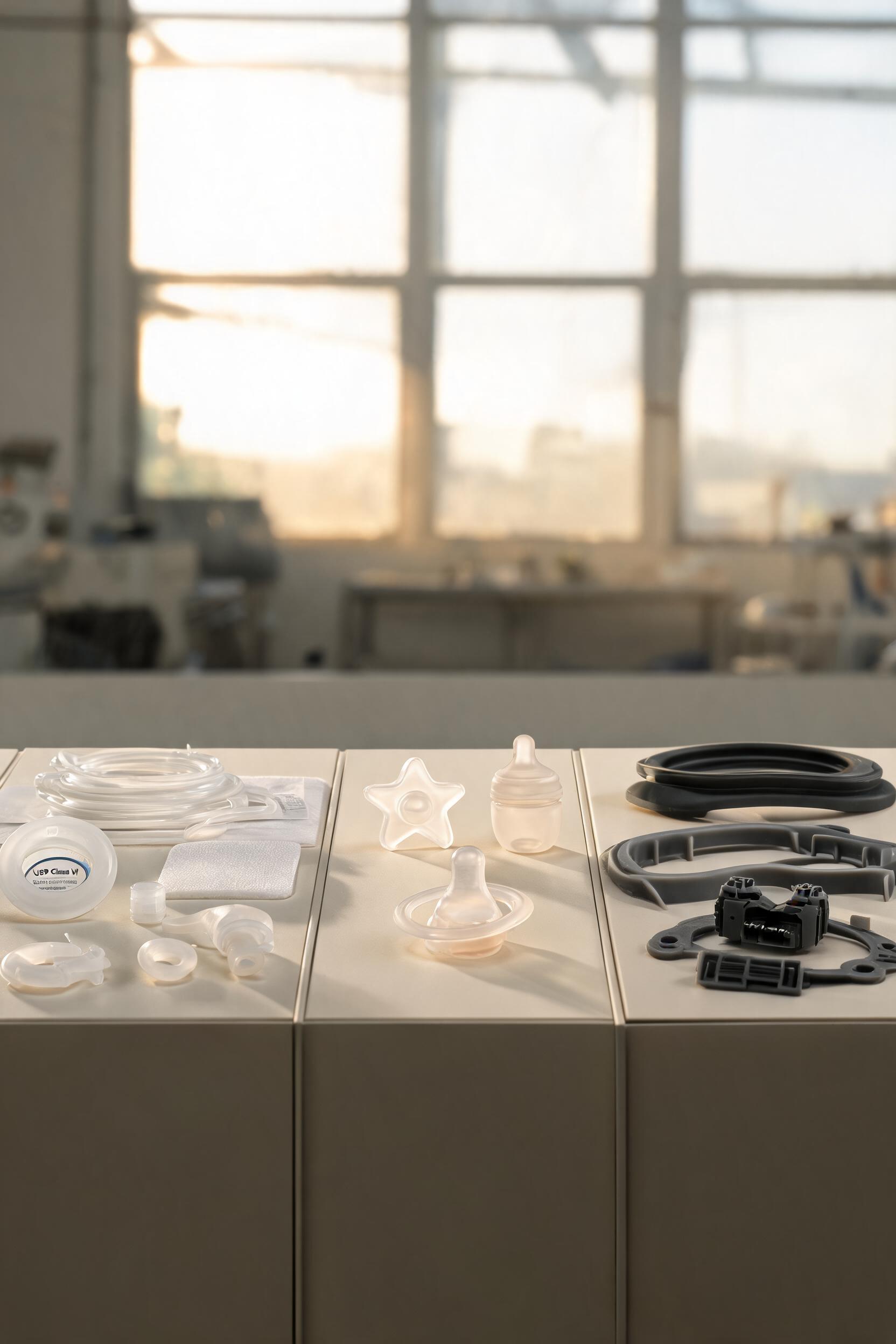
Failing biocompatibility testing is a common problem for many manufacturers producing medical silicone components. As a professional liquid silicone rubber (LSR) products manufacturer located in Ezhou, Hubei, Xiangchu Rubber holds ISO 9001 certification, and can provide medical grade LSR product solutions that meet USP Class VI requirements, helping manufacturers optimize product compliance.
Liquid Silicone Rubber (LSR) has become one of the most widely used materials for medical devices in recent decades, owing to its inherent flexibility, thermal stability, and chemical inertness. However, biocompatibility testing remains one of the most common pain points for medical device manufacturers worldwide. Many product development projects are delayed, or even scrapped entirely, when custom medical silicone components fail critical biocompatibility assessments, leading to lost time, increased costs, and missed market launch windows.
Common causes of failed biocompatibility testing for medical silicone parts include residual unreacted monomers, contaminants from processing additives, inconsistent material formulation, and poor manufacturing control. Even minor deviations in raw material purity or production processes can result in cytotoxicity, irritation, or systemic toxicity results that do not meet global regulatory requirements.
At 橡楚(湖北)橡胶有限公司, we recognize that reliable biocompatibility is non-negotiable for medical-grade LSR components. We recently updated our official product website to launch our tailored LSR medical-grade solutions, including formulations that meet the stringent requirements of USP <87> Class VI standards. Located at 湖北省鄂州市鄂城区经济开发区凡口街道内河巷54号, our facility operates under ISO 9001 quality management systems to deliver consistent, compliant LSR components for medical applications. This article explores common biocompatibility challenges for medical silicone parts, breaks down global regulatory requirements, and outlines how our tailored solutions address these critical needs.
---
Biocompatibility failures are rarely random; they almost always stem from identifiable gaps in raw material selection, formulation, or manufacturing processes. Understanding these root causes is the first step to preventing costly test failures.
The quality of base LSR raw materials is the foundation of biocompatible end products. Low-grade base silicone often contains residual volatile organic compounds (VOCs), unreacted low-molecular-weight siloxanes (LMW), and trace contaminants from upstream refining processes. These impurities leach out of finished components during testing, triggering cytotoxicity responses or other adverse biological reactions.
Table 1: Common Impurities Linked to Biocompatibility Failures
Many suppliers source uncertified base LSR from non-specialized producers to cut costs, leading to batch-to-batch inconsistency in impurity levels. A component may pass biocompatibility testing in one production run but fail in the next, creating significant regulatory risk for medical device manufacturers.
Even with high-quality raw LSR, improper processing and post-curing can introduce contaminants or leave residual byproducts that compromise biocompatibility. LSR requires cross-linking (curing) to form the finished elastic component, and this process produces trace byproducts that must be removed through controlled post-curing.
Common processing-related issues include:
At 橡楚(湖北)橡胶有限公司, we have observed that up to 40% of biocompatibility failures we see from customer-submitted third-party parts are caused by poor post-curing practices alone. A 2022 industry survey of medical device contract manufacturers found that inconsistent post-curing protocols are the third leading cause of regulatory rejection for silicone components.
LSR formulations often require additives such as pigments, fillers, and adhesion promoters to meet functional or aesthetic requirements for medical devices. However, many non-medical grade additives do not meet biocompatibility standards, and even approved additives can cause failures if used at excessive concentrations.
For example, carbon black pigments commonly used to tint silicone may contain polycyclic aromatic hydrocarbons (PAHs) that trigger positive cytotoxicity results if not properly purified. Similarly, low-grade inorganic fillers may contain trace heavy metals that exceed regulatory limits. Some suppliers use untested additives to achieve specific hardness or elongation properties without verifying their biocompatibility, leading to unexpected test failures.
---
To avoid test failures, medical device manufacturers must first understand the core biocompatibility standards that apply to their products across major global markets. All major regulatory bodies recognize silicone as a suitable material for medical use, but they require clear evidence of compliance with defined biocompatibility thresholds.
The United States Pharmacopeia (USP) Class VI classification is one of the most widely recognized and stringent biocompatibility standards for plastic and silicone materials used in medical devices. USP <88> Biological Reactivity Testing defines the Class VI classification based on a series of in vivo tests designed to assess acute systemic toxicity, irritation, and subchronic toxicity.
Table 2: USP <88> Tests Required for Class VI Classification
To meet USP Class VI requirements, the LSR material must pass all three test categories. USP Class VI materials are approved for use in medical devices that come into contact with blood, tissue, and internal organs for extended periods, making this classification a requirement for most implantable and long-term use medical devices.
Outside of the United States, the ISO 10993 series of standards is the primary benchmark for medical device biocompatibility, recognized by the European Union, China, Canada, and most other global regulators. ISO 10993 is a risk-based standard that requires biocompatibility testing tailored to the intended use of the device, including:
For most medical silicone components, cytotoxicity testing (ISO 10993-5) is the first required step, and failures here typically halt further regulatory progress. Unlike USP Class VI, which focuses on in vivo testing, ISO 10993 allows for initial in vitro screening, making it a more cost-effective first step for product development.
While USP Class VI and ISO 10993 are separate standards, most LSR materials that meet USP Class VI requirements will also satisfy the core biocompatibility requirements of ISO 10993 for most medical device categories. This makes USP ClassVI-certified LSR a flexible choice for manufacturers targeting multiple global markets.
For the U.S. market, the Food and Drug Administration (FDA) regulates medical silicone components under 21 CFR Part 820 (quality system regulation) and 21 CFR Part 58 (good laboratory practices for biocompatibility testing). The FDA recognizes USP Class VI as an acceptable level of biocompatibility testing for most silicone components, and it references ISO 10993 as a recognized consensus standard. Unlike some material classifications, the FDA does not issue its own "medical grade" certification for silicone materials, instead requiring device manufacturers to provide evidence of biocompatibility appropriate for the device's intended use. USP Class VI certification of the base LSR and finished component is generally accepted as sufficient evidence for most low to medium-risk devices.
---
To address the persistent challenge of biocompatibility failures for medical silicone components, 橡楚(湖北)橡胶有限公司 has updated our official website with comprehensive information on our tailored LSR medical-grade solutions, including USP Class VI compliant formulations. We designed these solutions to address the root causes of biocompatibility failure, from raw material selection to finished component delivery.
All of our medical-grade LSR formulations start with 100% USP Class VI-approved base LSR sourced from specialized global raw material suppliers with documented traceability. We do not use uncertified fillers, extender oils, or additives in any of our medical-grade formulations, and every additive we use is pre-tested for biocompatibility to ensure it meets USP and ISO requirements.
Our core medical-grade LSR product line covers a wide range of mechanical properties to suit different medical device applications, as outlined in Table 3 below:
Table 3: Core Medical-Grade LSR Formulations (USP Class VI Compliant)
All formulations in this line are tested to meet USP <87> and USP <88> Class VI requirements, and we provide material test reports (MTRs) with every batch to document compliance. For custom applications requiring specific colors or functional properties, we only use biocompatible pigments and additives that have been pre-validated to meet regulatory requirements, eliminating the risk of additive-related biocompatibility failures.
Our manufacturing facility at 湖北省鄂州市鄂城区经济开发区凡口街道内河巷54号 operates under an ISO 9001 certified quality management system, with dedicated production zones for medical-grade LSR components to prevent cross-contamination with industrial-grade materials. Our process controls include:
We maintain full batch traceability for all raw materials and finished components, with records retained for a minimum of 7 years to support regulatory audits for our customers. Every batch of medical-grade components undergoes in-house residual VOC testing before shipment, allowing us to catch potential biocompatibility issues before parts leave our facility.
We understand that medical device manufacturers need more than just compliant components; they need comprehensive documentation to support their own regulatory submissions. For all our medical-grade LSR solutions, we provide the following documentation as standard:
For customers developing new medical devices, we can also support first-article testing and third-party biocompatibility testing coordination, to reduce the time and cost of product development. We work closely with each customer to understand their specific regulatory requirements, and we can adjust our formulation and processing protocols to meet the unique needs of each project.
---
At 橡楚(湖北)橡胶有限公司, biocompatibility reliability is built into our entire quality management system, not just a final testing step. We hold ISO 9001 certification for our entire operation, and we conduct regular internal audits of our raw material sourcing, manufacturing processes, and testing protocols to ensure consistent compliance.
Every medical-grade LSR component we produce goes through the following checkpoints before shipment:
We regularly review customer feedback and industry developments to update our formulations and processes. When we updated our medical-grade solutions on our official website, we incorporated feedback from medical device manufacturers on common pain points, including the need for more consistent batch-to-batch performance, faster lead times for custom components, and clearer documentation for regulatory submissions. We continue to invest in process improvements and training for our team to ensure our solutions meet the evolving needs of the global medical device industry.
---
Biocompatibility failures do not have to be an inevitable part of developing medical silicone components. Most failures are caused by avoidable issues with raw material quality, formulation, or manufacturing control, and can be prevented by working with a supplier that prioritizes biocompatibility from the start of the production process.
At 橡楚(湖北)橡胶有限公司, our updated USP Class VI compliant medical-grade LSR solutions are designed to address the root causes of biocompatibility failure, providing medical device manufacturers with consistent, compliant components that meet global regulatory requirements. Operating out of our facility at 湖北省鄂州市鄂城区经济开发区凡口街道内河巷54号, with an ISO 9001 certified quality management system, we focus on delivering reliable, traceable LSR components that support our customers' product development and regulatory goals.
If you have experienced biocompatibility testing failures with your current medical silicone supplier, or if you are looking for a reliable partner for your medical LSR component project, we invite you to explore our updated solutions on our official website. For questions or to request a quote, you can contact us at phone +86 18071171144 or email churubber@163.com. We look forward to supporting your next medical device project.