
橡楚编辑部 6/14/2026 48 min read
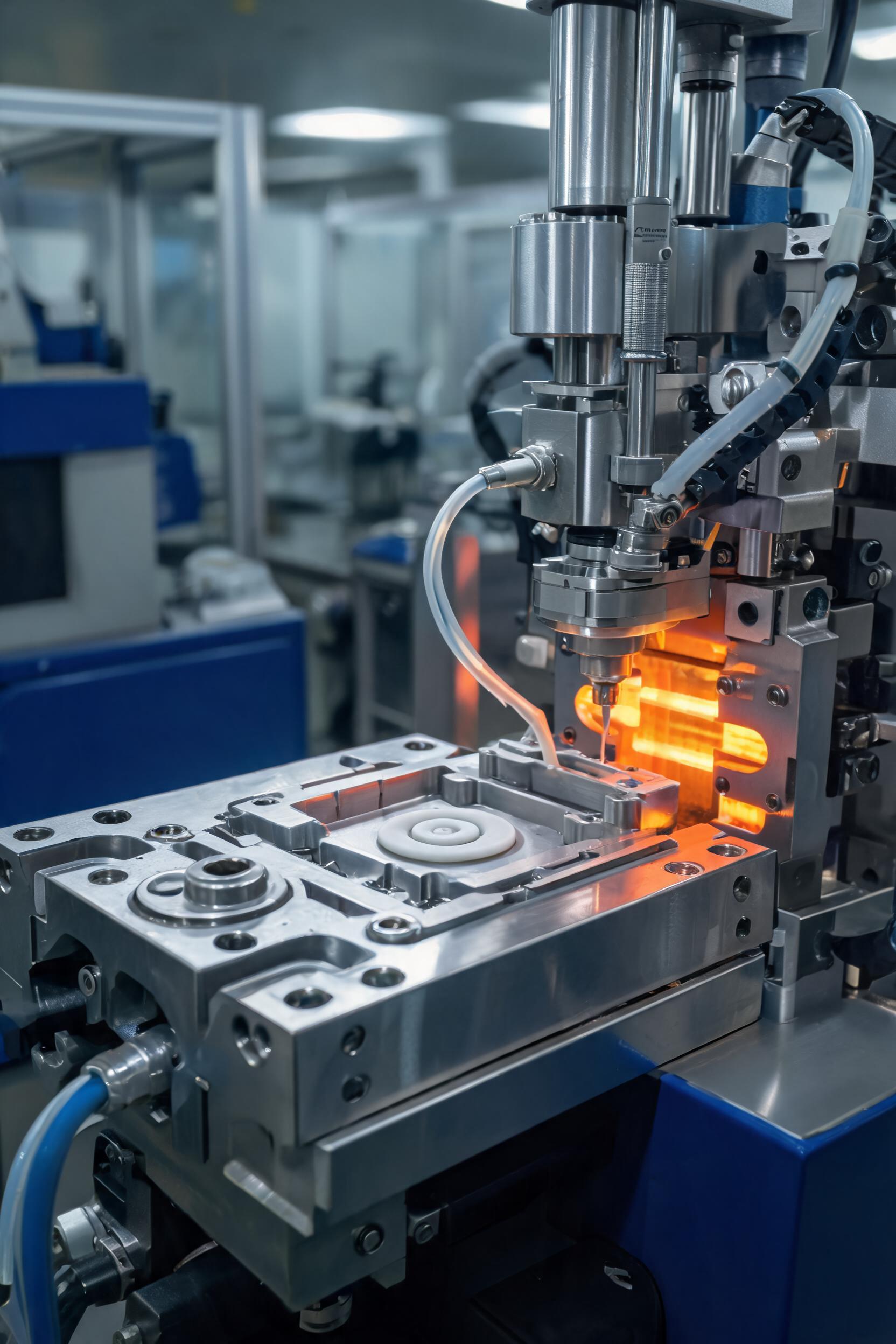
This article fully analyzes the liquid silicone rubber (LSR) injection molding process of waterproof keys for smart wearables from drawing design to mass production. It sorts out key process control points and optimization directions, helping relevant practitioners understand the core points of LSR injection molding in the production of waterproof accessories for smart wearables. Xiangchu (Hubei) Rubber focuses on LSR product manufacturing with ISO 9001 certification.
Liquid Silicone Rubber (LSR) has become the material of choice for critical components in smart wearables, driven by its unique combination of biocompatibility, chemical resistance, low temperature flexibility, and excellent water sealing properties. Among the most demanding LSR applications in this segment are wearable waterproof keys, which require consistent tactile feel, long-term durability against sweat and water immersion, and precise dimensional tolerances to fit into increasingly compact device form factors.
Developing a wearable waterproof key from initial design drawings to mass production requires careful alignment of material selection, tooling design, process parameter tuning, and quality control. At 橡楚(湖北)橡胶有限公司, we specialize in custom Liquid Silicone Rubber (LSR) product manufacturing, with extensive experience optimizing LSR injection molding processes for smart wearable components. Our facility is located at 湖北省鄂州市鄂城区经济开发区凡口街道内河巷54号, and we operate under ISO 9001 quality management standards to deliver consistent, high-quality parts for global export clients. This article provides a full technical breakdown of the end-to-end LSR injection molding process for wearable waterproof keys, covering every stage from design for manufacturing (DFM) review to final mass production validation.
The foundation of a successful mass production run for wearable waterproof keys is laid in the pre-production stage, where design requirements are translated into manufacturable specifications and appropriate material grades are selected. Missteps at this stage often lead to costly reworks, extended lead times, and inconsistent part quality in volume production.
Before moving to tooling or production, all key performance specifications must be aligned between design engineering and manufacturing teams. Wearable waterproof keys have unique functional requirements that differ from general-purpose rubber keypads, as outlined in the table below:
At 橡楚(湖北)橡胶有限公司, we conduct a full DFM review immediately after receiving customer design drawings to flag any design features that may increase production risk or compromise performance. Common issues we address include overcomplicated undercuts that increase tooling cost, insufficient draft angles that cause part sticking during demolding, and oversized sealing lips that lead to excessive flash and poor tactile feel.
Not all LSR materials are suitable for wearable waterproof keys. Material selection depends on the specific performance requirements of the end device, and we typically categorize available grades based on core functional needs:
This is the most common material for entry-level to mid-range smart wearables. It meets standard biocompatibility requirements, provides good sealing performance, and has a lower material cost than specialty grades. For most applications requiring IP67 water resistance, this grade delivers adequate performance when processed correctly.
Most wearable waterproof keys are overmolded onto a plastic housing or rigid PC/ABS insert to create a permanent water-tight seal. This grade of LSR is formulated with added adhesion promoters to create a strong chemical bond between silicone and rigid thermoplastics, eliminating the need for secondary adhesives that can fail over time. At 橡楚(湖北)橡胶有限公司, we test bond strength per ASTM D429 standard to ensure no delamination occurs after thermal cycling or water immersion.
For high-end wearables that require consistent tactile performance over millions of actuation cycles, low-compression set LSR is the preferred choice. Compression set measures the permanent deformation of a material after being compressed under load for a set period; a lower compression set means the key will retain its original shape and tactile feel over the product’s lifespan. Typical compression set values for this grade are ≤10% (tested at 100°C for 22 hours per ASTM D395), compared to 15–20% for general-purpose LSR.
All LSR materials we use at 橡楚(湖北)橡胶有限公司 are sourced from reputable global suppliers, and we provide full material test reports to customers prior to production. We only select materials that meet the required biocompatibility and environmental regulations, including REACH and RoHS, for export markets.
Tooling is one of the most critical factors affecting part quality, production efficiency, and cost in LSR injection molding. Unlike thermoplastic injection molding, LSR injection molding requires specific tooling design modifications to account for the low viscosity of uncured LSR and the thermal curing process.
Wearable waterproof keys are small, high-precision parts, so tooling design must address key factors specific to LSR processing:
Uncured LSR has an extremely low viscosity (similar to motor oil), which allows it to fill very thin mold cavities but also increases the risk of trapped air if venting is not properly designed. Trapped air leads to incomplete cavity filling, voids in the part, or burning from compressed air during injection, all of which compromise water sealing performance.
For multi-cavity tools (the standard for mass production of small wearable keys), we use the following gating and venting guidelines:
LSR cures via a cross-linking reaction that requires consistent elevated temperatures (typically 150–190°C) throughout the mold cavity. Uneven mold temperature leads to uneven curing, with some areas under-cured (causing sticking and poor part release) and other areas over-cured (leading to excessive material brittleness).
For multi-cavity tools for waterproof keys, we use a parallel water cooling (actually, temperature maintenance) circuit design, with separate circuits for the core and cavity to maintain temperature variance within ±2°C across all cavities. This ensures consistent curing time and part quality across every cavity in the tool, which is critical for mass production repeatability.
LSR has high natural adhesion to mold surfaces, so adequate draft angles are required to avoid part tearing or deformation during demolding. For wearable waterproof keys, we specify a minimum draft angle of 0.5–1° for all vertical wall surfaces, with 1.5° preferred for deeper cavity features to ensure easy part release.
Mold surface finish also directly affects part quality and release: a high-polish finish (SPI A-2 or equivalent) on cavity surfaces reduces LSR adhesion, minimizes demolding force, and leaves a smooth, aesthetically pleasing surface on the finished key. For sealing lip surfaces that require tight tolerances, we maintain a surface finish of Ra 0.2μm or better to ensure consistent sealing performance.
The optimal number of cavities in the tool depends on the customer’s required annual volume, which dictates production efficiency and tooling cost. The table below outlines common cavity configurations for wearable waterproof key production:
For tool steel, we use S136 stainless steel for all LSR injection molding tools, as it has excellent corrosion resistance (critical for the humid environment of LSR processing) and high hardness (up to HRC 52–54 after heat treatment) for long tool life. For high-volume mass production tools, we use powder metallurgy stainless steel for improved wear resistance, which extends tool life to over 1 million cycles without requiring cavity rework.
At 橡楚(湖北)橡胶有限公司, we work with trusted tooling partners in China to fabricate all tools in compliance with our ISO 9001 quality standards, and we conduct a full first article inspection (FAI) after tooling is completed to verify dimensional accuracy before moving to process validation.
Once tooling is fabricated, the next step is to develop and validate injection molding process parameters to ensure consistent part quality that meets all customer requirements before moving to mass production. LSR injection molding is a highly sensitive process, so small changes in parameters can have significant impacts on part performance.
There are four core process parameters that must be tuned for wearable waterproof key production: injection speed, injection pressure, mold temperature, and curing time.
The low viscosity of uncured LSR allows for fast injection speeds, which help reduce cycle time and ensure complete cavity filling before curing begins. For small waterproof keys, we typically use injection speeds of 50–100 cm³/s, adjusted based on cavity size and number. Injection pressure is set to 80–120 MPa, which is sufficient to push LSR into thin sections and eliminate voids, without causing excessive flash or mold flashing that increases trimming time.
For overmolded waterproof keys (the most common design, where LSR is bonded to a rigid plastic insert), we reduce injection speed by 10–20% to avoid displacing the insert from its correct position in the cavity, which would cause dimensional errors and poor sealing.
Mold temperature directly impacts curing rate and final part properties. For most wearable waterproof key applications, we set mold temperature between 160°C and 180°C. Higher mold temperatures speed up the curing reaction, reducing cycle time, but can cause increased material brittleness if set too high. Lower temperatures extend curing time, reducing production efficiency, and can lead to under-cured parts that have poor mechanical properties.
Curing time is matched to mold temperature and part wall thickness: for keys with a maximum wall thickness of 2–3mm (typical for most wearables), curing time ranges from 10–20 seconds. We verify full curing via hardness testing: if the measured Shore A hardness of the part matches the material specification within ±2 Shore A after cooling, the curing time is validated.
The table below shows a typical set of validated process parameters for a 32-cavity tool producing 10mm diameter wearable waterproof keys (40 Shore A LSR):
After tuning parameters to produce dimensionally accurate parts, we conduct a full validation process to confirm that parts meet all functional performance requirements, including water resistance, durability, and bond strength. The key tests we perform at 橡楚(湖北)橡胶有限公司 are:
We test 20–30 randomly sampled first articles per validation run per IEC 60529 standard for the specified IP rating. For IP67 testing, parts are assembled into test housings and immersed in 1m of water for 30 minutes, then disassembled to check for any water ingress. For high-end applications requiring continuous water exposure, we also conduct a 24-hour immersion test to confirm long-term sealing performance.
We test 10 sample parts on a custom actuation test rig, applying 1N of actuation force at a rate of 1Hz for 1 million cycles. After testing, we measure compression set and tactile force change: a maximum 10% change in actuation force and maximum 5% compression set are accepted for mass production.
To validate the bond between LSR and the rigid insert (for overmolded keys), we subject 10 sample parts to 100 cycles of -40°C to 85°C temperature cycling, with 30 minutes hold time at each extreme. After cycling, we conduct a visual inspection and pull-off test to check for delamination: no delamination is allowed for production release.
Once all validation tests are passed, we lock in the process parameters and conduct a small-batch pilot run of 5,000–10,000 parts to confirm process capability. We calculate Cp and Cpk for critical dimensions (such as key outer diameter and sealing lip thickness), and require a Cpk of ≥1.33 for all critical dimensions to confirm the process is capable of consistent mass production.
After process validation is completed, we implement strict process control and quality assurance protocols to maintain consistent part quality throughout the mass production run, aligned with our ISO 9001 quality management system.
LSR injection molding for high-volume production requires continuous monitoring of key process parameters to avoid drift that can lead to out-of-spec parts. At 橡楚(湖北)橡胶有限公司, we use the following in-line control protocols:
After molding, all parts go through secondary finishing and final inspection before shipment:
Located at 湖北省鄂州市鄂城区经济开发区凡口街道内河巷54号, our production facility is optimized for both low-volume prototype runs and high-volume mass production of LSR components for smart wearables. We can scale production from 100 prototype parts to millions of mass-produced units with consistent quality, and we work closely with customers to adjust production schedules to meet their demand.
Developing a high-quality wearable waterproof key from initial design drawings to mass production requires a systematic, process-driven approach that aligns design, material selection, tooling, process tuning, and quality control. Every stage of the process impacts the final performance of the part, from water resistance to long-term tactile feel, and even minor errors can lead to costly reworks or product failures in the field.
At 橡楚(湖北)橡胶有限公司, we leverage our years of specialized experience in LSR injection molding to guide customers through every stage of the process, from initial DFM review to full mass production. We operate under strict ISO 9001 quality management standards, and we focus on delivering consistent, high-quality LSR components that meet the demanding requirements of the smart wearable industry. For customers looking for a reliable LSR manufacturing partner for wearable components or other custom LSR products, we invite you to contact us at phone 18071171144 or email churubber@163.com to discuss your project requirements.