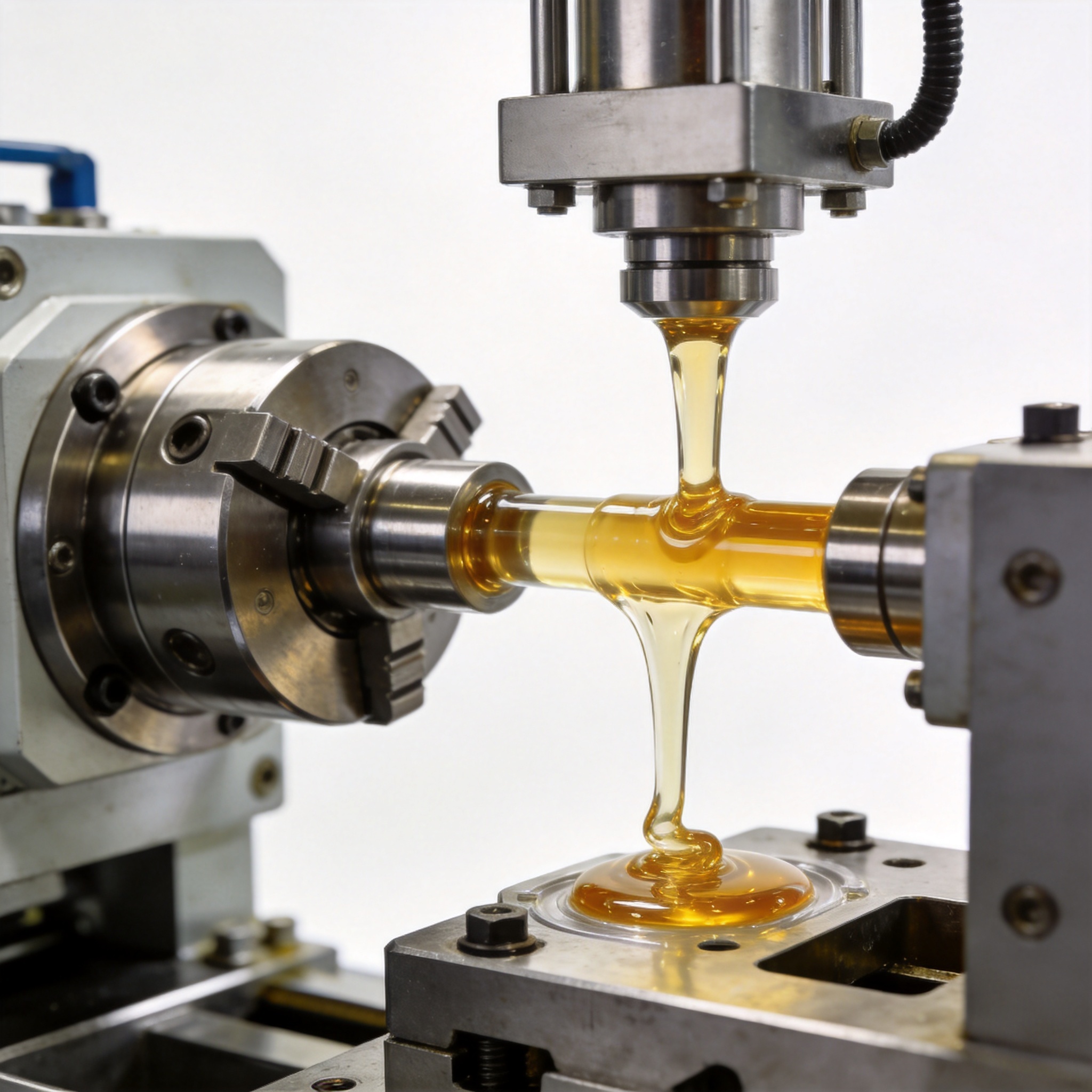
Complete Guide to LSR Injection Molding: From Raw Material to Finished Product
橡楚技术团队 5/7/2026 11 min read
A comprehensive guide to LSR injection molding process, covering material properties, molding steps, equipment configuration, and process advantages.
Liquid Silicone Rubber (LSR) injection molding is an efficient and precise manufacturing process for silicone products, widely used in medical, baby care, electronics, and other industries. This article provides a comprehensive guide to the LSR injection molding process.
1. LSR Material Properties
Liquid silicone rubber consists of two components (A and B). Component A contains vinyl-terminated polydimethylsiloxane, while Component B contains cross-linking agent and catalyst. When the two components are mixed in a 1:1 ratio, addition-cure reaction occurs at elevated temperature to form elastomeric products.
Key Characteristics:
Low viscosity: Enables precision injection into complex molds
Fast cure cycle: Typically 10-60 seconds at 150-200°C
Excellent thermal stability: Operating range from -60°C to 200°C
Biocompatibility: Medical-grade LSR passes ISO 10993 testing
High transparency: Suitable for optical and aesthetic applications
2. Injection Molding Process Flow
2.1 Material Preparation
LSR A/B components are loaded into the dosing unit of the injection molding machine. The material must be stored at room temperature (20-25°C) and kept sealed to prevent premature curing.
2.2 Metering & Mixing
The precision metering pump delivers A and B components in a strict 1:1 ratio to the static mixer. Pigments or additives can be introduced at this stage for colored or modified products.
2.3 Injection
The mixed LSR is injected into the heated mold cavity. Injection pressure typically ranges from 50-150 MPa depending on part geometry and material viscosity.
2.4 Curing
Inside the heated mold (typically 150-200°C), the LSR cures rapidly. Cure time depends on wall thickness: thin-wall parts (< 1mm) cure in 10-20 seconds, while thicker sections may require 60-120 seconds.
2.5 Demolding
After curing, the mold opens and the finished part is ejected. LSR parts typically have excellent release properties due to the material's low surface energy.
2.6 Post-Processing
Secondary operations may include:
Deflashing: Removal of flash or parting line remnants
Post-curing: Optional additional curing for optimal properties
Inspection: Dimensional, visual, and functional quality checks
Cleanliness: Class 100,000 cleanroom for medical products
Process monitoring: Real-time tracking of pressure, temperature, and cure time
Conclusion
LSR injection molding offers significant advantages in precision, efficiency, and product consistency compared to traditional solid silicone processing methods. As the technology continues to mature, its applications will expand further into high-precision and high-reliability industries.
Related Tags
Liquid Silicone LSR Injection Molding Silicone Process Vulcanization