
橡楚编辑部 6/13/2026 39 min read
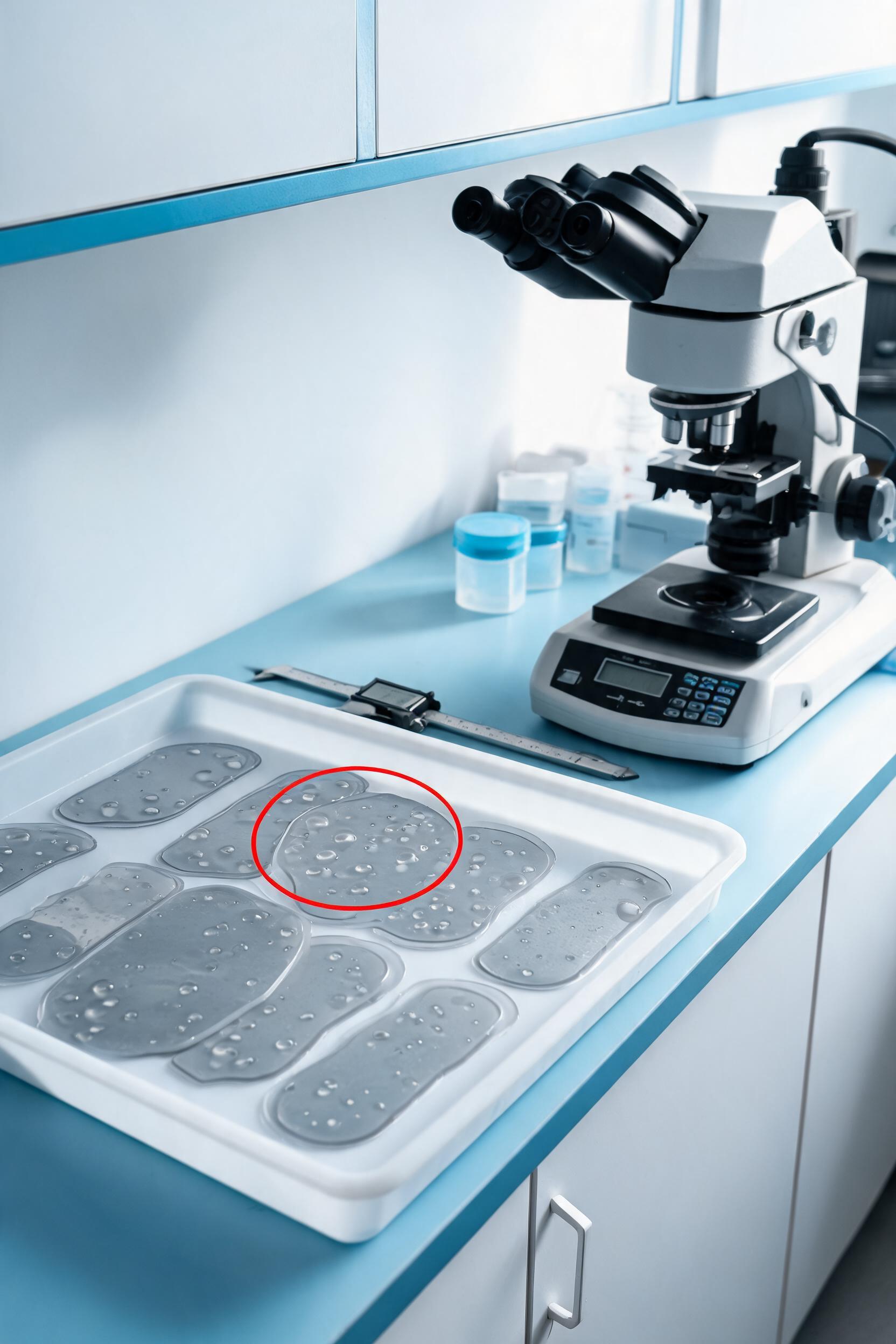
When a batch of waterproof liquid silicone gaskets for new energy vehicles was completely scrapped due to bubble defects during the first sampling, our technical team found the key detail after reanalysis. This article shares bubble prevention experience in LSR molding process, helping LSR manufacturers reduce sampling loss. Xiangchu (Hubei) Rubber, a professional LSR products manufacturer, follows ISO 9001 for quality control.
Liquid Silicone Rubber (LSR) gaskets have become an indispensable sealing component in modern new energy vehicles (NEVs), providing reliable waterproof, dust-proof, and vibration-damping performance for battery packs, electronic control units, onboard charging systems, and door and window assemblies. For NEV applications, even a micro-defect such as a tiny air bubble can compromise the long-term sealing performance of the gasket, leading to water ingress, short circuits, or premature component failure that threatens vehicle safety.
Earlier this year, 橡楚(湖北)橡胶有限公司 completed a first-round sampling for a batch of custom NEV waterproof silicone gaskets, only to find that over 90% of the produced samples contained visible internal bubbles that failed to meet client dimensional and performance requirements, resulting in full scrappage of the trial run. As a specialized LSR manufacturer located at 湖北省鄂州市鄂城区经济开发区凡口街道内河巷54号 that strictly adheres to ISO 9001 quality management standards, we launched a full technical review of the entire sampling process. This article documents our troubleshooting process, root cause analysis, and corrective actions to share our practical technical experience with LSR product designers and manufacturing teams working in the NEV industry.
Before diving into the root cause analysis, it is necessary to outline the product specifications and original pre-production process we designed for this batch of gaskets, to contextualize the subsequent troubleshooting.
This gasket is designed for the gap sealing between the NEV power battery pack upper and lower casings, with the following core technical requirements:
Bubble defects are a particularly critical disqualification factor for this application: even a 0.2mm internal bubble can act as a water absorption channel under long-term immersion, which eventually leads to battery pack insulation failure.
For this large-size gasket, we designed the following compression molding process for first sampling, aligned with common industry practices for small-batch trial production:
From the surface, this process follows the general process parameters for LSR gasket manufacturing, which is why the root cause of bubble defects was not identified immediately after scrappage.
After the full batch of samples was scrapped, our quality and engineering team followed the ISO 9001 non-conformity correction process to eliminate potential causes one by one. We first tested the most common causes of LSR bubble defects reported in the industry.
The first common cause of LSR bubbles is improper raw material storage or incorrect mixing that introduces excess air. We conducted the following tests:
After this round of testing, we eliminated all raw material and mixing related factors.
Next, we checked whether the molding process parameters (temperature, pressure, time, vacuum degree) were incorrect. We adjusted parameters one by one for small trial runs:
As shown in the table, adjusting common process parameters only reduced the bubble rate slightly, but did not solve the problem. Most samples still had visible bubble defects concentrated along the edge of the gasket, 5-10mm away from the outer contour.
We then checked the mold venting design, another common cause of trapped air bubbles. The original mold was designed with 0.08mm deep venting grooves along the outer edge, which meets the standard design for LSR compression molding. We enlarged the venting depth to 0.12mm and conducted another trial: the bubble rate reduced to 65%, but still far below the acceptable 0% for sampling.
At this point, we had eliminated all common causes of LSR bubble defects, which led us to re-examine the less-noticed step of LSR preheating before molding – the detail that ended up being the root cause.
For most small and medium-size LSR parts, preheating of the material itself before molding is not required, because the small volume allows the material to heat evenly quickly after being loaded into the hot mold. For large-size gaskets like this 1245mm × 820mm battery pack gasket, however, the lack of preheating of the LSR compound before mold loading creates a hidden condition that traps air.
After determining that all other factors were not the root cause, we tested the temperature distribution of the LSR compound immediately after manual pouring into the mold, before closing the mold. The LSR compound was stored at room temperature (25°C), so the entire volume of the compound was 25°C when poured into the 140°C preheated mold.
When the mold is closed and pressure is applied, the outer layer of the LSR compound touches the hot mold surface first, and cures rapidly within 60 seconds to form a solid outer skin. The inner core of the compound is still at a low temperature, so it remains viscous and flows slowly under pressure. As the outer skin cures, the air that is pushed from the inner core to the edge cannot escape through the already cured outer edge venting grooves, and gets trapped inside the gasket to form large numbers of bubbles.
We verified this mechanism with a thermal imaging test:
By 60 seconds, when we normally close the mold and apply pressure, the outer layer is already close to the curing temperature, and the venting area on the edge has started to cure, locking air inside the part. This explains why our bubbles were concentrated along the edge of the gasket, exactly where the air would be pushed before the vent cured.
This defect only occurs on large-size LSR parts because of the relationship between part thickness/volume and heat transfer rate. For small gaskets (less than 300mm in any dimension, 3mm thick), the entire volume of LSR can heat up to curing temperature within 30 seconds, so air can be pushed out through the vents before the outer layer cures. For large-size gaskets over 1000mm in length and 4.5mm thick, the core cannot heat up fast enough, leading to the differential curing effect that traps air.
We also found that this issue is rarely discussed in public technical materials, because most small-batch sampling projects for large NEV gaskets skip the preheating step to save time and simplify the process, which makes it a hidden mistake that many teams only encounter after a full batch of samples is scrapped.
Based on the root cause analysis, we adjusted the sampling process by adding a simple preheating step for the LSR compound, and adjusted other matching parameters to eliminate the bubble defect.
We modified the original process with the following key changes:
All these changes are simple adjustments that do not require additional expensive equipment, only a change to the process sequence.
After implementing the corrective actions, we produced a new batch of 5 samples for inspection. We conducted dimensional inspection, visual inspection, and CT scanning to check for internal bubbles, with the following results:
The new batch of samples met all client requirements, and was approved on the first inspection. This confirms that the overlooked preheating detail was the root cause of the original bubble defect.
From this scrapped first sampling and subsequent troubleshooting, we summarized three key lessons that can help other LSR manufacturers and NEV component designers avoid similar mistakes:
General LSR manufacturing guidelines often do not mention preheating of the material itself for compression molding, because it is not required for small parts. For large-size NEV components such as battery pack gaskets, which often exceed 1 meter in length, preheating the LSR compound before loading into the mold is a necessary step to avoid differential curing and trapped air. This step adds only 15-20 minutes to the total sampling time, but eliminates the risk of full batch scrappage that costs far more time and material.
If bubbles in LSR gaskets are concentrated along the outer edge, 5-15mm away from the part contour, this is a clear sign of differential curing caused by uneven material temperature, rather than bad venting or insufficient degassing. Adjusting venting or degassing parameters will only give minor improvements, while preheating the material will solve the problem completely.
As an ISO 9001 certified manufacturer, 橡楚(湖北)橡胶有限公司 followed a systematic elimination process to find the root cause, rather than adjusting parameters randomly. This systematic approach allowed us to quickly rule out common causes and identify the hidden preheating detail that was easy to overlook. For custom LSR development projects, systematic troubleshooting reduces iteration time and helps deliver qualified samples to clients faster.
Bubble defects in LSR components for new energy vehicles are often caused by small, overlooked process details rather than major design or equipment failures. In this project, a full batch of first sampling of NEV waterproof silicone gaskets was scrapped because we followed general process rules and skipped the preheating step for the large-size LSR compound, a detail that is rarely mentioned in public technical guidelines. Through systematic troubleshooting aligned with ISO 9001 quality management requirements, we identified the root cause of differential curing caused by uneven temperature, implemented simple corrective actions, and successfully produced qualified samples that met all client requirements.
橡楚(湖北)橡胶有限公司 is located at 湖北省鄂州市鄂城区经济开发区凡口街道内河巷54号, and specializes in custom Liquid Silicone Rubber (LSR) products for new energy vehicle and industrial applications. We continuously document and share our practical manufacturing experience to help clients and partners solve common technical problems in LSR product development. If you have requirements for custom NEV LSR gaskets or other LSR components, please contact us at phone 18071171144 or email churubber@163.com for technical consultation and quotation.