
橡楚编辑部 5/17/2026 47 min read
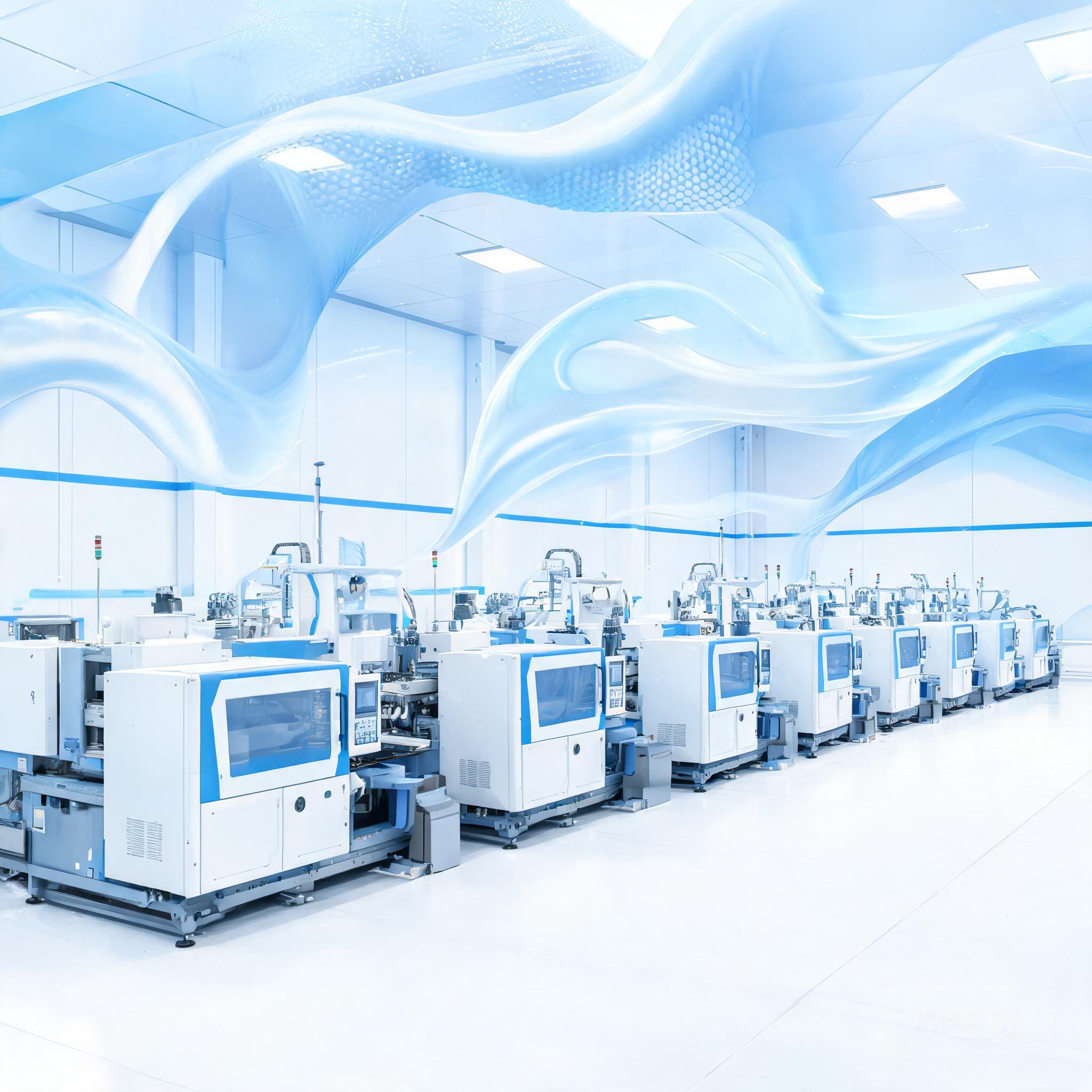
This article provides an in-depth analysis of the core advantages of liquid silicone rubber (LSR) factories equipped with advanced injection molding technology. From precise process control, high-clean production environments to customized solution adaptation, it explains how these manufacturers ensure the accuracy, performance and batch stability of LSR products, offering reference for customers in medical, automotive, consumer electronics and other fields to select suitable LSR suppliers.
The global demand for high-precision, biocompatible, and durable silicone components has grown at a 6.8% CAGR since 2020, driven by expanding applications in medical devices, automotive electrification, consumer electronics, and aerospace. Liquid Silicone Rubber (LSR), a two-part platinum-cured thermoset elastomer, has emerged as the material of choice for these use cases due to its exceptional thermal stability (-60°C to 220°C), low compression set (<10% after 22 hours at 177°C per ASTM D395), biocompatibility (ISO 10993, USP Class VI certification), and resistance to UV radiation, chemicals, and hydrolysis. However, realizing the full potential of LSR requires specialized manufacturing infrastructure, precise process control, and deep material expertise—capabilities that only purpose-built LSR factories with advanced injection molding technology can deliver at scale.
Unlike conventional thermoplastic injection molding, LSR processing presents unique challenges: the material’s low viscosity (1,000–10,000 Pa·s at shear rates of 10 s⁻¹) increases the risk of flash, its exothermic curing reaction demands uniform temperature control across mold cavities, and cross-contamination with other materials can render entire batches unusable. Modern LSR factories address these pain points through end-to-end optimized workflows, from material handling to post-curing quality validation, that enable production of components with dimensional tolerances as tight as ±0.005 mm, zero flash, and 99.8%+ production yield for high-volume runs. This article explores the core technical pillars of a leading LSR factory, the performance advantages of its advanced injection molding technology, its real-world application outcomes, and the future innovations shaping the LSR manufacturing landscape.
A high-performance LSR factory is built from the ground up to mitigate the unique processing risks of liquid silicone rubber, with segregated production zones, climate-controlled material storage, and closed-loop material delivery systems that eliminate variability at every stage of the manufacturing process.
Contamination control is non-negotiable for LSR production, particularly for medical and food-contact components. Leading factories divide their operations into tiered cleanroom zones aligned with ISO 14644-1 standards, with dedicated equipment for each material family to prevent cross-contamination:
Each zone is equipped with dedicated LSR injection molding machines, material mixing stations, and post-processing equipment, with no shared tools between LSR and thermoplastic production lines. All work surfaces are treated with anti-static coatings to prevent dust accumulation, and air exchange rates are set to 15–20 air changes per hour for ISO 7 zones to maintain consistent air quality.
LSR is supplied as two separate components (Part A: base polymer + platinum catalyst; Part B: crosslinker + inhibitor) that begin curing immediately upon mixing, making precise metering and bubble-free delivery critical to part quality. Advanced factories deploy fully automated closed-loop material handling systems that eliminate manual intervention and reduce material waste to <2% per run, compared to 8–12% for manual mixing processes:
This closed-loop system also integrates automatic vacuum degassing for both raw material batches and mixed LSR, reducing void content in finished parts to <0.01%—a critical requirement for high-pressure sealing and medical implant applications.
The centerpiece of a modern LSR factory is its fleet of specialized injection molding machines, equipped with precision controls, smart mold technology, and in-line monitoring systems that enable production of complex, high-tolerance parts at scale with minimal waste.
LSR’s low viscosity requires a fundamentally different approach to injection than thermoplastics, as even minor fluctuations in pressure, speed, or temperature can cause flash, short shots, or inconsistent curing. Leading LSR factories use all-electric injection molding machines with closed-loop control over every process parameter, delivering performance that far exceeds hydraulic or hybrid alternatives:
These machines also integrate dynamic viscosity compensation algorithms that adjust injection parameters in real time based on in-line viscometer readings, compensating for minor batch-to-batch variations in raw material properties. For high-volume production runs, this technology reduces defect rates to <0.2%, compared to 3–5% for standard LSR molding processes.
Mold design is the single largest determinant of LSR part quality, as the material’s low viscosity makes it prone to leaking into mold parting lines and its exothermic curing reaction requires uniform heat distribution to avoid under-cured or over-cured regions. Advanced LSR factories use proprietary cold runner mold systems with active thermal control that eliminate flash and reduce cycle times by 30–40% compared to conventional hot runner systems:
Molds are also equipped with in-cavity pressure and temperature sensors that collect data at 100 Hz during each injection cycle, enabling real-time detection of defects such as short shots, air entrapment, or curing inconsistencies. For high-value medical part production, this data is logged and stored for 10+ years to meet FDA traceability requirements.
To ensure consistent quality across high-volume runs, advanced LSR factories integrate end-to-end automation and non-destructive testing (NDT) systems that inspect 100% of produced parts without requiring manual intervention:
This fully automated workflow enables 24/7 lights-out production for high-volume orders, with production capacity of up to 20 million parts per year per molding line while maintaining consistent quality.
Beyond process and equipment advantages, leading LSR factories differentiate themselves through in-house material science capabilities that enable custom LSR formulations tailored to specific application requirements, eliminating the performance tradeoffs associated with off-the-shelf materials.
While standard LSR grades offer a broad range of performance properties, many niche applications require custom formulations that balance conflicting requirements such as high tear strength and low hardness, or electrical conductivity and biocompatibility. Advanced factories employ dedicated material science teams that develop custom formulations in-house, with full testing and certification capabilities:
All custom formulations undergo accelerated life testing in-house, including 1,000+ hour thermal cycling, UV exposure, and chemical resistance tests, to ensure they meet application performance requirements before full-scale production. In-house R&D laboratories also enable rapid iteration, with new formulation prototypes available for customer testing in as little as 72 hours.
As regulatory pressure to reduce industrial waste grows, leading LSR factories are investing in sustainable processing technologies that minimize material waste, reduce energy consumption, and enable end-of-life recycling of LSR parts:
These sustainable capabilities not only reduce environmental impact but also lower production costs for customers, with recycled LSR formulations costing 15–20% less than equivalent virgin grades.
The technical capabilities of advanced LSR factories translate directly to measurable performance improvements for customers across industries, with case studies demonstrating higher part reliability, lower total cost of ownership, and faster time-to-market for new products.
A leading medical device manufacturer partnered with an advanced LSR factory to produce 5 million per year of silicone seals for portable insulin pumps, requiring zero leaks, biocompatibility, and resistance to 1,000+ cycles of autoclave sterilization. The factory’s technical team addressed key challenges through:
The project reduced the customer’s total production cost by 28% and cut time-to-market for the new insulin pump from 12 months to 7 months, thanks to the factory’s in-house mold design and prototyping capabilities.
A global EV manufacturer required 12 million per year of IP68-rated gaskets for lithium-ion battery packs, requiring resistance to thermal cycling (-40°C to 150°C), flame retardancy, and a 15-year service life. The advanced LSR factory delivered a solution that:
The resulting gaskets reduced the battery pack’s leak rate by 90% compared to the customer’s previous thermoplastic gasket design, and the factory’s high-volume production capacity enabled the customer to scale EV production from 200,000 to 500,000 units per year without supply chain delays.
Advanced LSR factories with specialized injection molding technology are redefining the performance and scalability limits of liquid silicone rubber components, enabling industries from medical devices to automotive electrification to leverage the unique properties of LSR in applications that were previously impossible or uneconomical to produce. The core advantages of these factories—segregated clean production infrastructure, closed-loop material handling, precision injection molding with real-time process control, in-house custom formulation capabilities, and end-to-end automation—deliver consistent part quality, lower total production costs, and faster time-to-market for customers.
Looking ahead, the next generation of LSR manufacturing will build on these capabilities through the integration of artificial intelligence (AI) process optimization algorithms that predict and correct defects before they occur, and further advances in sustainable LSR recycling that will make 100% closed-loop LSR production a reality by 2030. As demand for high-performance silicone components continues to grow, partnering with a LSR factory that has invested in advanced injection molding technology will become an increasingly critical competitive advantage for product manufacturers across all industries.