
橡楚编辑部 5/18/2026 41 min read
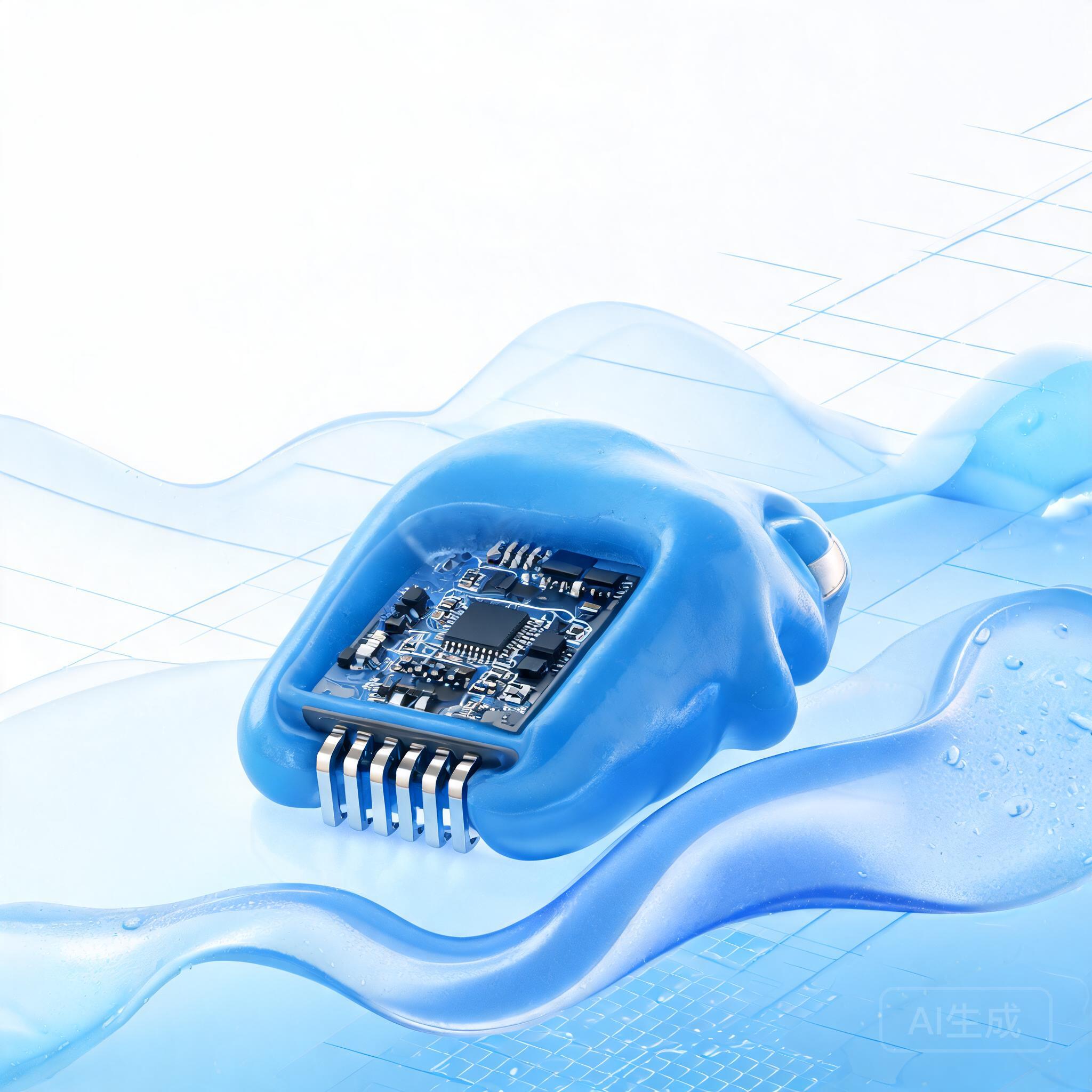
This article focuses on the upgrade of liquid silicone overmolding process, analyzing the pain points of traditional overmolding processes in the production of high-precision waterproof electronics, such as weak bonding, sealing failure, and dimensional deviation. It explains the core improvements of the upgraded process in material matching, mold temperature control, and injection parameter optimization, and elaborates how the upgraded process greatly improves the waterproof rating, structural stability, and production yield of electronic products, providing practical references for waterproof design in consumer electronics, outdoor electronics and other fields.
The global market for high-precision waterproof electronics—including wearables, medical implantable devices, automotive sensor modules, and industrial IoT enclosures—is projected to grow at a 7.2% CAGR through 2030, driven by rising demand for devices that operate reliably in harsh environments ranging from submersion in saltwater to exposure to corrosive chemical agents. Liquid Silicone Rubber (LSR) overmolding, the process of bonding LSR to rigid substrates such as polycarbonate (PC), aluminum, or glass-filled nylon, has long been the preferred sealing solution for these applications due to LSR’s inherent properties: a wide operating temperature range of -60°C to 220°C, 1000+ hours of UV resistance, and stable dielectric performance even at 90% relative humidity.
However, traditional LSR overmolding processes face critical limitations for next-generation high-precision electronics: 15-25% dimensional variation on sealing edges, 2-3% of parts failing IPX8 pressure testing due to delamination, and a 180-second average cycle time that limits mass production scalability. These gaps have spurred a new wave of process upgrades focused on micron-level dimensional control, zero-defect bonding, and in-line quality validation. This article analyzes the core technical upgrades to LSR overmolding, their performance outcomes for waterproof electronics, and real-world implementation case studies across key end markets.
The foundation of reliable waterproof overmolding lies in the compatibility between LSR formulations and rigid substrates, as delamination at the bond line is responsible for 70% of field failures in waterproof electronics. Recent material innovations have moved beyond generic primer-based bonding to self-bonding LSR grades and substrate surface modification technologies that eliminate manual process variability.
Traditional LSR overmolding requires manual application of solvent-based primers to substrates, a process that introduces 20-30% of bond line defects due to uneven coating thickness, dust contamination, and improper curing. Next-generation self-bonding LSR grades integrate functional silane coupling agents directly into the polymer matrix, which form covalent bonds with polar substrate surfaces during the curing process without external primers.
Table 1 compares the performance of standard vs. self-bonding LSR grades for common electronics substrates:
Self-bonding LSR grades are formulated with adjustable modulus ranges from 30 Shore A to 70 Shore A, allowing designers to match material stiffness to application requirements: softer 30 Shore A grades are used for wearable device skin contact seals, while stiffer 70 Shore A grades are preferred for automotive sensor housing gaskets that require resistance to high-pressure fluid exposure. The elimination of primer also reduces volatile organic compound (VOC) emissions by 85% compared to traditional processes, meeting EU REACH and US EPA regulations for consumer electronics.
Many high-precision electronics integrate fragile components such as MEMS sensors, flexible printed circuits (FPCs), and glass displays that can be damaged by the 80-120 bar injection pressures of standard LSR processing. Low-pressure LSR formulations, optimized for injection at 20-40 bar, maintain full crosslink density during curing while reducing shear stress on embedded components by 75%.
These formulations incorporate thixotropic additives that increase material viscosity under low shear conditions, preventing overflow and flash on micro-sized features as small as 50 μm. Testing on smart watch display assemblies shows that low-pressure overmolding reduces FPC trace damage from 4.2% to 0.1% compared to standard LSR processing, while maintaining a seal thickness uniformity of ±10 μm across the 30mm display perimeter. The low-pressure approach also enables overmolding of thin glass substrates as thin as 0.4mm, a critical capability for next-generation AR/VR optical modules that require hermetic sealing around precision optical elements.
For high-precision waterproof electronics, sealing edge dimensional variation of more than 20 μm can create gaps that allow water ingress under pressure, while flash on connector interfaces can cause electrical contact failures. Recent upgrades to injection molding equipment, tooling design, and closed-loop process control have reduced dimensional variation to below 10 μm for mass-produced parts, enabling compliance with IPX9K waterproof ratings that require resistance to 80°C high-pressure water jets at 100 bar.
Traditional hydraulic LSR injection machines have a shot weight variation of ±2%, which translates to inconsistent seal thickness across production runs. Modern all-electric servo-driven LSR molding systems achieve shot weight control of ±0.05%, with independent control of injection speed, hold pressure, and curing temperature across 16 separate process zones.
These systems integrate three core monitoring technologies for closed-loop control:
A 2023 study of automotive radar sensor overmolding production lines found that servo-driven systems reduced dimensional variation on 0.2mm thick sealing gaskets from 22 μm to 8 μm, while reducing scrap rates from 6.8% to 0.9% over 100,000 production cycles.
Mold design is a critical but often overlooked factor in overmolding accuracy, as uneven mold temperature can cause differential curing of LSR, leading to part warpage and dimensional drift. Next-generation overmolding tools incorporate two key design upgrades to address these issues:
Tooling surface treatment is another critical upgrade: nano-ceramic coatings with a hardness of 3500 HV applied to the mold cavity reduce LSR adhesion to the tool surface, extending tool life from 500,000 cycles to 2,000,000 cycles while reducing demolding force by 60%. This is particularly important for parts with micro-sealing features, as high demolding forces can cause deformation of thin LSR seals during ejection.
Even with optimized material and process control, 1-2% of overmolded parts can have hidden defects such as micro-cracks, bond line delamination, or incomplete curing that are not visible to the naked eye. Traditional quality validation methods such as random pressure testing are destructive, slow, and cannot detect defects in 100% of production parts. Recent advancements in non-destructive testing (NDT) technologies enable 100% in-line inspection of overmolded electronics, with defect detection resolution down to 10 μm.
Ultrasonic testing (UT) using 50-100 MHz high-frequency transducers can detect gaps as small as 10 μm at the LSR-substrate bond line, without damaging the part or requiring disassembly. The system works by emitting short ultrasonic pulses through the LSR layer, measuring the time and amplitude of the echo reflected from the bond interface. A fully bonded interface reflects less than 10% of the ultrasonic signal, while a delaminated interface reflects more than 70% of the signal, allowing for quantitative measurement of bond quality.
Table 2 outlines the performance of high-frequency UT compared to traditional validation methods:
For medical implantable devices such as cardiac pacemaker enclosures, UT testing is mandated by FDA regulations to ensure 100% of parts have no bond line defects that could allow bodily fluid ingress. Recent advancements in phased array UT systems have reduced inspection time for a 50mm diameter overmolded enclosure to 0.8 seconds, making the technology feasible for high-volume production lines with output rates of 4,000 parts per hour.
Terahertz (THz) spectroscopy, which uses electromagnetic radiation in the 0.1-10 THz frequency range, enables non-contact measurement of LSR layer thickness, crosslink density, and filler distribution across the entire part surface. Unlike ultrasonic testing, THz spectroscopy can penetrate non-conductive substrates such as PC and glass, allowing for measurement of LSR seal thickness even when the seal is located between two rigid substrate layers.
THz systems can measure LSR thickness with an accuracy of ±2 μm, and can detect under-cured regions by measuring the absorption coefficient of the LSR: under-cured material has a 20-30% higher THz absorption rate than fully cured material due to unreacted silicone oligomers. For smart watch waterproof enclosures, THz inspection is used to measure seal thickness at 200 discrete points around the display perimeter, ensuring that no region falls below the 0.15mm minimum thickness required for IPX8 compliance. The technology also detects filler agglomerations in LSR that can create weak points in the seal layer, a defect that affects 1.2% of parts produced with standard process control methods.
The process upgrades outlined above have been deployed across multiple high-precision electronics sectors, delivering measurable improvements in waterproof performance, production efficiency, and product lifecycle. Two representative case studies illustrate the practical benefits of the upgraded overmolding process.
A leading global wearable manufacturer sought to upgrade its smart watch waterproof rating from IP67 (1m submersion for 30 minutes) to IPX8 (10m submersion for 24 hours) while reducing production scrap rates. The device required overmolding of a 0.2mm thick LSR seal between a 0.4mm thin glass display and an aluminum alloy housing, with a dimensional tolerance of ±10 μm on the seal thickness.
The manufacturer implemented the following upgraded process:
The results after 6 months of mass production were:
The upgraded process also enabled the manufacturer to offer a 5-year waterproof warranty for the device, a key differentiator in the competitive wearable market.
A tier-1 automotive supplier required an overmolding solution for LiDAR sensors used in autonomous driving systems, which must operate reliably in -40°C to 125°C temperature ranges, resist 1000 hours of salt spray exposure, and meet IPX9K waterproof requirements. The sensor has a polycarbonate housing with a 0.3mm thick LSR seal around the optical window, with zero defects allowed to prevent LiDAR performance degradation.
The supplier deployed an upgraded overmolding process with low-pressure 50 Shore A self-bonding LSR, vacuum vented tooling, and in-line UT inspection of the bond line. The results were:
The solution is now used in 12 different autonomous driving vehicle platforms, with over 2 million sensors deployed in the field as of 2024 with zero reported waterproof failures.
The upgrade of liquid silicone overmolding processes represents a critical enabling technology for next-generation high-precision waterproof electronics, addressing the historical limitations of dimensional variation, bond line reliability, and quality validation efficiency. The combination of self-bonding LSR materials, servo-driven closed-loop molding systems, and in-line non-destructive testing has raised the performance bar for overmolded seals: dimensional variation below 10 μm, IPX8 pass rates above 99.5%, and mass production cycle times below 120 seconds.
Looking ahead, ongoing innovation in LSR overmolding will focus on two key areas: first, the development of electrically conductive self-bonding LSR grades that enable simultaneous sealing and electrical interconnect formation, reducing component count in IoT devices by 30%; second, the integration of AI-powered process optimization systems that use real-time sensor data to predict and prevent process drift before defects occur. As end markets continue to demand smaller, more robust electronics with longer service lives, upgraded LSR overmolding will remain the gold standard for high-performance waterproof sealing solutions.